When exams come close, the whole house can start to feel tense.
Parents notice it first. A child sits with books open for hours, but the mind keeps wandering. Sleep gets disturbed. Small distractions feel bigger than they should. Everyone wants to help, but often does not know what to change.
This is where Vastu Shastra (वास्तु शास्त्र) can be useful. It does not replace hard work, revision or discipline. But it can help create a study space that feels calmer, clearer and easier to use every day.
In many homes, I have seen that the problem is not always the student. Sometimes the desk is badly placed. Sometimes the room feels heavy or cluttered. Sometimes the child studies in one corner and sleeps poorly in the same space. Small corrections can make the room more supportive.
This guide explains practical Vastu tips for exam success. The aim is not to make the home perfect. It is to make the study environment more settled, focused and useful.
Why Vastu Matters For Students
Vastu Shastra (वास्तु शास्त्र) is the traditional Indian system of spatial planning. It looks at direction, placement, light, airflow and the way a room is used.
For students, these things matter because study is not only about intelligence. It is also about mental steadiness, routine and the ability to sit for long periods without feeling restless.
This matters even more during board exams, entrance tests and government job preparation. In these phases, families often notice the same pattern: the student is working hard, but the room itself does not support concentration.
For example, many parents in their 50s and 60s tell me the same thing: “My son studies, but he keeps getting up every ten minutes” or “My daughter feels sleepy at the desk but cannot sleep properly at night.” In such cases, the room setup is worth checking.
Setting Up The Study Room The Right Way
The location of the study room is the first thing to consider. In Vastu, the most commonly preferred directions for study are east, north and northeast.
These are generally linked with lightness, clarity and better mental focus. If a separate study room is not possible, even a study corner in the right part of the home can work well.
When discussing room placement, many people first think only in the basic eight directions. But Vastu often looks at sixteen zones. These include north, north-northeast, northeast, east-northeast, east, east-southeast, southeast, south-southeast, south, south-southwest, southwest, west-southwest, west, west-northwest, northwest and north-northwest.
This becomes useful when families want a more detailed understanding of where a study room or desk actually falls within the home.
Which Directions Work Best For A Study Room
Here is a simple guide:
| Direction/Zone | General Vastu View | Study Use |
|---|---|---|
| Northeast | Most favourable | Calmness, clarity, learning |
| East | Highly favourable | Alertness, memory, morning energy |
| North | Favourable | Concentration, analytical study |
| East-Southeast | Usable with care | Needs balance through layout and colours |
| West-Southwest | Secondary option | Can work if properly arranged |
| Southwest | Usually not preferred | Better for stability than active study |
An east-facing study room is one of the best options. It receives morning light, which helps the room feel active and fresh. This can be especially helpful for students who study early in the day. Many families find that an east-side room naturally feels lighter and less dull.
The northeast is widely seen as the strongest direction for learning. It is often chosen when the student needs calmness, better concentration and less mental noise. If a child gets anxious before exams or struggles to settle into a routine, this direction is often preferred.
Southwest is generally treated as a heavier zone. It may offer stability, but it is not usually the first choice for a study room. In most homes, this part of the house works better for a bedroom or master bedroom.
This zone is not usually the first recommendation for a study room, but it can still be managed well. If the study space falls here, then proper desk direction, light colours and reduced clutter become more important.
Some Vastu references consider this workable for younger children or fixed routines. Still, it usually needs more care in arrangement than an east or northeast room.
The Shape Of The Room Matters Too
A simple square or rectangular room is usually the easiest to work with. These shapes feel balanced and allow furniture to be placed without awkward pressure points.
Rooms with odd corners or cut areas may not feel comfortable for long study hours. Even if the student cannot explain it, the room can feel unsettled.
Study Room Door Direction
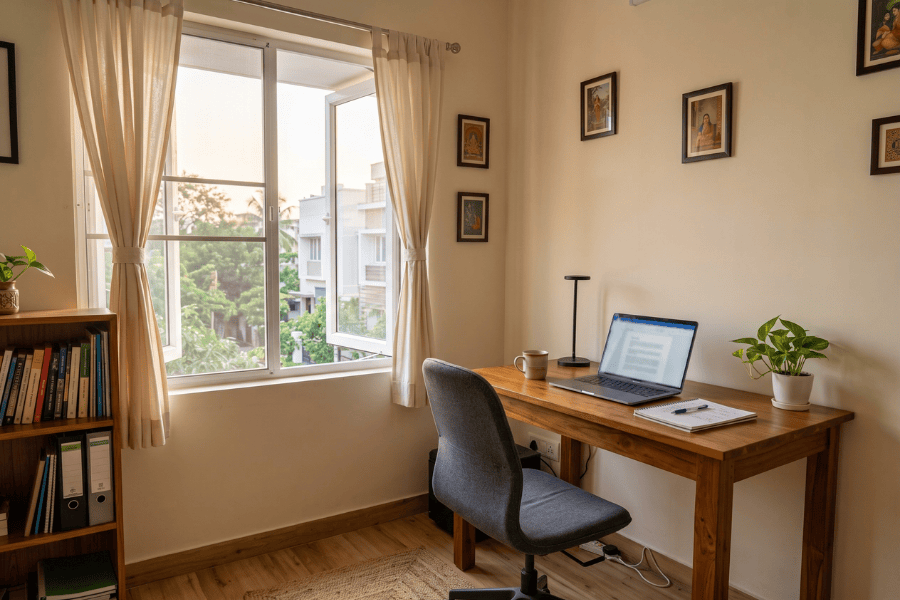
The study setup should allow the student to remain comfortable and alert. One common principle is that the student should not sit with the door directly behind them.
This may sound small, but it matters. Many students feel distracted or uneasy when they cannot sense who is entering the room.
Natural Light, Air And Colours
A study room should not feel dark, stuffy or overly harsh. Good daylight and ventilation help the mind stay awake.
Light shades such as off-white, pale yellow, soft green and light blue are generally preferred. These colours keep the room calm without making it dull.
Dark colours, heavy reds and black are usually avoided in study areas because they can make the room feel visually heavy.
Desk Placement Can Change The Whole Feel Of Study
In many homes, the desk matters more than the room. A child may not have a separate study room, but a correctly placed desk can still make a clear difference.
The desk should ideally be placed in the east, north or northeast part of the room. The student should preferably sit facing east or north while studying.
A simple wooden desk is usually the best choice. Square or rectangular shapes are preferred because they feel steady and practical.
Try not to push the study table tightly against the wall. A small gap can help the space feel more open.
A realistic example: in many flats, a study table gets pushed wherever there is empty space, often next to the bed or directly under a shelf. It saves room, but the child ends up studying in a cramped corner with poor light. Over time, that setup can feel tiring.
Best Direction To Study For Competitive Exams
For competitive exams, direction becomes even more important because the student spends more hours at the desk. East and north are the most commonly recommended directions.
East is linked with clarity and alertness, while North is often associated with concentration and analytical thinking.
This is why many families choose these directions for children preparing for UPSC, banking, SSC, railways or other government job exams.
Bookshelves And Storage
Bookshelves should support order, not create pressure. Heavy cupboards or shelves should not hang directly above the study desk.
Storage can be placed neatly along the south or west wall in many layouts, while daily-use books can remain easy to reach without crowding the table.
Here are some simple desk and storage rules:
- Keep the study table clean and free from extra items
- Avoid heavy storage directly above the head
- Arrange books neatly instead of stacking them in piles
- Make sure the student can see the door
- Avoid placing mirrors in front of the desk
| Study Element | Better Choice | Avoid |
|---|---|---|
| Sitting direction | East or north | Long study sessions facing south |
| Desk placement | Open, visible, balanced | Door directly behind the chair |
| Desk material | Wooden | Unsteady or overly reflective surfaces |
| Overhead area | Clear and open | Beam or heavy cupboard above |
| Tabletop | Minimal and tidy | Clutter, loose piles, distractions |
Better Sleep Before Exams Matters More Than Most People Think
Many families focus only on study hours. But poor sleep can quietly damage memory, mood and concentration.
If a student studies late into the night and then sleeps in a poorly arranged room, the next day often feels unproductive. The child may appear lazy, but the real issue may be poor rest.
For better sleep, the bed is often recommended in the south or west part of the room. Sleeping with the head towards the east or south is commonly suggested in Vastu.
This becomes important when the study and sleep space are the same room. If possible, create some separation between the bed and the study zone. Even a small bookshelf, side table or change in orientation can help.
A common real-life situation is this: parents create a study corner on the bed itself because the room is small. It seems practical for a few days, but the child starts feeling sleepy while studying and restless while sleeping. Mixing both functions too closely often creates this problem.
Vastu Tips For Hostel And PG Students
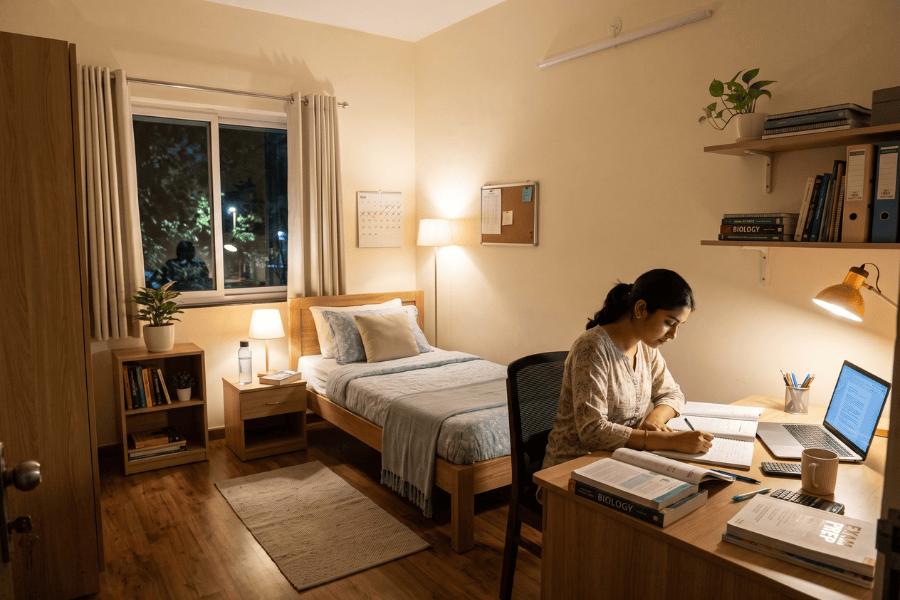
Not every student has control over the room layout. Hostel and PG students often have to work with whatever space is available.
In such cases, the aim should be adjustment, not perfection. If possible, the student should sit facing east or north. The desk should be kept clean and not overloaded.
Mirrors reflecting the study table should be avoided. If the room is shared, even a small personal study corner with a clear table and good light can help.
Small changes still matter:
- Use a proper study lamp
- Keep the table free of clutter
- Avoid studying under a beam if another position is available
- Separate study material from sleeping items as much as possible
Common Vastu Mistakes Students And Families Miss
The same problems appear in many homes. These mistakes are easy to overlook because they seem normal.
Studying Under A Beam
A beam over the desk can make the space feel heavy and pressurised. Many students say they feel mentally tired faster in such a spot.
Incorrect Bed Placement
A badly placed bed can disturb sleep, especially during exam time. If rest is poor, study quality usually drops.
Mirrors In Front Of The Study Area
Mirrors can create distraction and unnecessary mental movement. If they reflect the student or the desk, they may disturb focus.
Cluttered Study Table
A crowded table often leads to a crowded mind. Pens, papers, old notebooks and random objects should be cleared regularly.
Poor Light And Ventilation
A room with weak airflow or poor light makes long study sessions harder than they need to be.
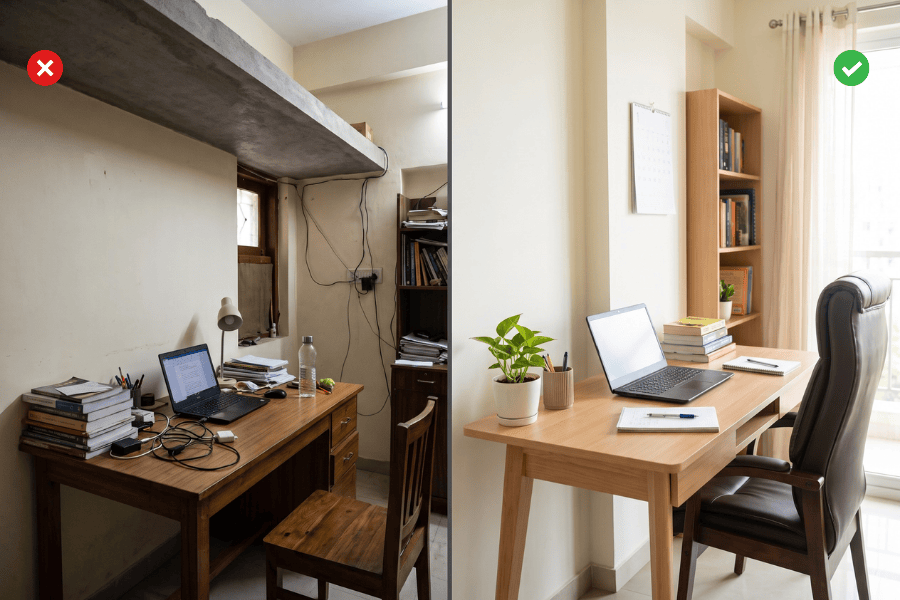
Simple Do’s And Don’ts For Exam Success
The best Vastu advice is usually the simplest advice.
Do’s
- Place the study desk in the east, north or northeast where possible
- Let the student face east or north while studying
- Keep the room clean, bright and well ventilated
- Use light and calming colours
- Keep sleep and study areas separate if possible
Don’ts
- Do not place the desk under a beam
- Do not keep a mirror in front of the study table
- Do not overload the desk with books and objects
- Do not ignore sleep while focusing only on study hours
- Do not expect remedies to replace routine and effort
Helpful Remedies That Support Focus
Many families like to include simple remedies along with room corrections. A picture of Saraswati (सरस्वती) in the study area is one of the most commonly used symbolic additions.
Some people also use crystals, education towers or similar Vastu products. These can be treated as secondary supports, not the main solution.
The main work is always in the layout, daily habits and overall feel of the room. A tidy desk, better direction and proper rest will do more than any object placed without thought.
If you want professional guidance for your home, Vastu Ananda offers vastu consultations for plot vastu, residential vastu, commercial vastu, hotel vastu and office vastu. They also offer a vastu basic course and vastu advanced course for learners. Learn more here: https://www.vastuananda.in/
Final Thoughts
When a child is preparing for exams, even small things at home begin to matter more. The direction of the desk, the amount of clutter or waste paper in the room, the quality of sleep and the overall feel of the study space can all affect how easy it is to focus.
Vastu is not about making a home complicated. It is about making the space feel more supportive. For many families, that may simply mean moving a study table, improving ventilation, clearing extra items or creating a better separation between rest and study.
That is also why Vastu works best when it is approached with balance. It should support effort, not replace it. A calm room can help a student feel more settled, but regular study, proper revision and rest are still the foundation of exam success.
If you are a parent or homeowner trying to create a better study environment, start with the basics and keep the changes practical. A well-planned space may not solve everything overnight, but it can make daily study feel smoother, lighter and more focused.
FAQs
Which direction is best for studying during exam time?
Facing east is commonly recommended for better focus and learning, while north is also considered favourable for concentration and academic progress.
What colours are considered good for a study space during exams?
Light colours such as white, cream, light green, pastel yellow, and soft blue are often preferred because they help create a calm and focused atmosphere.
Can mirrors affect concentration while studying?
Mirrors should be placed carefully and should not reflect the student or study table directly, as this is often believed to create distraction and disturb focus.
Where should books and study materials be kept?
Bookshelves and study materials are generally best placed in the west, southwest, or south areas, while keeping the study desk itself neat and organised.