

Have you ever walked into a home and felt peaceful within seconds? And then stepped into another home that felt heavy, dull or somehow unsettled?
Many families notice this difference but cannot always explain it. In Indian homes, fragrance has long been part of what makes a space feel calm, welcoming and spiritually settled. This is why many people search for vastu shastra ke hisab se agarbatti (वास्तु शास्त्र के हिसाब से अगरबत्ती). They want to know which incense to choose, where to light it and whether it can truly support positive vibes at home.
The good news is that this does not have to be complicated. In Vastu Shastra (वास्तु शास्त्र), agarbatti (अगरबत्ती) is not treated as a magic remedy. It is a simple daily support for a home that is already being kept clean, airy and spiritually grounded. Used correctly, it can help make the home feel lighter, fresher and more peaceful.
Why Agarbatti Matters In Vastu
In Vastu, the energy of a home is shaped by several things at once. Direction matters, but so do light, airflow, cleanliness and daily habits. Fragrance also plays a role because it changes how a room feels very quickly.
This is one reason incense sticks have remained part of Indian home life for generations. A mild, suitable fragrance can help prepare the mind for prayer, clear a stale feeling from a room and create a more settled atmosphere.
For many families, lighting vastu agarbatti (वास्तु अगरबत्ती) is less about ritual alone and more about keeping the home emotionally balanced. A small daily action can quietly change the mood of a space.
What Actually Changes When You Light Agarbatti
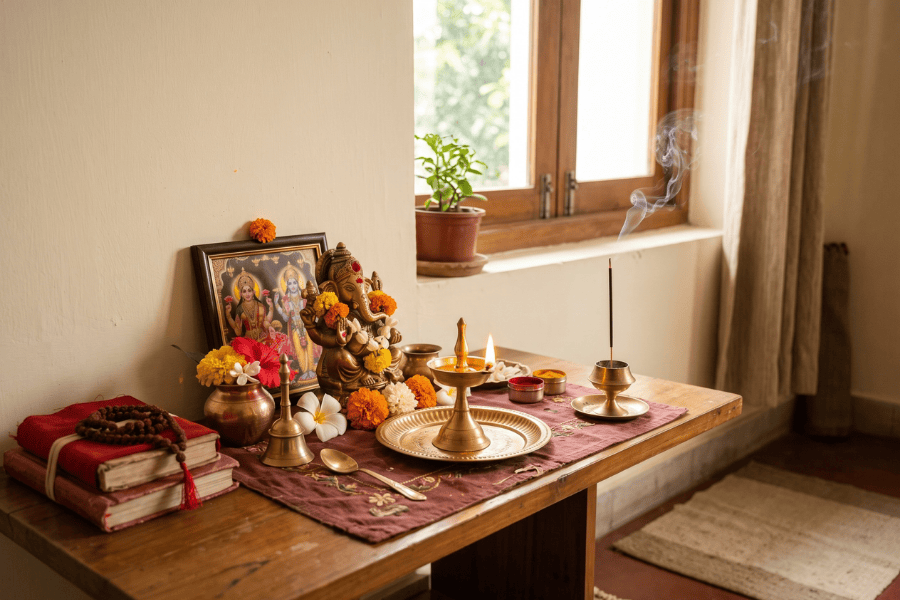
Agarbatti does more than add scent. It often marks a shift in the home.
Think of a couple in their 60s who light incense before morning prayers. The house may be silent, the windows slightly open and the prayer area freshly cleaned. That one moment can make the whole home feel calmer and more focused.
This is where Vastu becomes practical. Repeated habits shape the feeling of a place. One agarbatti lit with care every day is often more meaningful than a bigger ritual done occasionally without attention.
Dhup And Agarbatti: What Is The Difference?
Dhoop and agarbatti are both used in Indian spiritual practice, but they are not quite the same.
Dhoop usually has a thicker, stronger fragrance and can produce denser smoke. Agarbatti tends to burn more gently and is usually easier for everyday use at home. For most families, agarbatti is the more practical choice for daily prayer and light cleansing.
The main point is not which one is stronger. It is which one feels right for your home, your prayer routine and the comfort of the people living there.
What Vastu Says About Fragrance And Home Energy
Vastu is based on balance. A home does not feel positive because of one object or one remedy. It feels positive when the space is clean, light enters properly, air moves freely and family routines support calmness.
Fragrance fits into this larger picture. It supports the atmosphere of the home and helps create mental and spiritual focus. This is especially useful in spaces used for prayer, meditation or quiet reflection.
When discussing detailed spatial planning, Vastu experts may refer to 16 directional zones: North, North-North-East, North-East, East-North-East, East, East-South-East, South-East, South-South-East, South, South-South-West, South-West, West-South-West, West, West-North-West, North-West and North-North-West.
You do not need to memorise all 16 zones to use agarbatti properly. For this topic, it is enough to know which parts of the home are best suited for prayer, calmness and fresh airflow.
The Best Place To Light Agarbatti At Home
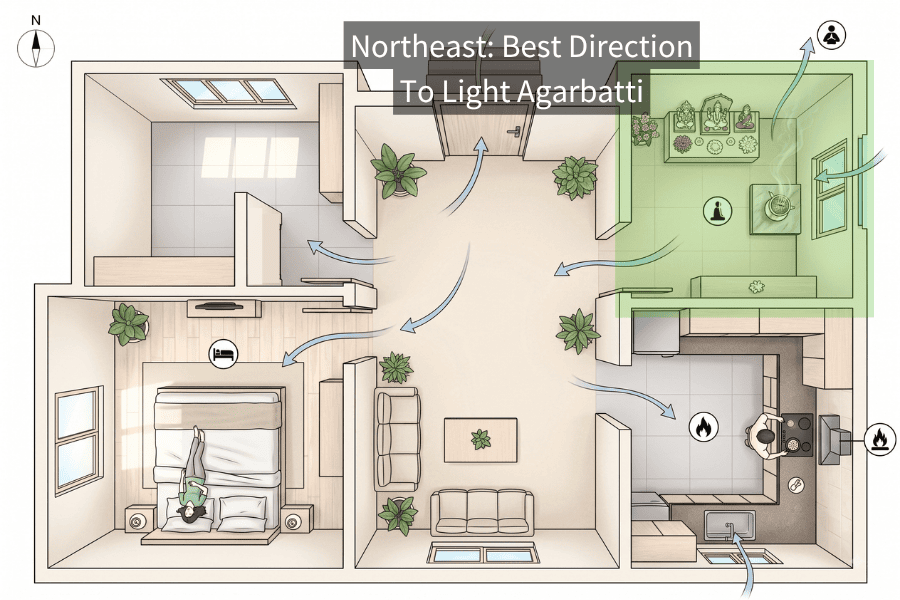
The Northeast, also known as the Ishaan corner, is widely considered the most suitable area for prayer and meditation. If your puja space is in this direction, lighting agarbatti there is generally seen as favourable.
The North-East is associated with clarity, prayer and a lighter quality of energy. This is why so many homes use that area for spiritual activity when the layout allows it.
But modern homes do not always follow ideal Vastu layouts. Many flats and apartments have space limitations. If your prayer area is not in the North-East, do not worry. A clean, respectful and quiet prayer space in another part of the home is still valuable.
Keep Sunlight And Ventilation In Mind
This is one of the most practical points. Even the best incense cannot do much for a room that is closed, cluttered or stuffy.
Try to light agarbatti where there is some airflow. Natural light also helps. A room that gets morning sunlight often feels fresher and more uplifting.
If possible, open a window for a few minutes before or after lighting incense. This supports a smoother positive energy flow through the room and keeps the fragrance pleasant rather than too strong.
Should You Light Agarbatti Near The Main Door?
Many families do this during festivals, after cleaning the house or before guests arrive.
The main entrance is important in Vastu because it is where energy enters the home. A clean doorway with a gentle fragrance can make the space feel welcoming and refreshed.
Still, this should be done with care. Do not place incense where smoke gets trapped, where children may reach it or where it becomes a fire risk.
Where Not To Light Agarbatti
Some places are best avoided.
Do not light agarbatti:
- Near dustbins
- In bathrooms
- In cluttered corners
- In fully enclosed spaces without airflow
- Too close to curtains, paper or wooden edges
This is both a Vastu and a practical safety matter. Fragrance should support the home, not create discomfort or risk.
How To Use Agarbatti In A Daily Vastu Routine
The most useful rituals are simple enough to follow every day. You do not need many sticks or elaborate steps.
One small, regular practice is enough for most homes.
Start With A Clean Space
Before lighting incense, quickly clear the area. Wipe the surface, remove clutter and make sure the place feels cared for. Agarbatti remedies support positive energy, but they cannot replace cleanliness.
Use It At A Fixed Time
Morning and evening are both common and suitable times.
Morning agarbatti can help begin the day with focus and calmness. Evening agarbatti is often used during aarti, when the home shifts from daytime activity to a quieter mood.
If twice a day suits your home, that is fine. If once a day feels more practical, that can also work well when done regularly.
Keep The Ritual Simple
A practical daily routine may include:
- Opening a window
- Lighting one agarbatti
- Offering a short prayer
- Sitting quietly for a minute or two
This kind of routine works especially well for older homeowners because it is easy to maintain.
Combine Fragrance With Prayer And Sound
In many homes, incense is used along with a bell, shankh or aarti. This can create a deeper sense of rhythm and devotion. There is no need to make the ritual too long. Even a few quiet minutes every day can help the home feel more settled.
Which Fragrance Is Best According To Vastu?
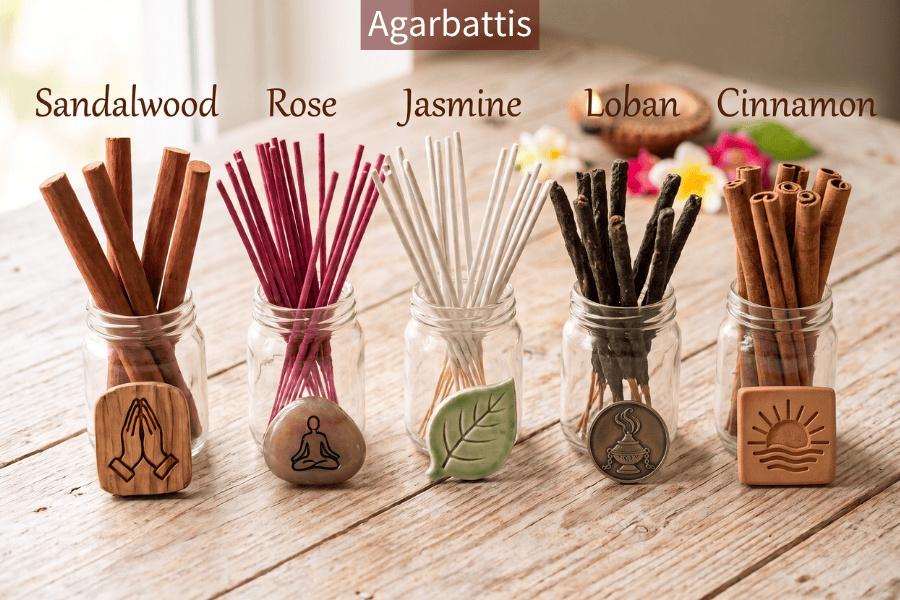
There is no single fragrance that suits every family. The right choice depends on why you are using it and how the fragrance feels in your home. Some scents support prayer and focus. Others help create a softer and more welcoming atmosphere.
Use this simple guide to choose a fragrance based on the mood you want to create and the part of the home where you plan to light the agarbatti.
| Fragrance | Best Used For | Suitable Area In The Home | Vastu Benefit |
|---|---|---|---|
| Sandalwood | Daily prayer and spiritual focus | Puja room, meditation corner | Creates calmness and supports devotion |
| Loban | Space cleansing and grounding | Prayer area, entrance | Helps clear heaviness and supports a settled atmosphere |
| Guggal | Traditional rituals and deeper cleansing | Puja room, quiet corners | Used for purification and spiritual focus |
| Rose | A soft and welcoming feel | Living room, family sitting area | Brings warmth and emotional comfort |
| Jasmine | Gentle freshness | Living room, bedroom | Helps create a peaceful and pleasant mood |
| Lavender | Relaxation and quiet evenings | Bedroom, reading corner | Supports calmness and rest |
| Cinnamon | Morning freshness and alertness | Living room, near open windows | Helps create an active and uplifting start to the day |
| Frankincense | Spiritual rituals and reflective spaces | Puja room, meditation area | Supports prayerful focus and a calm environment |
Spiritual Fragrances For Prayer
Sandalwood, loban and guggal are commonly used in puja rooms and meditation spaces. These scents feel traditional, grounding and devotional. They are a good choice when you want the home to support prayer and concentration.
Floral Fragrances For A Softer Feel
Rose, jasmine, mogra and lavender can work well in living areas and family spaces. These are often preferred in homes where the goal is warmth, comfort and a gentle freshness rather than an intense spiritual fragrance.
Popular Fragrances In Indian Homes
Some commonly used options include:
- Sandalwood
- Rose
- Jasmine
- Mogra
- Loban
- Guggal
- Lavender
- Cinnamon
- Frankincense
If you are comparing products such as vastu tathastu agarbatti (वास्तु तथास्तु अगरबत्ती), vastu shield agarbatti (वास्तु शील्ड अगरबत्ती) or vastu shanti 5 in 1 agarbatti (वास्तु शांति 5 इन 1 अगरबत्ती), do not choose by packaging alone.
Check whether the fragrance feels balanced, whether the smoke is comfortable and whether it suits daily use in your home.
Is Cinnamon Agarbatti Good In The Morning?
Many people also search for use of cinnamon agarbatti in morning in vastu (वास्तु में सुबह दालचीनी अगरबत्ती का उपयोग).
Cinnamon has a warm and active fragrance. It can suit the morning, especially in homes that feel dull or closed after the night. A mild cinnamon scent may help create a brighter and more energetic start to the day.
For example, if the living room feels flat in the early morning or the kitchen area lacks freshness, cinnamon may feel uplifting. But it should still be used in moderation.
If anyone in the home finds it too strong, choose a softer fragrance instead. In Vastu, comfort matters. A scent that disturbs the household is not the right one, even if it sounds useful in theory.
A Quick Note On Vastu And Feng Shui
Some articles compare Vastu and Feng Shui when talking about incense and space cleansing. That comparison can be helpful, but only up to a point.
Both systems value clean, airy and balanced spaces. Both connect the home environment with wellbeing. But they come from different traditions and should not be treated as the same thing.
For this topic, the useful takeaway is simple. A tidy, ventilated and peaceful home supports positive living, and agarbatti can be one part of that environment.
Common Mistakes People Make
The mistakes are usually small but important:
- Using very strong incense in a closed room
- Lighting too many sticks at once
- Ignoring clutter around the prayer area
- Choosing fragrance only because it is trendy
- Expecting incense to solve a poorly maintained space
Agarbatti should support the energy of the home. It should not be used to cover up stale air, mess or lack of care.
A Simple Way To Think About It
If your home is clean, your prayer space is respected and the fragrance is mild and suitable, you are already following the spirit of Vastu.
This is especially comforting for couples buying a new house and for homeowners in their 50s and 60s who want a simple daily routine that feels peaceful. You do not need anything complicated. You need a home that feels right when you enter it.
If you would like personalised guidance for your home or workplace, Vastu Ananda offers Vastu consultations for plot vastu, residential vastu, commercial vastu, hotel vastu and office vastu, along with vastu basic and advanced courses for learners.
Final Thoughts
Agarbatti has remained part of Indian home life for a reason. It is simple, familiar and meaningful.
When used with care, it can support prayer, improve the feel of a room and help the home feel calmer and more settled. That is the real value of vastu shastra ke hisab se agarbatti (वास्तु शास्त्र के हिसाब से अगरबत्ती).
Choose a clean space. Pick a fragrance that feels natural and peaceful. Use it regularly, but lightly.
In the end, the best Vastu practice is the one that brings peace to the people living in the home.
FAQs
Which direction is best for lighting agarbatti as per Vastu?
The North-East is usually considered the best direction for lighting agarbatti, especially in the puja area.
Can I light agarbatti every day?
Yes, many families light agarbatti daily during morning prayer, evening aarti or both.
Is Dhoop better than agarbatti?
Not always. Dhoop is usually stronger, while agarbatti is often better for everyday home use.
Which fragrance is best for positive energy at home?
Sandalwood, loban, guggal and rose are commonly used to support a calm and positive home atmosphere.

