When you think of a hospital, you might imagine doctors in lab coats, high-tech medical equipment or latest medical treatments.
But what about the hospital building itself?
The ancient science of Vastu Shastra tells us that the hospital’s layout or plan has a huge impact on patient experience, doctors’ concentration and even the outcome of medical treatment!
Vastu helps align the hospital’s design with the five natural elements and positive energy flows. Such a hospital feels bright, calm and well organised. This improves day-to-day functioning, supports healing and reduces stress for patients, families and staff.
This guide explains the experience-based best practices for clinics and hospital architecture as per vastu, so let’s get started!
Vastu in Ancient Indian Medicine
In ancient India, healing was never seen as separate from the space around us. Traditions such as Ayurveda (आयुर्वेद) and Vastu Shastra (वास्तु शास्त्र) both valued balance, natural elements and harmony in daily life.
Ayurveda focused on the body, mind and lifestyle. Similarly, Vastu looked at how buildings, directions and environment could support wellbeing and health.
In our Indian tradition, a healing space must feel calm, ordered and connected to nature. It shouldn’t just be functional or clinical.
The idea is simple: a well-planned, vastu-compliant hospital environment will support healing rather than create extra fear, stress or pain.
That’s why hospital owners still consider Vastu while planning and constructing hospital buildings.
Benefits of Vastu in Modern Hospitals
Hospital planning is not only about fitting departments into a building.
Hospitals are places of critical care, urgency and recovery. Every detail in such a space matters, from hygiene and ventilation to room layouts and lighting.
In addition to modern medical standards, safety codes and functional design, medical centres and clinics must also support balanced energy through hospital vastu (अस्पताल के लिए वास्तु).
In practice, this means paying attention to:
- Directions
- Sunlight access and windows
- Ventilation and clean, fresh air
- Open spaces
- Less clutter for reduced visual chaos
- Organised circulation or movement paths
- Ideal room placement
- Appropriate colours
This is the only way to create a healthcare environment that feels stable, clear and healing. The goal is ease of movement, connection with natural elements, a sense of comfort in waiting areas and a positive psychological experience for both patients and caregivers.
Vastu Tips for Designing Hospital Zones
Different hospital zones serve different purposes, so Vastu guidance usually changes from one space to another.
Critical care areas need stability. Waiting areas need openness and calm. Consultation rooms should support privacy and trust. A vastu expert keeps these needs in mind while analysing the space and identifying potential problems.
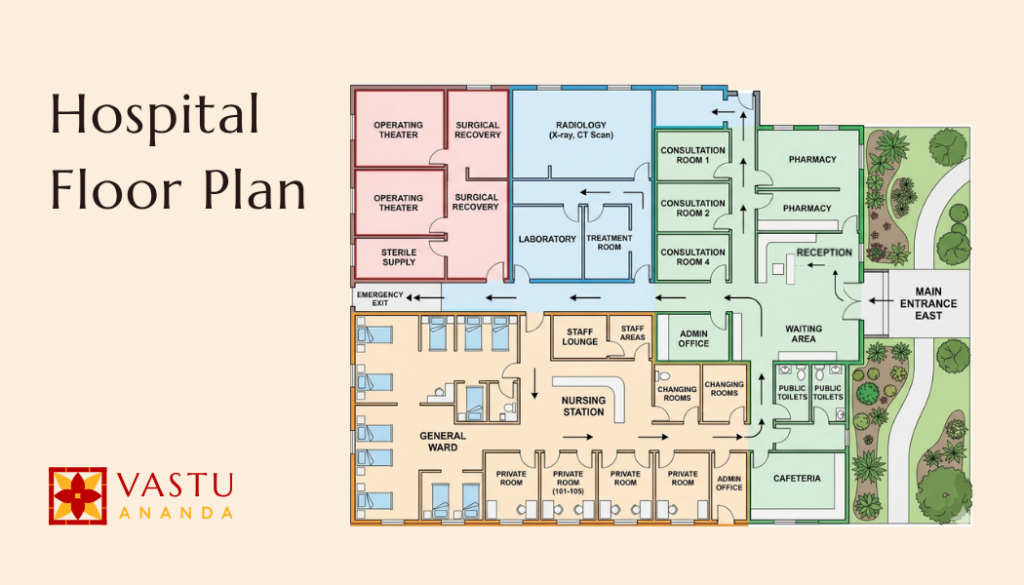
Hospital Entrance Vastu
The entrance sets the tone for the whole hospital.
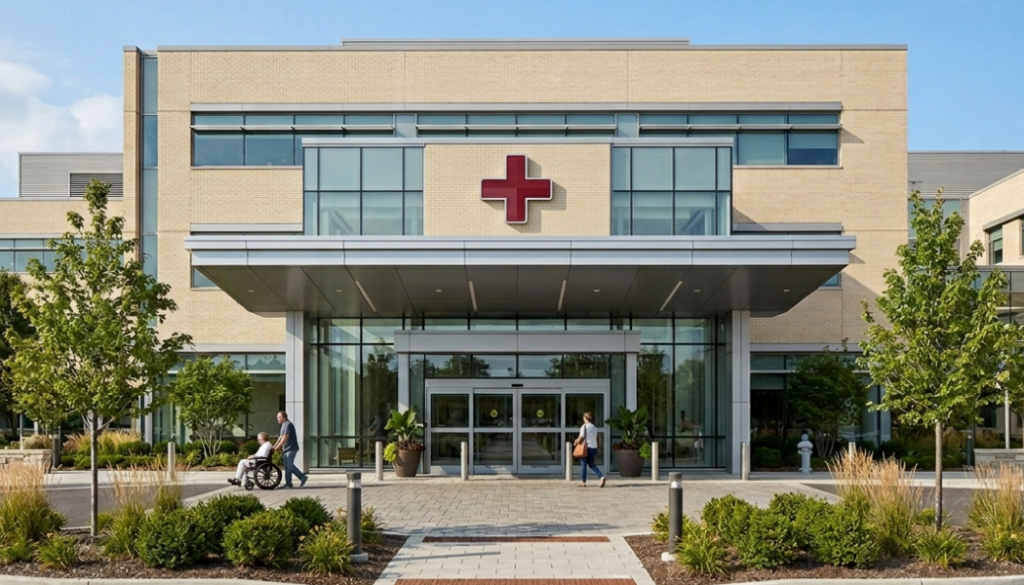
A hospital’s main entrance area should feel safe, visible and welcoming, especially for elderly patients and families under stress. It should create a sense of relief.
East and North are considered favourable directions for the main door because they are associated with light, movement and openness.
The most important tips for hospital’s entrance in Vastu are:
- Prefer an entrance in the East or North.
- Ensure clear signage.
- Keep the outside area open, clean and easy to access.
- Use plants and soft landscaping near the entrance.
- Avoid dark, cramped or blocked entrance passages.
- Provide accessible movement for patients, wheelchairs or hospital gurneys.
Hospital Reception & Waiting Area
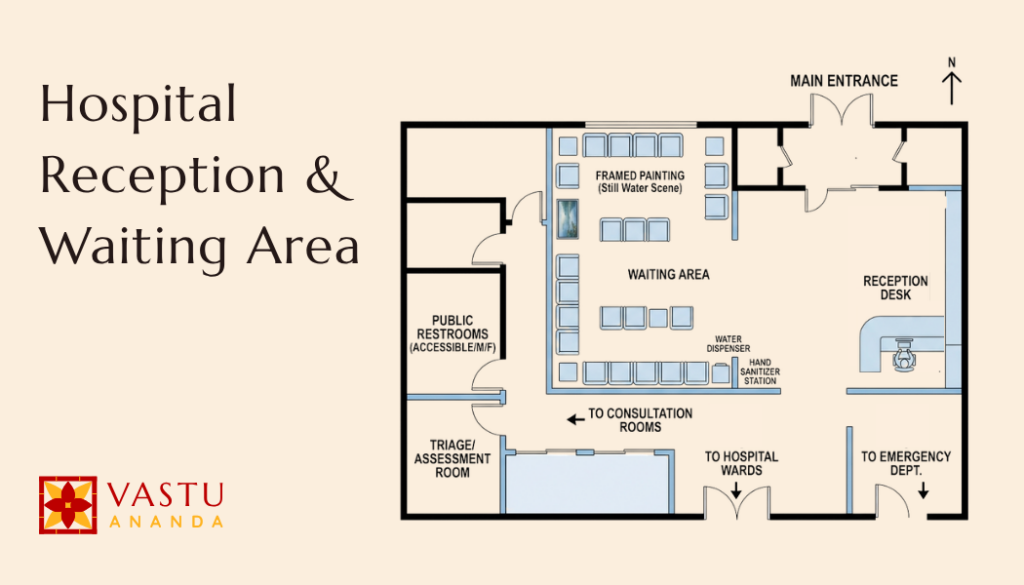
The reception and waiting area shape the first impression of a hospital. So it’s important to design this in the right way. A heavy or chaotic reception can increase anxiety for patients and visitors.
In hospital Vastu (हॉस्पिटल वास्तु) layouts, the reception is often placed in the North-East corner or a bright front zone, as this area is associated with clarity and openness.
Heavy storage units, unused furniture and bulky décor should be avoided in the North-East. The reception should be open, light and clutter-free.
For vastu for hospital reception, the reception desk should ideally be placed in a clean and bright area. The reception desk should not block the entrance. The staff should face East or North while attending to visitors.
The waiting area should not feel crowded or gloomy. Good airflow, comfortable seating and natural light matter just as much as direction. Soft colours, natural light and simple décor can make the space feel more reassuring. Drinking water points are often preferred in the North-East.
The reception should be easy to navigate too. There should be clear signage so no one gets lost looking for any room.
OPD & Consultation Rooms
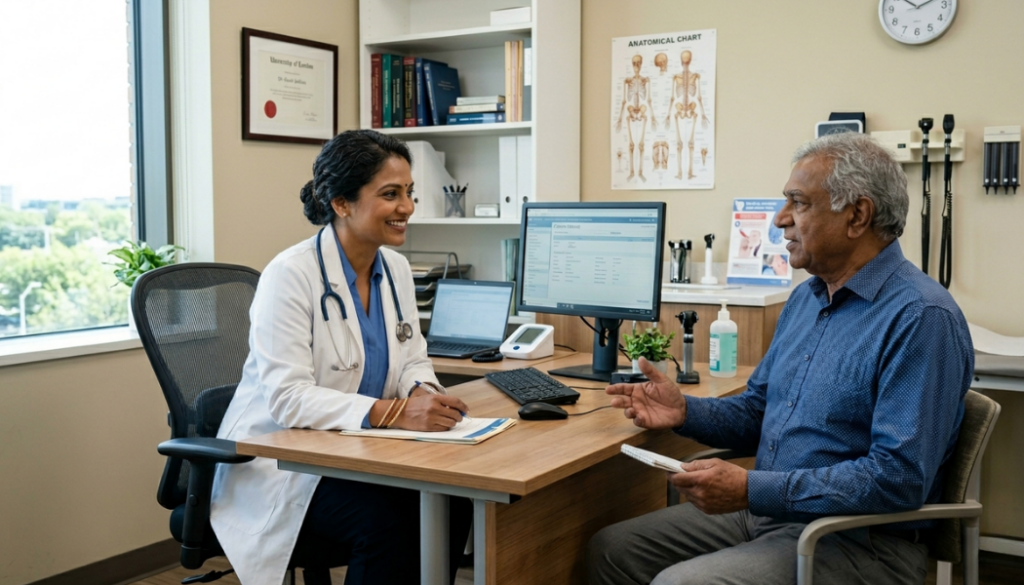
The Outpatient Department (OPD) and doctor consultation rooms are where most patients discuss their medical concerns and get diagnoses for their health issues. So this space should support concentration, clear communication and trust.
According to doctor office vastu guidance, consultation rooms and OPDs are usually considered suitable in the East or North-East zones. These areas are linked with stability and focus.
The doctor should ideally sit in the South, West or South-West part of the room, while facing East, North-East or North during any consultation. This direction inspires focus, clear thinking and steady judgement.
The patient’s seat should be placed directly opposite. The doctor’s desk should be orderly and clutter-free to avoid stress and anxiety. Patients should feel they are in a space where the doctor can listen without distraction. Heavy storage, files and cabinets are usually better kept along the South or West walls.
It’s important to create a private environment, with screens, closed doors and frosted glass windows wherever possible. This improves both comfort and trust in the consultation process.
Emergency Room
Emergency rooms deal with urgent cases, quick action and high emotional intensity. When a patient’s life is in critical danger, the most important thing is speed and accuracy of treatment.
For the emergency room, medical Vastu experts most often recommend a location in the South-West for stability and recovery. North-West is also suitable for faster movement and case turnover.
It’s important to have clear, direct access from the entrance gate or ambulance bay. Ensure bright lighting, clear signage and an uncluttered layout. Maintain good ventilation and an organised bed layout.
ICUs & Operation Theatres (OT)
The Intensive Care Unit (ICU) is designed for patients who need constant monitoring, advanced life support and intensive medical care. The operation theatre (OT) is a sterile, highly controlled space where surgeries and other critical medical procedures are performed.
Both ICUs and Operation Theatres are critical spaces in a hospital because they demand precision, sterility and calm decision-making.
To support stability, focus and smoother recovery, these hospital zones should be placed in West, South or South-West zones. Avoid South-East for OT placement. The layout should be quiet and free from unnecessary movement. OT doors should not open into chaotic corridors.
Doctors and surgeons should ideally face East or North during procedures. The bed direction should allow the patient’s head to be towards the South.
Storage and bulky/heavy medical or electrical equipment are usually better kept along the South or West sides. Good ventilation, bright lighting and an uncluttered layout are also recommended.
Patient Rooms Vastu
Patient rooms and inpatient hospital wards are one of the most important spaces in a hospital. This is where admitted patients rest, recover and spend the most time.
In Vastu, a calm and balanced room is believed to support healing, better sleep and emotional comfort.
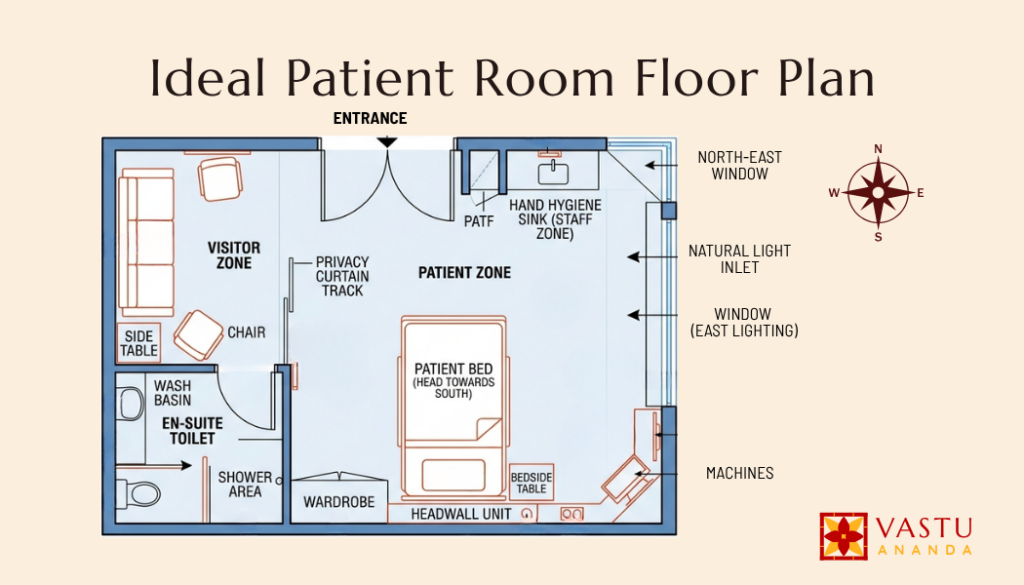
Place patient rooms in the North, East or North-West. Keep the patient’s bed so the head rests towards the South.
According to health vastu principles, there should be windows for letting in natural light for improving mood and ambience. Windows or openings should be in the East or North-East. Avoid clutter, harsh colours and heavy storage around the bed.
The emotional experience of the room matters. A patient room should feel light, clean and reassuring. In many cases, these are the very same factors families notice first. It can give them hope and strength in a difficult situation.
Pharmacy Vastu
The pharmacy is a key support area in any hospital because it manages medicine storage, dispensing and daily treatment flow. You might’ve noticed that pharmacists often explain the medicines and correct dosages to patients. They play a huge role in ensuring patients recover from illnesses or diseases.
In Vastu, this space should support order, accuracy and smooth movement. Even small mistakes here can negatively affect patient care.
Keep the pharmacy in the West, if possible. Avoid the North-East, which is usually kept light and open.
Heavy racks, bulk stock and storage units are better placed along the South or West walls, with the centre kept open for easy movement. Electronic items such as billing systems, medical refrigerators and other equipment are often preferred in the South-East.
Good ventilation, dry storage and clear shelf labelling are also important. The dispensing counter should be clean, visible and well lit. The pharmacist should ideally face East or North while dispensing medicines.
Laboratory & Diagnostic Areas
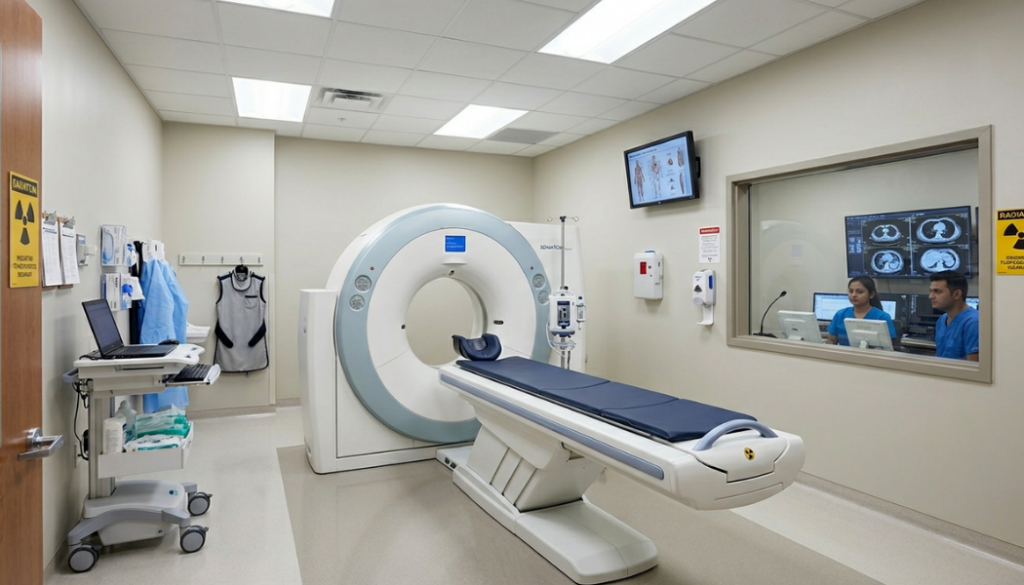
Laboratory and diagnostic areas are the parts of a hospital where tests, scans and reports help doctors understand a patient’s condition clearly. These spaces matter because accurate diagnosis is the foundation of timely treatment, clinical decisions and better patient outcomes.
Laboratories and diagnostic zones are usually treated as technical spaces. According to Vastu, you should place diagnostic and machine-heavy functions in the South-East, because this direction is associated with the fire element and electrical equipment.
Vastu Colours, Paintings & Items for Hospitals
Colour has a strong psychological effect in hospitals. In Vastu-based interiors, soft and calming shades are generally preferred over harsh or overly dark colours.
Whites, light greens, pale blues and gentle earthy shades are commonly seen as suitable because they create a cleaner and more peaceful feeling. This helps create a welcoming patient experience.
For hospitals, a balanced approach works best:
- Use light, soothing colours in patient-facing areas.
- Avoid aggressive reds or very dark tones in recovery zones.
- Keep artwork simple, uplifting and calm.
- Prefer nature scenes, sunrise views or gentle abstract patterns.
- Avoid disturbing, chaotic or overly heavy imagery.
In Vastu, paintings of mountains are sometimes used in the South-West for stability. On the other hand, the North-East is usually kept open, light and uncluttered.
Water imagery is sometimes used in Vastu because water is associated with flow, calmness and mental ease, especially in lighter zones such as the North-East. In a hospital, this can include subtle artwork showing clean rivers, gentle waves or peaceful water scenes in reception or waiting areas. However, this should be avoided in critical care areas.
| Painting Description | Purpose | Best Room | Ideal Wall Direction |
|---|---|---|---|
| Soft sunrise or early morning landscape | Encourages hope, positivity and emotional upliftment | Patient room, waiting area | East |
| Calm river or still water scene | Supports peace, relaxation and a soothing atmosphere | Reception, waiting area | North or North-East |
| Mountain landscape | Represents strength, stability and support | Doctor’s cabin, admin room, recovery room | South-West |
| Green garden or tree-filled nature scene | Reduces stress and brings freshness | Patient room, waiting area | North or East |
| Soft flowers or gentle natural artwork | Creates comfort and a welcoming feeling | Reception, consultation room | East or North |
| Open sky or light abstract nature-inspired painting | Makes the room feel lighter, cleaner and less confined | Corridor, patient room, waiting area | North or East |
Helpful Vastu items for hospitals are usually subtle and simple. Examples include prayer rooms, clean indoor plants in public areas to create a refreshing feeling and orderly placement of furniture. The biggest “item” in Hospital Vastu is often not an object at all, but the absence of clutter.
Hospital Direction in Hospital Vastu Shastra
The direction a hospital faces is a common concern for owners and architects. The facing direction can have a big impact on the activities done within the building. Beyond directions, Vastu also looks at how the entrance, zones and internal functions are arranged.
North Facing Hospital Vastu
A North facing hospital vastu layout is often seen as favourable because the North is associated with flow, movement and support. If the entrance is well placed in the North or North-East and the internal zoning is strong, this is generally considered positive.
For North facing hospitals:
- Keep the North-East open and clean.
- Avoid heavy blocks in the North-East.
- Place stable functions towards South-West.
- Use clear entry circulation.
East Facing Hospital Vastu Benefits
The East is linked with morning light, visibility and freshness. So an East facing hospital can feel open and welcoming, especially when the entrance and waiting zones receive good daylight.
Benefits of East-facing hospitals include:
- A brighter and more positive entrance experience.
- Better sense of openness in the morning.
- Symbolic connection with renewal and healing.
- Stronger suitability for public-facing spaces.
Of course, these benefits depend on actual design quality and Vastu design principles. An East facing building with poor planning will not perform well just because of direction.
South Facing Hospital Vastu
South is traditionally associated with stronger, negative energy that needs careful handling. The South direction is linked to Yama (यम), the god of death, which is why this direction is often approached with greater care, especially in places connected to health and recovery.
A South facing hospital is not ideal. But if it cannot be avoided, it’s important to follow vastu guidelines carefully and remove vastu dosh in entrance placement, energy flow and internal zoning.
The entrance should be positioned carefully in the South or South-South-East zone. South-South-West entrance is avoided, to prevent imbalance and negative energy.
South facing hospitals also face the challenge of heat and harsh energy since South is the zone of Agni (अग्नि), the fire element.
The Fire energy can support machinery and electrical systems when used correctly, but in a hospital it must be controlled carefully. If this fiery quality becomes too dominant at the entrance or in public-facing areas, the space can feel harsh, overly heated, restless or overstimulating rather than calm and healing.
So we should place the hospital entrance precisely, soften light and avoid harsh exposure.
West Facing Hospital Vastu
A West facing hospital can work well in Vastu, but only when the hospital vastu plan is done in a disciplined way.
The mistake people make is judging the building only by its facing. In hospital Vastu, the real question is whether the entrance pada, internal zoning and weight distribution are correct.
For a West facing hospital, the entrance is generally safer in the West-North-West or a balanced West zone. The West-South-West side is usually avoided for the main public entry.
If the West-facing side is overloaded with clutter, poor light or confused circulation, the hospital may feel heavy and slow in operation. The front should not feel dark, blocked or compressed. Keep the approach broad, clean and easy to read. Reception can be supported by a bright North or North-East side inside the building.
However, a West facing hospital can still support strong clinical functioning, especially when critical zones are well anchored and the lighter zones remain open and clear.
Remedies for Hospital Vastu Dosh
Sometimes a hospital is already built and cannot be redesigned without demolition. In such cases, people look for remedies for Vastu Dosh (वास्तु दोष).
Here are some realistic, non-disruptive solutions for common hospital vastu issues:
- Improving light and ventilation in blocked spaces.
- Removing clutter from the North-East.
- Adding weight or storage to the South-West where suitable.
- Repainting peeling or dull walls.
- Using calm colours in patient areas.
- Adjusting furniture layout to improve directional balance.
- Using nature-based artwork in appropriate zones.
A professional vastu consultant for hospitals can help interpret the site, floor plan, entrances, room use and direction issues before suggesting remedies. This is especially useful for large hospitals where functions are spread across several floors.
If you are planning or reviewing a healthcare property and want expert guidance, Vastu Ananda offers experienced-based consultations for hospital vastu, clinic vastu, hospital plot vastu and vastu for health. Align your hospital space for speedy and safe healing!
Final Thoughts
When it comes to a hospital, Vastu is not something to take lightly. This is a space where people come for relief, treatment and recovery. So every direction, room placement and energy zone matters.
A hospital planned as per Vaastu Shastra really supports smoother operations, greater trust, better healing energy and a more positive experience for patients, doctors and staff.
Whether it is the entrance, reception, OT, ICU, patient rooms or pharmacy, the right Vastu decisions can make a real difference. If you are planning a hospital, nursing home or clinic, it is always wise to get the layout checked by an experienced Vastu consultant before finalising the design.
FAQs on Vastu for Hospital Buildings
Which direction is best for a hospital entrance?
The most commonly preferred directions are East and North. These are generally associated with openness, light and smoother public access.
What is the best bed direction for patients in hospital vastu?
As per hospital bed vastu, it’s best to keep the patient’s head towards the South.
Is North-East good for all hospital rooms?
No. The North-East is usually kept light, open and uncluttered. It is often considered suitable for reception or open areas, but not always for heavy, highly technical or storage-intensive functions.
Does vastu affect health?
Yes, according to the science of Vastu Shastra, the design and direction of a space can affect health. The environment influences comfort, stress levels, mental peace and the overall healing environment.
If they’re aligned properly, hospital vastu factors such as entrance placement, natural light, ventilation, room layout and bed direction can support faster recovery & better wellbeing.
In vastu, is it a good idea to buy a house near a hospital?
In Vastu, buying a house near a hospital is usually not considered ideal. Hospitals are associated with illness, stress, emotional disturbance and constant emergency activity, so many Vastu experts believe that living too close to one can affect the peace and energy of the home.
However, the exact impact also depends on distance, road placement, surroundings and the Vastu of the house itself.
How to do vastu for eye hospital?
Since eye care depends heavily on precision, comfort and low visual stress, an eye hospital should have a bright but glare-controlled entrance. The reception, consultation rooms and diagnostic and treatment areas should all be organised and well-planned.
Keep consultation and specialist rooms in stable zones such as the South-West, South or West. Ensure that the entire space feels quiet, clean and easy to navigate. There shouldn’t be any harsh lighting.
Should hospital Vastu be considered before construction or after?
Before construction is better, because room placement, entrances and circulation can be planned more smoothly. Even plot selection can be done according to plot vastu to ensure better results in future.
After construction is completed, only limited remedies may be possible without huge demolition or financial burden.
Where to keep hospital files as per vastu?
Hospital files and important records are generally best kept in the South-West, South or West zones, as these directions are associated in Vastu with stability, control and safekeeping.
For hospital owners and administrators, this is especially important because patient records, legal documents and operational files need to remain organised, secure and easy to manage.