A clinic consultation room is where diagnosis begins, trust is built, and healing energy is set in motion.
In Vastu, this room must support clarity, calm and positive outcomes for both doctor and patient. When the consultation room follows the right Vastu principles, it improves focus, strengthens communication and creates a more balanced healing space filled with positive energy.
In hospitals and clinics, every area carries a different function. The consultation room is especially important. A well-planned room aligns the five elements – Earth (पृथ्वी), Water (जल), Fire (अग्नि), Air (वायु) and Space (आकाश) – so the energy remains stable and supportive for health and recovery.
Whether you are setting up a small private clinic or planning a larger healthcare facility, the right Vastu approach helps create a consultation room that feels professional, peaceful and effective.
Why Vastu Matters in Hospitals and Clinics
Healthcare spaces deal with stress, pain, uncertainty and recovery every day. Because of this, Vastu plays a major role in shaping the energy of a hospital or clinic.
The architecture of hospitals and clinics must feel clean, orderly and uplifting. Vastu helps achieve this by placing functions in the right directions and matching them with the right elemental energy.

For example, North-East (उत्तर पूर्व) is linked with purity, clarity and divine support, while South-East (दक्षिण पूर्व) is connected with Fire and active processes. South-West (दक्षिण पश्चिम) gives stability and control, which is why it often suits leadership areas.
This also connects with the traditional Vastu devtas of India. The North is associated with Kuber (कुबेर), which supports growth and flow. The East links to Indra (इंद्र), which brings light and fresh energy. North-East is connected with Ishan (ईशान), making it ideal for purity and wisdom. These directional forces matter deeply in healing spaces.
Modern healthcare design also supports the value of calm, light-filled and well-ventilated spaces. This aligns strongly with Vastu’s stress on balanced space planning, fresh air and well-placed windows.
Core Vastu Principles for Healthcare Spaces
The first principle in Vastu is balance. A healthcare space must not feel heavy, blocked or chaotic. It should allow energy to move smoothly while keeping key zones stable and functional.
The main principles include:
- Proper directional planning for each activity
- Open and light energy in the North-East
- Controlled Fire energy in the South-East
- Stable administration or authority in the South-West
- Smooth air movement and circulation in the North-West
- Clutter-free central zone or Brahmasthan (ब्रह्मस्थान)
The Centre represents Space (आकाश) and Brahma (ब्रह्मा), so it should remain as open and unobstructed as possible. In a consultation room, this means avoiding cramped furniture layouts, overfilled storage and unnecessary equipment in the middle of the room.
The room should also maintain good visual order. Too many sharp edges, dark tones or mixed functions can disturb the energy. Vastu works best when the room has one clear purpose and everything inside it supports that purpose. These are simple yet effective Vastu Tips for any healthcare setting.
Best Location and Entrance Planning
For a clinic consultation room, the best location depends on the size and design of the overall facility, but some directions are generally more supportive than others.
The ideal zones for consultation rooms are often:
- North
- East
- North-East
- North-West in some functional layouts
North supports financial flow and patient movement. East brings light, freshness and clarity. North-East is especially powerful for healing, wisdom and calm decision-making. This makes it one of the best zones for consultation and patient rooms, provided the area is kept clean and light.
The main entrance to the clinic or consultation area should ideally be in the North, East or North-East. These directions bring beneficial energy into the space and help patients feel more comfortable on arrival.
Avoid placing the main consultation room in the South-West if the room is meant mainly for patient interaction. That zone is better for senior authority, ownership or management. However, for a senior doctor’s chamber where stability and control are important, South-West can work well if the room is planned properly.
Ideal Layout for Hospitals and Clinics
The layout of a hospital or clinic should guide movement without confusion. Consultation spaces should be easy to access, yet calm and separate from noisy treatment or waiting areas.
Here is a simple Vastu-based layout guide:
| Area | Best Direction | Vastu Benefit |
|---|---|---|
| Reception Area | North or East | Smooth entry and communication |
| Waiting Area | North or North-East | Calm patient flow |
| Consultation Room | North, East or North-East | Clarity and healing support |
| Pharmacy | North-East or East | Organised dispensing and trust |
| Electrical Equipment | South-East | Proper Fire element placement |
| Admin Office | South-West | Stability and control |
| Toilets | West or North-West | Better energy containment |
Inside the consultation room, the doctor’s chair should ideally be facing North or East while consulting. This improves clarity, authority and positive interaction.
The patient can sit facing East or North, where possible. Heavy cabinets should be placed on the South or West walls. The North-East part of the room should stay lighter and more open.
Examination tables are best placed in the North-West corner of the clinic, according to Vastu principles.
Department-Wise Vastu Guidance
Different medical departments need different energy qualities, so Vastu planning should reflect the function of each area.
The reception area and front desk should be placed in the North or East. Staff should face East or North while attending patients. Water fountains can be placed in the north or northeast direction.
Consultation Rooms are best in the North, East or North-East directions. A dedicated medical room must feel calm and professionally arranged.
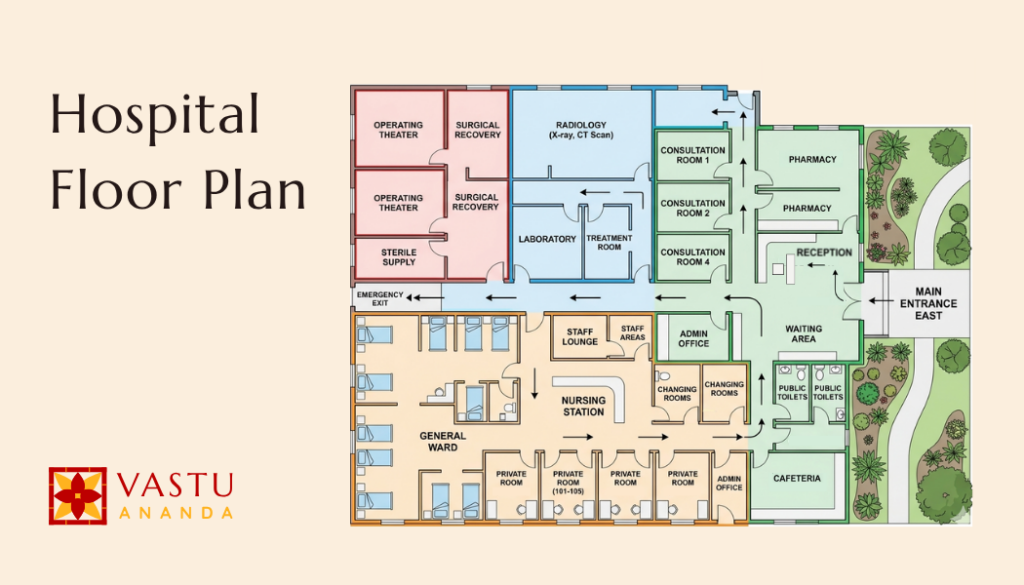
Diagnostic zones can work in the West or South if heavy equipment is involved. This helps ground the heavier energies of machinery. Rooms used for X-ray services should be planned carefully so the equipment stays in a stable zone without disturbing the consultation flow.
South-East is often suitable for operating rooms because it is ruled by Agni (अग्नि) and supports active medical procedures, precision and controlled intervention.
North-East and East support healing, light and calmness. A patient’s room in these directions feels more restful and balanced, so recovery rooms can be aligned here. These spaces should have soothing colours and natural airflow.
South-West is ideal for senior decision-makers, records and financial control. In larger facilities, service zones such as the kitchen should also be placed carefully, with South-East often working best because of the Fire element.
This directional planning improves the rhythm of the entire facility and helps each department function with more ease.
Vastu for Ambience and Healing Elements
Ambience matters greatly in a clinic consultation room. The room should feel calm, clean and reassuring from the moment a patient enters.
Use the five elements carefully:
- Earth (पृथ्वी): stable furniture, balanced layout and soft earthy tones
- Water (जल): clean drinking water placement in the North-East if suitable
- Fire (अग्नि): controlled lighting and electrical equipment in the South-East
- Air (वायु): proper ventilation, especially from the East or the North
- Space (आकाश): avoid overcrowding and maintain openness
Soft white, light green, pale blue and gentle beige tones work well in consultation areas. Harsh red or very dark shades should be avoided. Fresh air and daylight support a healing atmosphere and also align with good healthcare design practice.
Common Vastu Doshas (वास्तु दोष) and Remedies
Many clinics operate in rented spaces or existing buildings, so Vastu doshas can occur. The good news is that any negative energy can be improved without major reconstruction.
Common doshas include a toilet in the North-East, heavy storage in the Centre, blocked East light, consultation seating facing an unsuitable direction or too much heat in the wrong zone.
Practical remedies include:
- Shifting heavy furniture to the South or the West
- Using full-spectrum lighting where natural light is weak
- Correcting seating directions
- Reducing clutter in the Brahmasthan
- Balancing colours according to the element of the zone
- Placing prescription medicines in the right direction
If a consulting room is in a less ideal direction, the internal arrangement becomes even more important. Direction of seating, wall weight, lighting and use of elemental balance can reduce the impact of the dosha significantly.
Renovation vs New Construction: What You Need
New construction gives the best opportunity to apply Vastu from the start. Room placement, entrance direction, circulation and elemental zoning can all be designed correctly from day one.
Renovation, however, is more common for clinics and consultation rooms. In such cases, Vastu corrections focus on what can be changed practically: seating direction, furniture layout, colour use, lighting, storage position and entrance treatment.
A new project allows complete directional planning. A renovation depends more on internal balancing. Both can produce strong results when handled carefully. The key is to identify which factors affect healing, communication and comfort the most, then correct those first.
If you are planning a clinic consultation room and want expert help with the right direction, layout and practical remedies, you can book a personalised clinic Vastu consultation with Vastu Ananda for clear guidance tailored to your space.
Final Thoughts
A clinic consultation room is not just a functional space. It is where confidence, diagnosis and healing begin. With the right Vastu planning, this room becomes more peaceful, more organised and more supportive for everyone who enters it.
From choosing the best location to setting the doctor’s seat in the right direction, each detail has a real impact. When the five elements are balanced, and the directional energies are respected, the consultation room works better, feels better and supports better outcomes.
For hospitals and clinics, strong Vastu creates a foundation of trust, order and healing energy. That is why it remains such an important part of healthcare space planning today.