
Have you ever seen a child sit at the study table for ten minutes, then get restless, distracted or simply walk away? Many families deal with this. The room may look fine, but something about it does not feel settled.
This is where Vastu Shastra (वास्तु शास्त्र) can help. A study room does not need expensive interiors or strict rituals according to Vastu principles. It needs the right placement, balanced light, calm colours and a layout that supports focus every day.
For many homeowners, especially parents and grandparents, the goal is simple. You want the child to feel comfortable, stay attentive and use the room well. In this guide, we will look at how to plan a study room as per vastu in a practical, modern way.
Why Study Room Vastu Matters
A study room should make it easier to focus, not harder. If the desk is cramped, the room is dark or books are scattered everywhere, the mind gets tired before study even begins. A child may avoid the room, keep shifting chairs or prefer studying at the dining table. Often, the issue is not laziness. The setup simply does not support concentration.
This is why study room vastu matters. It helps you create a room that feels calm, clear and easy to use. When the space is balanced, studying becomes less of a struggle.
The Best Direction for a Study Room
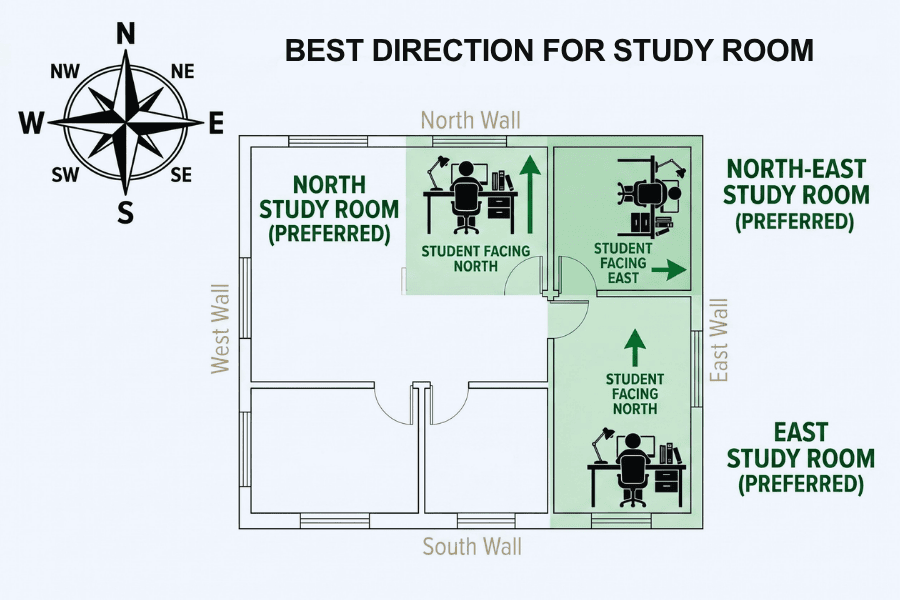
Direction is usually the first thing people ask about, and rightly so. In most homes, the best location for a study room is in the East, North or North-East part of the house.
These directions are generally linked with freshness, clarity and mental steadiness. East is often preferred for alertness, north for focus and north-east for a calm learning environment.
When a student sits to study, east and north are usually the best directions to face. This is one of the most common and practical Vaastu rules for a study room.
A common question is whether south is always wrong. Not necessarily. If the house layout leaves no other option, you can still improve the room by correcting the desk position, lighting, clutter and colours.
For families preparing a room for board exams or competitive exams, consistency matters just as much as direction. A fixed, calm and well-used study spot often gives better results than a perfect direction in a poorly planned room.
Best Study Room Directions
| Aspect | Best As Per Vastu | Usually Avoided | Why It Matters |
|---|---|---|---|
| Room location | East, North, North-East | Cramped or poorly lit corners | Helps create a calmer study environment |
| Direction to face while studying | East or North | South | Supports steadier focus |
| Best direction for competitive exams | East or North | Frequently changing study spots | Encourages routine and concentration |
| Overall room feel | Open, bright and balanced | Dark, heavy and cluttered | Reduces distraction |
When discussing room placement in detail, Vastu experts may also refer to the full 16 zones. These are north, north-north-east, north-east, east-north-east, east, east-south-east, south-east, south-south-east, south, south-south-west, south-west, west-south-west, west, west-north-west, north-west and north-north-west.
These finer divisions are useful in detailed planning, but for most homeowners, getting the main direction right is the first step.
Where the Study Table Should Go
Once the room is chosen, the next step is the study table. This matters because the study table is where the child or student will spend most of their time.
As a rule, place the study table so the person can face east or north. The area in front of the desk should feel open. If the desk is pushed into a dark corner or blocked by bulky furniture, it can make the space feel tight and tiring.
This is something many parents notice without naming it. A child may sit at a table that looks fine on paper, but if there is a wall too close in front, a door behind the chair or a shelf hanging overhead, the space can feel uncomfortable.
The chair should also be stable and supportive. A proper chair helps posture, and posture affects attention more than people realise. Long study hours become difficult when the seating is poor.
Simple table shapes work best. A square or rectangular study table usually feels balanced and practical. For colours, lighter shades such as white, cream or light wood are more suitable and provide more positive energy than very dark finishes.
A mirror in front of the study table is usually avoided. It creates visual distraction, and in some homes it makes the student feel restless without knowing why.
Bookshelves, Furniture and Everyday Clutter
A study room does not need too much furniture. It needs the right furniture placement.
Bookshelves are usually best along the West or South-West side of the room, while the centre should remain open. Books should be easy to reach but should not spill over the desk all the time.
This is especially relevant in Indian homes where study rooms often become mixed-use spaces. One shelf becomes a storage area, then old files are added, then extra household items slowly enter the room. Over time, the study room stops feeling like a place to study.
If there is a bed in the room, it is better to keep the study corner separate and clearly defined. If needed, a simple partition can help. Even in a shared room, a child studies better when the space feels dedicated.
Quick Fixes That Make a Study Room Feel Better
- Clear the desk at the end of each day
- Keep bookshelves neat and not overfilled
- Avoid storing unrelated household items in the study room
- Separate the study zone from the sleeping zone if possible
Choosing Colours That Support Focus
Colour changes the mood of a room very quickly. Some rooms feel fresh the moment you enter them. Others feel heavy even when they are clean. That is why wall colour is such an important part of planning a study room as per vastu.
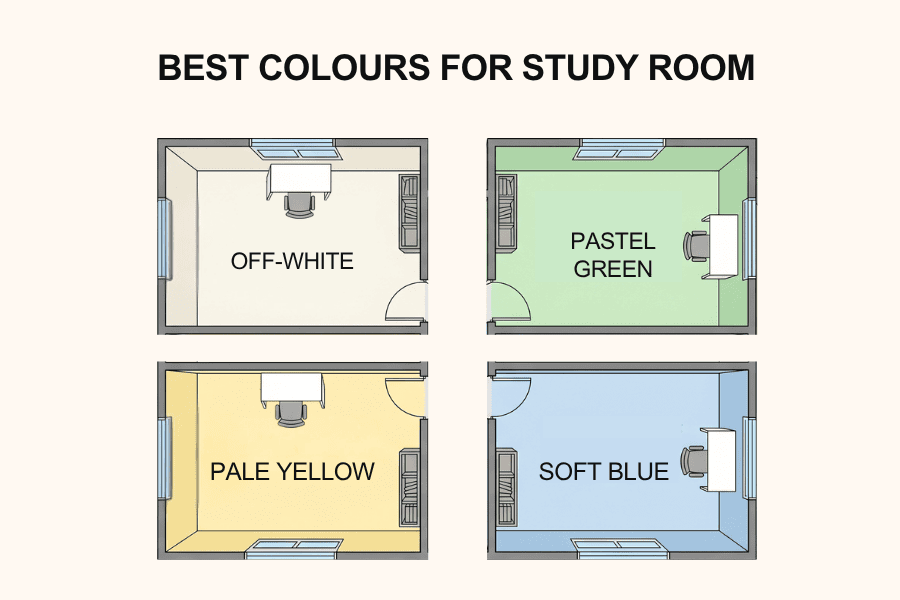
The best colours are usually light and calm. Off-white, cream, pale yellow, pastel green and soft blue are commonly recommended because they help the room feel open and easy on the eyes.
This matters even more in homes where the room does not get strong natural light. A dark wall colour in a small study room can make the space feel smaller and duller.
People often ask whether colour really affects concentration. A child sitting in a bright but soft-coloured room usually feels more comfortable than in a room painted in a deep, heavy shade.
Best Colours for a Study Room As Per Vastu
| Colour | Effect on the Room | Best Use |
|---|---|---|
| Off-white | Feels open and clean | Small or low-light study rooms |
| Cream | Adds warmth without heaviness | Main wall colour |
| Pale yellow | Feels bright and active | Rooms that need a cheerful tone |
| Pastel green | Feels restful and balanced | Rooms meant for long study hours |
| Soft blue | Creates a calm and airy feel | Simple study spaces with good daylight |
Good colour combinations include cream with light wood, off-white with pastel green and pale yellow with white. These combinations feel pleasant without becoming distracting.
Light, Air and Natural Balance in the Room
A study room should never feel dull or stuffy. Good light and airflow are basic needs, yet they are often overlooked.
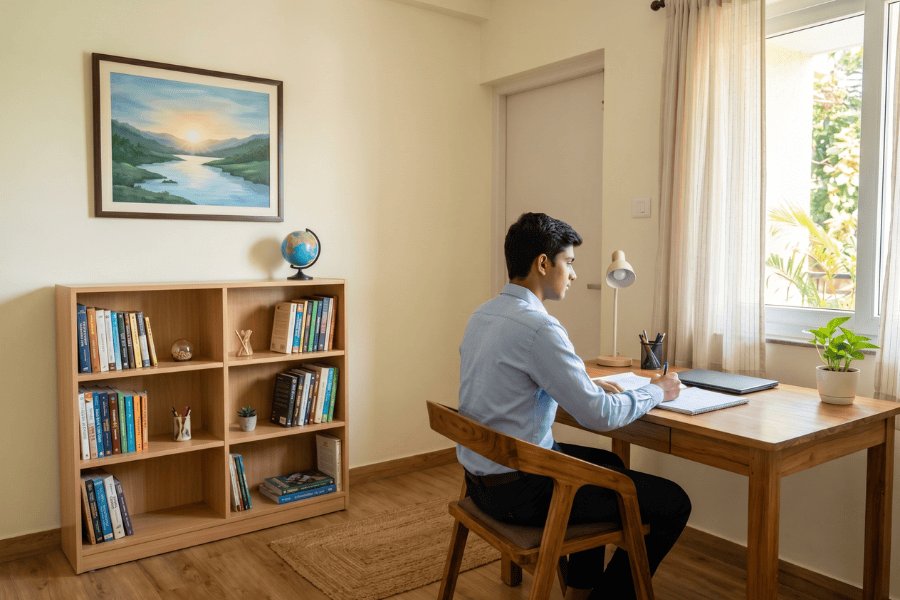
Natural daylight is ideal because it keeps the room lively and helps the student stay alert. At the same time, glare should be controlled. If sunlight falls directly on the page or screen, it can cause strain. Study lamps are best placed on the left side of the desk. This prevents shadows from falling directly on your writing hand and supports productivity.
Ventilation matters just as much. A room with fresh air simply feels lighter and supports positive energy flow to support a better study environment. In many homes, opening a window for part of the day or avoiding heavy curtains is enough to improve the feel of the space.
A few natural elements can also help. A simple indoor plant or some natural wood in the furniture can soften the room. In Vastu, placing a money plant in the North or South-east direction brings in luck and new career opportunities.
But the key is restraint. Too many decorative items will only add distraction.
Study Decor as per Vastu
Wall décor in a study room should support the purpose of the room. It should not become the main attraction.
Calm artwork, simple motivational messages and a few meaningful pictures can work well. Avoid anything aggressive, overly dark or emotionally heavy. The room should feel encouraging and support proper energy flow.
This is where many homeowners overdo things. One wall gets filled with quotes, charts, pictures and symbols, and before long the room starts to feel busy. In a study room, less is usually better.
Some families also like to keep symbolic items connected with education or good fortune. That is fine, as long as the study desk and wall space remain uncluttered and practical. An idol of Lord Ganesha is ideal to increase focus and wisdom. Images of Goddess Saraswati are also traditionally important in study room Vastu, and help with better academic performance.
Managing Screens, Wires and Devices
Today, most study rooms and home offices include at least one screen. It may be a laptop, desktop or tablet. This is normal, but devices should not take over the room.
The screen should be placed at a comfortable height, and the desk should still have enough clear space for books and writing. When the study table is crowded with chargers, wires and extra devices, even a well-designed room starts to feel messy.
Cable management makes a bigger difference than people expect. Neat wires make the room look calmer. This is a small practical change, but it can improve the room immediately.
A Child’s Study Room Needs Simplicity
When planning a children’s study room as per Vastu, simplicity matters more than decoration. A child needs a space that feels calm, easy to use and free from too many distractions. The colours should be soft, the desk comfortable and the layout clear.
The best study direction for children is usually East or North.
Parents often tell me the same thing: the child keeps leaving the room and sits somewhere else to study. In many cases, the room is not wrong, it is just overdone. Too much furniture, too many colours or too much noise in the design can make the room less inviting.
A simple room with a steady routine usually works far better than a highly decorated one.
How Study Vastu Helps with Concentration
At its core, Vastu is about balance. In a study room, that means the room should not feel too dark, too crowded, too noisy or too heavy.
When the five elements are discussed in relation to a room, the practical lesson is simple. Space should feel balanced. The furniture should not block movement. Light should not strain the eyes. Air should move. The room should feel calm enough for the mind to stay with the work.
For students who struggle with attention, the most useful corrections are often basic ones. Improve the desk position, lighten the room, remove clutter and make the study spot consistent.
Simple Remedies for Study Room Vastu Dosha
Most study room problems do not need complicated remedies. Usually, a few sensible changes are enough.
If the desk faces the wrong way, shift it if possible. If the room feels dark, improve the lighting. If the room feels mentally tiring, remove extra items, organise the shelves and use lighter colours.
These are the most common issues to look for:
- Poor desk direction
- Dark colours
- Distracting mirrors
- Too much furniture
- Weak lighting
- Poor ventilation
In most homes, correcting these basics improves the room more than anything else.
Modern Study Room Ideas That Still Follow Vastu
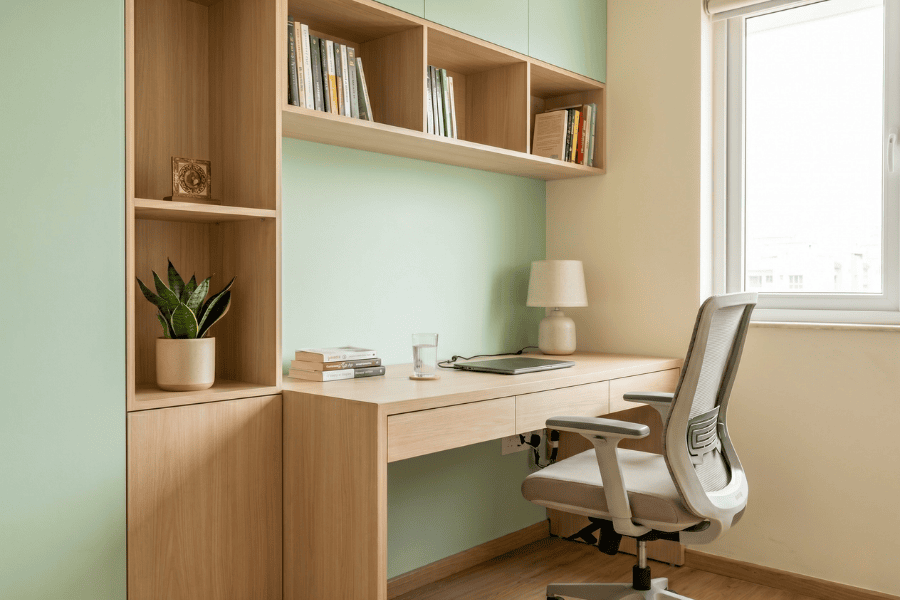
Modern study rooms in 2025 are becoming cleaner and more practical. Built-in storage, lighter colours, ergonomic chairs and better cable management all work well with Vastu principles.
A study corner can also work beautifully in a smaller home, as long as it is clearly defined. The space does not have to be large. It simply has to feel settled and purposeful.
That is the real point of a study room as per vastu. It should be easy to use every day. If the room supports that, it is doing its job well.
Study Room Vastu for Different House Directions
Whether the home is east-facing, north-facing, south-facing or west-facing, the main principle remains the same. Try to create a study area where the student can face east or north, with enough light, calm colour palette and a clutter-free environment.
If the room falls in the north-east, it is usually considered favourable for study. South-east, north-west and south-west rooms may need more care in layout, but they can still work well with proper corrections.
The goal is not to reject a room because it is not ideal. The goal is to improve the room you have.
Final Thoughts
A good study room or home office should feel peaceful the moment you enter it. It should not feel crowded, dark or distracting. That is why the right study direction, table placement, colours, lighting and furniture matter so much.
Study room vastu is most helpful when it is applied simply and practically. For homeowners and families, the best result is not a room that looks perfect in theory. It is a room where studying actually happens with more comfort and less resistance. If you want personalised guidance, Vastu Ananda offers vastu consultations for plot Vastu, residential Vastu, commercial Vastu, hotel Vastu and office Vastu. We also offer a basic course and an advanced course for learners who want to understand Vastu Vidya in more depth.
FAQS
Where should the study table be placed?
A study table is best placed so the person faces east or north while studying. This setup is often believed to support concentration and better mental flow.
Which direction should students face while studying?
Facing east is commonly recommended for improved focus and learning, while north is also considered favourable for concentration and academic growth.
What colours work best in a study room as per Vastu?
Light shades such as white, cream, light green, blue, or pastel yellow are usually preferred because they help create a calm and distraction-free environment.
Where should bookshelves and storage be kept?
Bookshelves and heavier storage units are generally best placed in the west, southwest, or south walls to keep the room balanced and organised.
Is it okay to study in a bedroom?
Yes, if a separate study room is not available, a study area can be created in a bedroom. It should be kept neat, well-lit, and positioned so the student faces east or north.