Do you ever feel tired, irritable or uneasy at home for no clear reason?
You may have slept for seven hours. The house may be clean. Nothing may seem obviously wrong. Yet the mind stays busy, the body feels tense and even small things begin to feel harder than they should.
Many people in their 50s and 60s describe this as, “The house is fine, but I do not feel peaceful.” These are common feelings, especially after a house move, a renovation or when one room slowly becomes difficult to use.
Vastu Shastra (वास्तु शास्त्र) looks at how a home affects everyday life through direction, light, balance, colour and room use. It is not a treatment for anxiety or depression. It should never replace therapy, prescribed medications or care from a psychiatrist for mental health issues.
But it can help create a home that feels calmer, lighter and easier to live in. And sometimes, that is where the first real sense of relief begins.
Why Vastu Is Often Linked to Anxiety and Restlessness
Vastu is not only about old rules. At a practical level, it asks one useful question: does your home help you feel settled?
A dark bedroom, clutter in the centre, a prayer space in a disturbed corner or a work area placed where there is constant interruption can all affect the mind. Many people do not notice this straight away. They just start feeling more tired, less patient or less at ease.
This is why Vastu is often linked with emotional balance. It focuses on simple vastu principles that bring more order and comfort into daily life.
That does not mean every emotional problem comes from the house. But when the space improves, many people notice better sleep, less irritation and a greater sense of ease.
Stress at home can also affect physical health over time. Poor sleep, constant tension and mental overload often show up in the body first.
What the 16 Vastu Zones Mean for Your Home
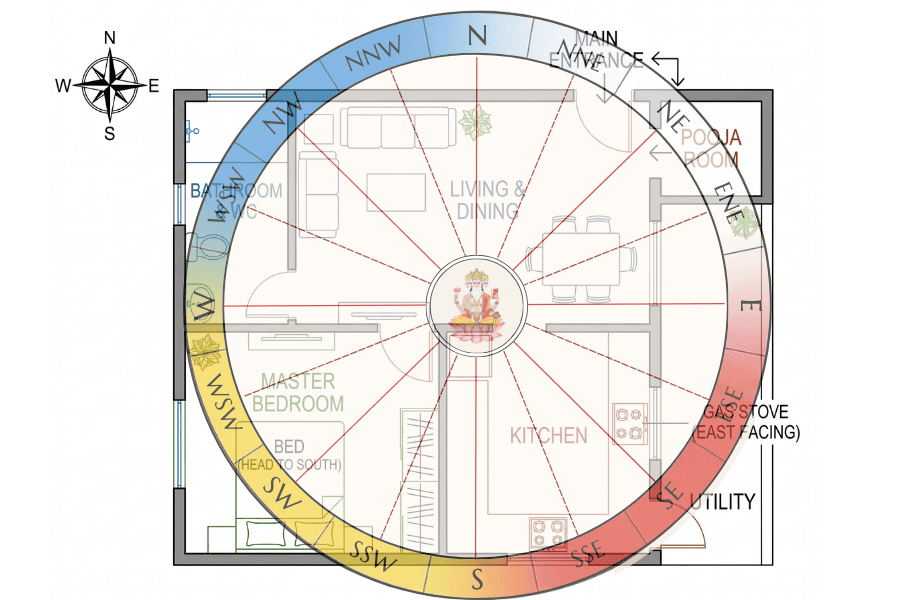
In Vastu, the home is divided into 16 zones, not just the four main directions. These are North, North-North-East, North-East, East-North-East, East, East-South-East, South-East, South-South-East, South, South-South-West, South-West, West-South-West, West, West-North-West, North-West and North-North-West.
You do not need to memorise all of them. What matters is understanding that even small directional shifts can change how a space feels and functions.
For example, the North-East is usually linked with peace, clarity and openness. That is why many people place a mandir (मंदिर), a meditation seat or a quiet reading corner there.
The East-South-East zone is often described as the zone of churning, or Manthan (मंथन). Some Vastu experts believe this part of the home can increase mental agitation if it is used for sleeping or quiet rest.
This may sound technical, but many homeowners recognise the feeling. A room may look fine, but no one sleeps well in it. A husband may keep waking up at 4 am. A wife may say she feels anxious for no reason whenever she spends time there.
The Home Zones That Need the Most Attention
Some zones matter more when the concern is anxiety, poor sleep or emotional heaviness.
| Zone | Common Vastu Association | Practical Home Use |
|---|---|---|
| North-East | Calm, clarity, prayer, openness | Keep clean, light and uncluttered. Good for a mandir (मंदिर) or quiet corner |
| North-West | Movement, change, restlessness | Avoid making it feel chaotic or overloaded |
| East-South-East | Churning, mental activity | Better for active use than for sleeping or prayer |
| Centre of Home | Balance and flow | Keep as open and light as possible |
| South or Southwest bedroom areas | Grounding and stability | Often preferred for rest and settled sleep |
The point is simple. Not every zone suits every activity.
A room used for sleep should feel steady. A prayer corner should feel light. A work area should support concentration, not distraction.
When a Home Starts to Feel Mentally Heavy
People often hear the phrase “Vastu defect” and imagine something serious. In most homes, it is much simpler than that.
Usually, it means imbalance. A blocked corner, poor light, clutter, awkward furniture placement, too many unused items or a room being used for the wrong purpose can all make a house feel heavier than it should.
Think of the spare room that slowly fills with old cartons, clothes, broken chairs and papers. Nobody wants to sit there. Nobody wants to clean it. The room starts affecting the mood of the whole house.
This is the kind of problem many families are dealing with when they start looking for Vastu upay. If the house lady feels anxiety and ill, Vastu upay does not always mean doing something elaborate. It often starts with basic corrections that make the house easier to live in.
Even small details matter. For example, a dustbin left in full view in an already crowded room can make the space feel more unsettled than it needs to.
Start Here: Clear the Clutter First
If there is one change that helps almost every home, it is decluttering.
Clutter creates pressure. It reminds the mind of unfinished work. A chair piled with clothes, a bedside table full of bills, a blocked passage or a crowded living room can make a person feel tense without fully knowing why.
This becomes even more important in the 50s and 60s, when comfort, ease and smooth movement through the home matter more.
Here are a few simple places to begin:
- Clear the area beside the bed
- Remove broken or unused items from the bedroom
- Keep the centre of the home open
- Empty one overfilled shelf at a time
- Do not turn prayer or sitting spaces into storage corners
These are small steps, but they often bring the quickest relief.
Light and Colours Matter More Than We Think
A dim room can quietly affect the mood of the whole house.
Morning light helps the body wake properly. Soft evening light helps it slow down. A room that stays dark through the day can start to feel dull, closed and tiring.
Good lighting matters here. Let in natural light where possible. Use sheer curtains if privacy allows. In the evening, choose warm lights instead of harsh white ones, especially in the bedroom and pooja area.
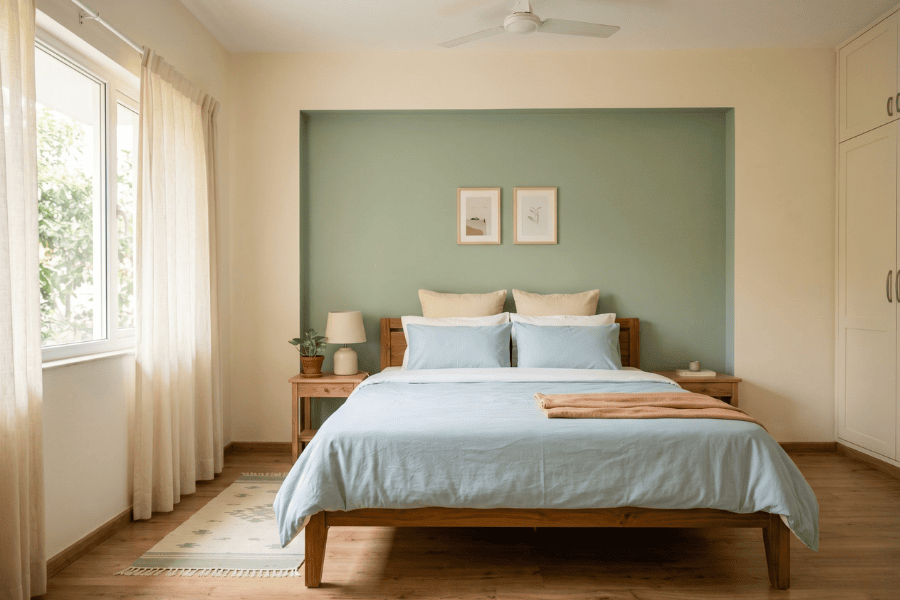
Colours also shape how a room feels. Soft colors such as cream, beige, light blue, sage green and peach are often recommended for calm spaces because they do not put pressure on the eyes.
If you prefer a softer look, pastel shades can work well in bedrooms, sitting rooms and quiet corners. Dark shades may work in small touches, but they are not always the best choice for rest spaces.
If Anxiety Is High, Look Closely at the Bedroom
If you are searching for vastu tips for anxiety and depression, the bedroom is the best place to start.
This is where the body is meant to switch off. But many bedrooms are full of stimulation: mirrors facing the bed, strong colours, bright lights, TV noise, cluttered wardrobes and things stored under the bed.
Vastu usually recommends a bedroom that feels simple, airy and calm. Soft shades, low clutter and good ventilation all help. Sleeping with the head towards the South is also commonly advised.
Many couples say the same thing: “We are sleeping, but we are not resting.” That difference matters.
When poor sleep continues for months, it affects energy, patience, physical health and the ability to handle normal daily stress. That is why bedroom Vastu should never be treated as a small issue.
A bedroom should not feel like a second sitting room, storage room or office. It should feel like a place where the body can finally relax.
Keep the Centre of the House Open
In Vastu, the centre of the home is called Brahmasthan (ब्रह्मस्थान). It is ideally kept open and light.
In real homes, this is often where extra stools, cartons, small tables or decorative pieces begin to collect. Slowly, the house starts feeling tighter and less breathable.
You do not need a large home to follow this principle. Even a flat can feel calmer when the central area is less crowded.
Sometimes the house does not need more things. It needs more space.
Create One Corner That Feels Peaceful
As people get older, they often start valuing quiet much more than activity.
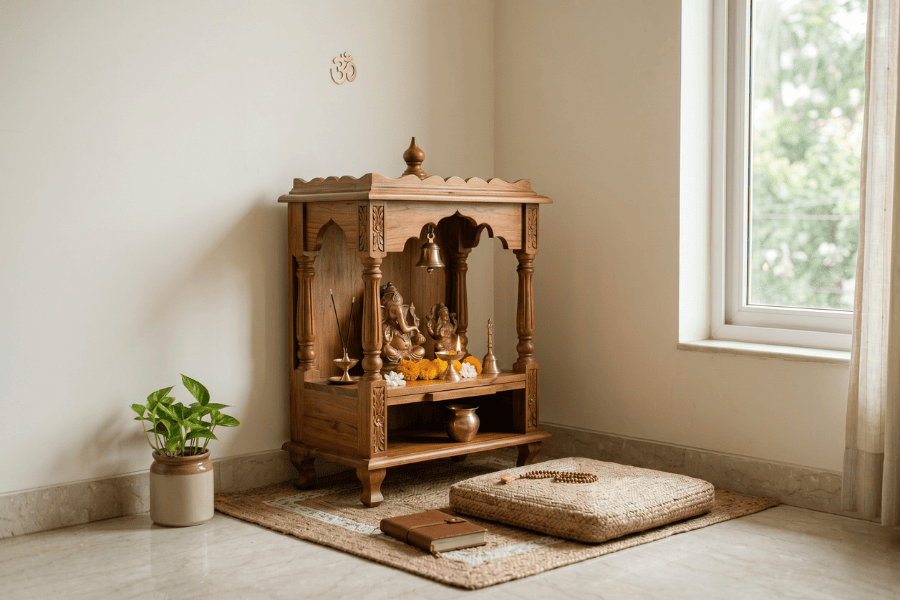
A small corner for prayer, reading or silent sitting can become one of the most comforting parts of the home. The North-East is often preferred for this because it is linked with calm and clarity.
This does not need to be decorative or expensive. A clean corner, a lamp, a mat and a sense of order are enough.
For many families, this becomes the place for morning pooja, a few minutes of silence, gentle yoga or simple breath work before the rest of the day begins.
Plants, Art and the Feeling of Life in a Home
Nature has a quiet effect on the mind.
Healthy plants can make a room feel fresher and less closed. Tulsi, money plant and areca palm are often mentioned in Vastu-based home guidance. The important thing is to keep them healthy and place them where they can actually thrive.
Some of this also connects with the wood element, which is associated with growth and renewal in traditional systems.
Artwork matters too. A meditating Buddha, a river, a lotus, a green forest or flying birds can all change the emotional feel of a room. These are not magical solutions. But they can make a space feel softer and more hopeful.
Some people also like to keep a small water fountain at home for a sense of flow and calm. It can work well if it is practical, clean and easy to maintain.
Small Daily Habits That Make the House Feel Better
A calmer home is usually built through small habits, not major corrections.
Open the windows in the morning. Keep the entrance clean. Let the North-East stay bright. Reduce clutter in the bedroom. Remove broken objects. Keep the pooja space neat. Make sure one part of the home always feels peaceful.
If you spend long hours at home, pay attention to where you sit. A settled study table or reading spot can support concentration and reduce mental scatteredness.
In Vastu, the South-East is often associated with the fire element. That is why kitchens are commonly placed there. When this part of the house is organised and used well, it supports action and routine instead of tension.
Room function matters too. In some traditional interpretations, the placement of spaces such as a toilet is handled with particular care.
Final Thoughts
If your home has started to feel tiring, restless or mentally heavy, Vastu gives you a practical way to understand why.
Often, the issue is not one dramatic defect. It is a mix of clutter, poor light, wrong room use, visual heaviness or a lack of calm in the spaces where you need it most.
You do not need to fix everything at once. Start with the room that feels the most uncomfortable. Make it lighter, quieter and simpler.
That is often where relief begins.
If you would like expert guidance tailored to your home, Vastu Ananda offers consultations for plot vastu, residential vastu, commercial vastu, hotel vastu and office vastu, along with a vastu basic course and vastu advanced course for learners. Explore more at Vastu Ananda.
To read more about Vastu-based home guidance and services, you can explore the website above.
FAQs
Can Vastu really help with anxiety?
Vastu can help create a calmer and more organised home environment. That may support better rest and emotional comfort. It is not a replacement for medical or mental health care.
Which zone is considered most peaceful in Vastu?
The North-East is widely seen as the most peaceful zone. It is often used for prayer, meditation or quiet sitting.
Which colours are considered calming in Vastu?
Soft cream, off-white, light blue, sage green and peach are commonly seen as calming colours for bedrooms and quiet spaces.
Can clutter really affect how a home feels?
Yes. Clutter can make a home feel heavy, stressful and hard to manage. It also adds visual noise, which can increase mental strain.
Are plants and paintings useful in Vastu for stress relief?
They can be helpful when used thoughtfully. Healthy plants and calm artwork may make a room feel fresher, softer and more supportive.