
Does your child have a good room but still avoid sleeping or studying in it?
Many parents notice this. The room may look neat and well furnished, yet the child seems restless, distracted or uneasy there. Sometimes, the problem is not the child. It is the way the room is set up.
That is where Vastu Shastra (वास्तु शास्त्र) can help. A child’s room is not just a bedroom. It is also a place for rest, learning, play and emotional comfort. When the room feels balanced, children often settle more easily into better sleep and study habits.
You do not need a perfect home to apply vastu for children’s room principles. In most cases, a few thoughtful changes can make the room feel calmer, lighter and easier to use.
Best Room Direction for Children
One of the first things parents ask is the best direction for children’s bedroom according to vastu. To understand that clearly, it helps to know that Vastu looks at the home through 16 directional zones, not just 8.
These 16 zones are North, North-North-East, North-East, East-North-East, East, East-South-East, South-East, South-South-East, South, South-South-West, South-West, West-South-West, West, West-North-West, North-West and North-North-West.
For a child’s room, West is commonly recommended. It is often linked with growth, steadiness and healthy development. North-West is also considered a good choice, especially for older children, because it is associated with movement, creativity and independence.
East and North-East are also suitable in many homes. These directions are often linked with clarity, learning and calmness, which is why they are often chosen for younger children.
A simple real-life example is this: many parents find that a child studies better in a bright East-facing room, but sleeps more deeply in a quieter room in the West part of the home. So, room direction should be used with practical judgement, not rigidity.
Children’s Room in the South-East Direction
A South-East room is usually not the first choice for children. This zone is linked with the fire element, so some families feel it may increase irritability or restlessness.
Still, this does not mean the room cannot work. If this is the available room, use light colours, reduce heat and limit screens. Keep the room airy and uncluttered. These small steps often help more than people expect.
How Bed Placement Affects Sleep
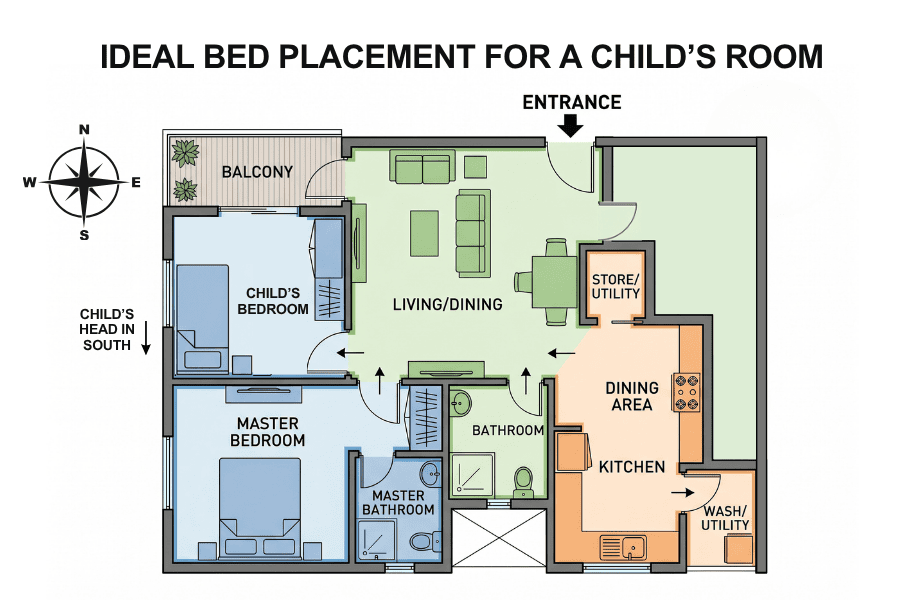
Bed placement is one of the most important parts of vastu for childrens room planning.
Parents usually notice this through daily patterns. A child may wake up tired, keep changing position through the night or say they do not like being alone in the room. Sometimes, the bed placement is adding to the discomfort.
As a general rule:
- Place the bed in the West or South-West part of the room
- Let the child sleep with the head towards the East or South
- Avoid sleeping with the head towards the North
East-facing sleep is often linked with freshness and routine. South-facing sleep is associated with stability and grounding.
What To Avoid Near The Bed
Try not to place the bed directly in front of a door, window or mirror.
A bed facing the door can feel unsettled. A mirror reflecting the bed is also usually avoided because it may disturb sleep. If there is a mirror in the room, place it on a side wall where it does not reflect the child while sleeping.
Sleeping under a beam is another common concern. Even from a practical point of view, a heavy beam over the bed can make the room feel tight and uncomfortable.
Keep The Room Open, Bright and Easy To Use
A child’s room should not feel crowded or difficult to move through. In simple terms, good Vastu supports open movement, fresh air and a sense of ease.
Some Vastu guides suggest that the room door should face East. If that is not possible, do not treat it as a major problem. Focus on what you can actually improve. Keep the doorway clear, let in natural light and make sure the room feels fresh rather than closed.
This matters even more in flats and smaller homes. A small room can still work very well if it is not overloaded with furniture, storage and decoration.
Many Indian parents in their 50s and 60s know this from experience. A room packed with extra chairs, old school bags, unused boxes and decorative items may look full, but it rarely feels peaceful.
Set Up the Study Area for Focus
A child’s room is not only for sleeping. It is also where daily habits are formed. That is why the study area matters so much in vastu for children’s study room planning.
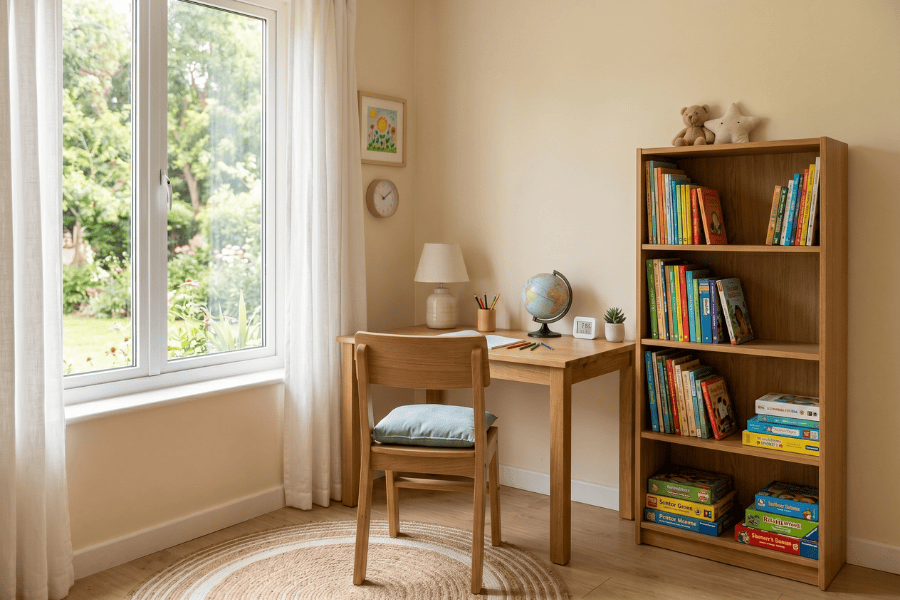
The child should ideally face East or North while studying. These directions are commonly linked with learning, concentration and mental clarity.
The table itself can be placed in a way that supports this seating direction. In many room layouts, the West or South-West side works well for the study table if the child can sit facing East or North.
Keep the Study Table Clear
A study table should not become a dumping space.
Remove dried pens, torn notebooks, broken stationery and things that are no longer used. A crowded desk can make study time feel harder before the child has even started.
Most parents have seen this happen. The child sits down to study, spends ten minutes moving old papers and then loses interest. A clean study table can reduce that resistance.
Where to Keep Books and Supplies
Bookshelves should be placed neatly so they support the study area, not crowd it.
Keep books organised. Do not overload the study desk with stacks of material. The goal is to create an अध्ययन क्षेत्र that feels clear and manageable.
Choose Colours That Feel Calm and Cheerful
Colour has a strong effect on how a room feels. This is why many parents search for the best color for their children’s room vastu and vastu colour for children’s room.
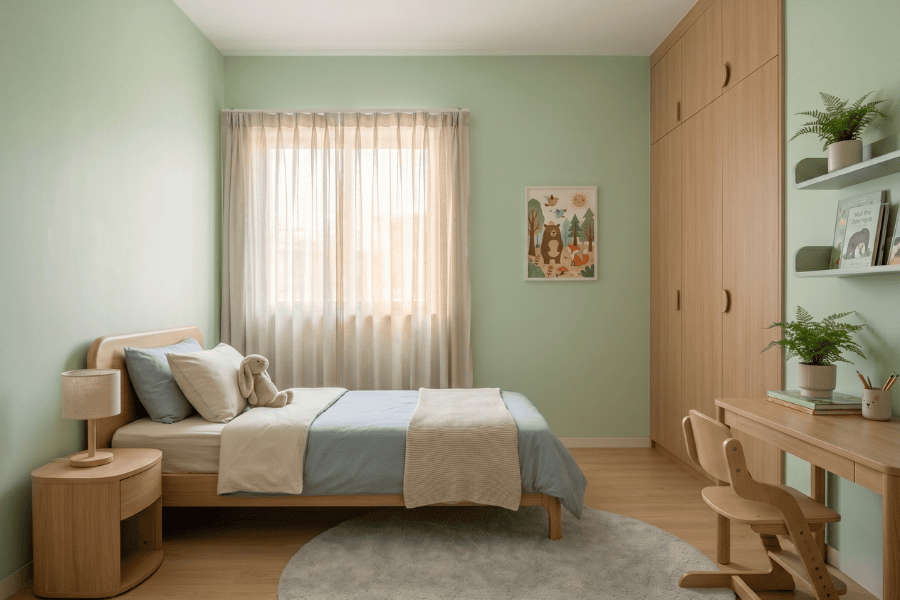
The most commonly recommended shades are:
- Light green
- Light yellow
- Soft blue
- Cream
- Off-white
These colours are usually preferred because they feel gentle, cheerful and easy on the eyes.
Light green is often linked with growth and freshness. Light yellow brings warmth and brightness. Soft blue can support calmness when used in moderation. Together, these shades help create a room with better सकारात्मक ऊर्जा.
Colours to Use Carefully
Very dark shades are generally avoided in children’s rooms.
Black, dull grey and too much deep red can make the room feel heavy or overstimulating. Loud combinations can also reduce the sense of calm the room needs for sleep and study.
This does not mean the room must look plain. Brighter colours can still be used in toys, cushions, art or small accents. The key is to keep the base of the room soft and balanced.
Control Clutter, Furniture and Decor
A child’s room should feel settled, not stuffed.
Heavier furniture such as wardrobes and large storage units are often better placed in the West or South-West part of the room. This can help the room feel more stable and better arranged.
Why Clutter Affects Children Quickly
Broken toys, extra school papers, unused books and random storage under the bed can make the room feel heavy very fast.
Children respond strongly to visual clutter. A room that feels too full can make them more distracted, more irritable or less willing to spend time there.
Many families notice this before exams. The same child who studies comfortably at the dining table may avoid the bedroom because it feels crowded and untidy.
Avoid Harsh Visual Elements
Try to avoid sharp furniture corners near the bed or study area.
It is also better to limit wild animal toys, aggressive wall art and too many gadgets in the room. Calm, cheerful and simple décor usually works better than loud styling.
What To Do if the Layout Is Not Ideal
Not every home allows the perfect room direction or furniture placement. That is normal.
If the room is in the South-East, reduce electronics and use soft shades. If there is an attached toilet, keep it clean, dry and well ventilated. If the ceiling has a beam or a slanted POP design, avoid placing the bed or study table directly below it.
The aim is not perfection. The aim is to reduce stress points and make the room feel more settled.
Quick Vaastu Checklist for a Child’s Room
| Area | What Works Better | What To Avoid |
|---|---|---|
| Room Direction | West, North-West, East, North-East | Overthinking one less ideal room when corrections are possible |
| Bed Placement | West or South-West part of the room | Bed under a beam |
| Sleeping Direction | Head towards East or South | Head towards North |
| Study Setup | Face East or North while studying | Cluttered desk |
| Mirror Placement | Side wall, away from bed reflection | Mirror reflecting the bed |
| Colours | Light green, light yellow, soft blue, cream | Very dark or harsh colours |
| Storage | Organised shelves and closed storage | Clutter under bed and random piles |
| Gadgets And Decor | Minimal gadgets, calm décor | Too many screens, wild animal toys, sharp edges |
Final Thoughts
A child’s room does not need expensive interiors or a major renovation to feel better.
In most homes, the biggest improvements come from simple choices: picking a suitable direction, placing the bed carefully, setting up a calm study area, using soft colours and keeping the room organised.
That is the real value of vastu for children’s room planning. It helps you create a space that supports sleep, focus and emotional comfort in everyday life.
If you would like expert guidance, Vastu Ananda offers vastu consultations for plot vastu, residential vastu, commercial vastu, hotel vastu and office vastu. We also offer a vastu basic course and vastu advanced course for learners who want to study the subject in more depth.
FAQs
What Is The Best Direction For Children’s Bedroom According To Vastu?
West is widely recommended. North-West, East and North-East are also considered suitable depending on the child’s age and the layout of the house.
What Is The Best Colour For A Children’s Room As Per Vastu?
Light green, light yellow, soft blue, cream and off-white are commonly recommended because they help the room feel calm and balanced.
According To Vastu, Where Should The Bed Be Placed For Children?
The bed is usually best placed in the West or South-West area of the room, with the child sleeping with the head towards the East or South.
How Should I Place The Study Table In A Child’s Room?
Place the table so the child faces East or North while studying. Keep the desk clean, well lit and free from clutter.
Can A South-East Children’s Room Be Improved With Vastu Remedies?
Yes. Use soft colours, keep the room airy, reduce electronics and focus on proper bed placement and cleanliness.