Have you ever walked into a home and felt calm straight away, while another house felt heavy, closed or difficult to settle into?
Many homeowners feel this, especially when buying a new house, planning renovations or trying to bring more balance into daily life. But most people do not know how to read a space clearly. They may hear bits of Vastu advice from family, neighbours or online videos, yet still feel confused about what really matters.
That is why learning Vastu Shastra (वास्तु शास्त्र) can be so useful. It helps you understand how direction, layout and space work together in a home, office or commercial setting.
For some people, this is only about improving their own home. For others, it becomes a deeper interest that leads to serious study. In both cases, guided learning makes the process easier.
This article explains the subject in a simple, grounded way. You will learn what Vastu Shastra means, where it comes from, how the mandala works, why people study it and how a structured course from Vastu Ananda can help beginners as well as advanced learners.
What Vastu Shastra Really Means
Vastu Shastra (वास्तु शास्त्र) is a traditional Indian system of architecture and spatial planning. Many learners also describe it as an Indian science of understanding built space through proportion, direction and use. The word Vastu (वास्तु) refers to a dwelling, site or built space. Shastra (शास्त्र) means knowledge or discipline.
Put simply, Vastu is about understanding how a space is organised and how that affects the people living or working in it.
It looks at direction, proportion, movement, room placement and the relationship between people and their surroundings. This applies to homes, plots, offices, shops, a factory and other built spaces.
For example, a couple buying their retirement home may want to know whether the house feels open and settled. A homeowner renovating after many years may want to understand why one part of the house always feels uncomfortable. Vastu gives a framework for looking at such questions properly.
Some key terms beginners should know are:
| Term | Meaning |
|---|---|
| Vastu (वास्तु) | A dwelling, site or built space |
| Vastu Shastra (वास्तु शास्त्र) | Traditional knowledge of spatial planning |
| Disha (दिशा) | Direction |
| Pancha Mahabhuta (पञ्च महाभूत) | The five elements: earth, water, fire, air and space |
| Vastu Purusha (वास्तु पुरुष) | The symbolic cosmic being used in site planning |
| Mandala (मण्डल) | A sacred geometric grid |
| Vastu Dosha (वास्तु दोष) | A Vastu-related imbalance |
| Parihara (परिहार) | Remedy or correction |
For beginners, proper learning matters because Vastu is not just a list of rules. It is a way of reading space with more care. That is one reason many learners now prefer a structured path through the wider tradition of Vastu Vidya.
A Short Look at the History of Vastu Shastra
Vastu Shastra has deep roots in India’s traditional knowledge systems. It developed over time through architecture, ritual planning and classical texts.
Works such as Mayamatam and Samarangana Sutradhara are often referenced in Vastu study. They show that Vastu was treated as a serious discipline, not just household belief.
Some traditional teaching systems also explore the relationship between Vastu and vedic astrology, especially when discussing timing, symbolism and broader interpretive frameworks. While the two are different subjects, learners often come across both during formal study.
One central concept is the Vastu Purusha, a symbolic representation of the site as an ordered living field. This idea shaped how people understood planning, placement and the relationship between built form and life within it.
This background matters for one simple reason. If you want to learn Vastu properly, it helps to know that it comes from a long-standing tradition. That is also why many learners prefer a proper course over random tips online.
Understanding the Vastu Mandala and Its Main Type
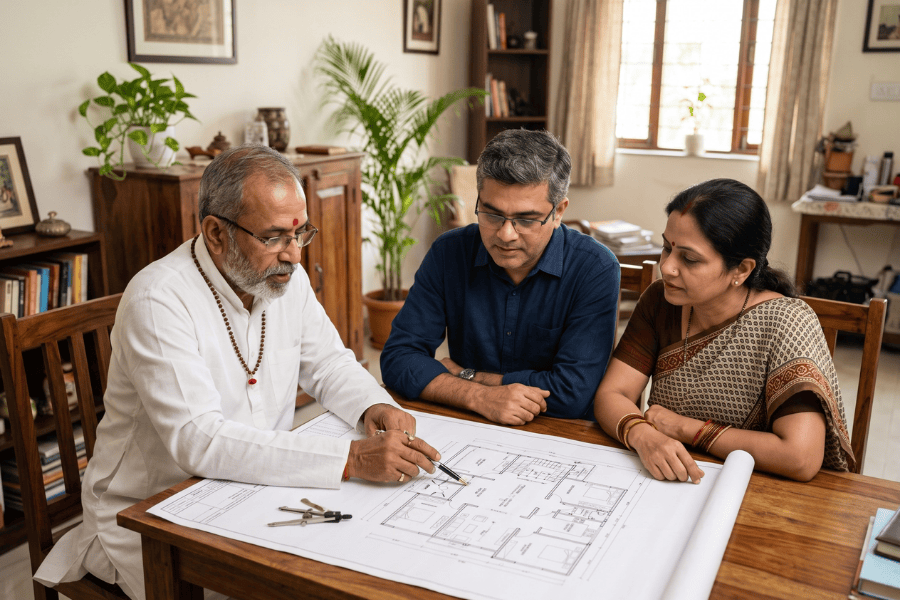
One of the most important concepts in Vastu is the Vastu Purusha Mandala (वास्तु पुरुष मण्डल). This is a square grid used to understand and organise space.
When students first see the mandala, it often feels technical. But once it is explained well, it becomes one of the clearest parts of Vastu learning.
Two common mandala formats are the 64-pada and 81-pada grids.
| Mandala Type | Grid Form | Learning Use | Main Property |
|---|---|---|---|
| 64-Pada Mandala | 8 x 8 grid | Traditional planning study | Balanced division of space |
| 81-Pada Mandala | 9 x 9 grid | Detailed Vastu interpretation | Finer spatial mapping |
These grids help learners understand directional sectors, central space and functional zoning.
Traditional explanations may also refer to symbolic zones linked with deities, which helped map sacred order into physical planning.
When Vastu is taught through diagrams and examples, the subject becomes far easier to follow. This is why many students learn faster in a course than through self-study alone.
The 16 Zones in Vastu: Why Direction Matters
Direction is one of the foundations of Vastu. But beginners often hear only the four main directions or the eight directional zones.
In practical study, many teachers also explain the space through 16 directional zones. These include North, North-North-East, North-East, East-North-East, East, East-South-East, South-East, South-South-East, South, South-South-West, South-West, West-South-West, West, West-North-West, North-West and North-North-West.
This more detailed breakdown helps learners read a plan with greater accuracy. It is especially useful when studying entrances, kitchens, bedrooms, staircases, the pooja room and work areas.
For example, a homeowner may say, “My kitchen is in the East.” But when studied more carefully, it may actually fall closer to East-South-East. That extra detail can matter in interpretation.
This is where directional analysis becomes important. It helps learners move beyond guesswork and understand the exact zone a room or feature falls into.
Vastu and Superstition: What to Take Seriously
One reason many people hesitate to learn Vastu is that they are not sure what to believe. Some dismiss it completely. Others accept every claim they hear. Neither approach helps. A grounded view of Vastu accepts that some ideas are practical, some are symbolic and some modern claims are exaggerated.
For example, natural light, ventilation and energy flow affect how a room feels. So do clutter, movement and room use. These are practical observations.
At the same time, Vastu also includes symbolic concepts that should be understood in context. The problem begins when fear replaces understanding.
The best way to avoid confusion is proper learning. A good course helps students separate principle from panic and understand how to use practical remedies sensibly.
Why People Are Turning to Vastu Again
People usually come to Vastu because they are trying to solve a real-life problem.
It may be a family choosing between two flats. It may be a couple planning a house after retirement. It may be someone wanting to understand why a room never feels restful, even after spending money on interiors.
Vastu gives people a way to look at space more carefully. It helps them ask better questions before buying, building or renovating.
People often choose to study Vastu because they want to:
- Understand how space affects comfort and balance
- Make better choices when buying property
- Improve planning in a home or workplace
- Study a traditional Indian subject in a meaningful way
- Build a path towards becoming a vastu consultant
For many learners, the biggest benefit is clarity. They stop depending on random opinions and begin to understand space with more confidence and a better grasp of core vastu principles.
Who Can Benefit Most From Learning Vastu
Vastu is not only for professionals. It can be very useful for ordinary homeowners too.
It may be especially helpful for:
- Homeowners trying to improve an existing home
- Couples buying a new house or flat
- Homemakers who want to understand room arrangement better
- Architects and professionals in interior design
- Civil engineers and builders
- Spiritual learners and students of traditional knowledge
- People looking for a second career or advisory role
For example, many people in their 50s and 60s start thinking more seriously about where they want to live long term. At that stage, buying or adjusting a home is not just a financial decision. It is also about peace, comfort and stability.
That is where learning Vastu, even at a basic level, can be genuinely useful.
How to Start Learning Vastu Shastra Step by Step
If you want to learn Vastu properly, it helps to follow a simple structure. That keeps the subject from feeling overwhelming.
Step 1: Begin With the Basics
Start with the meaning of Vastu, key terms and the basic purpose of the subject. Do not rush into remedies before understanding the foundation.
Step 2: Learn Directions and Elements Properly
Study the main directions and the five elements. Then move to the 16-zone understanding of space. This helps you read plans more accurately and understand how natural energies are said to move through a built environment.
Step 3: Study Layouts and Mandalas
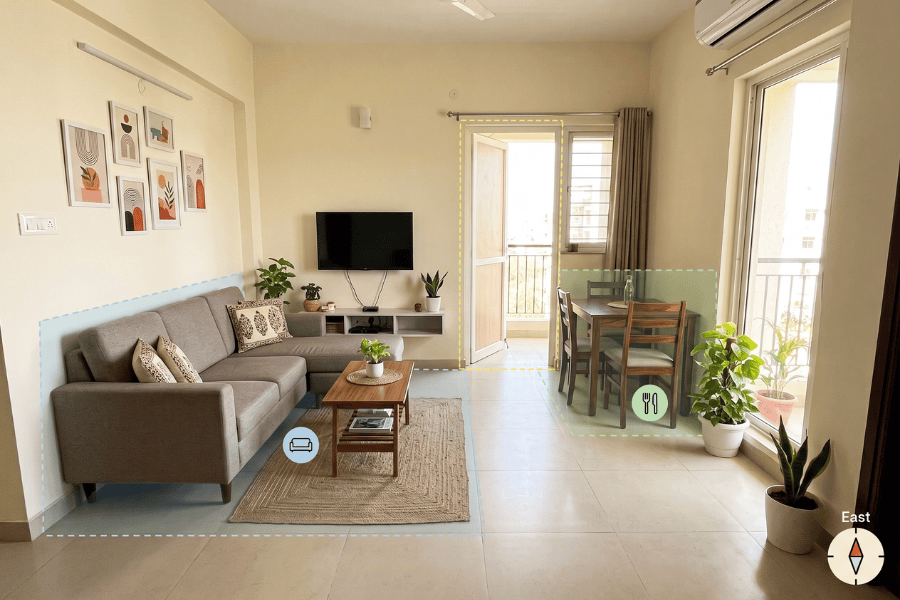
Learn how to read a floor plan. Study the centre, edges and directional sectors. This stage is where the subject becomes visual and practical.
Step 4: Learn Through Real Examples
Practical teaching makes a big difference. Good courses often include real case studies so students can see how principles apply in actual homes, plots and offices. This is especially helpful for beginners who struggle to connect theory with real spaces.
Step 5: Practise in Your Own Home
One of the best ways to learn is to study your own home. Check the directions. Look at room placement. Notice where there is light, clutter, openness or heaviness. This turns theory into observation.
Step 6: Use Simple, Sensible Corrections
Not every issue needs a dramatic fix. Often, simple changes are more useful. Strong courses explain practical remedies clearly and show when they are appropriate.
Step 7: Move Towards Structured Learning and Certification
Once your interest becomes serious, a proper course can help you go deeper. A structured programme gives you sequence, support and clearer progress than scattered self-study.
Books, Courses and Tools That Actually Help
There are many ways to begin learning Vastu. But not all of them are equally useful.
Books are good for understanding the subject slowly. Floor plans, notebooks and a compass help with practical observation.
Still, many learners benefit most from guided teaching. A course can explain the subject in order and reduce confusion.
Some students also find a live workshop helpful because they can watch demonstrations, ask questions and follow examples in real time.
If your goal is to move beyond casual interest, structured learning is usually the fastest and clearest path.

What to Expect From a Vastu Shastra Course
A good Vastu course should make the subject easier to understand, not more complicated.
It should take students from basic terminology to practical use in a steady way.
Who Is the Course For?
A course is usually suitable for:
- Complete beginners
- Homeowners and homemakers
- Design professionals
- Spiritual learners
- People thinking about future Vastu practice
What Should You Be Able to Do After the Course?
A solid course should help learners:
- Understand key Vastu terms
- Interpret directions and layout basics
- Study homes, plots and common spatial patterns
- Identify practical imbalances
- Build confidence in using the subject carefully
What Are the Requirements?
Most learners do not need a technical background.
Interest, patience and a willingness to practise matter more than prior expertise.
What Is Usually Included in the Syllabus?
A typical syllabus may include:
| Course Area | What It Covers | Why It Matters |
|---|---|---|
| Basics and Terminology | Core definitions and language | Builds foundation |
| History and Background | Traditional roots and key concepts | Adds context |
| Directions and Elements | Spatial interpretation basics | Essential for learning |
| Mandalas and Layouts | Diagram reading and zoning | Makes learning practical |
| Plot and Home Analysis | Real-world application including plot selection | Useful for everyday understanding |
| Remedies and Corrections | Practical improvement methods | Helps with implementation |
| Modern Usage | Adapting Vastu today | Keeps training relevant |
For learners who want a clear path, Vastu Ananda offers both a basic course and an advanced course. That makes it easier to start at the right level and continue learning with more depth.
Is a Certificate in Vastu Shastra Worth It?
For many learners, yes.
A certificate gives structure to your study and shows that you have followed a proper learning path. It is especially useful for people who may later want to guide others or study the subject more seriously.
That said, a certificate is a beginning, not the end. Real confidence comes from study, observation and practice.
Why a Guided Course Makes Learning Easier
Many people spend months watching short videos and still feel unsure. They hear one rule from one person and a different rule from another.
A good course removes that confusion. It gives a sequence, explains the logic and helps students build understanding step by step.
For learners who want that kind of support, Vastu Ananda offers vastu consultations for plot vastu, residential vastu, commercial vastu, hotel vastu, office vastu and even specialised settings such as a factory. They also offer a vastu basic course and a vastu advanced course for students at different stages.
Why the Teacher Matters More Than Most People Think
The teacher can shape how clearly a student understands Vastu.
A good teacher does not simply give rules. They explain why something matters, when it applies and how to think through a real situation.
This matters because Vastu is easy to oversimplify. A strong teacher helps students understand how space responds to light, movement, use and even broader natural forces within the built environment.
That is why many learners look for programmes taught by experienced teachers and vastu experts rather than relying only on quick online advice.
The Real Benefits of Doing a Vastu Course
A structured course offers benefits that go beyond basic knowledge.
It helps students learn in a steady way, understand layouts more clearly and apply ideas with better judgement.
Some of the key benefits are:
- Structured learning from basics to application
- Better understanding of directions and space
- Less confusion from mixed advice
- More confidence for home use or future professional growth
- A clearer path for deeper study
For many people, this is what turns interest into useful understanding.
What Can You Do After Completing a Vastu Course?
That depends on your goal.
Some people use what they learn only for their own home. Others use it when buying property, planning renovations or helping family members make decisions.
Some continue with advanced study. Over time, a few may work towards becoming a vastu consultant, especially if they keep learning and building experience.
Can You Start Earning After a Vastu Course?
Possibly, but not immediately in every case.
A course gives knowledge and direction, but trust and experience still matter. People usually seek guidance from someone who can explain things clearly and calmly.
The best approach is to treat certification as the start of serious learning. Income can follow later, once understanding and confidence become stronger.
Who Is Eligible to Enrol?
This depends on the course provider, but many Vastu courses are open to a wide range of learners.
In most cases, the main requirements are simple:
- Genuine interest
- Willingness to practise
- Patience to learn step by step
That makes Vastu accessible to homeowners, retirees, professionals and serious beginners alike.
How Vastu Fits Into Modern Homes and Workspaces
Modern homes are not always built according to ideal plans. Flats, apartments and compact urban houses often come with limitations.
That is why modern Vastu learning must be practical. It should show how traditional ideas can be understood in real-life conditions.
For example, today Vastu may be considered alongside layout efficiency, ventilation, function, storage and material placement. In commercial settings, it may even shape how raw material is stored or moved.
In residential settings, learners may also study spaces such as a basement, utility area or prayer area more carefully, because each affects the overall balance of the home in a different way.
A good course helps learners apply traditional principles without becoming rigid or unrealistic.
Want to Learn Through a Proper Course?
If you are ready to learn Vastu in a structured and practical way, choose a course that matches your level.
Some people need a strong foundation for personal use. Others want to go deeper and build long-term knowledge.
Vastu Ananda supports both paths through its basic and advanced Vastu courses, along with practical consultation experience across residential, commercial, hotel, office and plot vastu.
Final Thoughts
Learning Vastu Shastra can be genuinely useful when done in the right way.
It helps people understand space better, make wiser decisions and bring more thought into how a home is chosen, arranged or improved.
This is especially true when choosing a plot or evaluating the shape of land, since those early decisions often influence the rest of the planning process.
In some cases, more detailed site-related learning may also include soil testing, especially when students begin studying land quality and early planning considerations in a more structured way.
If you want to move beyond random advice and learn with more confidence, a guided path can make all the difference. With the right support, Vastu can become a practical skill rooted in observation, balance and a clearer understanding of natural energies in everyday life.
FAQs
How long does it take to learn Vastu Shastra?
You can understand the basics in a few weeks or months if you study regularly. But deeper learning takes time. If you want to move beyond personal use and into serious understanding, structured study helps a lot.
Do I need a course to learn Vastu Shastra?
Not always. You can begin with books and observation. But a course usually makes the process faster, clearer and more practical.
Is Vastu only for homes?
No. It is also used for plots, offices, shops, hotels and other spaces.
Is Vastu Shastra superstition?
Not when it is studied properly. The subject includes practical and traditional dimensions. Good learning helps students understand the difference between principle and exaggeration.
Can beginners learn Vastu Shastra?
Yes. In fact, beginners often do best when they start with a clear and well-structured course.