The water element or Jal Tatva (जल तत्व) is linked with flow, sensitivity, clarity and nourishment. It affects not only physical spaces but also the emotional balance of a place.
Water is one of the most sensitive elements to handle. When placed correctly, it can support calmness, clarity and prosperity. When placed poorly, it may create imbalance, restlessness or waste. This is why water features such as water tanks, fountains, aquariums and pools should never be treated as only decorative choices. Their direction, condition and purpose matter.
Let us look at how the water element is understood in Vastu Shastra and how it should be used in homes, offices and industries.
Why the Water Element Matters in Vastu
What Water Represents in Vastu Shastra
Water stands for movement, purification, softness and life support.
In the Vastu context, it is associated with receptivity, intuition and the ability of a space to hold and circulate subtle energy. It is also linked with opportunities, emotional balance and financial flow.
A balanced water element may support:
- mental peace
- smoother relationships
- better flow of resources
- freshness in the environment
Water, Memory and Ancestral Karma in Vastu Thought
In traditional Vastu understanding, water is believed to hold impressions. This is why it is often connected with memory, inherited patterns and ancestral karma.
The idea is simple: water receives, stores and reflects.
Because of this quality, it is seen as more impressionable than the other elements. In spiritual practice, water is often used in rituals for cleansing, healing and offerings because it can absorb intention and subtle energy flow.
Why Water Is Seen as a Carrier of Karma
According to traditional Vastu philosophy, water is linked with karma because it is fluid, adaptive and receptive. Earth is stable, the fire element transforms, air moves and space holds. Water, however, is believed to both move and retain subtle impressions. This symbolic role is why water is often treated with extra care in sacred and domestic spaces.
Why North and North-East Matter Most for This Element
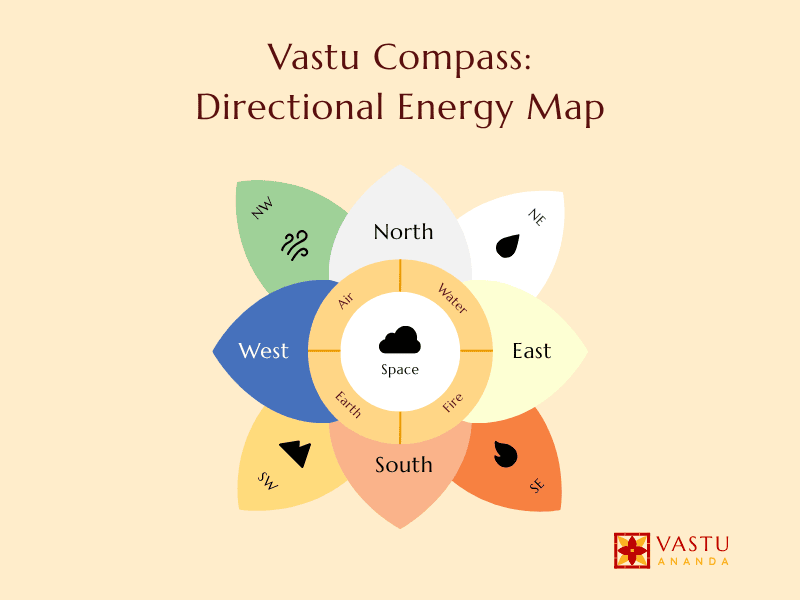
In Vastu Shastra, the north (उत्तर) and north-east (उत्तर पूर्व) directions are widely regarded as the most suitable zones for water-related placement. This guidance is also true for water fountains, aquariums, ponds and underground water storage.
| Direction | Vastu View of Water Placement |
|---|---|
| North-East (उत्तर पूर्व) | Most auspicious for water features due to openness and spiritual clarity |
| North (उत्तर) | Good for flow, opportunity and career support |
| East (पूर्व) | Often acceptable for selected water features |
| South-West (दक्षिण पश्चिम) | Usually avoided for major water elements |
Moon, Mind and the Water Element
Water is also symbolically linked with the Moon, which governs the mind and emotions in Indian philosophy. This is one reason why disturbed water placement is often said to affect mental peace. Clean, calm and well-placed water sources can support a more settled environment, while dirty or stagnant waterbodies may create heaviness.
Water Flow Direction in Vastu Shastra
The direction of water flow matters. As per Vastu, water should ideally move or collect toward the North, East or North-East direction. For fountains, water should flow inwards towards the house. Such an inward flow symbolises support and retention rather than loss (symbolised by outward flowing water).
Here are the basic rules:
- Avoid strong water placement in the south (दक्षिण), south-west (दक्षिण पश्चिम) or south-east (दक्षिण पूर्व)
- Keep water moving, clean and quiet
- Avoid placing major water features at the centre of the property
Why Places Near Water Often Prosper More
Many prosperous cities in the world developed near rivers, seas or ports. While economic success depends on many factors, the Vastu idea that water attracts activity and abundance also fits this pattern well.
In Vastu terms, water symbolises movement, exchange and resource flow and these water sources were known to help with trade, transport, farming and settlement in the region.
Water in Homes, Offices and Industries
Water in Homes
In homes, the water element should bring softness and balance, not excess dampness or emotional heaviness.
Best uses in homes include:
- Underground water sources in the north-east
- Small fountains in the north, east or north-east
- Aquariums in suitable common areas
- Carefully planned pools or indoor ponds
Room-wise placement tips for water element:
| Space | Practical Vastu Guidance |
|---|---|
| Entrance | Can support a welcoming feel if the water is clean and not overpowering |
| Living Room | Good for small fountains or aquariums in north, east or north-east |
| Bedroom | Usually best avoided |
| Kitchen | Avoid decorative water features |
| Bathroom | Do not add extra or unnecessary symbolic water elements here |
| Under stairs | Avoid water features or water bowls |
Water in Offices
In offices, water is usually associated with the flow of work, communication and business opportunities. A small and well-maintained fountain in the north direction can be suitable in some office settings. However, it should never become a distraction. The design should be simple, quiet and proportionate to the space.
Water in Industries
For industries, water planning should be even more careful because function, safety and layout all matter equally. Water storage, drainage and process-related water should be aligned with both Vastu principles and engineering logic. As a general rule, lighter and water-related zones are more favourable in the north and north-east, while heavy operations are better kept elsewhere.
Representing Water Element In Vastu
Swimming Pools
A swimming pool is best planned in the north-east, north or east if the site allows. In public places like hotels also, the swimming pool is best placed in the North-East (उत्तर पूर्व), as this zone is linked with Water (जल) and supports positive energy, freshness and overall balance in the property.
It is generally better placed in a corner rather than in the centre. Ground-level pools are usually preferred over terrace pools in Vastu.
Indoor Ponds
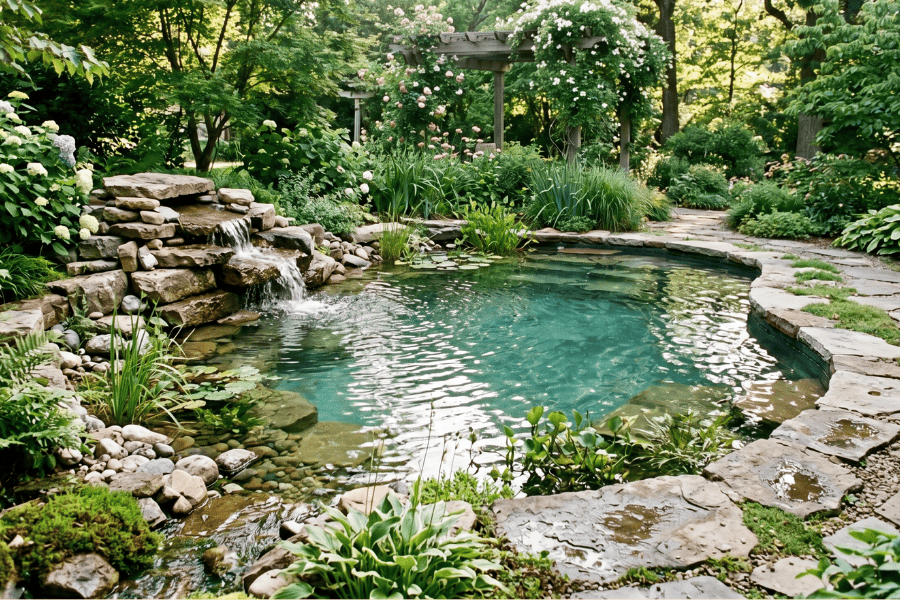
Indoor ponds can create a calm atmosphere, but they must be very well-maintained. They should not feel dark, stale or neglected. Small, simple and clean is usually better than large and showy.
Water Tanks
Underground water tanks are usually considered more suitable in the north-east, north or east, depending on the site plan. Overhead water tank placement follows a different logic and should be assessed carefully within the full property layout.
Aquariums
Aquariums are popular because they combine movement, life and visual calm. They are generally better in living or reception areas than in bedrooms. They should be clean, active and not overcrowded.
Water Fountains
Water fountains are used to create gentle movement and freshness. Common options include tabletop fountains, wall fountains and garden fountains. The best choice is one that is quiet, easy to maintain and suited to the scale of the room.
Vastu Dos and Don’ts for Water Fountains
- Keep the water flowing and clean
- Choose soft sound, not loud splashing
- Avoid damaged, leaking or dirty units
- Do not let water flow outward in a way that suggests loss
Common Mistakes To Avoid
People often make some common errors while dealing with the water element:
- Placing water in the south-west
- Keeping stagnant or dirty water
- Adding too many water features to one property
- Placing fountains in bedrooms or under staircases
Care & Maintenance of Water Elements
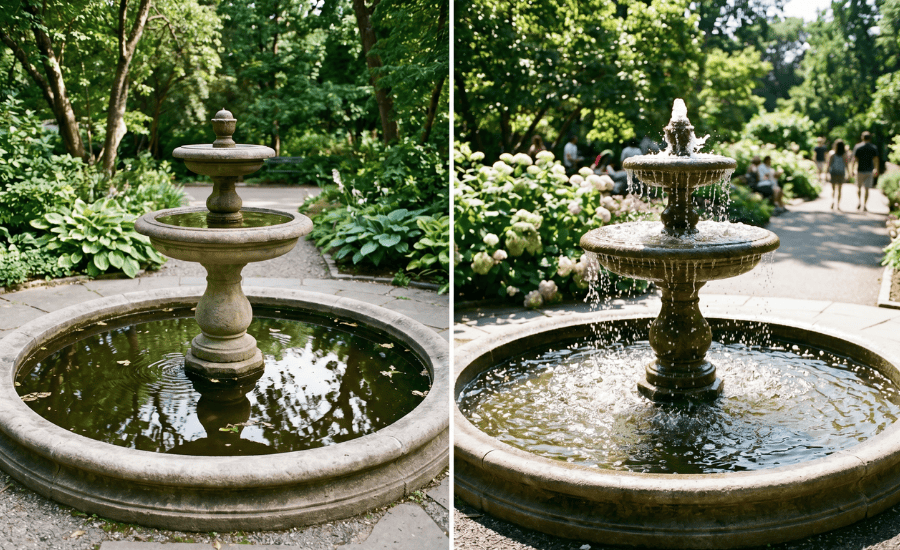
According to Vastu principles, maintenance is not separate from placement. A fountain in the right direction that is filled with dirty water will not support the space well. The same is true for water tanks, ponds and aquariums.
Keep in mind:
- Clean all water elements regularly
- Repair leaks quickly
- Prevent algae, odour and stagnation
- Maintain proper circulation where needed
- Remove broken or unused water decor
Final Thoughts
A balanced water element can make a space feel lighter, calmer and more supportive. The key is not to overuse it. In Vastu, water works best when it is clean, well-placed and proportionate to the property.
If you are planning a new home, office or commercial space and want practical guidance, Vastu Ananda offers consultations for bringing in the water element and other guidelines for Vastu-aligned living spaces.