
Water is one of the most important elements in Vastu Shastra. It is linked with flow, clarity, health and emotional balance. Because of this, the placement of a water tank can affect how balanced and comfortable a space feels.
In practice, many homeowners think about tank placement only after the structural work is almost done and they end up having to compromise. A better approach is to plan the tank placement at the design stage so that plumbing, weight distribution and Vastu guidance can work together.
In this guide, we will look at the importance of water tank placement, the logic behind directions and the difference between underground and overhead water tanks.
Why Water Tank Placement Matters in Vastu Shastra
Ever wondered what the logic is behind the direction of placing water storage tanks? In traditional Vaastu thinking, there is both symbolic and practical reasoning.
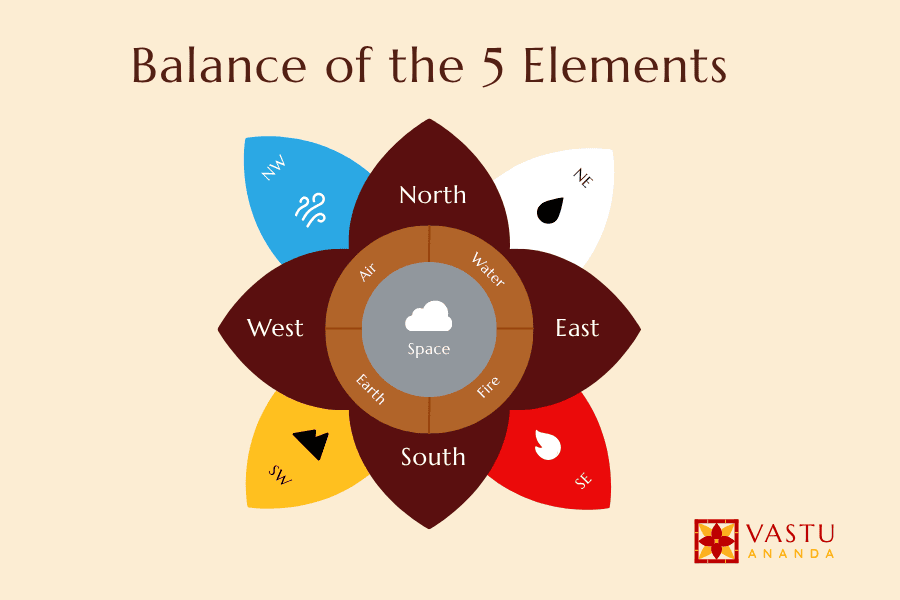
In Vastu Shastra, the placement of heavy and light elements matters. The water element is generally associated with the north (उत्तर) and north-east (उत्तर पूर्व) because these zones are considered lighter and more receptive.
But in water tank placements, the water element needs to be balanced with the physical weight and height of the water tank as well. This is where many people get confused and assume that all water storage tanks should be placed in the same direction.
There’s a big difference between underground & overhead water tanks!
| Tank Type | Best Direction | Acceptable Alternative | Directions To Avoid |
|---|---|---|---|
| Overhead Tanks | South-West | West, sometimes South | North-East, Centre, South-East |
| Underground Tanks | North-East | North, East | South-West, South-East, North-West |
Overhead Water Tank: Best Direction and Position
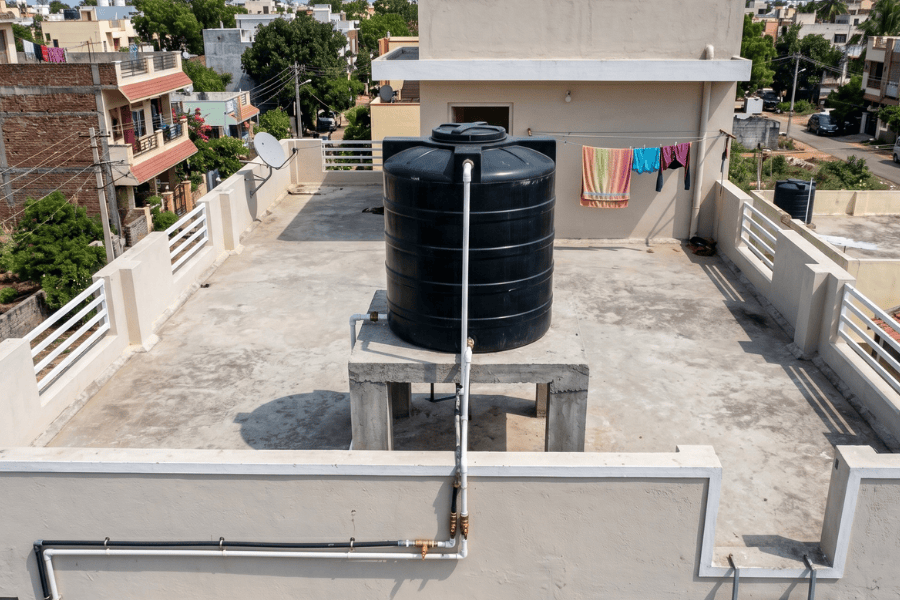
The south-west (दक्षिण पश्चिम) is considered better able to hold weight because it is linked with stability and the earth (पृथ्वी) element. So an overhead water tank, which adds downward pressure to a structure, is commonly recommended to be placed in the south-west (दक्षिण पश्चिम) instead of the north-east.
The west is also considered suitable and, in some cases, the south may be used as a secondary option if the other directions aren’t available.
Key guidelines for an overhead tank:
- Avoid the north-east, south-east and centre or Brahmasthan (ब्रह्मस्थान)
- Do not place it directly above a kitchen, puja room or main sleeping area
- Leave a little distance from the exact corner rather than pushing the tank tightly against the edge
Underground Water Tank: Best Direction and Position
An underground water tank follows a different rule. Here, the best direction is usually the north-east. The north and east are also generally considered acceptable.
The north-east, also called Ishanya (ईशान कोण), is associated with openness, clarity and lighter energy. The direction is considered supportive of balance, openness and positive energy flow.
This makes it suitable for underground water storage, wells and similar water bodies. It supports the idea of flow without adding heaviness to the upper part of the home.
By contrast, underground water tanks in the south-west are usually a major Vastu defect.
Which Is Better: Overhead or Underground Water Tank?
According to Vastu principles, an underground water tank in the right zone often feels more naturally aligned with the water element. But an overhead water tank might be more practical for daily use because it supports water pressure and household distribution. So, many homes use both:
- An underground water tank for storage
- An overhead water tank for their daily supply
This is often the most balanced setup because it combines practicality with Vaastu guidance.
When To Decide Tank Placement as per Vastu
The best time to decide on tank placement is before construction or during the planning stage. This is important for three reasons:
- It avoids structural compromise later
- It helps align plumbing lines and maintenance access
- It reduces the need for awkward remedies after installation
If the water tank location is decided too late, homeowners may end up placing it randomly, which can create Vastu-related problems.
If you are building a new home, discuss the water tank location with the architect, contractor and Vastu consultant together. If the home is already built, then focus on choosing the best possible available location and get appropriate vastu remedies to avoid issues caused by poor placement.
Additional Vastu Tips, Dos and Don’ts
A water tank affects both utility and atmosphere. But even a well-placed tank loses its benefit if it is dirty, cracked or constantly leaking. The space around the tank should look clean, simple and well-maintained. Good Vastu and good maintenance should go together.
Leakage in a water tank is considered inauspicious in Vastu Shastra because it reflects loss, imbalance and waste of resources. Since Water (जल) is linked with flow, emotional balance and financial stability, a leaking tank can disturb the energy of the home and lead to stress, unnecessary expenses and a sense of instability. Any leakage should be repaired quickly.
Here are some useful points that are often missed during planning and maintenance:
- Keep the tank well covered
- Clean it regularly to maintain water quality
- Repair any leakage quickly
- Make sure access for inspection and cleaning is easy
Vastu Shastra Colours for Water Storage Tanks
Colour isn’t as important as the direction and position of the water tank, but it can still support harmony. Vastu recommends choosing tank colours based on the direction in which the tank is placed.
For overhead tanks in the south-west or west, lighter earthy or neutral colours are often preferred, such as off-white, yellow or grey. Bright blue or black should be avoided.
For homeowners, the most sensible approach is this:
- Keep the color simple and muted
- Avoid overly aggressive or very dark shades if they feel visually heavy
- Prioritise hygiene, heat resistance and material quality
Final Thoughts
Water tank placement as per Vastu principles is really about balance. It is about understanding the difference between underground and overhead storage, respecting the role of weight and direction and planning the system early.
As a general rule, keep underground tanks in the north-east, north or east, and place overhead tanks in the south-west or west. After that, focus on structure, hygiene and ease of maintenance. A clean, well-planned tank supports both practical comfort and a calmer home environment.
If you want expert guidance for plot planning, home design or commercial spaces, Vastu Ananda offers detailed consultations for plot vastu, residential vastu, commercial vastu, hotel vastu and office vastu.
FAQs
Can an overhead water tank be placed in the North-East?
No. The North-East is generally not recommended for an overhead water tank because it combines the water element with excessive weight in a sensitive zone.
Overhead water tanks can be placed in South, West or South-West.
Which direction is best for an underground water tank?
The North-East is usually considered the best. North and East may also be acceptable depending on the layout.
Is West good for an overhead water tank?
Yes, West is a practical and acceptable option for overhead water tanks, especially if the South-West direction is not available.
Are tank colors very important in vastu?
In vastu, it’s important to first fix the direction, position, cleanliness and structure of the water tank. After those are done, colour is a significant supporting factor.