Have you ever walked into a house and felt at ease within minutes? And in another home, even if it looked beautiful, something felt heavy, restless or uncomfortable?
Many homeowners feel this but cannot explain it. Sometimes the house has enough space, good furniture and all the modern comforts, yet daily life still feels strained. Sleep feels lighter, arguments happen more often, the kitchen feels awkward to use or the home never feels truly settled.
This is where Vastu Shastra (वास्तु शास्त्र) becomes useful. At its best, Vastu is not about fear. It is about understanding how direction, light, space, weight and room placement affect the feeling of a home.
For Indian families, especially those building a new home, buying a retirement house or helping children choose a flat, the basic rules of Vastu still matter. They offer a simple framework for making better decisions before and after moving in.
In this guide, you will learn the core rules in a clear and practical way. We will cover directions, plot selection, the five elements, entrance rules, room placement, the centre of the home, colours, clutter and a few simple checks that most households can follow.
What Vastu Shastra Really Means
Vastu Shastra is the traditional Indian system of planning buildings in harmony with natural forces. It looks at sunlight, airflow, orientation, heat, open space and the balance of activity within a structure.
In simple words, it asks a practical question: is your home arranged in a way that supports peace, health and stability?
This is why Vastu is not only about where to place a temple or which wall should hold the bed. It starts much earlier, with the plot, the shape of the house, the main entrance and the way each area is used.
For example, many couples in their 50s tell me the same thing after moving into a new house: “Everything is good, but the house does not feel comfortable.” Often the issue is not one big defect. It is a combination of poor room placement, a blocked centre, weak light or an entrance that feels cramped and neglected.
Why Direction Matters So Much in Vastu
Direction is one of the foundations of Vastu. Before talking about rooms or furniture, you need to understand how the house sits on the land.
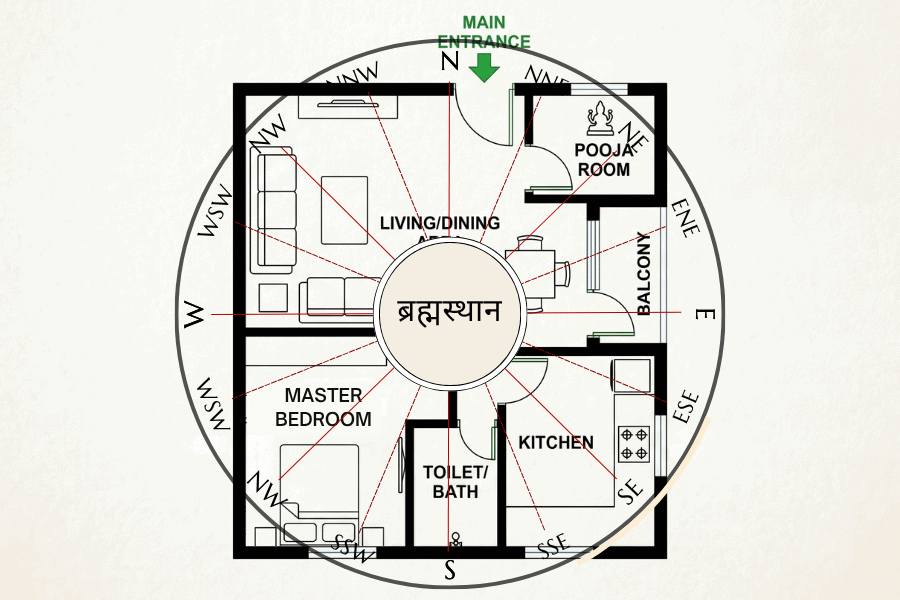
Most people know the 8 main directions: North, North-East, East, South-East, South, South-West, West and North-West. But in Vastu, the first full directional framework includes 16 zones.
These 16 zones are:
- North
- North-North-East
- North-East
- East-North-East
- East
- East-South-East
- South-East
- South-South-East
- South
- South-South-West
- South-West
- West-South-West
- West
- West-North-West
- North-West
- North-North-West
Each of these zones carries a slightly different quality. In practice, most homeowners work with the larger 8-direction model. But an experienced consultant studies all 16 zones when assessing a plot or floor plan in detail.
Broadly speaking:
- North is linked with movement and opportunity
- East is linked with light and freshness
- North-East is linked with clarity and prayer
- South-East is linked with fire and cooking
- South-West is linked with stability and weight
- North-West is linked with change and movement
This is why room placement in Vastu is not random. The direction of a room changes how that room functions.
The Five Elements Behind the Basic Rules
At the heart of Vastu are the five elements, also called Panchabhutas (पंचभूत). These are Earth (पृथ्वी), Water (जल), Fire (अग्नि), Air (वायु) and Space (आकाश).
These elements help explain why certain rooms are placed in certain directions. The South-East is linked with fire, so it suits the kitchen. The North-East is linked with water and purity, so it often suits prayer and water-related features. The centre is linked with space, so it should stay light and open.
Even homeowners who are not deeply spiritual usually understand this quickly. A kitchen in the fire zone feels logical. An open centre feels better than a blocked one. A dark wet corner in the wrong place affects the house.
That is why the basic rules of Vastu often feel practical when they are explained properly.
Start With The Plot, Not The Furniture
Many people begin thinking about Vastu after the house is built. In reality, Vastu begins with the land.
The shape of the plot matters because it affects the entire layout. Square and rectangular plots are usually preferred because they are easier to balance.
Irregular plots can create awkward corners, uneven extensions and difficulty in planning rooms properly. This does not mean every irregular plot is unusable, but it does need more care.
The slope and openness of the land are also important. In many traditional guidelines, lighter and more open space in the North and East is preferred, while the South-West is kept heavier and more anchored.
Homebuyers in India often focus on price, road access and builder reputation, which is sensible. But if you are comparing two similar plots or flats, the one with a cleaner shape and better directional balance usually offers more planning ease in the long run.
A Few Plot Rules Worth Remembering
- Prefer square or rectangular plots where possible
- Avoid severe cuts or strange extensions
- Keep the North-East lighter and less obstructed
- Let the South-West feel stronger and heavier
- Check drainage, access and surrounding structures before finalising the property
Why the Main Entrance Sets the Tone
The main entrance is one of the most important areas in a Vastu-based home. It is the point where people enter, where movement begins and where the house first opens to the outside world.
In many traditional references, North, East and North-East are considered favourable directions for the entrance. These directions are often linked with lightness, flow and positive movement.
But direction alone is not enough. The entrance must also feel right.
A good entrance is clean, well lit and easy to approach. It should not feel squeezed between storage, broken shoes, buckets or clutter. Many homes lose the benefit of a good entrance because the doorway becomes a dumping zone.
I often see this in lived-in family homes. The house may be well designed, but the area outside the main door is crowded with extra chairs, cartons and unused items. The result is a heavy first impression every single day.
Simple Entrance Checks
- Keep the main door area clean and open
- Make sure the entrance is well lit
- Avoid a dustbin or clutter directly in front of the door
These small corrections are easy to make and often improve the feel of the home immediately.
The Centre Of the House Should Feel Open
In Vastu, the centre of the house is called Brahmasthan (ब्रह्मस्थान). This is considered a key zone because it represents space and balance.
In older homes, this could be an open central area or courtyard. In modern flats, the centre may simply be a passage, circulation zone or middle part of the floor plan.
The rule remains the same: do not overload the centre.
If the central area is filled with heavy storage, dark partitions or clutter, the house starts to feel tight and blocked. Even people with no knowledge of Vastu notice this. They often say the home feels “stuck” or “closed”.
A simple example is a flat where the centre becomes the place for folded cots, old cartons, a shoe rack and unused furniture. Over time, the whole home feels harder to move through.
Keeping the middle zone as open as possible supports both Vastu and day-to-day comfort.
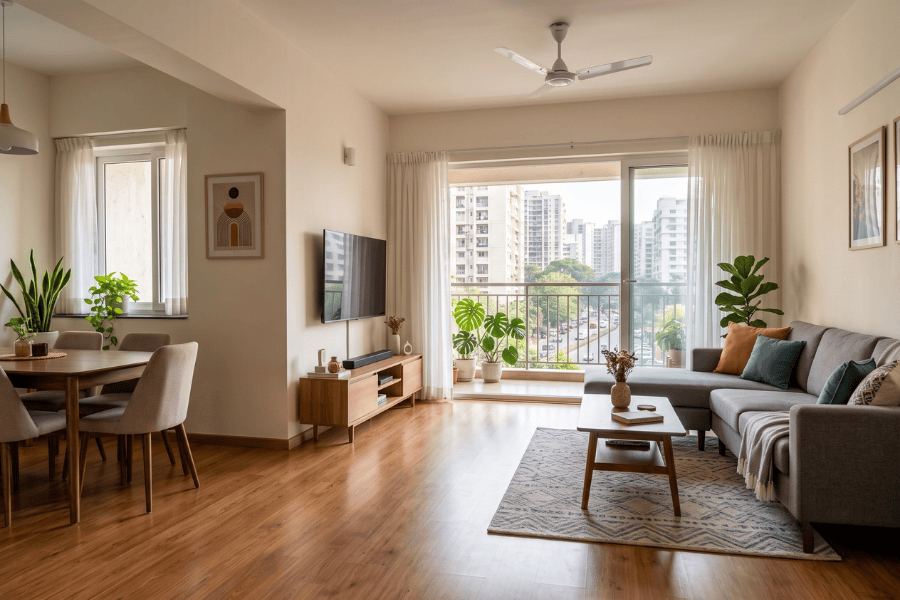
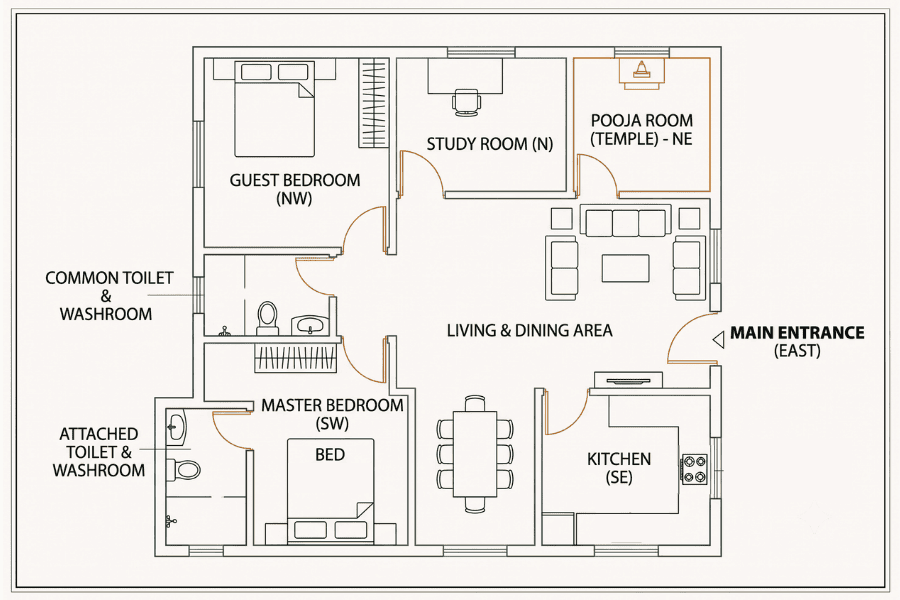
Where Each Room Should Ideally Go
This is the part most homeowners want to know first. The good news is that the broad room rules in Vastu are fairly easy to understand.
Living Room
The living room usually works well in the North, East or North-East. In some plans, the North-West also works.
Since this is the area where family gathers and guests are received, it benefits from light, openness and easy movement. A living room that gets good daylight usually feels more welcoming.
Kitchen
The South-East is widely treated as the best zone for the kitchen because it is linked with fire. If this is not possible, the North-West is often used as a second option.
Inside the kitchen, the cooking area should be planned carefully. Many Vastu traditions advise cooking while facing East.
This is one of the rules many Indian families still follow naturally, especially in self-built homes.
Master Bedroom
The South-West is usually preferred for the master bedroom. This zone is associated with weight, stability and grounding.
For older couples, this often works well in practical terms too. A stable room in the quieter heavier zone of the house usually feels more restful.
Sleeping with the head towards South or East is also a widely repeated Vastu rule.
Pooja Or Meditation Space
The North-East is generally treated as the best area for prayer, meditation or a pooja corner. It is considered a lighter and calmer zone.
Even in a small flat, a clean and respectful pooja area in the East or North-East often feels better than placing it casually in a busy or cramped corner.
Bathrooms And Toilets
Bathrooms and toilets are often placed in the West or North-West. Some traditions also allow certain South-East placements depending on the plan.
The main caution is usually against placing them in the centre or North-East.
From a practical point of view, this is also sensible. Bathrooms should stay dry, ventilated and well maintained. A leaking, damp bathroom affects the whole mood of the home regardless of direction.
Study, Guest And Utility Areas
Study areas often work well in the East or North where alertness and light are better supported.
Guest rooms are often placed in the North-West, which is linked with movement and temporary stay. Utility and storage zones should be planned in a way that does not overload the lighter parts of the house.
Room Placement At A Glance
| Space | Commonly Preferred Vastu Zone | Main Reason |
|---|---|---|
| Main Entrance | North, East, North-East | Lightness and positive movement |
| Living Room | North, East, North-East | Openness and social comfort |
| Kitchen | South-East | Fire element |
| Master Bedroom | South-West | Stability and rest |
| Pooja Room | North-East | Calmness and clarity |
| Study Area | East or North | Focus and light |
| Guest Room | North-West | Movement and temporary stay |
| Bathroom/Toilet | West or North-West | Keeps lighter zones free |
Small Interior Rules That Make a Big Difference
Once the main layout is understood, everyday arrangement becomes important.
These are not minor details. They shape how the house feels every day.
For example, mirrors should not directly reflect the bed. Heavy furniture is generally better placed in the South, West or South-West. Staircases are usually preferred in heavier zones rather than in the North-East.
These rules work best when they are used with common sense. The aim is not to create stress over every object. The aim is to avoid obvious imbalance.
Three Everyday Vastu Habits
- Keep heavier storage in the South or West side of the home
- Avoid blocking walkways and central movement areas
- Do not place mirrors where they reflect the sleeping person directly
These changes are simple, low-cost and often more useful than decorative remedies.
Light, Air and Water Are Not Small Details
A home cannot feel balanced if it is dark, damp or poorly ventilated. This is where Vastu overlaps strongly with good design.
Natural light matters. Morning light from the East is especially valued because it brings warmth and freshness without the harshness of later sun.
Airflow matters just as much. Bedrooms, kitchens and bathrooms should all feel breathable.
Water must also be managed carefully. In many Vastu traditions, water features and underground water placement are linked with the North-East. But even more important for homeowners is this: avoid leaks, dampness and stagnant water.
A family may follow room directions carefully and still feel discomfort because a damp corner, blocked window or leaking pipe is left untreated for years.
Colours, Plants and The Feel Of The Home
Vastu also pays attention to the feel of a space. Colours, plants and decorative choices should support the purpose of the room.
Light and soft colours often work well in living spaces because they keep the room open and calm. Bedrooms usually benefit from restful shades. Kitchens can carry a little more warmth.
Very dark, heavy colours can make already tight spaces feel even more closed.
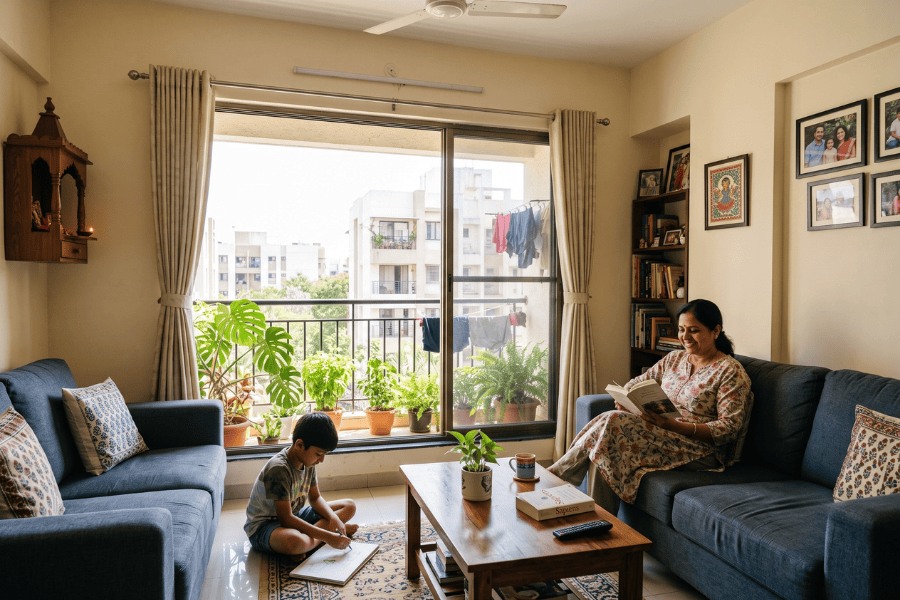
Plants can bring life and softness into a home, especially in balconies, entrances and brighter areas. Healthy plants add freshness. Dead or neglected plants do the opposite.
This is something many older homeowners understand well. A cared-for house feels alive. A neglected house feels tired, even if the layout is technically correct.
A Practical Vastu Checklist For Homeowners
If you want to review your own home without getting overwhelmed, start here:
- Is the entrance open, clean and well lit?
- Does the centre of the home feel clear rather than blocked?
- Is the kitchen placed in a sensible fire-related zone if planning allowed it?
- Is the master bedroom in the South-West if possible?
- Are the North and East sides relatively lighter?
- Are bathrooms dry, clean and leak-free?
- Does the house get enough sunlight and airflow?
- Is clutter being stored in the wrong places?
This kind of review is often more helpful than worrying about minor symbolic remedies.
How To Apply Vastu in Modern Homes
Not every flat or home can follow every classical rule. This is especially true in city apartments, builder floors and homes that were bought ready-made.
That is why good Vastu advice should never make homeowners anxious. It should help them improve what can be improved.
In modern homes, it is usually suggested to focus on the basics:
- Entrance quality
- Room use
- Sleeping direction
- Kitchen balance
- Open centre
- Clutter reduction
- Light and ventilation
These are the areas that usually make the biggest practical difference.
Final Thoughts
The basic rules of Vastu Shastra are not difficult when explained properly. They are really about balance.
Choose a regular plot if you can. Respect direction. Keep the entrance welcoming. Use the South-East for fire, the South-West for stability and the North-East for quietness and clarity. Keep the centre open. Allow light and air to move through the home. Avoid clutter and neglect.
For homeowners, especially those creating a long-term family home, these rules offer a grounded way to think about comfort and harmony. They do not replace architecture or engineering. They work alongside them.If you would like expert support, Vastu Ananda offers thoughtful vastu consultations for plot vastu, residential vastu, commercial vastu, hotel vastu and office vastu. We also offer a vastu basic course and vastu advanced course for learners who want to study the subject in more depth.
FAQs
Which Direction Is Best For The Main Door?
The main door is usually preferred in the North, East or North-East, depending on the house plan and exact zone placement.
Which Direction Is Best For A House In Vastu?
North, East and North-East are commonly considered favourable directions in Vastu, especially for the main entrance and open spaces.
Why Is The North-East Important In Vastu?
The North-East is considered a light and pure zone. It is commonly used for a pooja room, meditation area or water-related placement.
Is It Bad To Sleep With Your Head Towards The North?
According to Vastu, sleeping with the head towards the North is usually avoided. South or East is generally preferred.