Have you ever felt that a home looks fine on the outside but still feels unsettled inside? Money comes in but does not stay. Family members argue more often. Important decisions feel delayed. In many homes, the South-West corner quietly tells this story.
In Vastu Shastra (वास्तु शास्त्र), the Nairuthi direction is linked with stability, security and control. This is the part of the home that should feel steady and protected. When it is balanced, many people believe it supports peace, stronger relationships, better financial control and career stability.
That is why this direction matters so much, especially for homeowners, couples buying a house and families planning for the long term. If you are investing your savings into a home, you want the space to support you, not drain you.
In this guide, we will look at what the Nairuthi direction means, what should be placed there, what to avoid, how it fits into the 16 Vastu zones and what remedies may help if there is a defect. We will also cover the common question of a toilet in the South-West.
What Is The Nairuthi Direction?
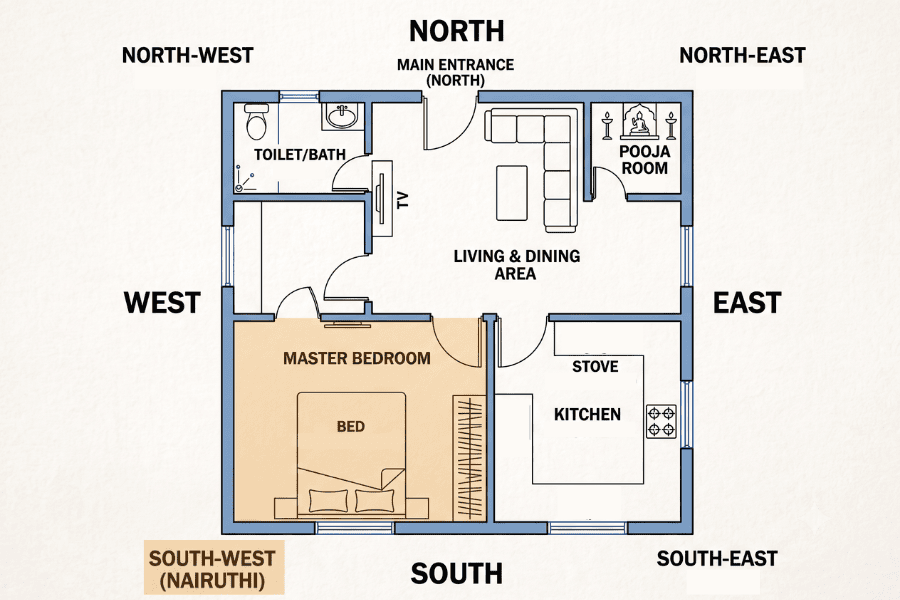
Nairuthi direction is the South-West part of a house, flat or plot. In nairutya disha vastu, this zone is usually associated with steadiness, grounding and long-term support.
This is why many Vastu experts treat it as one of the most sensitive zones in a property. It is not a space to leave weak, cut or disturbed.
In simple terms, the Nairuthi direction sits between South and West. In many homes, this is seen as the zone that should hold weight, both physically and energetically.
A practical example is easy to understand. If the North-East is often kept light and open, the South-West is usually better when it feels solid, settled and protected.
South-West (Nairutyaa) In Simple Terms
The South-West is also called Nairutya or Nairutyaa. In many traditional explanations, it is linked with the earth element, which is why it is associated with stability and support.
Some traditional interpretations also connect this direction with a protective but intense force, and a few texts even use the word demon in a symbolic sense. In real home planning, though, the more useful point is that this zone should feel strong, stable and well managed.
This is also why the master bedroom, heavy storage or important household documents are often recommended for this zone. The idea is simple: things that represent permanence sit better here than things linked with movement or disposal.
How Nairuthi Direction Fits Into The 16 Vastu Zones
To understand the Nairuthi direction properly, it helps to look at the full Vastu grid. Many people know the 8 main directions, but a more detailed Vastu reading often works with 16 zones and their exact orientation within a property.
These 16 zones are: North, North-North-East, North-East, East-North-East, East, East-South-East, South-East, South-South-East, South, South-South-West, South-West, West-South-West, West, West-North-West, North-West and North-North-West.
This fuller view matters because homes are not always affected by only one broad corner. Sometimes the issue sits in a sub-zone. For example, a true South-West issue may feel different from a problem in South-South-West or West-South-West.
For homeowners, this matters in practical ways. A room may technically fall in the South-West side of the home, but the exact placement of the bed, toilet seat, water line or storage could shift the effect.
Why Direction Matters In Vastu
Vastu is based on the idea that different parts of a home support different kinds of energy. It also reflects practical logic such as light, ventilation, heat and how a family uses space every day.
In traditional planning, these are grouped under the cardinal directions and their sub-zones. This is why direction is not just symbolic. It affects how a room feels and how it functions.
When people say a house feels calm, heavy, open or disturbed, they are often reacting to a mix of layout, light and energy flow. In Vastu, the Nairuthi direction is expected to feel secure and grounded.
The centre of the home also matters here. Many Vastu practitioners refer to this central zone as the Brahmasthan, and they advise keeping it open and balanced so the rest of the house can breathe properly.
For a couple in their 50s or 60s, this can be especially relevant. At that stage of life, people often want stability more than speed. They want fewer disturbances, better health routines, stronger savings and a home that feels dependable.
What The South-West Direction Represents
In Vastu, the South-West is often linked with stability, protection, authority and long-term prosperity. It is also commonly associated with the head of the family and with the ability to stay in control of finances and important decisions.
Some traditional systems connect directions with symbolic guardians such as Yama, Vayu and other directional forces. These references are part of Vastu’s older spiritual framework, but for most homeowners the practical takeaway is simple: the South-West should support firmness and order.
You will also see this wider directional logic across the home. For example, North is often linked with Kubera, the deity associated with wealth, while North-West is connected with movement and the air element.
That is one reason this zone is taken seriously in family homes. If the South-West is weak, some people feel the home lacks a centre of strength.
You will often hear this in real life. A family may say, “We work hard but nothing stays settled,” or “There is always some unexpected expense.” In Vastu consultations, the South-West is one of the first places checked when such patterns repeat.
This should be understood with balance. Vastu does not replace financial planning or family communication. But it can help explain why one part of a home feels more supportive than another.
What To Keep In The Nairuthi Direction
One of the most common questions is what things should be kept in the South-West. The broad rule is to place items here that add weight, permanence and stability.
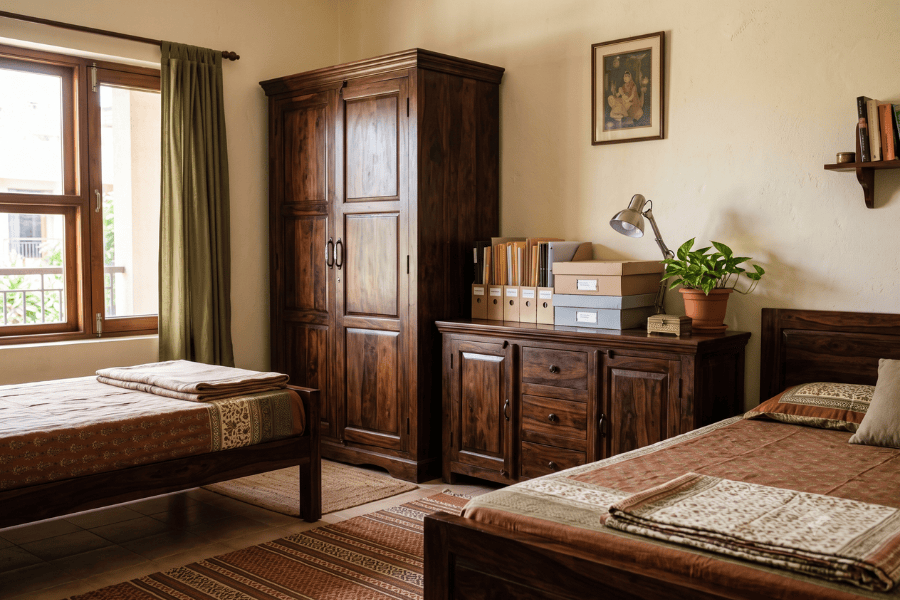
That may include heavy wardrobes, solid wooden furniture, important documents, family valuables stored correctly or the master bedroom. In many homes, this direction is also suitable for the room of the senior-most couple.
In some layouts, people also ask whether this can be a good place for a study. For children, that is not usually the first recommendation, but for adults handling serious paperwork, planning or quiet reading, a well-balanced South-West room can support focus.
This makes sense when you think about how Indian families live. The room of the household decision-makers is usually expected to feel private, secure and settled. The South-West supports that purpose well.
What Works Well In The Nairuthi Direction
| Suitable Placement | Why It Is Recommended |
|---|---|
| Master bedroom | Supports stability and authority |
| Heavy cupboards or wardrobes | Adds weight to the zone |
| Important documents and valuables | Linked with protection and control |
| Solid furniture | Strengthens the grounded feel |
| Earthy colours and simple decor | Supports elemental balance |
Avoid making this area too light, too empty or too temporary. A folding chair and a pile of unused boxes do not create the same effect as a properly planned room.
What To Avoid In The South-West Zone
The South-West should not feel weak. That is the main rule.
This is why Vastu generally advises against major cuts, too much open space, water bodies, poor maintenance or a constant sense of movement in this area. Too many large windows here may also reduce the sense of support if the room starts feeling exposed instead of grounded.
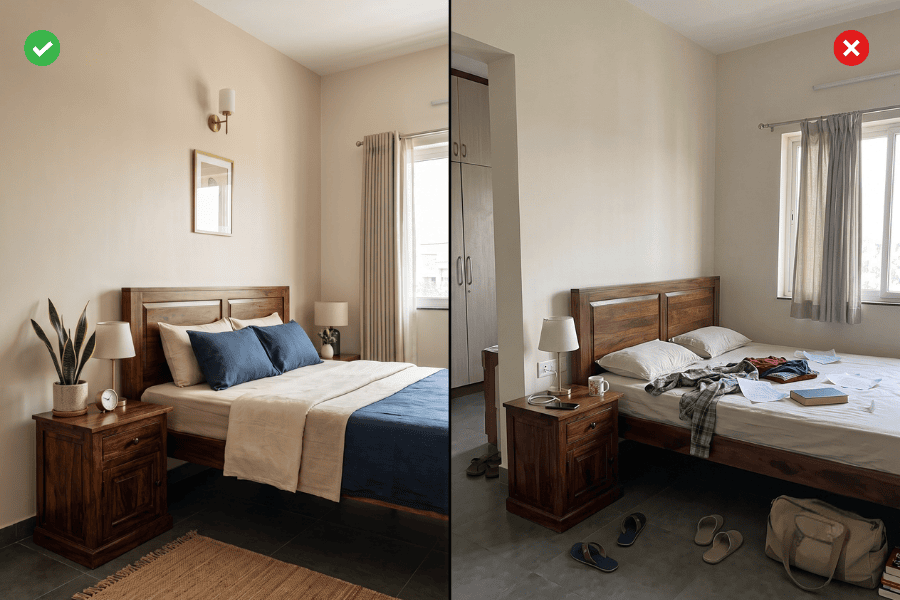
A disturbed South-West is often linked with instability in wealth, family peace and confidence. In Vastu language, people may describe this as a build-up of negative energy, though in practical terms it often begins with poor layout, dampness, clutter or imbalance.
For example, if this corner has seepage, broken walls, clutter or a toilet with poor maintenance, that can affect how the whole area feels. Even people who do not follow Vastu closely often say such spaces feel heavy in the wrong way.
Common South-West Mistakes And Their Vastu Concern
| Common Issue | Why It Is Seen As A Problem In Vastu |
|---|---|
| Missing or cut South-West corner | Weakens stability |
| Water feature or leakage | Conflicts with the grounding nature of the zone |
| Too much empty space | Reduces support and strength |
| Clutter and broken items | Creates stuck and disturbed energy |
| Poorly maintained toilet | Adds drain-like energy to a stability zone |
How Nairuthi Direction Can Affect Home Life
In nairutya disha vastu, the South-West is often connected with how secure life feels over time. This includes finances, authority, emotional steadiness and the ability to make clear decisions.
For younger couples, this may show up as trouble settling into a new house or constant delays in long-term planning. For older homeowners, it may feel more like repeated money outflow, family tension or a sense that the home never feels fully restful.
Again, this should be read sensibly. Not every life problem begins in one corner of the house. But when the South-West is weak, it is common in Vastu practice to look at how the home may be affecting confidence, prosperity and continuity.
Remedies For Nairuthi Direction Defects
A Nairuthi defect usually means the South-West is not being used in a stable way. This could be due to a structural cut, the wrong room function, water placement, poor maintenance or a toilet in that zone.
The first step is always practical correction. Before using symbolic remedies, check the basics. Is the area clean? Is it dry? Is there enough weight in the room? Is the layout making the zone feel exposed or weak?
In many homes, simple changes can help:
- Move heavier furniture into the South-West
- Organise important items properly
- Repair cracks, seepage or broken flooring
- Use earthy shades such as beige, sand, light brown or muted peach
- Reduce unnecessary movement and clutter in the area
If you are in the construction stage, this is much easier to address early. It is always better to plan the use of the South-West before final room placement than to depend fully on remedies later.
Some people also use Vastu pyramids, symbols or devotional images. These are part of traditional remedy systems, but they should support the main correction, not replace it.
South-West Toilet: What Vastu Says
A toilet in the South-West is a common concern in modern flats and builder floors. In many Vastu systems, this is considered less favourable because the South-West is meant to hold and stabilise energy, while a toilet represents disposal and drainage.
Still, many people cannot rebuild their homes. So the better question is not “Is this terrible?” but “How can I reduce the imbalance?”
The most useful Vastu-based steps are practical:
- Keep the toilet very clean
- Fix leakage without delay
- Ensure good ventilation
- Keep the door shut when not in use
- Avoid dark, damp or neglected corners
- Use calm earthy or light tones if suitable
In some homes, placement of mirrors also becomes an issue. If a mirror reflects clutter, the toilet seat or an already cramped layout, it tends to make the space feel more disturbed rather than more open.
These steps may sound simple, but they matter. In real homes, neglected toilets often affect the mood of the whole room around them.
Some remedies mentioned online include sea salt, wooden partitions or Vastu pyramids. These may be used by some households, but proper maintenance should come first every time.
How Other Directions Support The South-West
The Nairuthi direction does not work alone. A house feels balanced when all major directions are used properly.
For example, the East direction is often associated with light and freshness, while Paschim or West is linked with support and completion. The South-East is connected with Agni and the fire element, which is why many Vastu plans place the kitchen there rather than in the South-West.
This helps explain a simple Vastu principle. The home works better when each zone is used according to its nature. Fire, water, storage, rest and movement all need the right place.
The same applies to entry points. A badly placed main door or an unbalanced room plan can weaken the overall flow of the house, even if one zone is corrected well.
The Mantra Linked To Nairuthi Direction
Some traditional Vastu experts recommend reciting the mantra “Om Nisasaraya Vidmahe” in relation to the Nairuthi direction.
It is better to present this as a traditional spiritual practice rather than a guaranteed Vastu cure. For many people, such chanting is a way to bring calm focus, a sense of protection and alignment with Dharma into the home.
Instructions To Chant This Mantra
If someone wants to follow this practice, it is best done with care and consistency. A clean space, calm mind and correct pronunciation matter more than casual repetition.
Where possible, people should follow a trusted teacher or authentic tradition. This keeps the practice respectful and accurate.
Meaning And Benefits
This type of mantra is generally associated with protection, balance and steadiness. In spiritual terms, people believe it may help settle difficult energy and support inner calm.
A mantra can support intention and peace of mind, but it does not replace layout correction, maintenance or practical Vastu planning.
A Simple Checklist For Homeowners
If you want to review your own home, start here:
- Check whether the South-West corner feels strong or weak
- See if the area is clean, dry and well maintained
- Add heavy furniture if the zone feels too empty
- Avoid water-related imbalance such as seepage or storage tanks in the wrong place
- Use the room for stable functions where possible
- Review any toilet in this zone with practical remedies first
- Consider a detailed consultation if the layout has a cut or structural defect
Final Thoughts
The Nairuthi direction is not a small detail in Vastu. It is one of the key zones that supports stability, control and long-term prosperity in a home.
If this part of the house is balanced, it can strengthen the feeling that life is moving on a steady path. If it is weak or disturbed, the home may feel less settled, especially over time.
The good news is that not every problem needs a dramatic remedy. In many cases, careful use of space, better maintenance and a few sensible changes can improve the energy of the South-West in a meaningful way.
If you would like expert guidance, Vastu Ananda offers vastu consultations for plot vastu, residential vastu, commercial vastu, hotel vastu and office vastu. They also offer a vastu basic course and vastu advanced course for learners.
FAQs
What Should Be Kept In The Nairuthi Direction?
The South-West is generally suitable for the master bedroom, heavy furniture, cupboards and important documents. These placements are believed to support stability and control.
What Should Be Avoided In The South-West Direction?
Avoid keeping the South-West too open, too light, cluttered, damaged or affected by water leakage. A weak south-west is often linked with instability and financial stress in Vastu.
Can A Toilet Be In The South-West Direction?
A toilet in the South-West is usually considered less favourable in Vastu. If it already exists, focus on cleanliness, ventilation, leak repair and practical remedies to reduce imbalance.
Which Element Is Linked With The Nairuthi Direction?
The Nairuthi direction is commonly linked with the earth element. This is why it is associated with grounding, support and permanence.