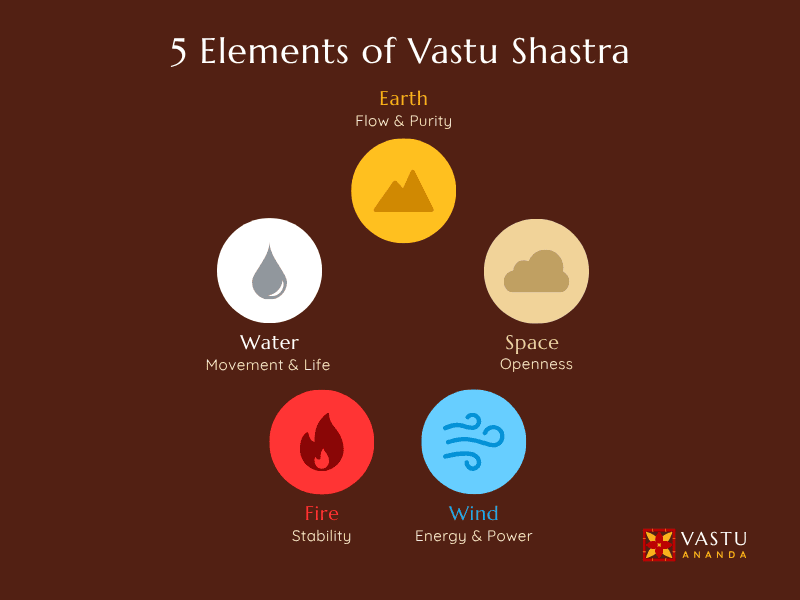
In Vastu Shastra, the idea of balance begins with nature. One of the most important concepts is the Panchabhootas (पंचभूत) or the five great elements: Earth, Water, Fire, Air and Space. These elements are believed to shape both the natural world and the energy of the places where we live and work.
From a Vastu point of view, a well-planned space should support the right expression of these five elements. When that balance is disturbed, people may feel discomfort, restlessness or lack of clarity. When it is respected, the space tends to feel calmer, lighter and more supportive.
This article explains the Panchabhootas in simple terms, how they relate to Vastu and what practical steps can help bring more harmony into a property.
What Are the Panchabhootas in Vastu?
The Panchbhootas are the five elemental building blocks recognised in Indian philosophy: Prithvi (पृथ्वी) or Earth, Jal (जल) or Water, Agni (अग्नि) or Fire, Vayu (वायु) or Air and Akash (आकाश) or Space. In Vastu, these natural elements are linked with direction, function and spatial balance.
In Vastu, elemental associations are often linked to specific zones: the North-East is connected with water, the South-East with fire, the South-West with earth, the North-West with air, and the centre with space. This approach is meant to support ease, stability and flow.
Panchabhootas and the Vastu Purush Mandala
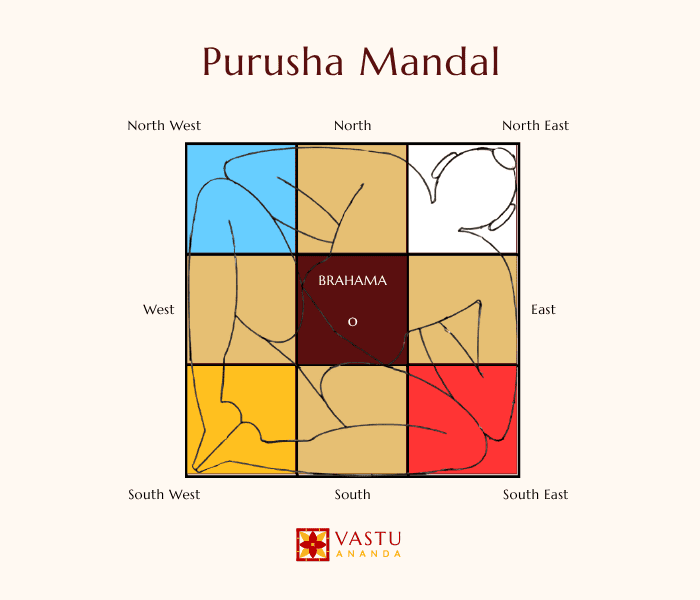
The Vastu Purush Mandala (वास्तु पुरुष मंडल) is the sacred grid used in Vastu planning. It helps organise a site or building according to directional energies and elemental balance. Within this framework, the five elements are understood through their spatial influence.
Each part of a building structure should support the element most suited to that zone.
This is why Vastu gives such importance to the placement of kitchens, water sources, open areas and heavy structures.
According to traditional understanding, the North-East direction is associated with the head of the Vastu Purush and is therefore kept light, clean and open. The South-West direction, associated with the feet, is ideally heavier and more stable. The centre, known as the Brahmasthan, should remain as open and unobstructed as possible.
Panchabhootas and Tibetan Philosophy
The idea of five elements is also found in Tibetan thought, though the interpretation is not identical to Vastu. In Tibetan philosophy and healing traditions, elements are often linked with body, mind and states of balance. The shared principle is that life depends on harmony between elemental forces.
In Vastu, however, the focus is more practical and spatial. It looks at how the built environment can reflect natural order. So while both traditions value the elements, Vastu applies them directly to architecture, layout and daily living.
The Five Elements and Their Vastu Significance
The five elements each represent a different quality in a space:
- Earth (Prithvi / पृथ्वी): stability, grounding, support
- Water (Jal / जल): flow, clarity, nourishment
- Fire (Agni / अग्नि): energy, transformation, action
- Air (Vayu / वायु): movement, freshness, communication
- Space (Akash / आकाश): openness, expansion, connection
Panchabhootas at a Glance
| Element | Sanskrit Name | Core Quality | Common Vastu Association |
|---|---|---|---|
| Earth | Prithvi (पृथ्वी) | Stability | Weight, structure, support |
| Water | Jal (जल) | Flow | Purity, movement, emotional ease |
| Fire | Agni (अग्नि) | Energy | Heat, light, activity |
| Air | Vayu (वायु) | Movement | Ventilation, circulation |
| Space | Akash (आकाश) | Openness | Lightness, expansion, awareness |
Earth
Earth represents stability, patience and foundation. In a home, this element is expressed through the land, the building mass, walls and heavy furniture. A strong earth element helps a place feel secure and settled.
In Vastu practice, heavier functions and storage are often better suited to stable zones. Too little grounding in a space may create a feeling of unease, while too much heaviness can make it dull or stagnant.
Water
Water stands for flow, cleansing and emotional balance. It is often connected with the North-East direction in Vastu thought. This is why water resources, water storage and prayerful calm are often preferred in this zone where possible.
Clean water placement and proper drainage are important. Stagnant or poorly placed water features may create discomfort rather than harmony.
Air
Air represents movement, freshness and exchange. It supports breathing, comfort and the easy movement of energy. In practical terms, air is supported by windows, ventilation and uncluttered pathways.
A space with poor airflow can feel heavy very quickly. Good cross-ventilation and openness often improve the experience of a home without major structural change.
Fire
Fire is linked with heat, visibility, digestion and transformation. In Vastu, the kitchen is commonly associated with the fire zone, especially the South-East direction. The kitchen fire element also includes electrical systems, lighting and cooking activity.
Balanced fire supports motivation and a healthy daily rhythm. Excess fire may show up as irritation, overheating or stress, while weak fire may make a space feel flat and lifeless.
Space
Space is the subtlest of the five elements. It refers to openness, emptiness and the field in which the other elements exist. In a property, space is supported by uncluttered areas, proper proportions and a sense of lightness.
Many modern homes suffer not from a lack of décor but from a lack of space. Even small homes benefit when the central area is not overcrowded.
Simple Ways To Support Each Element
| Element | What Strengthens It | What Disturbs It |
|---|---|---|
| Earth | Clean structure, balanced weight, natural materials like wood or clay | Weak foundation, instability, disorder |
| Water | Clean water zones, good drainage, calm North-East | Leakage, stagnation, clutter near water |
| Air | Ventilation, windows, open movement | Block airflow, stuffiness |
| Fire | Well-placed kitchen, natural light, safe electrical use | Excess heat, faulty wiring, dark cooking areas |
| Space | Decluttering, open centre, simple layouts | Overcrowding, unnecessary partitions |
Vastu Tips for Balancing the Panchabhootas
Here are a few practical ways to support elemental balance at home:
- Keep the North-East direction clean, light and peaceful
- Avoid clutter in the centre of the house
- Maintain good airflow through windows and vents
- Place cooking functions carefully and safely
- Fix leaks, seepage and drainage issues early
- Use heavy storage in zones that can handle weight well
These steps are simple, but they often make a noticeable difference in how a place feels.
Panchabhoota Aradhana: Shlokas and Rituals
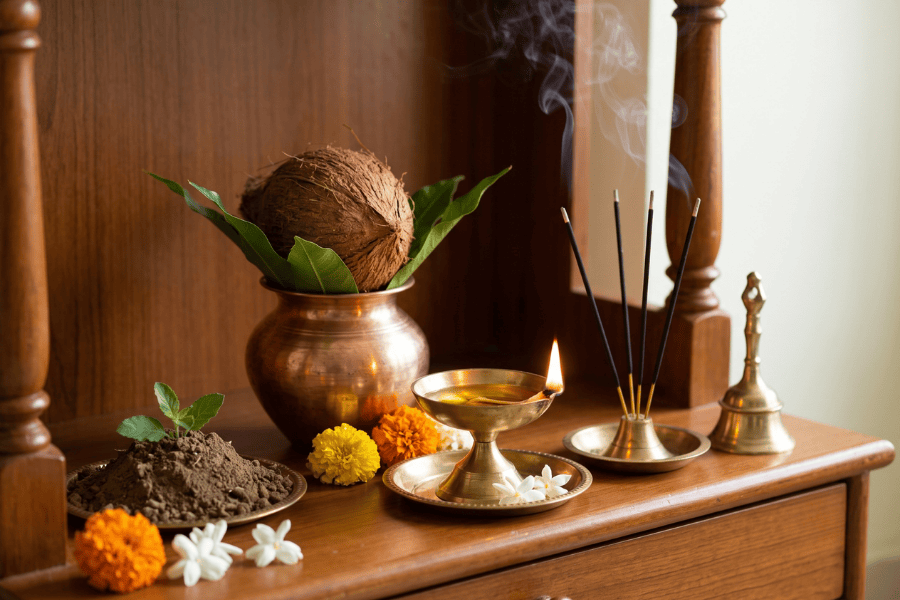
Panchabhoota Aradhana (पंचभूत आराधना) refers to honouring the 5 elements with awareness and respect. In Vastu practice, harmony is supported not only through layout but also through everyday care of the space. This may include simple daily prayer, lighting a diya, using guggul incense, chanting shlokas (श्लोक) connected to peace and gratitude or even placing Ganga Jal in the North, East or North-East directions.
Not every home needs an elaborate ritual. Regular cleanliness, mindful use of space and simple devotional practices often matter more than performance.
Final Thoughts
The Panchabhootas are not only a spiritual idea. In Vastu, they offer a practical way to understand why some spaces feel balanced and others do not. Earth gives support, water gives flow, fire gives energy, air gives movement and space gives openness.
When these elements are respected in planning and daily living, a property often feels more settled and supportive. The goal is to create a thoughtful balance.
If you would like personal guidance for plot, residential, commercial, hotel or office Vastu, or want to study the subject further through a basic or advanced course, you can explore Vastu Ananda.
FAQs
1. Are Panchabhootas and Panchamahabhutas the same?
Yes, these terms are often used interchangeably to refer to the five great elements: earth, water, fire, air and space.
2. Why are the Panchabhootas important in Vastu?
They form the basic framework for understanding spatial balance in Vastu Shastra. Their placement and expression influence comfort, function and harmony.
3. Is the Vastu Purush Mandala connected to the five elements?
Yes. The Vastu Purush Mandala helps organise a space in line with direction and elemental principles.
4. Can simple changes improve elemental balance?
Yes. Better ventilation, decluttering, fixing leaks and using space more thoughtfully can improve balance in many homes.
5. Does every ritual for Panchabhoota Aradhana need to be elaborate?
No. Simple, respectful daily practices are often enough, especially when done with consistency and understanding.