

Setting up a factory is not only about land, heavy machinery and workflow. In Vastu Shastra, the way a factory is planned can also affect how smoothly the space functions. A factory may have good equipment and skilled teams, but if movement, storage, utilities and work zones are poorly arranged, it often creates avoidable friction.
Factory Vastu (फैक्ट्री वास्तु) is useful because it brings attention to placement, weight distribution, circulation, openness and function.
A well-planned site supports safer movement, better supervision, cleaner zoning and fewer daily obstacles.
This guide will cover the key Vastu Shastra principles for factories in a simple and structured way, from plot selection to internal layout, support facilities and practical remedies.
Vastu for Factories: Why Industrial Vastu Matters
Industrial Vastu focuses on how land, buildings, utilities and work areas are arranged in a manufacturing or production unit. The goal is balance, stability and smooth operation.
When factory planning follows clear spatial logic, it can support:
- Better movement of people, materials and vehicles
- Cleaner separation between heavy work, administration and support functions
- Improved use of light, ventilation and open areas
- A more organised and less stressful work environment
- Reduced confusion around storage and utility placement
A factory should not be treated as a single hall with random placement. Every part of the premises, from the gate to the pantry, should be considered as part of one system.
Factory Site and Layout
The site and layout form the foundation of factory vastu. If the basic zoning is wrong, later corrections become much harder.
Plot: Soil, Shape and Slope
The starting point is the land itself. Square and rectangular industrial plots are often preferred in vastu because they are easier to plan and create balanced layouts. Irregular factory plots can still be used, but they often need more careful design treatment.
A site with poor drainage, stagnant water or unstable soil can also create practical and structural issues.
Some common site preferences include:
| Site Factor | Vastu Preference |
|---|---|
| Factory Plot Shape | Square or rectangular |
| Soil Quality | Firm, stable and well-drained soil |
| Slope | Sloping towards North, North-East or East |
| Open Side | Better on the North or East |
| Heavy Storage | More suitable in South and West |
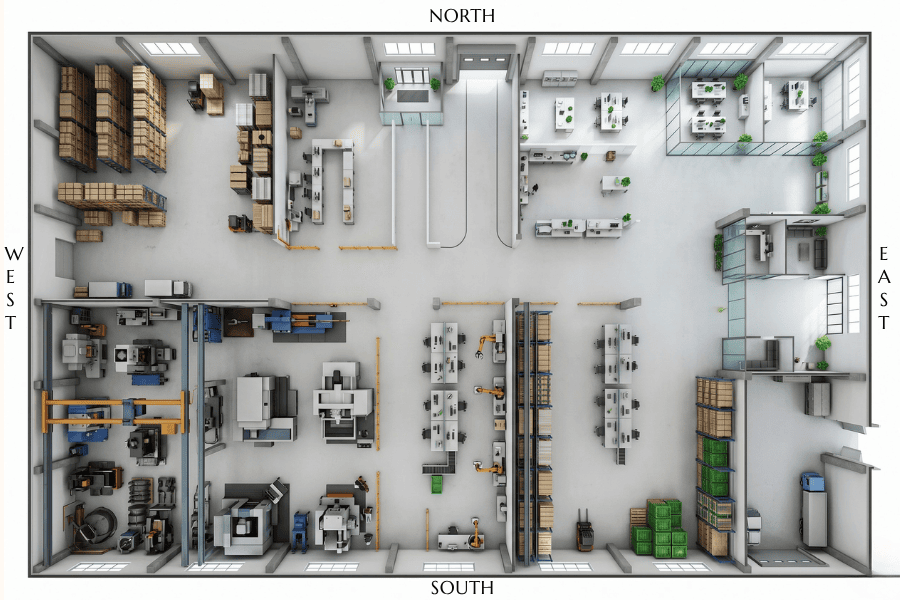
Entrance and Main Gate
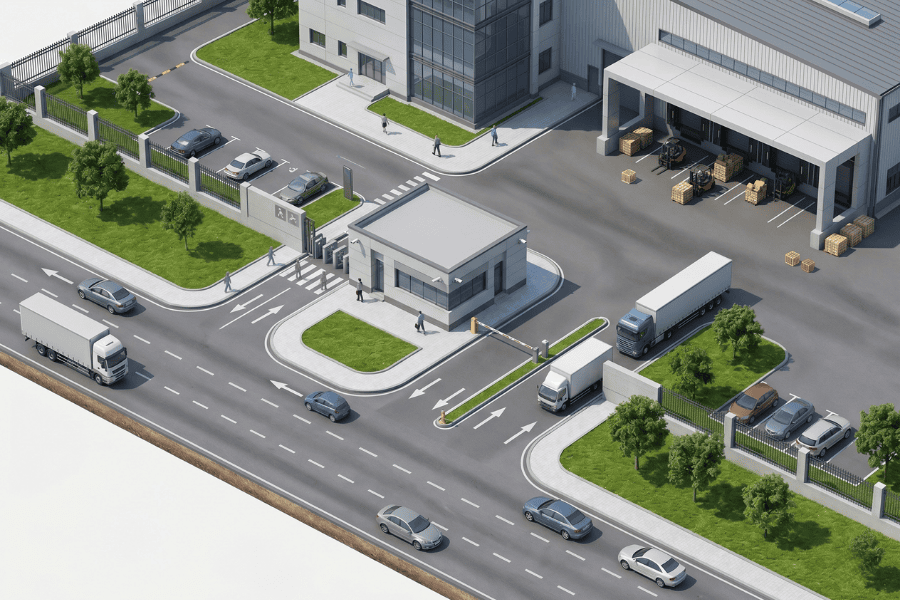
The main gate is important because it controls movement into the factory. The entrance should be placed carefully in relation to the plot and road, and should not create blockage or awkward circulation.
South, South-West and West-facing entrances are highly defective, while North, East and North-East entrances are generally more favourable when properly aligned.
In practice, the gate should:
- Allow smooth clockwise entry of people and vehicles
- Open without creaking into a clear, uncluttered zone
- Avoid direct conflict with heavy storage or obstructions
- Feel proportionate to the scale of the factory
- Not have sliding doors
The main entry should also be well-maintained. A neglected or cramped entrance often creates a poor first impression and disrupts flow from the start.
Factory Shed
The factory shed is the working core of the unit. Its form, internal slope and openness matter. A common Vastu Shastra recommendation is to avoid overloading the North-East with heavy structures or dense storage. The centre of the factory shed should also not feel cramped or choked.
A few useful planning points are:
- Keep the central area as open as possible for circulation
- Avoid placing very heavy activity in the North-East
- Maintain a practical roof and floor slope for drainage
- Plan clear movement paths between production stages
This is especially important in active industrial units where material handling and supervision need clarity.
Compound and Boundary Wall
Boundary and compound walls should define the site without making it feel trapped. In factory Vastu, the South and West compound walls are often kept higher or heavier than those in the North and East. The idea is to create more support and containment in the heavier zones of the site.
Machines and Equipment
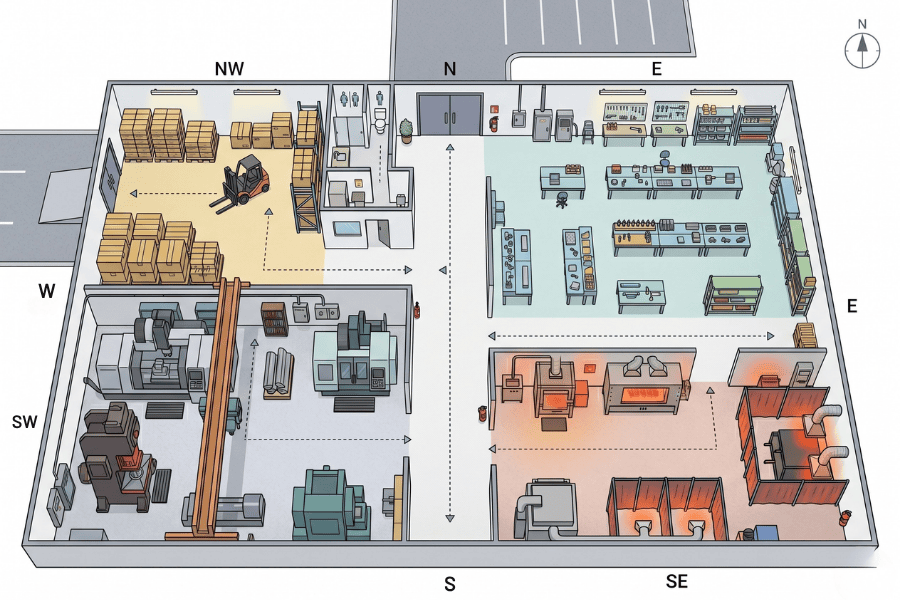
Machinery placement should follow function, weight and safety in industrial vastu. The key point is that machines should not be installed randomly. It should support workflow and leave enough room for operation, maintenance and safe movement.
| Factory Element | Vastu Placement Approach |
|---|---|
| Heavy machinery | South, South-West or West |
| Lighter equipment | North or East |
| Heat-generating machines | South-East |
| Finished goods | North-West |
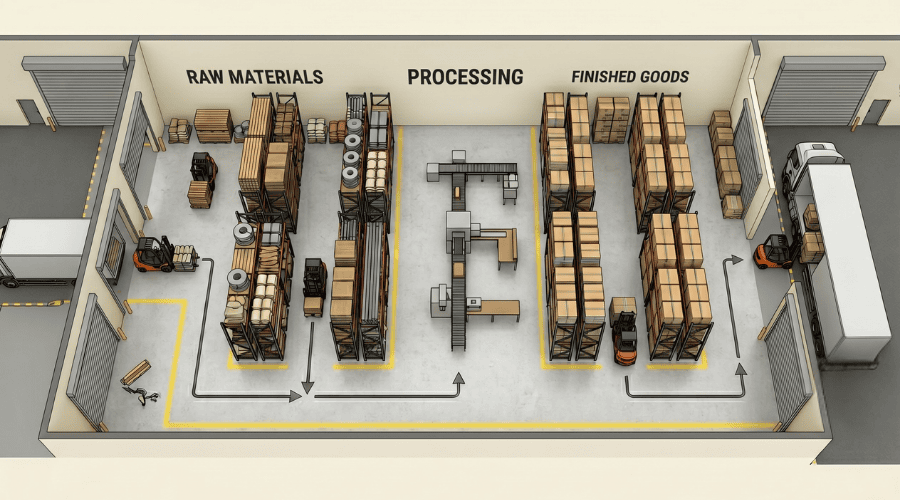
Raw Materials and Finished Goods
Storage is one of the most important parts of industrial planning. Raw materials and finished goods should not be mixed without logic. Raw materials should be kept in the West or South-West and finished goods in the North-East to support movement and dispatch. A simple storage rule is this: separate receiving, processing and dispatch clearly.
Factory Office
The office area should support control, planning and visibility. According to Vastu Shastra recommendations, the owner’s office should be placed at the highest point in the South or South-West direction. Seating should be arranged to face North or East.
The office should not be squeezed into a noisy or chaotic corner. It should feel stable, organised and connected to factory operations without being placed in the middle of production confusion.
Labour Quarters
If labour quarters are part of the premises, they should be clearly separated from production, storage and hazardous utility zones. They should not interfere with core industrial activity. Good labour accommodation should have proper ventilation, sanitation and distance from heavy machine zones.
Kitchen and Pantry
The kitchen or pantry is generally best placed in the South-East, which is the fire zone in Vastu. Even in a small factory, the pantry should be clean, practical and kept away from toilets or waste storage.
Water Boring, Toilets and Septic Tanks
The water element needs careful placement in vastu. Borewells and water tanks are often preferred in the North-East in Vastu-based planning.
Toilets and septic tanks are treated differently and should be kept away from the most sensitive open or sacred zones of the site. Toilets can be placed between the South and West zones while the North-West is the best direction for septic tanks.
Parking Area
Parking (पार्किंग) should never block the main circulation. Heavy vehicles, light vehicles and visitor parking should be planned separately where possible. According to Vastu Shastra, it is best to avoid major parking loads in the North, East and North-East and keep heavy vehicle parking in heavier zones of the plot.
A good parking plan should provide safe turning space as well as clear loading and unloading access. There should be no blockage near the main gate. A separation between staff and heavy vehicle movement is also preferred.
Additional Facilities and Elements
Once the main factory layout is right, secondary elements should also be aligned with the overall plan.
Factory Colours
Factory colours should be calm, clean and functional as per industrial vastu. Light shades such as white, beige, soft yellow, grey and muted green are commonly suggested. These tones help the space feel open and well-maintained.
The factory colour should support the type of work being done. Highly aggressive colours in every area can increase visual fatigue. Offices may use warmer or more grounded shades, while production areas often benefit from simple neutral finishes.
Heating and Electrical Controls
Heating systems, boilers, furnaces and electrical controls are connected with the fire element in Vastu. For that reason, the South-East is the most commonly recommended zone for such functions.
Electrical panels and heat-based systems should be:
- Placed in a designated service zone
- Easy to access for maintenance
- Kept away from water-related functions
- Integrated with fire safety planning
Elevators
If the factory has elevators or lifts (लिफ्ट), they should be placed with attention to circulation and structural balance, preferably in the West and North-West directions. They should not choke the central movement zone or create awkward congestion near entry points.
Trees and Plantation
Plantation can soften the site and improve the environment, but it should be planned. Non-thorny plants and well-kept greenery are generally preferred. Large trees should not block the main entrance or create dark, damp corners near active work zones.
Tulsi (तुलसी) and other traditional plants may be used in suitable spaces, though factory landscaping should remain practical and easy to maintain.
Garbage Storage
Waste storage is often ignored, but it has a strong impact on the feel and hygiene of the premises. Garbage should be stored in the North-West away from the main gate, pantry and water source. It should never spill into the circulation space.
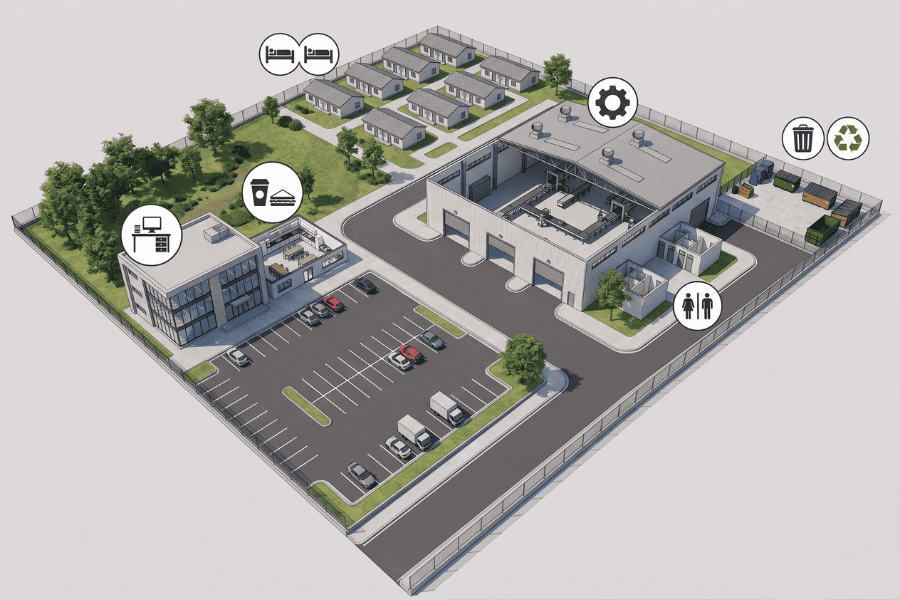
Vastu Guidelines for Industrial Success
In many factory vastu dosha cases, the best approach is correction, not demolition. Remedies should be practical and proportionate.
Some useful corrective steps include:
- Declutter the North and East if they feel blocked or overloaded
- Shift heavy storage away from the North-East where possible
- Move heat and electrical functions closer to the South-East if feasible
- Improve the entry sequence so the gate opens into a cleaner, clearer space
- Use better zoning for raw materials, finished goods and waste
- Introduce lighter colours and better maintenance in dark, neglected areas
Better organisation, cleaner zoning, reduced congestion and corrected placement can change how a space functions on a daily basis.
Final Thoughts
Factory Vastu works best when it is approached with balance and common sense. It is about creating order, functional clarity and a supportive environment for production and workers.
The strongest factory plans usually follow a few consistent principles: choose a stable site, keep the layout logical, place heavy and heat-based functions carefully, separate storage properly and maintain clean support areas. When these basics are respected, the premises often feel easier to manage and more settled over time.
If you are planning a new factory or reviewing an existing one, start with the fundamentals. In industrial Vastu, the biggest improvements usually come from clear thinking and disciplined layout, not from excessive changes.
If you want expert guidance for an existing industrial site, Vastu Ananda offers consultations for plot vastu, residential vastu, commercial vastu, hotel vastu and office vastu, along with vastu learning programmes through our courses.