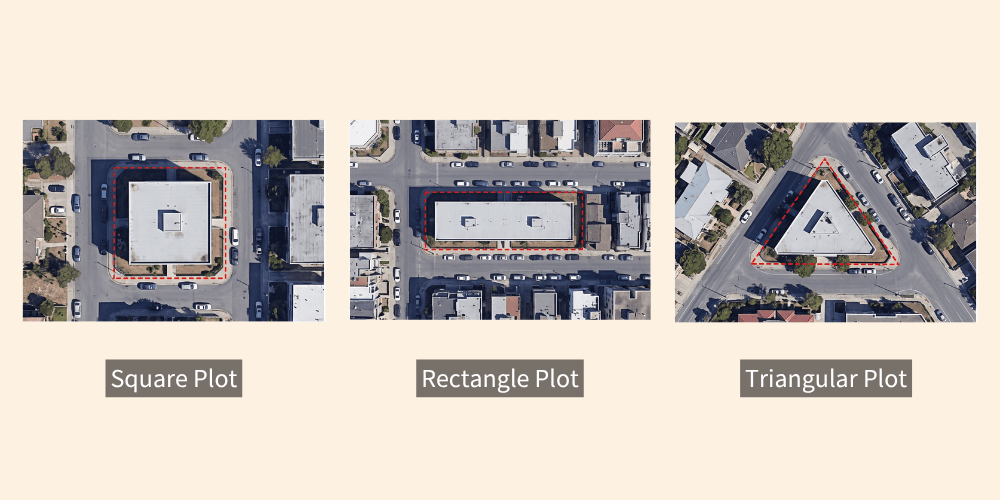
A triangle plot can make many buyers pause. In Vastu Shastra, regular shapes like a square (वर्गाकार) and a rectangle (आयताकार) are usually preferred because they support balanced planning, better symmetry and smoother energy flow.
A triangular (त्रिकोणीय) plot, however, is more complex. In Vastu Shastra, such land shapes are generally considered less favourable and need much closer evaluation.
Triangular plots often create more design stress than standard plots. Corners become difficult to use, open space gets uneven and room planning may feel forced. Still, some triangular areas can be improved with careful boundary treatment, proper zoning and balanced layout decisions. The right approach is to assess the whole site, study the surroundings and then practically apply Vastu principles.
Triangle Plots in Vastu Shastra
In Vastu Shastra, plot shape matters because it affects how space is distributed and used. Square and rectangular plots are traditionally regarded as the most suitable, while triangular and other irregular shapes are generally considered unfavourable.
A triangle has three corners and a sharper geometry than a square or rectangle. This often creates an imbalance in open areas, building lines and energy flow.
However, assessment does not stop at shape alone. Vastu assessment also considers directional alignment, slope, soil stability and road position when evaluating such a site. In many cases, the main aim is to create a more regular usable area inside the site, often through a compound wall or layout adjustment.
Types
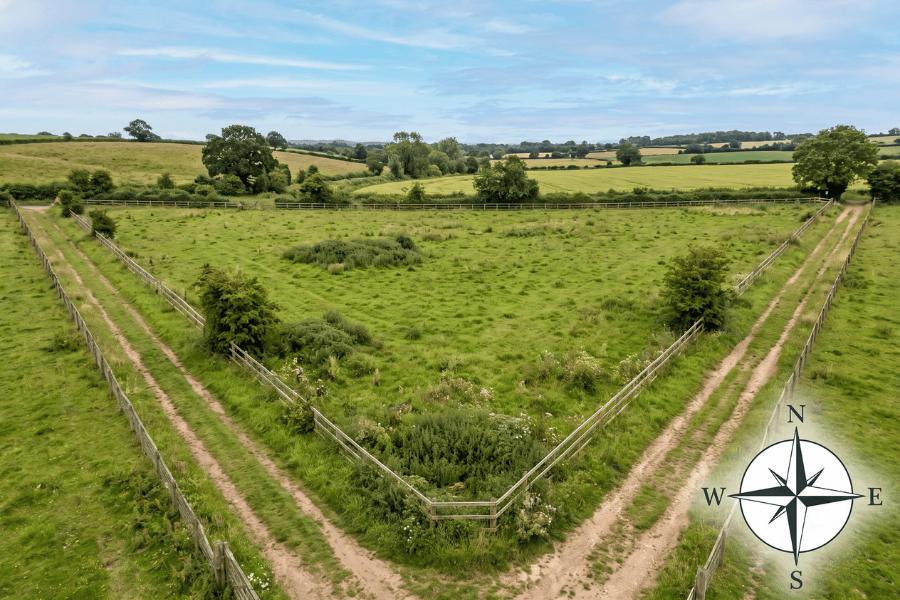
Not all triangular areas behave in the same way. The effect changes based on which side faces the road and where the pointed or cut portion falls. In practical terms, triangular plots are often reviewed as:
- North or East-facing
- South-facing
- West-facing
- Land with a sharp projection in one direction
- Sites where the buildable area can be converted into a near-rectangular plot
It also helps to compare such plots with Gaumukhi plots and Shermukhi plot types. Gaumukhi (गौमुखी) plots are generally preferred for homes, while a Shermukhi (शेरमुखी) plot is often linked more with commercial use.
This is why two triangular sites of the same size may not be equally suitable. The orientation changes the planning options.
Good vs Bad Triangle Plots
A more balanced triangular land that has a usable frontage and the scope to form a rectangular compound is usually easier to manage. A plot becomes more difficult when:
- The sharp point falls in a sensitive zone
- The road hits the land awkwardly
- The shape creates major dead corners
- The buildable area becomes too narrow
- The slope and open space are badly distributed
The actual ground condition also matters. Before any construction, the soil and foundation plan should be checked properly because weak soil or uneven settlement can make a difficult plot even harder to handle.
So, the question is whether it can support a stable and practical layout after correction.
Best Direction and Road Placement
Direction and road position are central to plot Vastu compliance. For triangular plots, these details become even more important because they affect entry, movement and zoning.
General guidance often favours sites that can maintain better balance in the North and East, with heavier treatment in the South and West. Many consultants pay special attention to the North-East because this zone is linked to openness, light and cleaner energy flow. A blocked or cut North-East often needs careful review.
It is also better to avoid sites directly hit by a T-junction (टी-जंक्शन) or Y-junction (वाई-जंक्शन) road. For irregular plots, that kind of road pressure can make the site feel even more aggressive.
The table below gives a simple planning view:
| Plot Factor | General Vastu Shastra View |
|---|---|
| North or East-facing | Usually preferred for a lighter feel |
| South and West | Better for heavier treatment and support |
| North-East condition | Better when open, clean and balanced |
| T-junction facing plot | Usually avoided |
| Site with scope for an inner rectangular layout | More workable |
| Awkward sharp entry corner | Needs careful correction |
How To Apply Vastu Principles
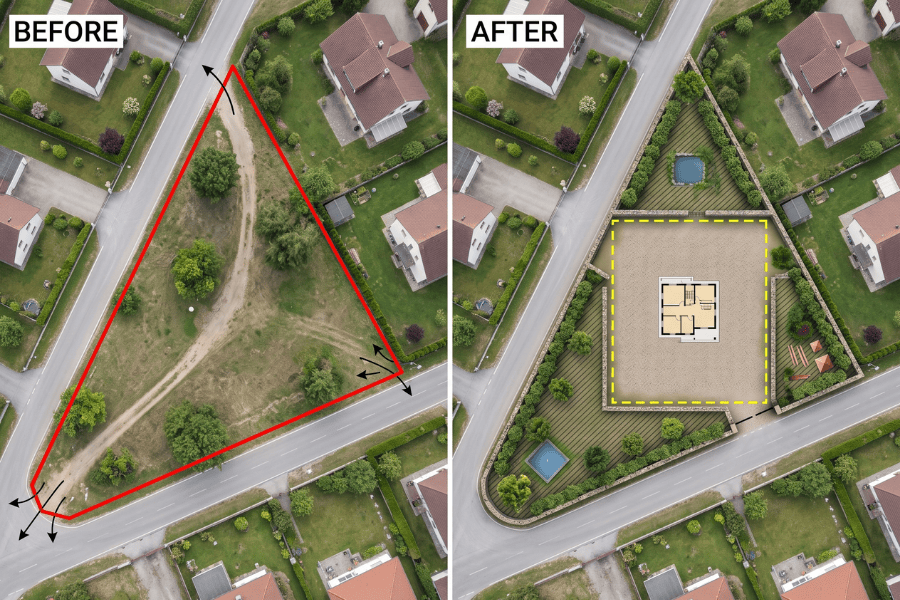
The first rule is to avoid forcing the full triangular shape into the house plan. Instead, the usable built zone should be regular, calm and easy to organise. In many cases, that means creating a square or rectangular inner zone and leaving the extra corners outside the main built form.
A practical Vastu Shastra approach usually includes:
- Keeping the house footprint regular
- Using awkward corners for landscaping, planting or open buffer space
- Maintaining more openness in lighter zones where possible
- Avoiding sharp, cramped interior layouts
- Planning the main gate and movement path carefully
The basic idea is to reduce the effect of the irregular outer shape and asymmetrical sides on the actual living area. It also improves ventilation, circulation and overall energy flow through the home.
Common Challenges of Triangle Plots
The biggest issue with a triangular plot shape is the practical design difficulty. Even from a planning point of view, triangular sites can create wasted edges, weak ventilation and uncomfortable room arrangements.
Uneven open space around the house, difficult room proportions and sharp corners that are hard to use well are some of the most common problems. This often leads to poor parking or circulation planning, trouble placing the gate logically and reduced flexibility for future extension.
A triangular site can also lead owners to compromise on room placement just to fit the boundary wall. That is where both design quality and Vastu Shastra logic begin to weaken. If the foundation is not planned with care, later construction work may also become more expensive.
Common Triangle Plot Issues and Their Impact
| Challenge | Likely Effect |
|---|---|
| Sharp corners | Hard-to-use leftover spaces |
| Narrow frontage | Weak entry planning |
| Irregular buildable area | Forced room shapes |
| Poor road alignment | Entry and movement issues |
| Wrong plot slope direction | Vastu imbalance in site levels |
| Weak soil or poor foundation | Structural risk during construction |
Vastu Tips for Tricky Triangular Plots
When a triangular plot cannot be avoided, corrections should focus on making the site calmer and more regular in use. Corrections may include both physical planning changes and traditional remedial measures, depending on the plot condition.
A commonly suggested Vastu tip includes forming a rectangular compound wall within the plot and using the leftover corners as non-built areas. This is one of the most practical corrections because it directly improves the planning quality, protects the main foundation zone and supports smoother energy flow.
Another vastu remedy is to create a regular inner boundary wall for the main house area. You can also reserve awkward corners for planting, landscape or light use. Placing trees or greenery in suitable outer portions where appropriate can also help.
Avoid building right into every sharp edge and keep the built form simple rather than highly cut or angular. Maintain a sensible slope, ideally lower towards the North-East or East and higher in the South or West.
The quality of soil should also be checked before final design decisions, especially if the pointed corner creates drainage issues. In some cases, consultants also recommend Vastu yantras (वास्तु यंत्र) as a secondary support measure, though the main correction should still come from proper layout and planning.
Some sources also suggest material-based remedies for certain extensions. That includes using colors wisely in the built environment. Calm colors and a clean site can support a more settled feel, though they cannot replace a good plan.
Should You Invest in a Triangle Plot?
The answer is: only after careful assessment.
A triangular plot may be worth considering if the location is strong, the price is fair and the site allows a proper inner rectangular planning zone. It may also make sense when the road placement is manageable, the surroundings are stable and the irregular corners can remain outside the main building use.
You should be more cautious if:
- The plot is very sharp or narrow
- The entry falls in a problematic spot
- The road directly strikes the site
- The buildable area becomes too compromised
- Major corrections reduce too much usable land
It is also wise to review the soil, drainage and long-term foundation needs before purchase. A triangular site with poor soil can lead to avoidable repair costs later. If you are comparing options, also remember that a Shermukhi plot and a triangular plot are not the same thing, even if both may need more careful use assessment.
Final Thoughts
A triangle plot is usually not the first choice in Vastu Shastra, especially for a residence. Regular shapes are easier to plan and are traditionally considered more balanced. Still, a triangular land is not always a complete no. The real decision should come from a full site review that includes direction, road placement, slope, usable build area, surroundings, soil condition and the possibility of correction.
In many cases, the smartest solution is to regularise the practical living zone rather than build around the triangle itself. That one step can improve both the Vastu quality and the day-to-day usefulness of the home. Keeping the North-East clear, maintaining healthy energy flow and choosing simple colors for the built space can all support a calmer result. Vastu yantras may also be useful as a support tool after the layout issues are addressed.
If a triangular plot is being considered for purchase, review the shape, slope, road hit, foundation needs and entry position with care. A Shermukhi plot may suit some commercial settings, but a triangular residential site needs more caution. The role of the North-East remains especially important in such cases, since many Vastu decisions around openness, light and energy flow begin there. Soft colors in the home and proper site planning can support comfort, but planning quality still comes first.
If you need guidance on plot Vastu, residential Vastu or commercial spaces, Vastu Ananda offers consultations and also provides learning options through its vastu basic course and vastu advanced course.
FAQs
1. Is a triangle plot good as per Vastu?
A triangle plot is usually seen as less favourable than a rectangular or square plot in Vastu Shastra (वास्तु शास्त्र). This is because it can create imbalance in space planning and energy flow. Still, the final effect depends on the plot’s direction, road placement and how the built area is designed.
2. Can you build a house on a triangular plot?
Yes, a house can be built on a triangular plot. In many cases, the better approach is to create a square or rectangular usable area within the plot and keep the irregular corners for open space, greenery or light use.
3. Does road placement matter for triangle plot Vastu?
Yes, road placement matters a lot. A well-placed road can improve access and planning, while a road directly hitting the plot, such as at a T-junction, is usually avoided in Vastu.
4. What is the best remedy for a triangular plot in Vastu?
One of the most practical remedies is to create a square or rectangular compound wall within the triangular plot and build the house inside that regular zone. This reduces the effect of the irregular outer shape.
5. Is a triangular plot good for investment?
It can be, but only after proper review. Buyers should check location, direction, road position, plot usability and how much land may be lost in correction. A lower price alone should not decide the purchase.
6. Should I consult a Vastu consultant before buying a triangular plot?
Yes, that is a sensible step. A site-specific review can help you understand whether the plot can be corrected properly and whether it is suitable for your intended use.