A marriage hall carries strong energy because it brings together rituals, family gatherings, food, music and movement in one place. In Vastu Shastra, the layout of a wedding hall affects comfort, flow and the overall success of events held there. A well-planned hall feels open, steady and welcoming. Guests move easily, ceremonies proceed without confusion and the space holds a peaceful mood.
Marriage Hall Direction and Plot Planning
The direction of the building sets the base for the full layout plan. A square or rectangular plot is best for a marriage hall. These shapes keep the energy balanced and make planning easier. This supports the balance of the five elements or Panchtatva (पंचतत्व): Earth (पृथ्वी), Water (जल), Fire (अग्नि), Air (वायु) and Space (आकाश).
A good starting plan includes:
- Open and lighter space in the North-East or Ishaan Kon (ईशान कोण)
- Heavier built-up sections in the South-West (नैऋत्य कोण)
- Proper sunlight and ventilation from the East and North windows
- Clear movement paths without blockage
| Design Element | Vastu Guide |
|---|---|
| Plot shape | Square or rectangle |
| Slope and openness | More open in the North and East |
| Heavy storage or back-end use | South-West |
| Fire-related functions | South-East |
| Movement and circulation support | North-West |
Marriage Hall Design Requirements and Internal Layout
Marriage hall planning needs more than a good direction. The building design must support rituals, dining, guest comfort and smooth movement. The internal layout should keep sacred activities, cooking functions and crowd flow in the right places.
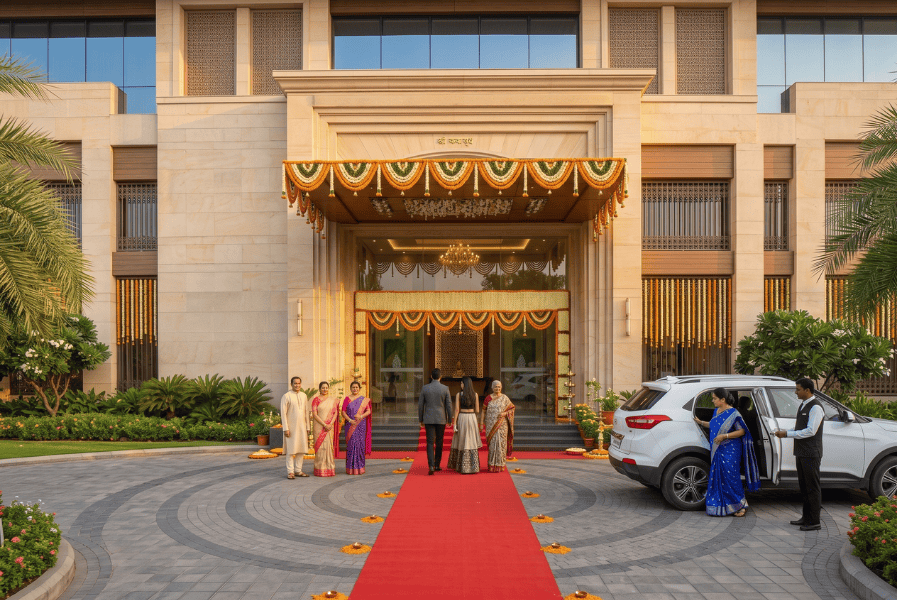
Entrance of the Wedding Hall
The entrance is one of the most important parts of a banquet hall.
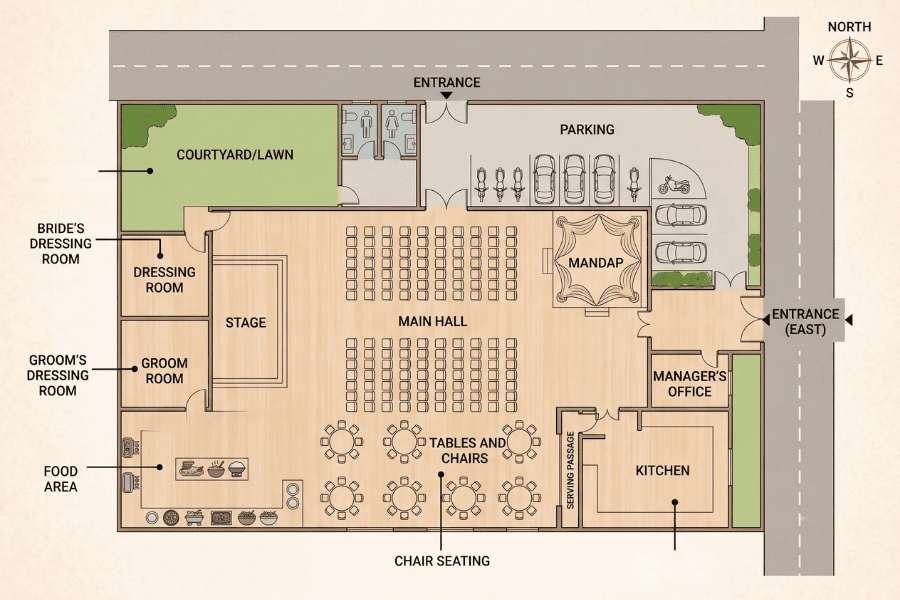
Vastu principles generally prefer the East and North entrances because they allow a cleaner flow of energy and create a welcoming first impression.
The entry should be wide, clear and easy to identify. A clockwise entry movement is also highly recommended. Good lighting at the entrance also improves the feel of the venue.
Placement of the Mandap and Agni Kund
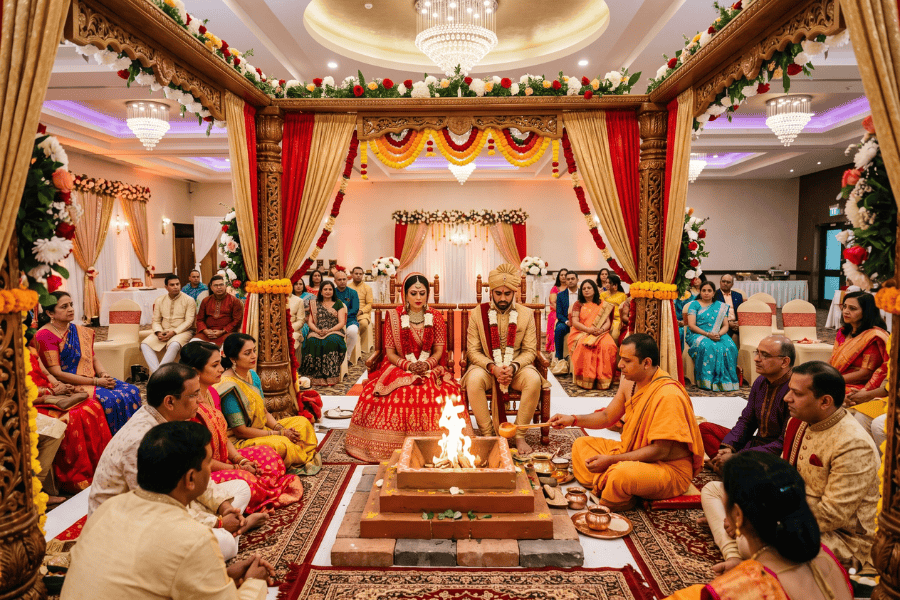
The mandap (मंडप) is the spiritual centre of the wedding. The Agni Kund (अग्नि कुंड) connects directly with the fire element. Since fire belongs to the South-East or Agni Kon (अग्नि कोण), this zone matters greatly in wedding hall planning.
The mandap should sit in a location that keeps the ritual area calm and organised. The fire setup should stay safe, ventilated and clear from crowd pressure. The sacred ritual space should never feel squeezed between seating and service areas.
Stage
The stage should stay in a position that gives clear visibility without disturbing the main energy balance of the hall. This supports order and comfort during long wedding functions.
Many planners prefer the West side for the stage area so the guest seating area can face East or North while watching the ceremony. The South-West corner is generally the most preferable as it should stay higher and heavier, which suits the main focal area of the hall.
The stage should also have enough depth, safe side access and a proper waiting area behind it.
Guest Seating
Guests’ seating arrangement should feel open and organised. Long blocks of chairs with narrow gaps create stress and slow down movement. Seating layouts work better when aisles are wide and the main ritual or stage area stays visible from most parts of the hall.
North and East-facing seating is generally preferred. This creates a calmer setting for guests during ceremonies and speeches.
Food Counters and Cooking Area
The cooking arrangements belong in the South-East because this is the fire zone. This placement suits stoves, electrical equipment and heat-producing appliances. Cooks should ideally face East while preparing food.
Food counters should stay easy to access but should not block the main ceremony space. Dining halls in the West are often considered favourable. Proper ventilation, waste management and fire safety are also necessary for a practical hall design.
Parking and Guest Movement
Parking lots must be planned with movement in mind. A good marriage hall avoids confusion at the gate, near the drop-off point and around the main entrance of the marriage premises. Guest passage should stay simple from parking to reception to hall entry.
Use these basics:
- Keep vehicle movement separate from the main pedestrian flow
- Avoid placing parking pressure directly in the North, East or North-East
- Leave enough open turning space
- Maintain clear location signboards and walking paths
Marriage Lawn or Garden Area
If the marriage hall has an outdoor lawn or garden, this space should stay lighter and more open than the building structure. North, East and North-East are suitable for open areas because they support freshness, movement and a pleasant atmosphere for guests.
Heavy landscaping, raised platforms, storage blocks or utility structures should not crowd the North-East (ईशान कोण). Large trees are better in the South, South-West or West. If the lawn is used for outdoor dining or reception events, the walking paths should stay clear and the lighting should be soft and well-planned.
Bathrooms and Toilets
Restrooms and toilets need careful placement in a marriage hall because they affect hygiene, comfort and the energy of the venue. North-West and West are generally more suitable layout zones for toilets.
Toilets and bathrooms should not sit close to the mandap (मंडप), main entrance or food preparation area. They should be easy for guests to access without crossing the main ritual or dining layout zones. Good ventilation, drainage and regular cleaning are necessary.
Final Thoughts
A marriage hall planned with Vastu brings order, comfort and a better event experience. Direction, entrance, mandap placement, kitchen planning and guest movement all matter. When these parts sit in the right zones, the venue feels balanced and peaceful.
For practical guidance on marriage hall Vastu, Vastu Ananda provides consultations for plot vastu, residential vastu, commercial vastu, hotel vastu and office vastu. They also offer vastu basic course and vastu advanced course for learners.
FAQs
Which direction is best for a marriage hall entrance?
North and East are generally preferred for the main entrance of a marriage hall.
Where should the mandap be placed in a wedding hall?
The mandap should sit in a calm and properly planned area, with the Agni Kund aligned carefully with the fire zone principles of Vastu.
Which direction is best for the kitchen in a marriage hall?
South-East is the preferred zone for the kitchen and other fire-related functions.
What plot shape is good for a marriage hall?
A square or rectangular plot is considered suitable for balanced planning and smoother energy flow.