Choosing the right plot is one of the most important steps in Vastu Shastra. Before the building design, room placement or main entrance direction is planned, the shape of the land itself needs attention.
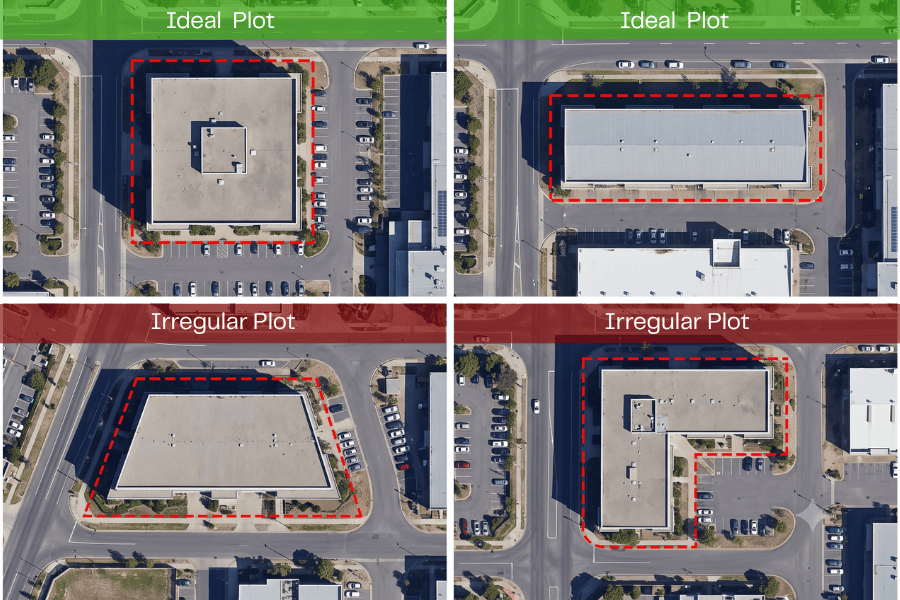
A regular rectangle or square plot is usually preferred because it supports balance and clear energy flow.
But in real life, many buyers come across uneven sites, especially trapezium or trapezoid-shaped plots.
A trapezoid plot is not always rejected in Vastu, but it does need closer study. Its effect depends on whether the plot is narrow at the front and broad at the back, or broad at the front and narrow at the back. These variations are commonly understood through Gaumukhi and Shermukhi plot types. People often make the mistake of judging such plots by shape alone, without checking orientation, corner cuts, slope and practical layout.
This guide explains how the trapezoid shape plot is understood in Vastu, what effects odd-shaped plots may have and what Vastu remedies can help if you already own one.
Why Plot Shape Matters in Vastu Shastra
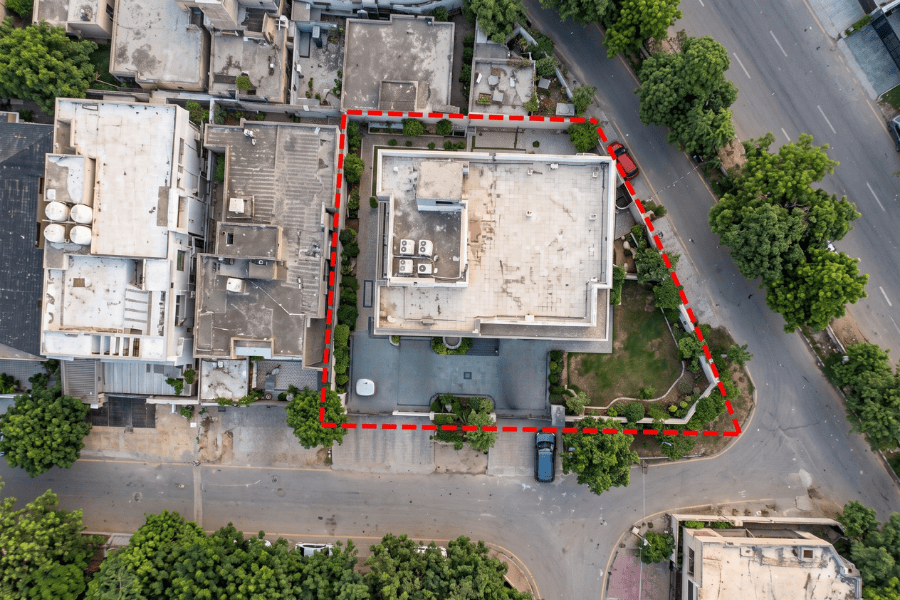
In Vastu Shastra, the plot is seen as the base of the entire property. If the land has a stable and balanced form, planning becomes easier and the energy of the site is considered more harmonious. Irregular shapes can create uneven zones, awkward corners and unbalanced distribution of space.
A plot shape is given importance before construction begins because:
- It affects how space is divided and used
- It influences the placement of the entrance, open areas and built-up sections
- It may create extensions or cuts in certain directions
- It can impact the balance of the five elements, or Panch Mahabhutas (पंच महाभूत)
A square or rectangular plot shape is usually easier to align with Vastu principles. A trapezium plot can still be used, but it often needs proper planning and sometimes corrective measures.
Understanding Trapezium-Shaped Plots in Vastu
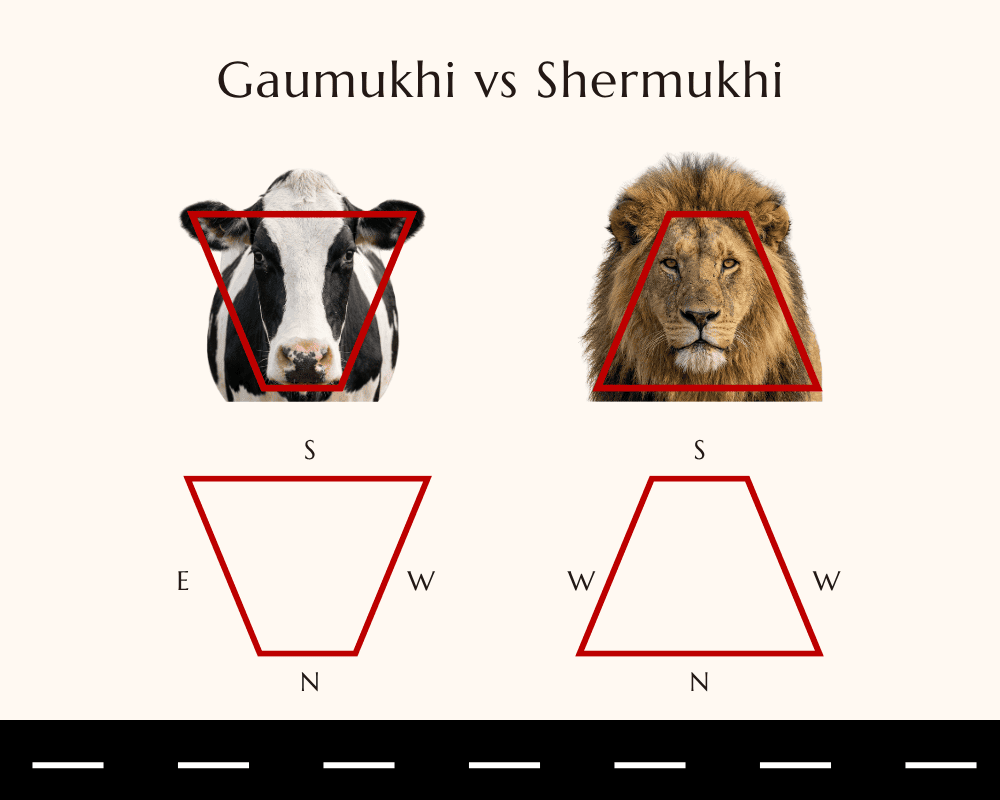
A trapezium (समलंब) or trapezoid-shaped land has one pair of sides that are parallel, while the other sides are uneven. In practical terms, this means the plot may become narrower or wider from one end to the other. In Vastu Shastra, these plots are generally studied in two common forms: Gaumukhi and Shermukhi.
Before buying or building on such a site, it is important to look beyond the shape and ask:
| What To Check | Why It Matters in Vastu |
|---|---|
| Front and rear width | Helps identify whether the plot is Gaumukhi or Shermukhi |
| Direction of the plot | The same shape can behave differently depending on the orientation |
| Corner cuts or extensions | Missing or extended corners can create Vastu dosha (वास्तु दोष) |
| Slope and ground level | A poor slope may increase imbalance |
Not all trapezium plots are treated the same way. Vastu usually separates them by their front and rear proportions. This creates two well-known categories.
Gaumukhi Plot
A Gaumukhi plot is narrow at the front and broader at the back. It is compared with the face of a cow, which is why it is called Gaumukhi (गौमुखी). Traditionally, this shape is considered more suitable for residential use. The broader rear portion is seen as supportive for stability, family life and gradual accumulation.
However, if the North, West or South sides are extended improperly, remedies may still be required.
A few points to keep in mind for a Gaumukhi plot:
- It is generally considered better for a house than for a business
- The layout should not create a cut in the Northeast
- Open and lighter areas should still be planned carefully
- The entrance should be chosen according to direction, not just shape
Shermukhi Plot
A Shermukhi plot is broad at the front and narrower at the back. It resembles the face of a lion, so it is called Shermukhi (शेरमुखी). Shermukhi plots are generally treated cautiously in Vastu and are considered less favourable, especially for residential use.
They’re better associated with commercial activity, but they still require careful evaluation because they may create serious directional defects. This shape is associated with outward activity, visibility and power. That is why it is often linked to shops, offices and commercial establishments.
A Shermukhi plot usually needs more caution when used for residential construction, especially if there are defects in the South-East or other sensitive zones.
Effects of Irregular Plots
In Vastu, irregular plots are generally considered unfavourable, though their actual impact depends on the nature of the cuts, extensions, orientation, slope, and how the built area is planned. Such land can create extra corners, sharp edges, missing sectors or uneven expansion in one zone.
Some common effects associated with irregular plots include:
- Difficulty in creating a balanced floor plan
- Uneven open spaces around the building
- Possible stress around finances, health or relationships, depending on the affected direction
- Poor use of important zones such as the North-East, Southwest, East or South-East
The effect often depends on where the plot expands or gets cut. For example, projections in the North or North-East are generally seen more favourably, while defects in the Southwest, South-East or North-East are approached with caution.
Here is a simple overview:
| Plot Shape | Usual Vastu View |
|---|---|
| Regular square or rectangle | Most balanced and preferred |
| Gomukhi | Better for residential use |
| Shermukhi | Better for commercial use |
| Plot with Northeast cut | Considered unfavourable |
| Plot with South-West cut | Major vastu defect, strongly needs correction |
| Plot with Southwest extension | Generally unfavourable |
In practice, the impact also depends on what is built on the land. A badly planned house on a good plot can still create problems, while a carefully corrected irregular plot may perform reasonably well.
(IMAGE IDEA) Common Trapezium Plot Mistakes, an illustrated layout showing wrong entrance placement, awkward construction line and corner cuts
Common Mistakes People Make on Trapezium Plots
Buyers often assume that once a plot is called Gaumukhi or Shermukhi, the job is done. But shape alone does not decide everything.
Here are the most common mistakes:
Ignoring Direction and Focusing Only on Shape
Direction matters deeply in Vastu. A good shape with a badly affected corner may still need correction.
Remedy: Always check orientation, road position, slope and corner condition before finalising the plan.
Building Along the Entire Irregular Boundary
On a trapezoid plot, people often try to use every inch of land. This can force the building into an awkward form.
Remedy: Create a regular construction zone inside the plot, preferably square or rectangular, and leave the irregular part as open space, landscaping or a boundary adjustment area.
Neglecting Corner Cuts and Extensions
A narrow or wide end may create hidden cuts or projections. This is especially important in the Northeast, South-East and South-West.
Remedy: Use compound wall planning, open space management and layout correction to reduce the impact. In some cases, Vastu tools such as pyramids or metal-based remedies are suggested, but these should be used with proper guidance from Vastu consultants.
Wrong Slope or Ground Level
Even a workable trapezium plot may become problematic if the site slopes in the wrong direction.
Remedy: Ideally, the plot should be higher in the South and West and lower in the North and East, especially towards the North-East.
Using a Shermukhi Plot for a Home Without Proper Planning
This is a common mistake. A broad-front, narrow-rear plot may suit commercial energy better than residential energy.
Remedy: If such a plot must be used for a residence, the internal built form should be regularised as much as possible and the entrance, zoning and open areas should be planned carefully after expert review.
Final Thoughts
A trapezoid-shaped plot is not something to fear, but it should never be judged casually. A narrow-front Gaumukhi plot may work well for a home. A broad-front Shermukhi plot may suit business better. But the final result depends on direction, slope, corner balance and how the building is placed within the site shape.
The safest approach is to avoid extreme irregularity and create a regular built-up area, even if the outer boundary is uneven. Good Vastu is about proportion, balance and thoughtful planning.
If you want Vastu consultant guidance for plot Vastu, residential Vastu or commercial Vastu, Vastu Ananda offers practical consultations based on real site conditions.
FAQs
1. Is a trapezoid plot good in Vastu Shastra?
A trapezoid plot is not usually the first preference in Vastu, but it is not always unsuitable. Its effect depends on whether it is Gaumukhi or Shermukhi, its direction, slope and any corner cuts or extensions.
2. Which is better for a house, Gaumukhi or Shermukhi?
Gaumukhi plot is generally considered better for residential use because it is narrow at the front and broader at the back. Sher Mukhi is more commonly linked with commercial use.
3. Can a trapezium plot be corrected?
Yes, in many cases the plot can be managed through better layout planning, compound wall adjustments, slope correction and by creating a regular shape for the built area within the site.
4. Are irregular plots always bad in Vastu?
No. Irregular plots are treated with caution, but they are not always unusable. The real issue is how the imbalance affects the directions and whether the site can be corrected through planning.
5. Should I avoid buying a Shermukhi plot?
Not necessarily. If you want the plot for commercial use, it may be suitable. For residential use, it needs more careful evaluation before purchase or construction.