Energy first enters a home through its main door. In Vastu Shastra (वास्तु शास्त्र), the entrance shapes the mood of the house, the comfort of the people living in it, as well as the flow of health, peace and prosperity. When the main door is placed well and kept balanced, the house feels lighter, calmer and more supportive in daily life.
This matters even more in modern homes. Many families live in flats, compact villas and builder floors where room for changes is limited. In such homes, the main entrance becomes one of the strongest Vastu points. Its direction, size, material, colour and surrounding decor all affect the quality of energy entering the house.
This guide covers the importance of door Vastu, the 32 entrance zones, the effect of each directional zone and the practical details people often miss, such as threshold, name plate, steps and entrance decor.
Why Door Vastu Matters
The main entrance door is the face of the house. It is the point through which people, light, movement and subtle energy enter. In Vastu Shastra, this area connects with flow, opportunities, harmony and mental peace.
A well-placed main door improves the movement of positive energy into the home and supports smoother relationships among family members. It even strengthens prosperity, clarity and peace of mind.
The home entrance also connects with the five elements or Panch Mahabhutas (पंच महाभूत) — earth, water, fire, air and space. Balance at the entrance affects the way these forces work inside the home.
The direction of the door also links with devtas (देवता) placed in the Vastu Purusha Mandala (वास्तु पुरुष मंडल). That is why even a small shift in door position can change results.
The 32 Entrance Zones in Vastu Shastra
In Vastu, each side of the house is divided into eight parts.
Together, the four sides create 32 entrance zones and these zones are also called padas (पद).
Each pada has a specific energy and is linked with a devta. So it is not enough to say that a home is East-facing, West-facing, North-facing or South-facing. The exact zone of the main door matters.
How Different Entrance Zones Influence Life Outcomes
Each directional segment carries a different effect. A door in a supportive zone improves peace, finances, growth and stability. But one placed in a weak zone brings stress, delay, conflict or health issues.
| Direction | Entrance Zones | Auspicious Zones | Common Effects | Zones Usually Avoided |
|---|---|---|---|---|
| North | N1 to N8 | N3, N4 and N5 | Growth, money flow and support in work | N1, N2, N6 and N7 |
| East | E1 to E8 | E3 and E4 | Clarity, reputation and fresh energy | E1, E2, E5, E6, E7 and E8 |
| South | S1 to S8 | S3 and S4 | Strength, steady results and control | S1, S2, S5, S6, S7 and S8 |
| West | W1 to W8 | W3 sand W4 | Stability and support | W1, W2, W6, W7 and W8 |
A North or East entrance usually feels lighter and more open. These directions connect with growth and fresh movement. A South or West main door can also work well if the door falls in the correct pada. Problems usually begin when the main entrance door sits in a weak zone. This is why two homes in the same facing direction can give very different results.
Main Door Vastu Elements That Need Attention
The details around the door affect how energy enters and settles.
Direction
Direction is the first thing to check. The exact 360-degree compass reading of the door position matters more than the broad facing of the plot or flat.
Generally, North and East-facing entrances are preferred. The North-East door direction especially brings lightness, spiritual calm and clarity. South and West entrances can work only if they fall in the right zones. Ideally, a South-West placement is avoided as it creates heaviness and instability.
The direction of the main door matters most for the daily lives of people living in flats, even if the building has a separate common entrance.
Material
Wood is the most recommended and preferred material for main doors as per Vastu. A solid wooden door gives warmth, grounding and protection. It also suits the earth element better than a harsh metal feel at the main door.
It is important to use strong, good-quality wood and avoid damaged, cracked or noisy doors. The hinges should also be kept smooth and silent. A weak or hollow-feeling main entrance door is also best avoided. The main door should feel firm and welcoming at the same time.
Door Size
The size of the main door is usually kept larger than the internal doors. This gives the home entrance the right importance and allows energy to enter freely. Its proportions should also look balanced. A proportionate main entrance door gives ease and confidence, while a cramped one creates pressure from the very start.
Colour
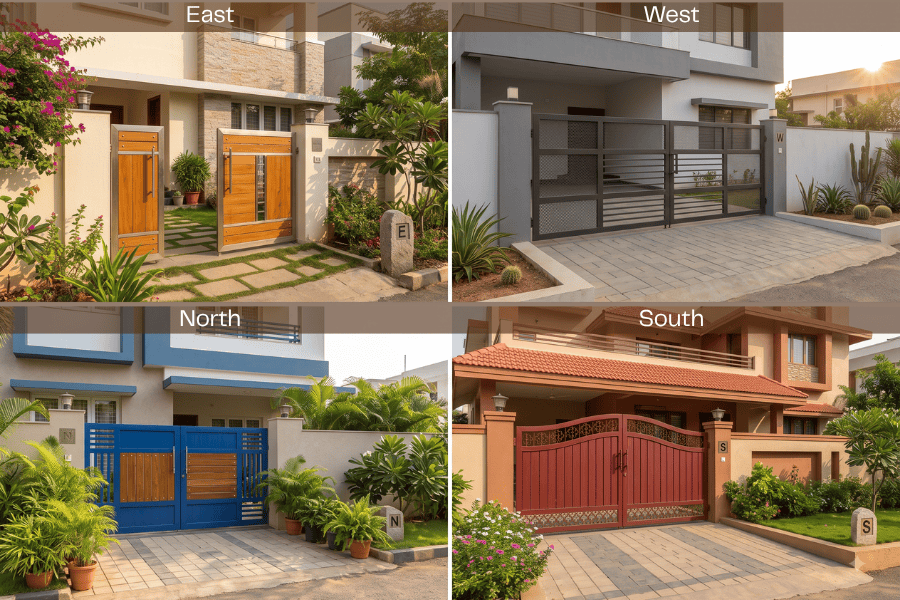
Door colour should match the direction and the energy linked with that side.
| Direction | Colour Preference |
|---|---|
| North | Blue shades |
| East | Green, light wood or soft brown tones |
| South | Red, maroon, pink or warm earthy shades |
| West | White, off-white, grey or metal-linked shades |
The colour should feel clean and settled. Very dark, harsh or peeling finishes reduce the quality of the entrance.
Name Plate
The nameplate is a small detail with strong symbolic importance. A proper nameplate gives identity and steadiness to the home.
It should be kept clear and easy to read. Fix it neatly on the right side of the main door. Avoid having broken, faded or temporary-looking plates.
Threshold and Doormat
The threshold and doormat together shape the first layer of energy control at the main entrance door.
The threshold, or dehri (देहरी), protects the home from draining energy. It creates a subtle boundary and keeps the energy field of the house contained. Use a proper raised threshold where suitable. Keep it clean and unbroken. Cracks and damage should be repaired immediately.
Use a neat doormat with simple colours. Replace it immediately when it gets worn out. Keep the area dry and clean.
Steps
Main entrance steps affect the movement of energy before it reaches the door. An odd number of steps, such as 1, 3, 5 or 7, are generally preferred.
Keep the stairs clean and well-maintained. Avoid broken edges as well as drainage lines and waste outlets below the main entrance steps. It is also best to ensure that no large obstructions block the entry. The stairs should give a smooth rise towards the home, not a feeling of blockage or pressure.
Entrance Decor as per Vastu Shastra
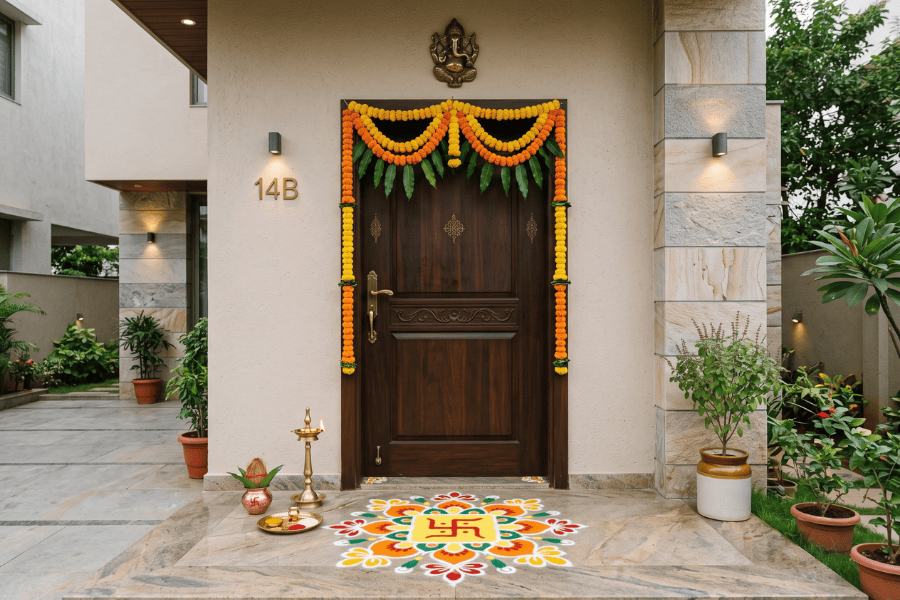
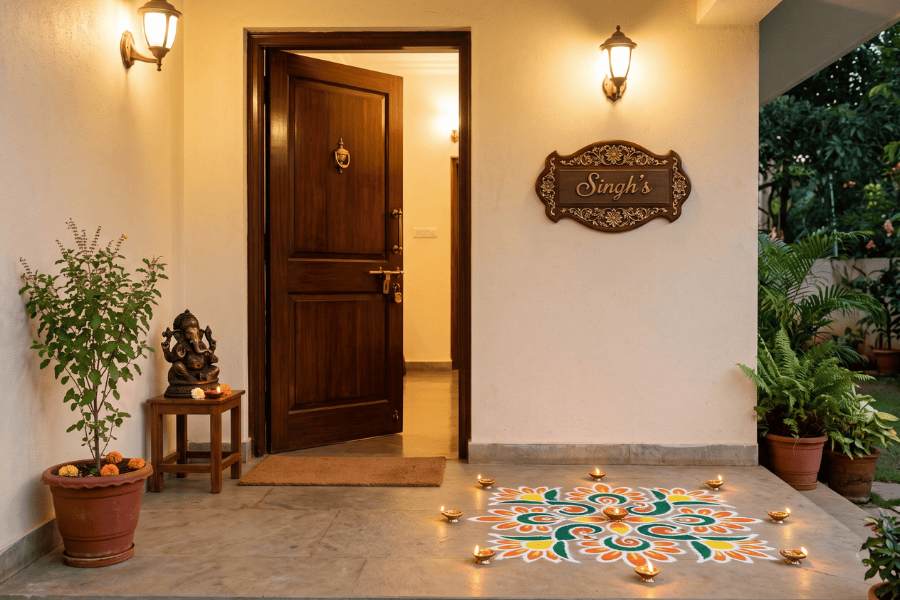
Decor at the entrance should support purity, balance and positive energy flow. The entrance should look calm, bright and cared for. Too much clutter weakens the space.
Idols of Gods
Many homes place divine symbols and deities near the main door for protection and blessings. This should be done with care. Avoid crowding the entrance with many idols. The entrance should feel devotional, not overloaded.
Lord Ganesha or Goddess Lakshmi idols are commonly placed near the main door. It should be kept neat and properly positioned.
Plants
Plants near the main entrance door bring freshness and a pleasant feel when they are healthy and well-placed. In Vastu, clean and well-kept greenery supports a positive first impression and keeps the entrance area lively.
Keep in mind:
- Use healthy potted plants with green leaves
- Keep pots clean and in good condition
- Remove dry, thorny or decaying plants
- Do not overcrowd the area
- Keep the path to the main door open and easy to use
Water Features
Water represents flow and movement. In Vastu Shastra, water placement needs care because the wrong location can disturb balance.
A small, clean water fountain near a suitable zone can improve freshness and calm. Dirty, stagnant or badly placed water creates heaviness and confusion.
Paintings and Rangolis
A tasteful painting, auspicious symbol or rangoli (रंगोली) at the entrance adds warmth and positive intent. These should stay clean, fresh and meaningful.
Vastu-friendly choices include:
- Traditional rangoli patterns
- Lotus or swastik symbol (स्वस्तिक) used respectfully
- Soft, pleasant artwork
- Festive decor during special days
Avoid sad imagery, aggressive visuals or anything broken, dusty or faded.
Common Main Door Vastu Checklist
Here is a quick checklist for review:
- Main door in a suitable directional zone
- Solid wooden door with smooth movement
- Main door larger than internal doors
- Door opens cleanly and inward with ease
- Entrance has good lighting
- Name plate is clear
- Threshold is present and unbroken
- Doormat is clean
- No clutter or obstruction at the entrance
- No mirror directly facing the main door
Simple Remedies for Door Vastu Issues
Not every home can shift its main entrance door. Flats and finished houses often need practical corrections. In such cases, simple remedies improve the home entrance energy.
Useful Vastu remedies include:
- Keep the entrance bright, clean and active every day
- Repair damaged hinges, handles and frames
- Use suitable colours for the direction
- Add a proper threshold if missing
- Place auspicious symbols neatly near the entrance
- Remove clutter, broken decor and unused items
- Use a correct metal or wooden name plate based on the entrance setting
For deeper correction, the exact zone of the door needs proper analysis through the Vastu Purush Mandala and directional reading.
Final Thoughts
Vastu principles consider the main door to be one of the most important parts of a home. It decides how energy enters, settles and affects the people living inside. The exact door direction from the 32 entrance zones matters a lot. The door’s material, size, colour, threshold, steps and decor complete the remaining picture. A well-kept entrance improves peace, steadiness and prosperity in a direct way.
If you want personalised guidance, Vastu Ananda provides vastu consultations for plot vastu, residential vastu, commercial vastu, hotel vastu and office vastu, along with vastu basic and advanced courses for learners.
FAQs
Which direction is best for the main door as per house Vastu?
North, East and North-East are commonly preferred. The exact entrance zone matters more than the broad door direction alone.
What are the 32 entrances in Vastushastra?
The 32 entrances are the padas placed across the four sides of a building, with eight on each side. Each pada has a different effect.
Can a South-facing main door be good?
Yes. A South-facing door can give good results when it falls in the right zones such as S3 or S4.
Which material is best for a main door as per Vastu principles?
Solid wood is generally preferred for the main entrance door because it gives strength, grounding and a welcoming feel.
Should the main door be bigger than other doors?
Yes. The main door should be larger than the internal doors to allow better energy flow and proper entrance balance.
Is a threshold important as per Vastu?
Yes. A threshold or dehri helps hold positive energy inside the home and creates a protective boundary.