In Vastu Shastra (वास्तु शास्त्र), a diya represents light, clarity and the removal of heavy or stagnant energy. In many homes across India, they are lit to create a calm atmosphere and support a more mindful home routine. Its effect often depends less on decoration and more on where, when and how it is lit. This is especially true when using an Akhand diya, which is traditionally kept burning for longer periods as a symbol of steady positive energy.
Why Diya Matters in Vastu Shastra
In Vaastu, fire (अग्नि) is linked with transformation, purity and movement.
A diya supports the fire element and is often used to create a sense of warmth and spiritual focus.
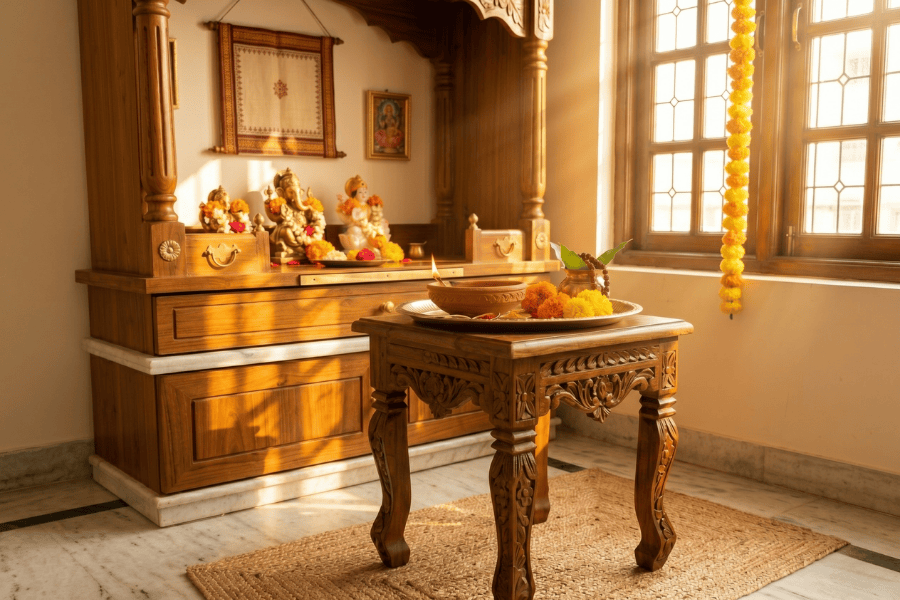
This is one reason they are commonly placed in the puja room, near the entrance and during festivals honouring Goddess Lakshmi.
A well-placed diya is traditionally believed to support:
- Mental clarity and peace
- A welcoming home environment
- A stronger sense of spiritual discipline
In some homes, an Akhand diya is lit during prayers, festivals or special observances such as Vastu Shanti. The steady flame is seen as a sign of continuity, devotion and inner stability.
This simple practice is valued because it brings regularity, intention and light into the space.
Placement Direction and Time
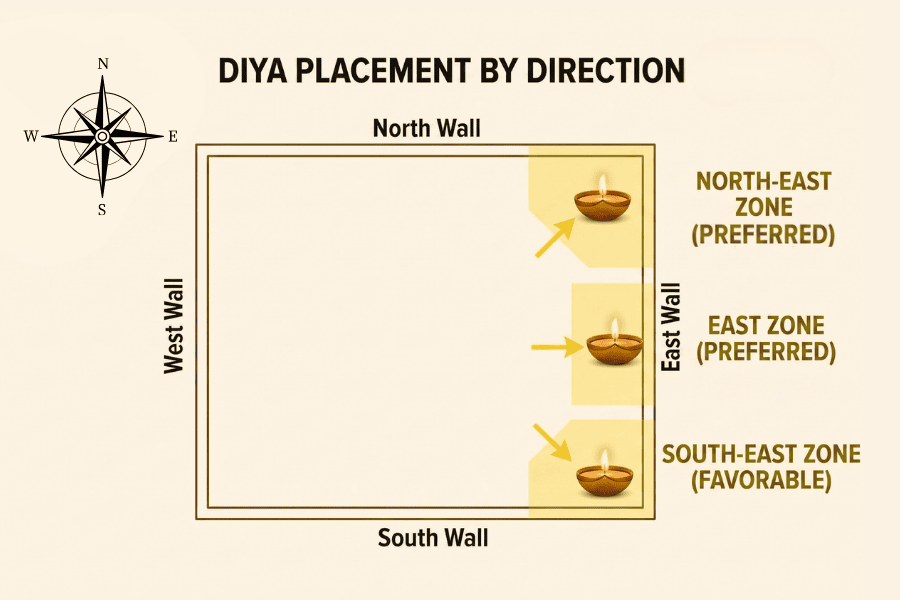
In most Vaastu guidance, East (पूर्व) and North-East (उत्तर पूर्व) are treated as favourable directions, especially in a puja area. The South-East (दक्षिण पूर्व) is also associated with the fire element and may be used carefully in the right context, especially for kitchen or fire-related balance.
| Direction | Common Vastu Association | Typical Use |
|---|---|---|
| East | Light, clarity, spiritual focus | Daily puja |
| North-East | Calm, purity, prayer | Mandir or meditation area |
| South-East | Fire element | Controlled fire-related use |
For daily worship, East and North-East remain the most widely accepted choice. An Akhand diya is also usually placed in these calmer spiritual zones rather than in busy passage areas.
Indoor and Outdoor Placement
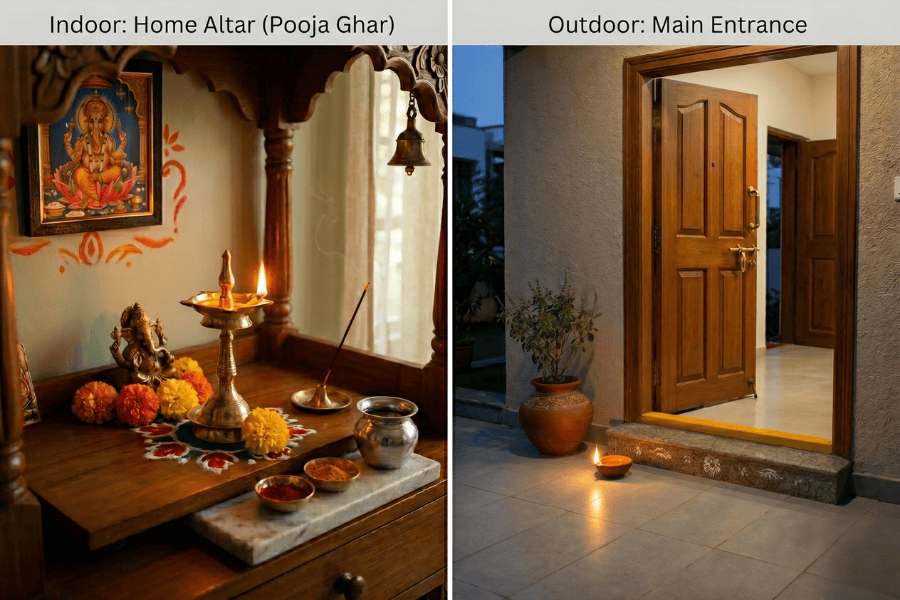
Indoors, it is usually placed in the puja room, near a clean altar or in a quiet prayer corner. A brass diya is often preferred in such spaces because it is durable, traditional and easy to maintain. A copper diya may also be used in some homes, though brass remains more common in regular worship.
Outdoors, the diya is often placed at the main entrance, balcony or courtyard, especially during Diwali. It is generally more suitable than a candle stand if the purpose is spiritual use rather than decoration.
Avoid placement in:
- In cluttered corners
- Directly under shelves or curtains
- In unsafe walkways or windy spots
Right Timing
Morning and evening are the most common times to light diyas. Evening lighting is especially popular because it marks the shift from day to night and creates a peaceful mood at home.
Types of Diyas and Their Vastu Significance
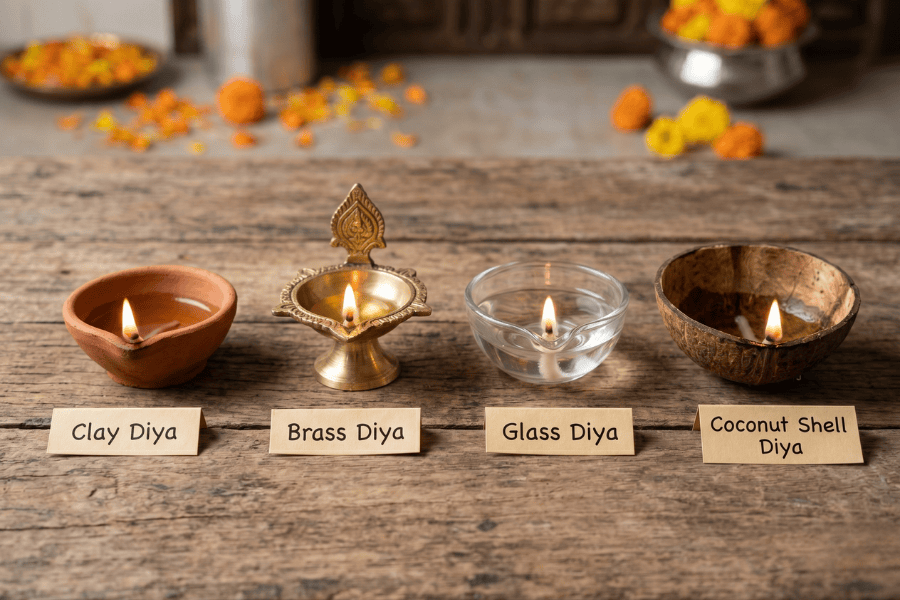
Clay ones are widely used because they feel natural and rooted in tradition.
Metal, especially brass ones are also commonly preferred in pooja rooms. On auspicious days dedicated to Goddess Lakshmi, many families choose a brass lamp for worship. Where people want a long-burning lamp for special occasions, an Akhand diya in brass is often preferred.
Some households also use special lamps, such as a Kubera Lamp, during festive worship, especially when prayers are offered to Goddess Lakshmi with the intention of inviting harmony and abundance.
Bamboo, glass and coconut shell ones may suit the home décor, though they are less central in traditional Vaastu practice.
| Material | Vastu Meaning | Common Use |
|---|---|---|
| Clay | Simple, grounding and traditional | Daily use and during festivals like Diwali |
| Metal | Durable and sattvic in puja spaces | Regular worship |
| Glass | Mostly decorative | Modern interiors |
| Coconut Shell | Natural and eco-friendly | Occasional decorative use |
| Bamboo | Decorative | Festive season styling |
Kind of Diya
Oil and ghee diyas are generally preferred in traditional practice. Oil ones are common for regular lighting, while the ghee kind are often chosen for worship of Goddess Lakshmi and for sacred rituals where a pure, steady flame is important.
Candles are convenient but are usually seen as less traditional in Vastu. Camphor (कपूर) is used more for ritual cleansing than for long-duration lighting.
Diwali and Vastu
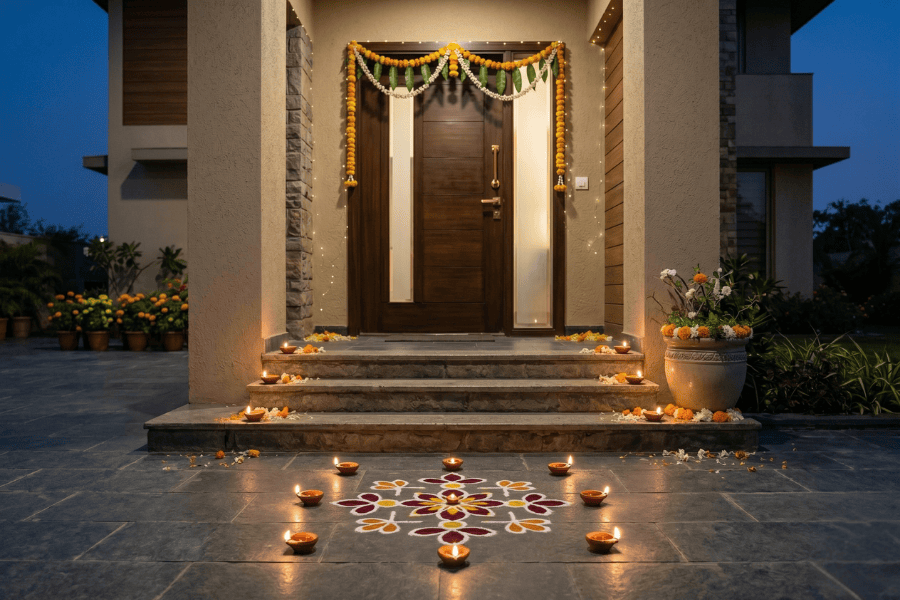
During Diwali, diyas are often placed at the entrance, windows, balcony and pooja room to symbolise welcome, protection and brightness. Many homes use clay diyas on this occasion because they are traditional and aligned with the festive spirit. It is also common to light an Akhand diya during Lakshmi puja, especially when offering prayers to Goddess Lakshmi for peace and prosperity.
A practical Diwali setup may include:
- Diyas on both sides of the main entrance
- One in the pooja room
- Additional ones in clean outdoor areas such as balconies or courtyards
They can also make thoughtful items for Diwali gifting, especially when the design has spiritual meaning and everyday use.
The key is balance. Too many placements without purpose can feel decorative only. In Vastu, a clean space, safe layout and thoughtful direction matter more than quantity.
Final Thoughts
A diya brings together symbolism and daily practice. In Vastu Shastra (वास्तु शास्त्र), its value lies in mindful placement, suitable timing and a clean setting. Whether you use a clay lamp for Diwali, a brass lamp for daily prayer or an Akhand diya for a longer ritual, the principle remains the same: light should support peace, order and intention in the home.
If you would like personalised guidance for your home, Vastu Ananda offers consultations for plot vastu, residential vastu, commercial vastu, hotel vastu and office vastu, along with learning options through its courses.