Have you ever stood in a stone shop, looking at a kitchen slab, a marble idol or a crystal tree, and wondered, “Will this actually suit my home?”
Many homeowners feel this way. They want the house to look good, feel peaceful and support family life, but when it comes to Vastu Shastra (वास्तु शास्त्र), the advice online can feel confusing, repetitive or too extreme.
The truth is simple. A good stone for Vastu is not just about picking a lucky crystal or an expensive slab. It is about choosing the right material for the right place, in the right colour, size and condition that creates positive energy.
That matters whether you are selecting a Ganesha idol, planning kitchen stone, placing a fountain, choosing ceramic tiles or adding a few crystals to the house.
This guide explains how to choose stone wisely, without superstition, clutter or guesswork. It covers crystals, natural stone decor, idols, flooring, kitchen surfaces and common construction-related questions, all while staying focused on one thing: what really makes a stone good for vastu.
What Makes a Stone Good for Vastu?
A good stone for vastu is one that suits the purpose of the space. It should feel natural, clean, balanced and properly placed.
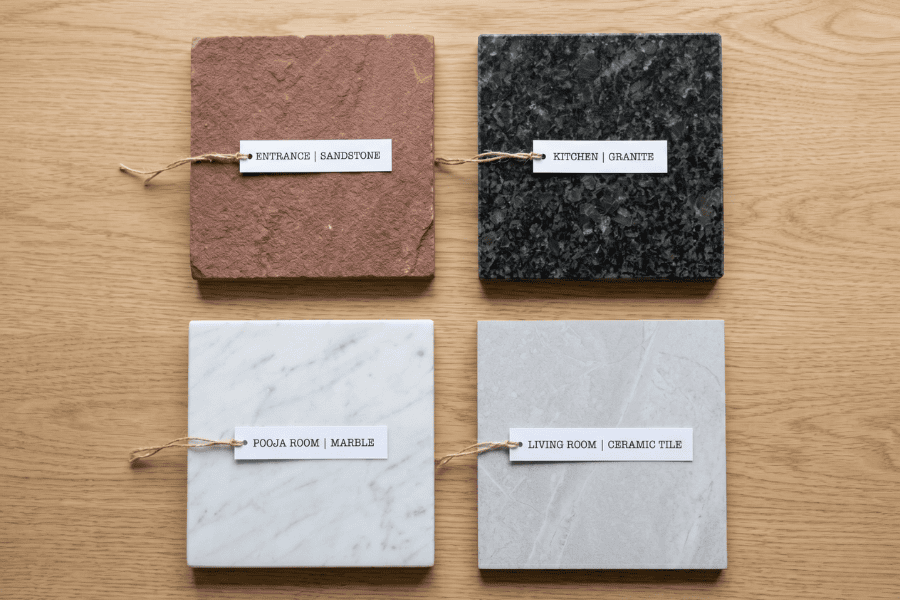
In most homes, natural materials are preferred because they feel stable and grounded. Marble, granite, sandstone, ceramic and other natural-looking surfaces are commonly chosen for this reason.
Colour also matters. White stone is often linked with clarity and freshness. Pink stone like rose quartz is usually seen as soft and comforting. Green-toned stones like green aventurine may support a sense of growth and balance, while red stone or red granite feels stronger and needs more careful placement. Black obsidian is used to absorb negative energy and create energy sheilds.
Condition matters just as much. A clean stone in good shape supports a settled atmosphere. A cracked slab, chipped idol or neglected crystal can make a place feel heavy, no matter how costly it is.
This is where many people go wrong. They focus only on the name of the stone and ignore the room, direction and use. In Vastu (वास्तु शास्त्र), the home is often understood through directional zones that make up the 16-zone Vastu grid.
Stones and Crystals Commonly Used in Vastu
When people search for a good stone for vastu, they are often thinking of crystals first. These are popular because they are easy to place, visually attractive and widely sold for home energy.
Still, the best crystal is not the one with the fanciest label. It is the one that suits your need and your room.
A few stones are used more often in Vastu because they are simple, familiar and easy to place at home.
- Clear Quartz (स्फटिक): for clarity and calm
- Rose Quartz (गुलाबी क्वार्ट्ज): for love and harmony
- Amethyst (जामुनिया): for focus and peace
- Marble (संगमरमर): for purity and pooja use
- Granite (ग्रेनाइट): for strength and practical daily use
Clear Quartz, Rose Quartz and Agate
Clear quartz is often linked with clarity, purity and mental calm. It is commonly placed in the North-East, especially in prayer or meditation areas. Lapis Lazuli is also frequently used to clear mental fog and help with honest communication.
Rose quartz is usually chosen for emotional warmth and harmony. It is often used in bedrooms or in the south-west part of the home where people want more stability in relationships.
Agate is a broad category, and many people use it in decorative forms such as wall clocks, bowls and hanging pieces. White or blue agate sheets are often chosen for a calm and balanced look.
Amethyst, Moonstone, Coral and Pearl
Amethyst is one of the easiest stones to recommend because it is linked with focus, calm and spiritual depth. It often works well in study corners, reading rooms and meditation spaces.
Moonstone is associated with emotional softness and peace. Some people like it in bedrooms or in homes that feel mentally busy or overstimulating.
Coral is stronger in feel and is usually treated more carefully. Pearl is gentler and is often linked with emotional healing, mental clarity and a graceful kind of prosperity.
Tiger eye is best used to rid a space of negative energy. It is linked to the fire element and is often associated with courage. These stones are best used with restraint. One well-chosen item is usually enough.
Rough Stones, Tumble Stones and Crystal Trees
Rough stones and crystal geodes are often used as decor focal points. They suit living rooms, side tables and quiet corners better than crowded display units.
Crystal trees are also popular, including rose quartz, amethyst and green amethyst trees. They are often sold under both Vastu and Feng Shui labels, but what matters is not the product name. What matters is whether the stone suits the space and whether the placement feels calm, not decorative for the sake of it.
Green aventurine is also commonly used in Vaastu to enhance luck and personal finance. It is recommended to place these crystal bowls on corner tables.
Why Crystal Cleansing Matters
Crystals collect dust very easily, and many people forget that. In Vastu terms, a neglected crystal does not support a fresh atmosphere.
This is why crystal cleansing is often advised. Some people use water, moonlight or dhoop. Even if you take a simple practical view, regular cleaning helps the stone feel cared for and intentional.
Common Stones in Vastu and Their Uses
| Stone | Vastu Use | Typical Placement |
|---|---|---|
| Clear Quartz | Clarity, calm, prayer support | North-east, pooja area, meditation corner |
| Rose Quartz | Love, warmth, family harmony | Bedroom, south-west |
| Amethyst | Focus, study, peace | Study room, reading corner |
| Agate | Balance, decorative calm | Living room, entrance decor |
| Pearl | Emotional calm, mental clarity | North, north-west |
| Coral | Strength, active energy | Used carefully, based on purpose |
| Citrine | Positivity, abundance | South-east, living space |
| Moonstone | Emotional ease | Bedroom, quiet corners |
| Marble | Purity and sacred use | Pooja room, idols |
| Granite | Strength and practical use | Kitchen top, flooring |
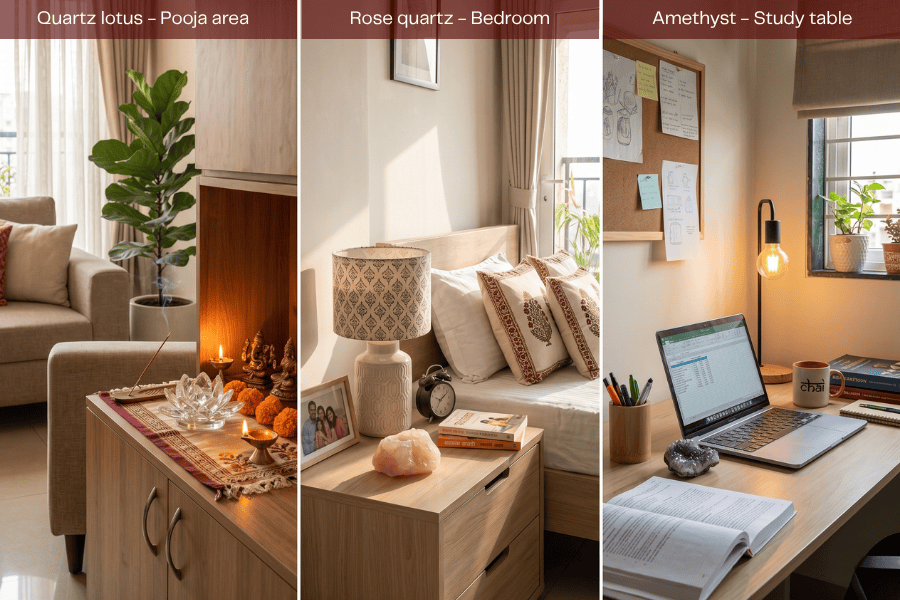
Where Should You Place Stones in the House?
This is often more important than the stone itself. Even a good stone can feel out of place if it is kept in the wrong room or used too heavily.
Entrance, Living Room and Pooja Areas
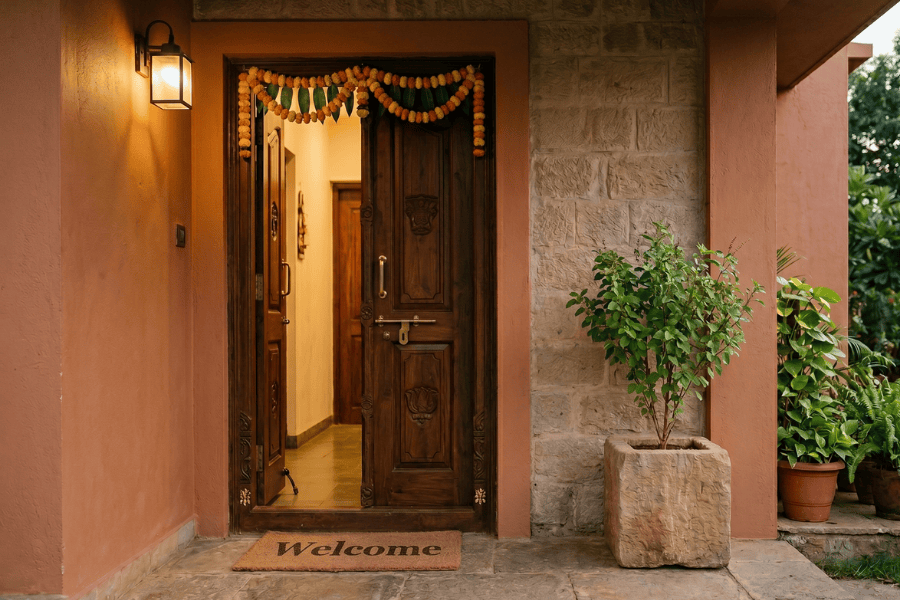
The entrance should feel open, clean and welcoming. If you want to place a stone item here, keep it simple.
A small clear quartz piece, an amethyst chime or a well-kept stone planter can work well. Avoid crowding the main door with too many remedies, idols and hanging objects.
In the living room, stone decor should support calm conversation and comfort. A geode, agate clock or simple natural stone bowl can work better than multiple scattered pieces.
Pooja or meditation areas usually suit clear quartz, white stone and other simple, clean materials. These spaces benefit from restraint.
Bedroom, Study and Bathroom
Bedrooms need softness, not overstimulation. Rose quartz is often chosen here because it supports warmth and emotional ease.
A study area needs focus. Amethyst is a common choice for this reason, especially for a grandchild’s study table or a quiet reading corner.
Bathrooms should stay simple. If you use a stone or crystal there, keep it small and easy to maintain. A bathroom is not the place for elaborate Vastu remedies.
The north-east is often associated with clarity and prayerful calm. The south-west is usually linked with stability and long-term support. The south-east has a more active quality, so stronger stones and colours should be handled carefully there.
This matters when placing crystal trees, hanging stones, bowls of pearls or decorative geodes. The question is not only, “Is this a good stone?” It is also, “Is this the right place for it?”
Room-Wise Stone Suggestions in Vastu Shastra
| Area Of The Home | Stones Commonly Used | Why They Are Chosen |
|---|---|---|
| Entrance | Clear quartz, agate, stone planters | For a clean, welcoming feel |
| Living Room | Agate, geodes, natural stone decor | For balance and grounded decor |
| Pooja Room | Crystal quartz, marble | For purity and calm |
| Bedroom | Rose quartz, moonstone | For softness and harmony |
| Study | Amethyst, clear quartz | For focus and mental clarity |
| Bathroom | Small neutral stones only | For simplicity and ease |
| Garden Or Outdoor Space | Sandstone, river stone, planters | For natural texture and grounding |
Stone Decor That Works Well Without Overcrowding the Home
Many homeowners in their 50s and 60s prefer decor that feels meaningful but not showy. That is a good instinct. Vastu usually works better with a few well-placed items than with too many symbolic objects.
Buddha Statues, Ganesha Idols and Elephant Figurines
Stone Buddha statues are often placed in quiet corners, meditation rooms or gardens. Buddha sculptures should feel respectful and calm, not ornamental in a careless way.
Ganesha idols need the same care. Marble, clay, brass and well-finished stone are all commonly used. People often search for black stone Ganpati idols, but the more important question is whether the idol is in good condition, placed respectfully and suited to the room.
Elephant figurines in marble or stone are also common. Used sparingly, they can add a sense of steadiness and grace. Meanwhile, stone turtles are a symbol of longevity and strength in Vaastu.
Urlis, Planters, Lamps and Animal Decor
Natural stone urlis can work well in an entrance or central sitting space if they are kept clean and not oversized.
Stone planters are useful because they combine decor with life. A natural stone lamp can also bring warmth to a dull corner without making it feel heavy.
Decorative stone animals should be used with care. Too many can make a home feel crowded rather than balanced.
Water Fountains Need Extra Thought
Stone water fountains are popular because they bring together water and natural material. But they need more care than most people think.
A fountain that is too large, too noisy or badly placed can become irritating instead of calming. That is especially true in homes where people want peace, better sleep and a settled daily rhythm.
What To Know Before Using a Stone Fountain
A natural stone water fountain can be a beautiful Vastu feature when it is proportionate to the home and easy to maintain.
The biggest mistake is choosing one only because it looks grand in a shop. In real homes, oversized fountains often create splashing, noise and clutter.
If the fountain is used indoors, it should not block movement or dominate the room. If it is used outdoors, it should still feel intentional and cared for.
River stones can be used around planters or garden features, but they should not create visual heaviness. The same applies to heavy stones kept on terraces. Before treating this as a Vastu issue, it is wise to think about practical concerns like load, water flow and safety.
Choosing the Right Stone for Tiles, Floors and Walls
When people talk about good stone for vastu, they often forget that the biggest stone decision in a house is usually not a crystal. It is the floor, wall surface or kitchen slab you live with every day.
Floor and Wall Materials
Recent Vastu-oriented tile articles commonly recommend natural stone, ceramic and porcelain surfaces. Marble, granite and sandstone are often preferred where the aim is a grounded and timeless feel.
But damaged, uneven or poor-quality ceramic tiles can disturb both the look and feel of a space.
Colours, Finish and Layout
Light and earthy colours are generally safer in Vastu-led interiors. Beige, cream, white, soft green and muted brown are widely recommended.
Very dark colours are usually used with caution. Matte and smooth finishes often feel more settled in living areas while rougher anti-skid textures make sense in wet zones. Symmetry matters too. Clean layout lines and neat installation support visual calm. This is more useful than chasing dramatic patterns that overpower the room.
How To Choose Kitchen Stone and Countertops
Kitchen platform stone should be practical first. It must be easy to clean, durable and suitable for heat and daily use.
So if you are asking how to choose slab stone for Vastu Shastra, focus on durability, cleanliness, colour balance and the overall direction of the space. That is more useful than looking for one magical slab.
Warm or earthy kitchen colours usually work better than very dark, heavy finishes in a small or low-light space.
Stone Choices for Surfaces in Vastu
| Surface | Stones Or Materials Commonly Chosen | Practical Vastu View |
|---|---|---|
| Flooring | Marble, granite, ceramic, porcelain | Choose durability, calm colour and clean finish |
| Wall Cladding | Sandstone, ceramic, subtle textures | Avoid overly dark visual weight |
| Kitchen Top | Granite, quartz, marble in some homes | Prioritise hygiene, durability and balanced colour |
| Pooja Platform | Marble, white stone | Supports purity and simplicity |
| Entrance Surface | Granite, stone tiles, natural finishes | Keep it neat, welcoming and easy to maintain |
Foundation Stones and Construction-Related Vastu
Some of the most anxious searches around vastu gems are actually about construction.
Foundation Stone Laying and Bhumi Pooja (भूमि पूजा)
Foundation stone as per vastu usually refers to the ceremonial and directional care taken when beginning construction. For many families, Bhumi Pooja and foundation stone laying are important cultural steps.
The exact ritual varies by tradition, priest and region. What matters most is that the start of construction is done with clarity, care and proper planning.
If stone comes up during excavation, it is not automatically a bad sign. In many plots, natural rock is simply part of the land. The right response is to consult your engineer or contractor first. The same applies if a stone cracks during new construction. Check technical reasons before assuming spiritual ones.
Borewells, Water Tanks and Structural Stone Questions
Searches about which stone is perfect in borewells or what happens if stone appears while digging a water tank usually come from site concerns. These are mainly engineering and ground-condition questions.
Vastu may shape how the area is planned, but technical safety must always lead.
Stone Placement Mistakes to Avoid in Vastu
One common mistake is placing very heavy stones on terraces without considering load, drainage and practical safety.
Another is crowding the entrance with too many stone items, idols, fountains and hanging decor.
Broken idols, cracked stone decor or neglected crystals are considered Vastu red flags. Also avoid copying every remedy from Feng Shui for yang energy and Vastu together without understanding what suits your home. Sacred stones are different in both these practices and can have different effects.
How To Choose the Right Stone for Your Space
Start with the purpose. Do you want calm, focus, harmony, grounding or a better-looking entrance?
Then look at the room, its direction and its daily use. After that, choose the material and colour.
For a prayer space, clear quartz or a simple white stone object may be enough. For a bedroom, rose quartz may suit better. For the kitchen, choose a durable and balanced countertop. For the entrance, keep stone decor clean, light and welcoming.
Final Thoughts
Choosing a good stone for vastu does not mean filling the house with random crystals, statues and remedies. It means understanding what each stone is for, where it belongs and whether it suits the room.
Natural materials, balanced colours, clean surfaces and careful placement matter far more than hype.
If you keep the approach simple, Vastu can guide better decisions without making the home feel heavy or forced. A clear entrance, a calm bedroom, a practical kitchen and well-maintained stone decor will usually do more for the energy of a home than too many symbolic items ever can.
If you want expert guidance tailored to your plot, home or business space, Vastu Ananda offers consultations for plot vastu, residential vastu, commercial vastu, hotel vastu and office vastu. They also offer a vastu basic course and vastu advanced course for learners.
FAQs
Which stone is considered best in Vastu Shastra?
There is no one best stone for every purpose. Clear quartz, marble, granite, rose quartz and amethyst are among the most commonly used, but the best choice depends on whether the stone is for decor, prayer, flooring, kitchen use or emotional balance.
Is marble a good stone for vastu?
Yes, marble or संगमरमर is widely used in Vastu-friendly homes. It is especially common in pooja rooms, idols and flooring because it feels clean, calm and pure.
Is granite good for vastu?
Yes, granite or ग्रेनाइट is often a good practical choice for flooring, kitchen tops and entrance surfaces. It is durable and grounding, but colour and placement still matter.
Can we keep rough stones in the house as per vastu?
Yes, rough stones and geodes can be kept in the house if they are clean, well placed and not excessive. They usually work best as one thoughtful feature rather than many scattered items.
Which crystal is good for home vastu?
Clear quartz for clarity, rose quartz for harmony and amethyst for focus are among the most common choices. The best crystal depends on the room and your purpose.