Have you ever looked at a home garden and felt that something was just not right?
The plants were there. The space was neat. But it still felt heavy, restless or dull. Many homeowners feel this without knowing the reason. The truth is simple: when a garden is not aligned with Vastu Shastra (वास्तु शास्त्र), the entire home can feel unsettled.
For many families, especially when building a long-term home or settling into retirement years, the garden becomes more important than ever. It is where you sit in the morning sun, grow tulsi, welcome guests and create a sense of peace around the house.
That is why garden vastu deserves serious attention. The right plant in the right place improves the energy of the home. The wrong tree, cluttered corner or misplaced water feature creates stress, blocks growth and disturbs harmony.
In this guide, you will learn how to plan a home garden according to Vastu, which directions work best, where to place plants and what to avoid if you want a peaceful and prosperous home.
What Is Garden Vastu?
Garden Vastu means applying Vastu Shastra (वास्तु शास्त्र) principles to your outdoor space. This includes the placement of plants, trees, lawn, pathways, swings, lights, water features and even decorative items.
In Vastu Shastra, a garden is not just an extra part of the house. It is an active energy field. It influences how positivity enters the home and how the five elements – Earth (पृथ्वी), Water (जल), Fire (अग्नि), Air (वायु) and Space (आकाश) – stay balanced.
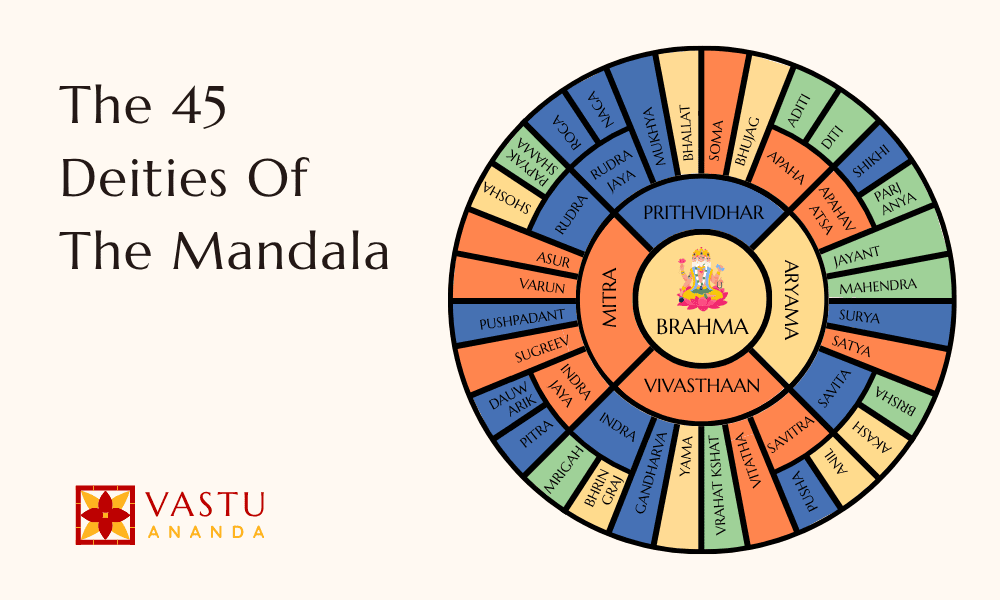
The moment we discuss directions in Vastu, we must look beyond the basic eight. A complete directional understanding includes 16 zones.
These directional zones are linked with devtas and elemental energies. The North direction is connected with Kubera (कुबेर), East with Indra (इंद्र), North-East with Ishan (ईशान कोण), South-East with Agni (अग्नि कोण) and the center with Brahmasthan (ब्रह्मस्थान), the sacred space of Brahma.
Why Garden Vastu Matters: Peace, Health, Prosperity
A garden affects much more than appearance. It affects how the home feels every day.
Think of a couple in their late 50s who finally move into their own independent house. They build a lovely front garden, but placed heavy pots in the North-East and a cluttered storage unit in the East. Soon, the space starts feeling blocked. Morning tea in the garden no longer feels calming. Small Vastu mistakes often show up in exactly this way.
When the garden is aligned correctly, it improves peace, health and prosperity. It keeps the home light, welcoming and energetically strong.
Your garden is one of the first zones that receives and holds energy around the house. If this space is clean, balanced and correctly planned, positive energy enters naturally.
If the garden is crowded, dark, dry or wrongly arranged, that same imbalance affects the emotional tone of the home. People often say, “Everything is fine in the house, but we still feel uneasy.” In many cases, the outdoor space is part of the problem.
A good garden does three things well:
- Supports light and air movement
- Keeps the directions balanced
- Connects nature with the home in a peaceful way
Where Should the Garden Be as per Vastu?
The best location for a garden is usually in the North, East or North-East (उत्तर पूर्व) part of the property. These directions support openness, fresh energy and natural light.
North supports prosperity and flow. East supports health and new beginnings. North-East supports purity, prayerful energy and calm.
If you have space only on one side of the house, North or East is usually easier to manage well. These zones respond beautifully to lawns, small plants and soft landscaping.
Best Directions for a Home Garden as Per Vastu
A simple rule works well here: lighter garden features should stay in lighter zones, and heavier features should stay in heavier zones.
| Direction | Best Garden Use | Energy Benefit |
|---|---|---|
| North | Lawn, low plants, open space | Prosperity and flow |
| North-East | Sacred plants, water, meditation corner | Peace and clarity |
| East | Herbs, flowering plants, morning seating | Health and freshness |
| North-West | Fragrant plants, airy corner, light seating | Movement and balance |
| South-West | Tall trees, large pots, dense planting | Stability and protection |
Areas To Avoid When Planning Home Garden
Avoid making the South-East or South-West too open, watery or light. These directions do not support major water features or soft open lawn in the same way that North and East do.
Also avoid:
- A large tree directly blocking the entrance
- Dense planting in the exact North-East
- Clutter in the centre
- Overgrown creepers on the house wall
- Broken pots and neglected corners
Many families unknowingly create this problem. A front garden may look “full” and “green”, but if it blocks light and movement, it starts working against the house.
Direction-Wise Garden Vastu Guidelines
North (उत्तर) is a powerful direction for growth and prosperity. Keep it open, green and relatively light. Low plants, soft grass and clean open space work very well here. Avoid making North too heavy with thick trees or large stone features.
North-East is the most sensitive and sacred garden zone. It is ruled by Water (जल) and Ishan. This area should feel clean, calm and open. A small water feature, a sacred plant or a quiet corner for prayer or sitting can create room for positivity and spiritual growth.
The East direction receives the morning sun. That makes it ideal for a healthy, active and uplifting garden space. Flowering plants, herbs and morning-use seating fit well in East. If you enjoy plucking fresh tulsi leaves or watering plants after sunrise, East is often the most satisfying direction.
South-East (दक्षिण पूर्व) is the zone of Fire. It needs discipline and balance. This is not the place for a fountain, pond or excessive dampness. Keep this area clean, bright and active. Controlled lighting works better here than water features. Snake Plant is a good option for this direction.
South carries stronger and more protective energy. It can support taller greenery better than soft planting. If you have a broad South side, use it for structured planting. Do not leave it weak, neglected or hollow.
South-West is the best place for large planters, mature trees and dense landscaping. This is where weight helps. Heavy ceramic pots and potted plants placed in the southwest support the house properly.
West can hold medium or tall plants, shaded sitting areas and useful trees. It should feel settled, not dull. This direction supports emotional steadiness. Keep it maintained and proportionate.
North-West is linked with movement and Air (वायु). It suits lighter planting, fragrant flowers and airy corners. It is a good place for evening seating if the space stays breezy and uncluttered.
Garden Layout as per Vastu
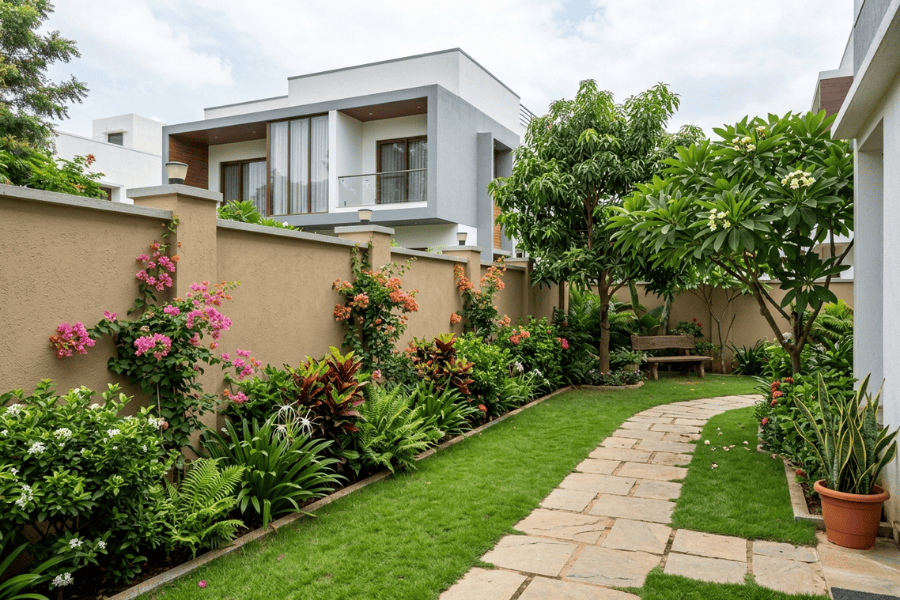
The garden entrance should be open and easy to access. It should never feel blocked by a tree trunk, a large bush or a broken gate. A clean entrance sets the tone for the whole house. This is especially important in independent homes where the front garden shapes the first impression every day.
Pathways should feel natural and easy to walk on. They should not force awkward turns or cut through the space harshly. A practical garden is always better than a decorative but confusing one. Many older homeowners prefer a clean, straight or gently curving path, and in Vastu, that usually works well too.
Seating works well in the North or the East. This allows the space to feel light and restful. Keep furniture simple. Too many chairs, tables and decorative pieces make the garden feel crowded.
Boundary walls should feel secure, not broken or patchy. Fencing should define the space clearly without making it harsh. Avoid random décor that does not belong. Garden statues, pots and ornaments should support the space, not compete for attention.
Lighting should improve safety and clarity. South-East facing areas are suitable for controlled lighting because of the Fire element. Use lighting with purpose. Highlight the pathway, entrance or one feature area. Do not scatter harsh lights all over the garden.
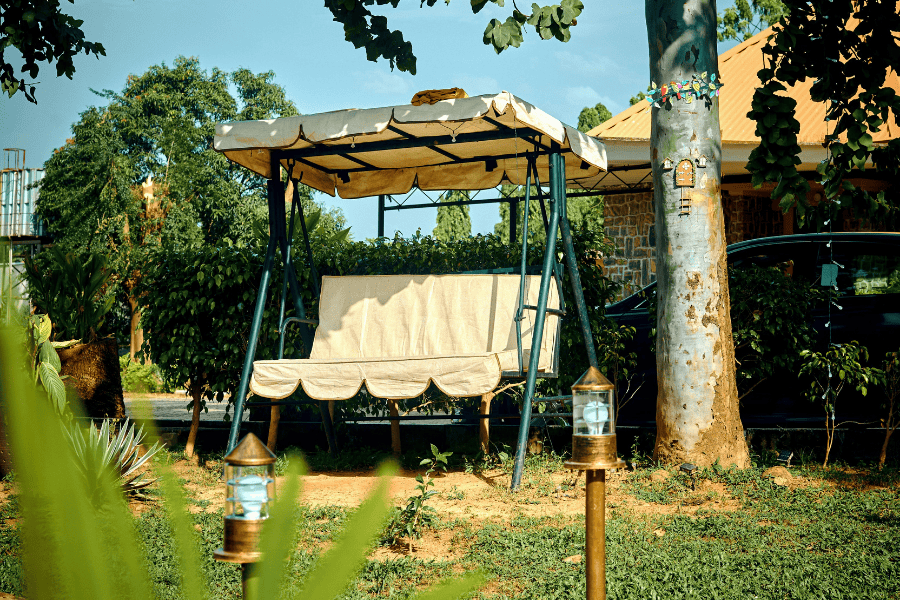
A swing is best placed so that it aligns well with a North-South axis. It should feel balanced and secure. This is especially useful in family homes where the garden is used for evening sitting, reading or conversation.
Garden colours should support calmness. Green should remain the dominant tone, with soft whites, yellows and natural earthy shades adding energy balance. Too many bright colours in pots, walls and décor can make the space feel restless instead of peaceful.
The centre is linked with Space (आकाश) and Brahmasthan. It should not be filled with heavy items, storage or dense planting. An open centre helps the whole garden breathe. Even in a small space, leave some visual openness.
Vastu Placement for Garden Elements
Tall trees should usually go in South, South-West or West. These are the directions that can hold weight. Do not plant large-root trees too close to the house. Their roots can damage the structure, and their shadow can block important sunlight.
Flowering plants bring joy and softness to a garden. They are especially suitable in the East and the North.
A home garden feels deeply satisfying when it grows something useful. Small kitchen garden sections with herbs, chillies, curry leaves or seasonal vegetables can work beautifully. East and North are usually good directions for such planting. These areas support nourishment and daily use.
Herbal plants such as Tulsi (holy basil) and aloe vera are excellent in a Vastu garden. They combine healing use with strong positive energy. This is one reason many Indian households naturally keep such plants near areas of daily activity. The tradition has practical and energetic value.
Water belongs in North, East or North-East. A small fountain, lotus pond or still water bowl in the correct direction improves peace, prosperity and good fortune. Avoid placing water in the South-East, South or South-West. This is one of the most common garden Vastu mistakes and can create negative energy.
Bird-friendly elements add life to the garden. A clean bird bath or feeder can be placed in a light, open area where it is easy to maintain. Nature-friendly elements must not turn into stagnant or messy zones.
Wind chimes can suit airy zones like the North-West. Decorative items should be limited and intentional.
Utility features should stay away from the North-East and the central area. Compost pits, tools and sheds should be kept in practical corners where they do not interfere with sacred or open zones.
Rock gardens are heavy and work better in the South-West. Hanging plants should not block windows, doors or key energy lines. Climbers should be controlled. They should not overrun the walls of the house or create dampness.
Bonsai plants are generally avoided in Vastu. They symbolise restricted growth. For homeowners who want peace, family progress and expansion, that is not the energy to encourage.
Fragrant plants like jasmine support a calm and uplifting atmosphere. A quiet sitting corner or meditation space works best in the North-East or East. For many people, this becomes the most meaningful part of the garden. A simple chair near a fragrant plant can do more than an expensive decorative corner.
Best Vastu Plants for Positive Energy at Home
Some plants are especially valued in Vastu because they keep the environment fresh, pure and alive. Tulsi, bamboo, jasmine, aloe vera and neem are among the best known.
These plants are not just popular. They are useful, familiar and easy for Indian homeowners to relate to.
The entrance should feel welcoming and spiritually clean. Tulsi, neat flowering plants and balanced green planters work well here. Do not overcrowd the entrance. Keep it graceful and easy to walk through.
For prosperity, healthy green plants such as the money plant and bamboo are commonly preferred. For peace, tulsi, jasmine and lotus are very strong choices. The key is not to collect many “lucky” plants without a plan. Placement matters as much as the plant itself.
Best Indoor and Outdoor Plants as per Vastu
Here is a practical list of commonly preferred vastu plants:
- Tulsi
- Money plant
- Bamboo
- Aloe vera
- Jasmine
- Neem
- Banana
- Ashoka
- Lotus
- Fragrant flowering plants
| Plant | Best Direction | Main Benefit |
|---|---|---|
| Tulsi | North, East, North-East | Positivity and purity |
| Money Plant | South-East | Wealth and growth |
| Bamboo | East, South-East | Wellbeing and prosperity |
| Banana | North-East | Peace and sacred energy |
| Aloe Vera | North, East | Healing and protection |
| Neem Tree | North-West | Health and cleansing |
| Ashoka | South, West, South-West | Stability and support |
| Lotus | North, East, North-East | Calm and purity |
Plants and Trees To Avoid in a Vastu Garden
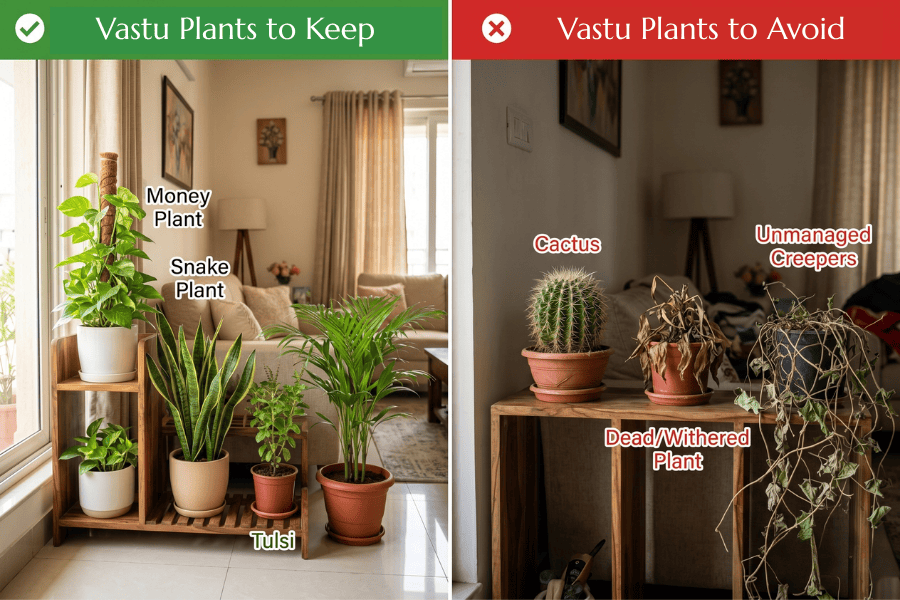
Dry plants, diseased plants, thorny plants and symbolically restrictive plants are not considered good for a house. They reduce freshness and create uncomfortable energy.
Very large trees with spreading roots should not be planted too close to the building. They block light, damage the structure and create heaviness near the house.
Thorny plants like cacti are also best avoided in home gardens. They increase sharpness and conflict in the energy of the space. Rose is an exception to the no-thorns rule.
Common mistakes include:
- Keeping dead plants indoors
- Using broken pots
- Placing plants where they block windows
- Crowding rooms with too many planters
- Keeping thorny plants in family areas
Terrace Garden Vastu Tips
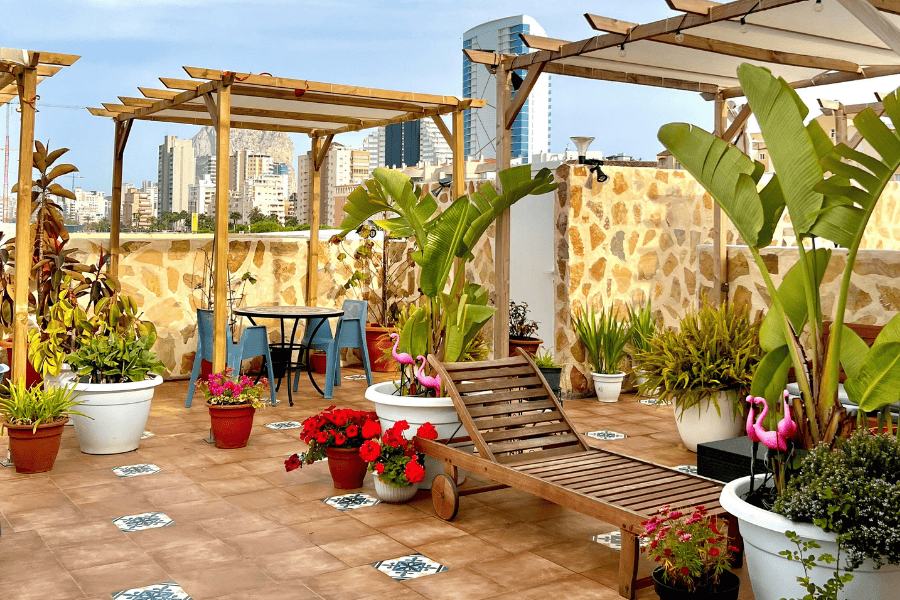
A terrace garden directly influences the top energy flow of the house. Because it sits above the living space, its layout matters a lot. If the terrace is cluttered with heavy pots in the wrong zone, old furniture and random storage, the effect is felt inside the home too.
North, East and Northeast are better for smaller plants and lighter features. South-West and West are better for heavier pots and taller plants. Keep small plants in the North-East or East. Keep heavy planters in the South-West. Taller plants can go in the West or the South.
If you want a water feature or water fountain on the terrace, place it only in the North or North-East. Keep décor simple and avoid broken items.
Tulsi, bamboo, jasmine, aloe vera and money plant work very well on a terrace if direction and maintenance are right.
FAQs
Which Plant Brings Positive Energy At Home?
Tulsi is one of the strongest plants for positive energy at home. Bamboo, jasmine and aloe vera are also good choices.
Which Plant Is Good for the Home Entrance?
Tulsi and healthy flowering plants like Lily are very good near the home entrance as long as they do not block movement.
Which Plant Is Not Good For A House?
Thorny plants, dead plants and bonsai are generally avoided in Vastu.
Which Plant Is Good for the Home?
Tulsi is one of the best all-around plants for a home because it supports peace, purity and spiritual strength.
Which Plants Are Good For The Bedroom?
Soft indoor plants in moderation can work in the bedroom. Avoid too many large or sharp plants there.
Final Thoughts
A vastu-compliant garden is not about filling space with plants. It is about placing the right elements in the right directions.
If you want your home to feel calm the moment you step outside, start with the garden. Often, a few practical corrections make a visible difference. A Tulsi plant in the right direction, a clear entrance, healthy flower pots and an uncluttered North-East can transform the energy of the house.
If you want personal guidance for your lawn, outdoor space or terrace setup, you can book a garden Vastu consultation with Vastu Ananda for practical advice based on your property and layout.