Home is where health, peace, relationships and prosperity grow every day. That’s why its energy matters more than most people realise.
A home is a living space that shapes the well-being of the people inside it. So the way a home is planned, arranged and maintained affects how comfortable, balanced and supported life feels within it.
Vastu Shastra traditions help align a home with the flow of energy and 5 natural elements: Earth (पृथ्वी), Water (जल), Fire (अग्नि), Air (वायु) and Space (आकाश). When these elements are balanced, the home supports a better energy flow, mental calm and stable progress.
North/South/East/West Facing Homes
In Vastu Shastra, each direction carries a different quality and is linked with a devta or governing force. A poorly planned can create repeated stress, imbalance and obstacles. So Vastu guidance should set the foundation for clear planning to improve comfort, harmony and long-term well-being.
Here is a quick guide:
| Facing Direction | General Vastu Effect | What Matters Most |
|---|---|---|
| North-Facing (उत्तर) | Connects with Kuber (कुबेर) and supports financial growth and opportunities | Keep the North direction open, light and clutter-free |
| East-Facing (पूर्व) | Receives positive energy from the rising sun and supports health, positivity and fresh energy flow | A clean entrance and morning light are important |
| South-Facing (दक्षिण) | Can work when planned in a way that the fire, earth and air energies remain balanced | Entrance placement and room layout become critical |
| West-Facing (पश्चिम) | Can support stability and gains | Balance heavy and light zones properly |
Important Room-Wise Vastu Tips
Do you also think it is enough to just have your home facing a particular direction?
It is not. A home becomes truly favourable when the entrance, room placement, water zones, kitchen position and open spaces work together.
Entrance
The entrance is where energy enters the home. A well-placed main door attracts positive opportunities and steady movement in life.
Keep the entrance well-lit and free from broken items, dustbins and shoe clutter. It should feel open, clean and welcoming.
A strong door in the North, East or North-East works especially well in many homes. Avoid a dull, dark or damaged entrance because it weakens the first energy point of the house.
Living Room
The living room should support connection, comfort and lively, but calm, energy.
The best location is often the North, East or North-East. This allows the area to feel open and bright. Place heavier furniture in the South-West or West direction and keep the North-East direction lighter. This supports balance.
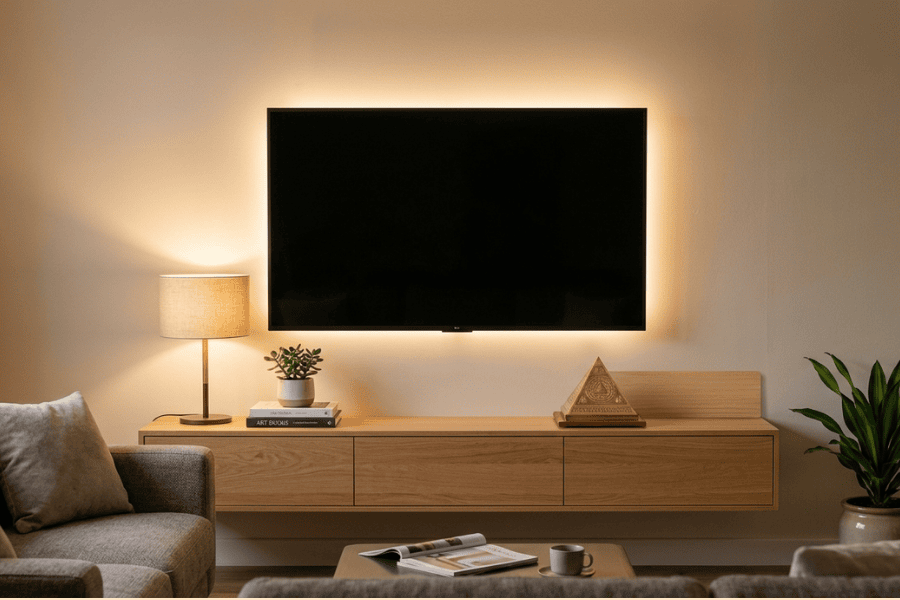
A good seating arrangement and TV placement also improve conversation and family bonding. Keep the room airy and avoid overcrowding it with décor.
Master Bedroom
The master bedroom is best in the South-West direction. This zone brings stability, maturity and emotional grounding. It is ideal for the heads of the family.
Use earthy shades and keep the room restful. The bed should have a solid headboard and should ideally be placed so the head rests towards the South. Avoid mirror reflections directly facing the bed as they disturb rest and create mental strain.
Kids’ Bedroom
A kid’s room should support growth, focus and calm behaviour. West, North-West or East can work well depending on the child’s needs. The East supports learning and freshness, while the West can support discipline.
Keep the study area in the East or North direction and make sure the room has good light and ventilation. Avoid too many dark colours, aggressive themes or clutter under the bed.
Kitchen and Dining Area
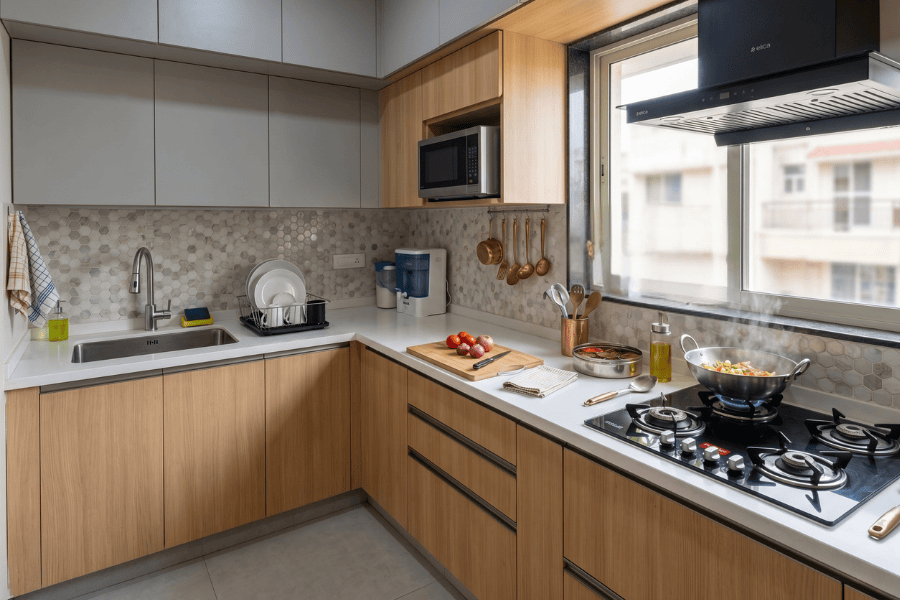
The kitchen is best placed in the South-East direction, or the direction of Agni, since it is the fire zone of the house. North-West can be the second option in some layouts. The person cooking should ideally face the East direction.
Keep the fire and water elements separate as much as possible. The stove and sink should not sit right next to each other because this creates conflict between Fire (अग्नि) and Water (जल). The dining table area should feel clean and warm, so meals support family unity and digestion.
Bathroom
Bathrooms must be placed carefully because they deal with waste removal and moisture. West or North-West often works best. Bathrooms in the North-East or the centre can disturb mental peace and energy balance.
Keep the bathroom dry, clean and ventilated. Moisture build-up weakens the quality of the home and leads to discomfort over time. Proper ventilation also helps prevent dampness and mould.
Pooja Room
The pooja room is best in the North-East, also called Ishan (ईशान कोण). This is the most sacred direction for prayer, stillness and spiritual focus. It supports clarity and inner peace.
Keep this area clean, calm and free from storage clutter. The prayer room should not be placed next to or below a bathroom. Soft light and a peaceful setting strengthen the spiritual quality of this space.
Balcony
Balconies are best in the North, East or North-East because these directions allow light and fresh movement into the home. A balcony in these zones helps the house feel open and energetically active.
Keep balconies neat and avoid turning them into dumping spaces. Use simple seating or light indoor plants to maintain a fresh atmosphere.
Storeroom
The storeroom should be placed in the South-West, West or South where heavier energy suits long-term storage. This keeps the lighter zones of the house clear.
Avoid keeping old, broken or unused items for years. Stagnant clutter blocks progress and affects the overall feel of the home.
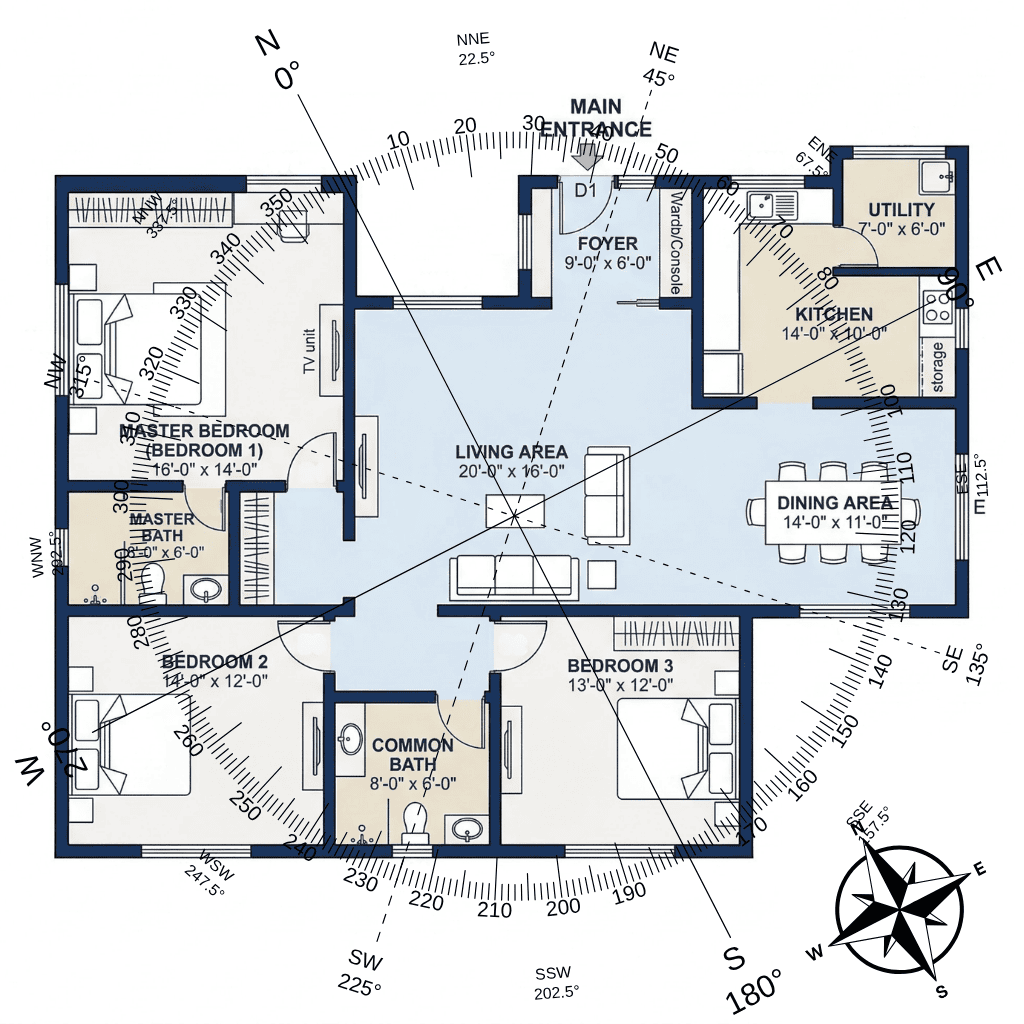
Additional Vastu Tips for Home
Colour
Colours influence mood and room energy. Light yellow, soft green, white and beige work well in most homes. Use stronger colours with care and match them to the room’s purpose.
| Area | Recommended Colours | Reason |
|---|---|---|
| Pooja Room | White, light yellow | Supports peace and purity |
| Living Room | Beige, light green, cream | Creates comfort and openness |
| Master Bedroom | Earthy tones, soft neutrals | Builds stability and calm |
| Kitchen | Light orange, peach, soft red accents | Supports fire energy |
| Kids’ Bedroom | Light blue, green, soft yellow | Encourages freshness and focus |
Lighting
A Vastu-compliant home should never feel dark and dull.
Good lighting activates positive energy and improves daily comfort. Natural light is especially important in living areas and bedrooms. It also supports healthier indoor environments. Use bright but soft lighting in active rooms and gentler light in resting zones. Keep the North-East bright and peaceful.
Windows and Doors
Windows and doors regulate movement, light and airflow. More openness in the North and East is generally beneficial. Larger openings in these directions bring in freshness and support balance.
Check these basics:
- Doors should open smoothly without noise
- Main entry areas should be bright and clear
- Windows should allow natural light and cross ventilation
- Broken window frames or jammed shutters should be repaired quickly
Water Placement
Good water placement improves clarity and calmness in the house. Water features, drinking water storage or underground water tanks are best in the North-East. This zone is linked with the water element and spiritual freshness.
Avoid major water placement in the South-East direction, where fire energy dominates. This creates an imbalance between the fire (अग्नि) and water (जल) elements.
Clocks
Clocks represent movement and time flow. A stopped clock signals stagnation and delay. East, North or West walls are usually better for clocks than South.
Mirrors
Mirrors expand what they reflect. Use them to increase light and openness, but place them with care. North or East walls often work well. Avoid mirrors directly facing the bed or the main home entrance. They can disturb rest and scatter energy.
Plants
Healthy plants bring freshness, oxygen and positive life force into the home. Tulsi is especially valued in many Vastu-compliant homes.
Small green plants in North, East or balconies work well. Avoid thorny plants indoors and remove dry or dying plants quickly.
Stairs
Stairs should feel stable and well-built. South, West or South-West zones often handle this weight better. The staircase should not dominate the centre or block the main energy flow of the house.
Interior and Furniture
Furniture should support ease of movement, not block it. Keep the centre or Brahmasthan (ब्रह्मस्थान) as open as possible. Heavy furniture fits better in the South-West and West sides, while the North-East direction should be kept as light as possible.
What To Avoid for a Vastu-Compliant Home
Some mistakes weaken the entire home even if a few rooms are placed well. These should be avoided where possible:
- Toilet in North-East
- Kitchen in North-East
- Heavy storage in the centre
- Broken mirrors, clocks or furniture
- Dark entrance or blocked main door
- Water and fire placed too close together
- Clutter in corners, under beds and near the entrance
- Poor ventilation in the bathroom and kitchen areas
- Sharp, stressful décor in restful rooms
These issues create an imbalance in the five elements and disturb the role of the directional devtas.
How To Check Vastu Shastra Compliance in Your Home
Start with a simple review of direction, entrance and room use. You can review your home using this order:
- Check the direction your house and main entrance are facing
- Mark North, East, South and West for the home correctly
- Identify the kitchen, master bedroom, pooja room and bathrooms
- Review clutter, lighting, ventilation and mirror placement
- Note any major imbalances in water and fire zones
Final Thoughts
A home planned with Vastu principles has directions, elements and room functions that work together. Such a home supports better health, calmer relationships and steady prosperity.
That is why Vastu Shastra remains such an important guide for a new home even today. If your home has a few defects, they can be improved with layout changes, room use adjustments and practical corrections.
If you want a clear assessment of your home layout, room placement and directional balance, a professional Vastu consultation can help you identify the right changes for a more peaceful and supportive living space.