
A staircase can quietly improve the energy of a home or disturb it every day. Many homeowners notice this only after moving in. The house looks fine, but something feels heavy, unsettled or blocked.
In Vastu Shastra (वास्तु शास्त्र), a staircase is a heavy structure that affects movement and energy flow. If it is built in the right zone, it supports stability and peace. If it is placed in the wrong area, it creates pressure in sensitive parts of the home because different rooms have different energies according to Vastu principles..
This matters to families building a new house, buying a duplex or renovating an older property. A staircase in the North-East (उत्तर पूर्व), a staircase facing the main door or poor stair design can all create Vastu defects. This guide covers the right staircase direction, placement, shape, step count, colours and remedies without unnecessary detail.
Why Staircase Vastu Matters in a Home
A staircase adds weight to one part of the house and creates constant upward and downward movement. Because of this, it should be placed only in zones that can handle heaviness.
The best zones for staircases are South, West and South-West (दक्षिण पश्चिम). These directions support stability and grounding. A staircase here strengthens the structure and keeps heavier energy in the right part of the home.
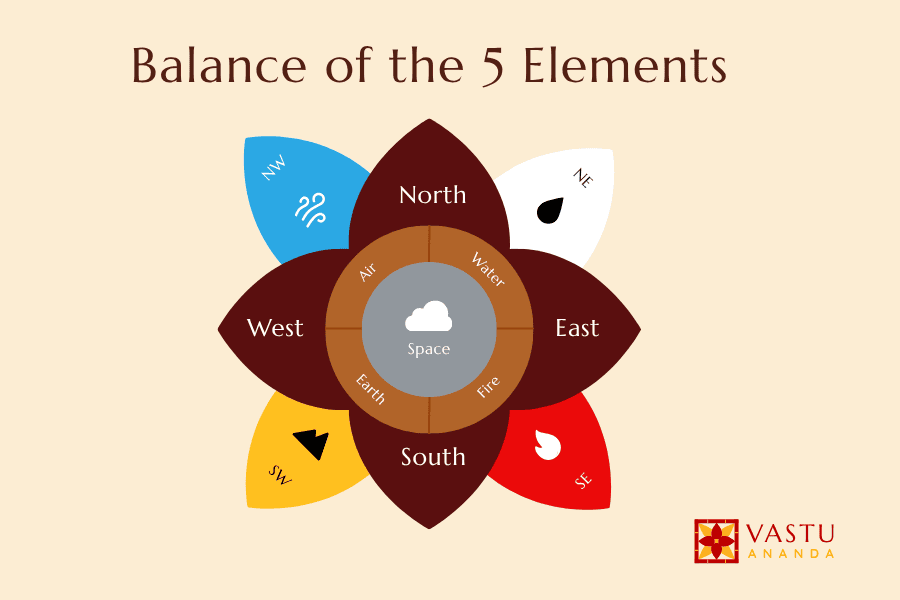
Trouble begins when the staircase comes into a light or sacred zone. The North-East is linked with Ishan (ईशान), Water (जल), prayer and clarity. The centre of the house, called Brahmasthan (ब्रह्मस्थान), is linked with Space (आकाश). A heavy staircase in either of these areas disturbs the balance of the house.
For accurate planning, Vastu can also be read through 16 directional zones:
- North (उत्तर)
- North-North-East
- North-East
- East-North-East
- East (पूर्व)
- East-South-East
- South-East (दक्षिण पूर्व)
- South-South-East
- South (दक्षिण)
- South-South-West
- South-West
- West-South-West
- West (पश्चिम)
- West-North-West
- North-West (उत्तर पश्चिम)
- North-North-West
This helps identify the exact effect of the staircase more clearly.
The staircase also interacts with the five elements: Earth (पृथ्वी), Water, Fire (अग्नि), Air (वायु) and Space. Since it is heavy, it suits Earth-dominant zones better than Water or Space zones.
Ideal Staircase Location as per Vastu
The best directions for a staircase are South, West and South-West in House Vastu.
South-West, or Nairitya Kon (नैऋत्य कोण), is usually the strongest choice. This zone supports weight, control and long-term stability. South is also good because it supports discipline and structure. West works well in many modern layouts and handles stair weight comfortably.
A common example is a duplex home where the staircase sits in the South-West corner and rises towards the West. Such homes usually feel more settled than homes where the stairs cut into the North-East.
Directions to Avoid for Staircases
The North-East is the main direction to avoid. It should stay open, light and clear. A staircase here blocks positive energy and creates heaviness where there should be flow.
The centre of the house should also never have a staircase. This area should remain open and balanced.
North and East are generally avoided if the staircase dominates these zones and reduces lightness or openness.
| Zone | Vastu View |
|---|---|
| South-West | Best zone for a staircase |
| South | Good and supportive |
| West | Good and practical |
| North-West | Acceptable in some layouts |
| South-East | Not preferred unless planned carefully |
| East | Avoid if it blocks light and openness |
| North | Avoid if possible |
| North-East | Strongly avoid |
| Centre | Never recommended |
Staircase Direction and Orientation as per Vastu
A clockwise staircase is recommended. As you go up, the movement should turn clockwise. This supports smoother energy flow and steady progress. An anti-clockwise staircase is usually avoided because it creates resistance in the movement pattern of the home.
The staircase should ideally rise from North to South or from East to West. This means the movement goes towards stronger, heavier directions. That keeps the load aligned with the natural energy of the house.
A staircase should not face the main door directly. When stairs are placed right in front of the entrance, energy entering the home rushes upward too quickly. It does not settle into the house. Many such homes feel restless even if the interiors are attractive.
If the staircase is near the entrance, there should be a separation through a wall, partition or turn in the layout.
Staircase Vastu for Different House Facings
In a North-facing house, the staircase should be in the South-West, South or West. Avoid placing it in the North. This is the zone of Kubera (कुबेर), linked with wealth and opportunities.
In a South-facing house, South, South-West and West are suitable for the staircase. These zones support the heavy structure and keep the layout balanced.
In an East-facing house, avoid placing the staircase in the East or North-East. The East is linked with Indra (इंद्र) and should stay open for light and positive flow.
In a West-facing house, the staircase can usually be placed in the South-West, South or West. This works well because the heavier side of the home can support the structure more easily.
Vastu for External Staircases
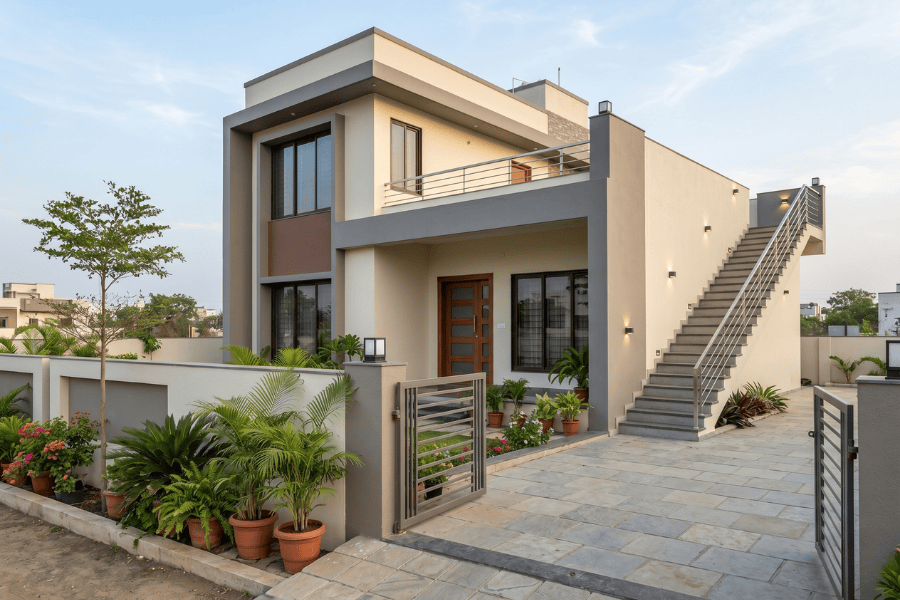
An external staircase should also be placed in the South, West or South-West. This keeps the heavy structure in a suitable zone and avoids disturbing sensitive parts of the plot.
Follow these basic rules:
- Place it on the South or West side
- Avoid the North-East corner
- Do not block the main entrance
- Keep it strong, finished and well-lit
- Make sure water does not collect around it
This is especially important in independent houses where an outside staircase is added later for upper-floor access.
The biggest mistake is placing the outside staircase in the North-East because it seems convenient. Other common mistakes include poor lighting, clutter below the staircase and direct alignment with the gate or entrance.
Designing Staircases in Vastu
Best Staircase Shapes as per Vastu
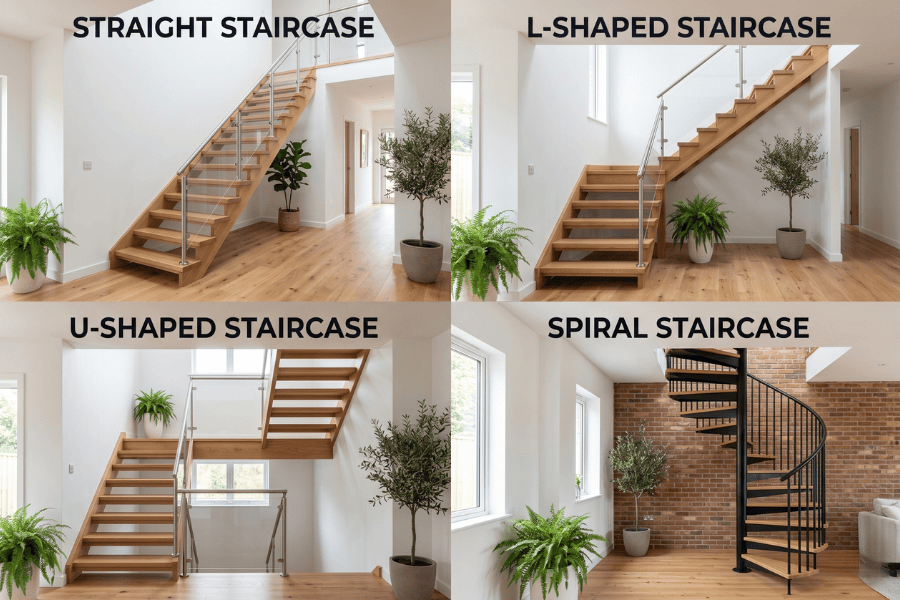
A straight staircase is simple and effective. It works well when placed in the correct direction and built with proper dimensions.
An L-shaped or dog-legged staircase is one of the best staircase shapes in Vastu. The landing changes direction smoothly and helps fit the staircase into a suitable zone.
A U-shaped staircase is also acceptable if it is built in the right zone and feels comfortable to use.
A winder staircase should be planned carefully. If the turning steps are too tight or uneven, the staircase feels unstable. This is not good for daily use or Vastu.
Circular or spiral staircases are usually avoided. Their rotating form creates unstable energy and they are often less comfortable, especially for older family members.
Number of Steps and Staircase Dimensions as per Vastu
An odd number of steps is preferred in Vastu because it is considered more favourable and balanced. Step counts such as 9, 11, 15, 17 and 21 are usually considered good. The staircase should still remain practical and comfortable.
The rise and tread should be easy and even. All steps should be equal in size. Uneven steps create discomfort and instability. This matters even more in homes where older parents or grandparents use the staircase every day.
| Staircase Element | Good Practice |
|---|---|
| Number of steps | Odd |
| Rise | Comfortable and even |
| Tread | Stable and broad enough |
| Step consistency | Same throughout |
| Landing | Open and well lit |
Handrail and Landing Guidelines
Handrails should be strong, smooth and easy to grip. Landings should be open, clean and properly lit. A dark or cramped landing makes the staircase feel heavy and neglected.
Staircase Colours and Materials as per Vastu
Choose light, earthy and calming colors. Beige, cream, soft grey, light brown and natural stone shades work well. These colours support balance and make the staircase feel grounded. Very dark colours can make the area feel heavier than it should.
Use materials that feel solid, safe and durable. Matte finishes, natural stone and wood-like textures are usually better than glossy and slippery surfaces. The staircase should look stable and be easy to maintain.
Lighting changes the feel of a staircase immediately. A dark staircase attracts stagnant energy and makes the house look neglected. Warm, steady lighting keeps the area clear and active.
What to Keep Under the Stairs as per Vastu
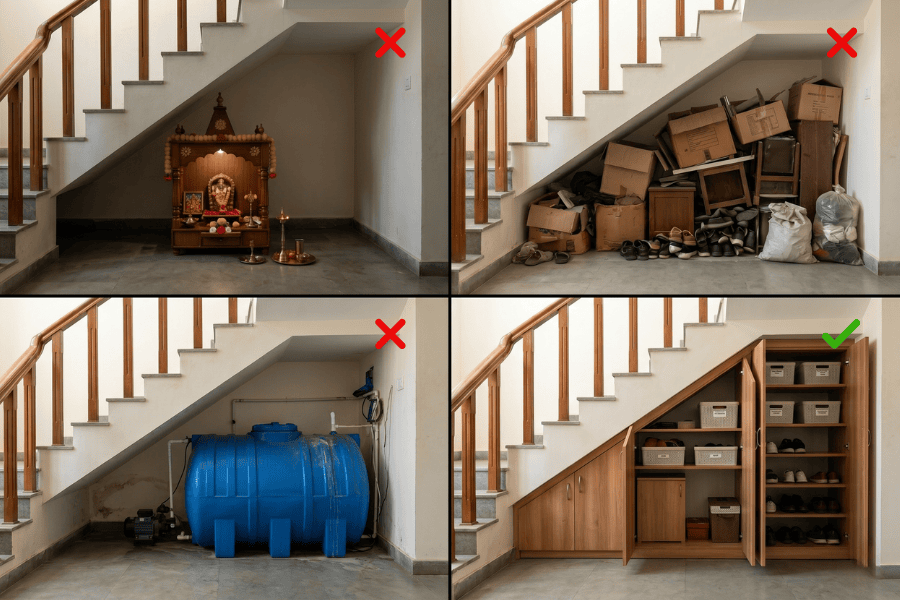
The space under the staircase can be used for light and organised storage. It should not become a dumping area for broken furniture, unused boxes or household junk. Clutter under the stairs creates stuck energy.
A pooja room should not be made under the staircase. This space is compressed and carries weight from above. It does not support devotion, peace or sacred activity.
Also, avoid using this space for:
- A toilet
- A kitchen setup
- Water storage
- Clutter and junk
- Important valuables in a neglected area
Staircase Vastu Do’s and Don’ts
Follow these core rules:
- Place the staircase in the South, West or South-West
- Keep the number of steps odd
- Make sure the staircase rises clockwise
- Keep rising and tread even
- Maintain proper lighting
- Keep the staircase clean and uncluttered
Do not:
- Build the staircase in the North-East
- Place it in the centre of the house
- Align it directly with the main door
- Leave it dark, broken or cluttered
- Create a spiral staircase in a sensitive zone
A wrongly placed staircase creates an energy imbalance in the house. This can show up as constant stress, lack of peace, delays or a general feeling of heaviness.
Staircase Vastu Dosh Remedies
If the staircase is already built in a weak zone, start with practical corrections. Keep it clean, bright and repaired. Remove clutter from below it. Improve the colours and the feel of the landing.
Crystals, metal wind chimes and healthy indoor plants can help soften the effect of a staircase dosha. These remedies support better energy flow, but they do not replace correct placement.
To reduce heavy energy:
- Improve lighting
- Repair broken edges or finishes
- Remove junk
- Use calm colours
- Keep handrails and walls in good condition
- Place fresh plants where suitable
Final Thoughts
Staircase direction as per Vastu is not a small detail. It affects stability, flow and comfort in the home.
When the staircase is placed in the right zone, turns in the right direction and follows simple design rules, the home feels more balanced and peaceful. If you want expert guidance for your layout, book a personalised staircase Vastu consultation with Vastu Ananda for advice based on your floor plan.
FAQs
Is a Staircase Facing the Main Door Good?
No. A staircase facing the main door is not recommended because it pulls energy upward too quickly.
What Are the Lucky Steps of Stairs?
Lucky step counts are usually odd numbers such as 9, 11, 15, 17 and 21.
Can I Build a Pooja Room Under the Staircase?
No. A pooja room under the staircase is not recommended.
What are the Vastu rules for staircase height?
The rise and tread should be comfortable, uniform and easy to use. The staircase should never feel steep, uneven or cramped.



































































































