A home can look perfectly set up and still feel incomplete. Sometimes, one corner feels dull. Sometimes, the room looks fine but does not feel calm.
That is often when people think of adding a water fountain. It brings movement, sound, and freshness into the home. But if you follow Vastu Shastra, the next question comes quickly: Where should the fountain go?
This matters more than many people think. A fountain placed in the right zone can feel soothing and balanced. In the wrong place, it can look decorative but still feel out of place. If you are planning a water fountain for your house, here is what to know before bringing one home.
Why a Water Fountain Matters in Vastu Shastra
In Vastu Shastra, energy is associated with five elements:
- Fire (अग्नि)
- Water (जल)
- Air (वायु)
- Earth (पृथ्वी)
- Space (आकाश)
Water is linked with flow, renewal, emotional balance, and abundance. That is why water features are treated carefully in house planning.
A fountain is not only a decorative item. In many homes, it is used to make a space feel lighter, calmer, and more welcoming. The sound of flowing water (जल) can soften the mood of a room and make an unused corner feel alive again.
Water fountains are also a Vastu remedy to improve financial flow and attract money.
Traditional Vastu also looks at a home through 16 directional zones, not just the 8 basic directions. These are: north, north-northeast, northeast, east-northeast, east, east-southeast, southeast, south-southeast, south, south-southwest, southwest, west-southwest, west, west-northwest, northwest, and north-northwest.
That is why even a small shift in placement can matter. A fountain in the northeast is viewed very differently from one in the southwest.
What a Water Fountain Can Add to a Home
The first change most people notice is not spiritual. It is practical and emotional. A fountain can make a room feel calmer without changing anything else.
This is especially true in homes where people spend more time indoors. A quiet living room corner, a balcony with plants, or a sitting area near the entrance can feel more settled once there is gentle water movement in the background.
In Vastu, flowing water is often associated with movement and prosperity. That is one reason many homeowners choose a fountain when they want the home to feel more positive, open, or balanced.
There are practical benefits too. A fountain adds a soft background sound, brings freshness to the room, and can make a formal or unused space feel more inviting.
Best Direction for a Water Fountain
If you are placing a fountain as per Vastu, the most commonly recommended directions are northeast (उत्तर-पूर्व), north (उत्तर), and east (पूर्व). These directions support the flow of positive energy in the home and provide mental clarity.
The North-East direction is usually considered the best choice. It is associated with peace, clarity, and spiritual lightness. If a homeowner is unsure where to begin, this is often the safest option. A metal fountain in the northeast is a powerful Vastu tip for bringing in wealth and positivity.
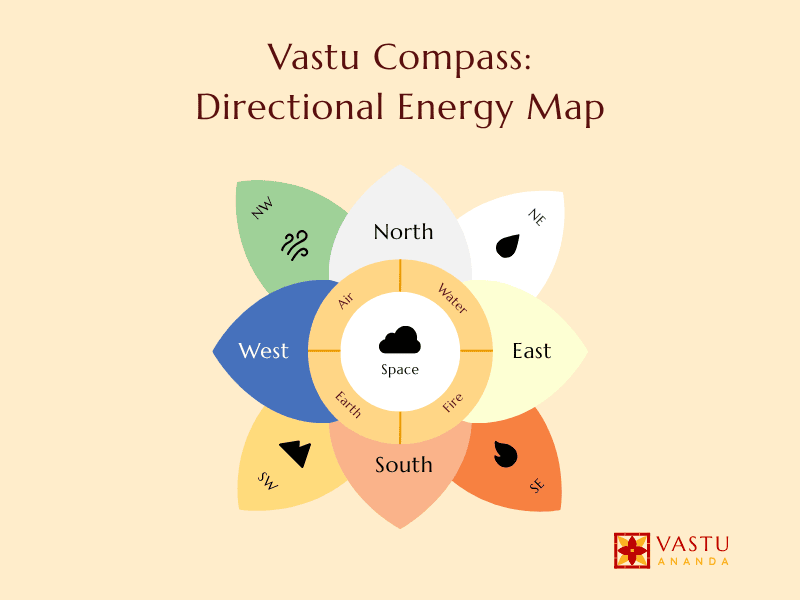
The North is also seen as favourable. It is often linked with flow, career movement, and financial opportunities. A Buddha fountain on the north side of a living area is a common choice to boost prosperity.
The East can work well too, especially in homes that receive good morning light. It is associated with freshness, health, and promotes happiness.
In some layouts, the northwest may also work, especially toward the lighter northern side of that zone. But this is usually treated as a secondary option rather than the first preference.
Best Places To Keep a Fountain at Home
The right direction should also be matched with the right room. A fountain may be in a suitable directional zone, but if it is placed in an awkward or neglected part of the house, it will not have support the energy flow of the house.
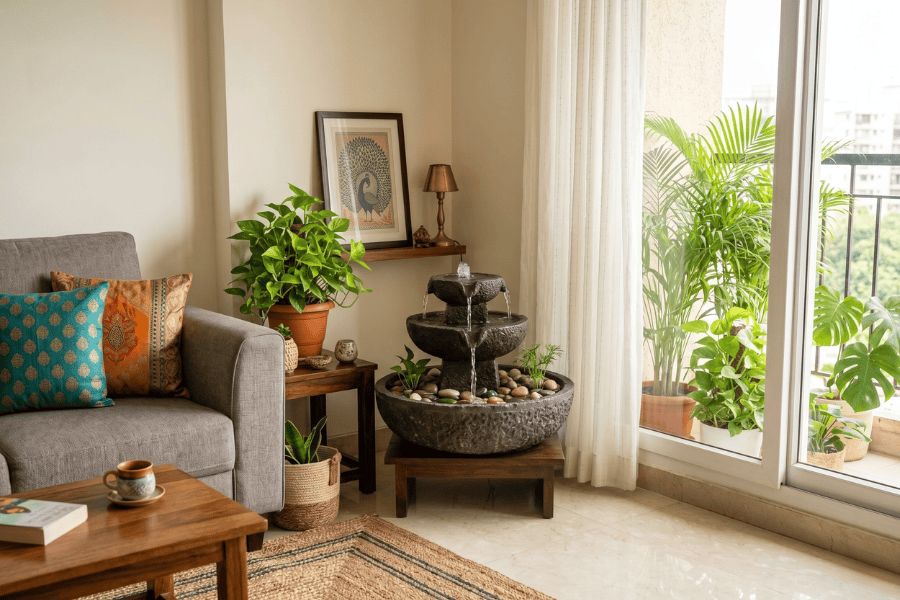
The living room is often the best place for a fountain. It is active, visible, and easier to keep clean. In many Indian homes, this is where the family gathers in the evening, where guests are received, and where a decorative element naturally gets attention.
A balcony can also work well if it faces a suitable direction. This is a practical outdoor option in flats where indoor space is limited.
A small fountain placed near healthy plants can make the balcony feel less like a utility space and more like a place to sit and relax. A northeast-facing garden is also a good option for situating a water fountain.
A fountain near the pooja room should be placed thoughtfully. It should not disturb the calmness of the prayer space or make the area feel crowded.
The bedroom is usually not recommended. Bedrooms are meant for rest, while flowing water brings active movement into the room. For older homeowners, especially, it often makes more sense to keep the fountain in a shared family space rather than in a sleeping area.
Avoid placing a fountain under a staircase, next to a shoe rack, near a bathroom entrance, or in a dark corner no one maintains. These are common mistakes and often make the fountain feel misplaced, no matter how attractive it is.
Which Directions Are Best Avoided
The south (दक्षिण), southwest, and west are generally not preferred for a water fountain.
The southwest (दक्षिण पश्चिम) is especially important to avoid. In home Vastu, this zone is associated with stability and grounding. Because of that, many people prefer to keep it heavy and steady rather than introduce moving water there.
The south is also usually avoided for water elements inside the home. The west may not be ruled out in every case, but it is rarely the first choice for homeowners looking for a simple and safe placement.
For most homes, it is better to stay with the more widely accepted directions instead of experimenting with doubtful ones.
| Placement | Direction |
|---|---|
| Best | Northeast, North, East |
| Can work in some homes | Northwest |
| Usually avoided | South, Southwest, West |
Avoid placing water fountains in kitchens, as this clashes with the fire element (आग्नेय कोण) dominant there.
Which Type of Fountain Works Best
The best fountain is one that suits your home in both size and feel. It should not look too heavy for the room or too flashy for the space.
Modern Fountains for Vastu
Tabletop fountains are one of the easiest options for most homes. They are compact, easy to place, and suitable for flats or smaller sitting areas.
Wall-mounted fountains are useful when floor space is limited. They work well in balconies, passage-side walls, or compact living rooms.
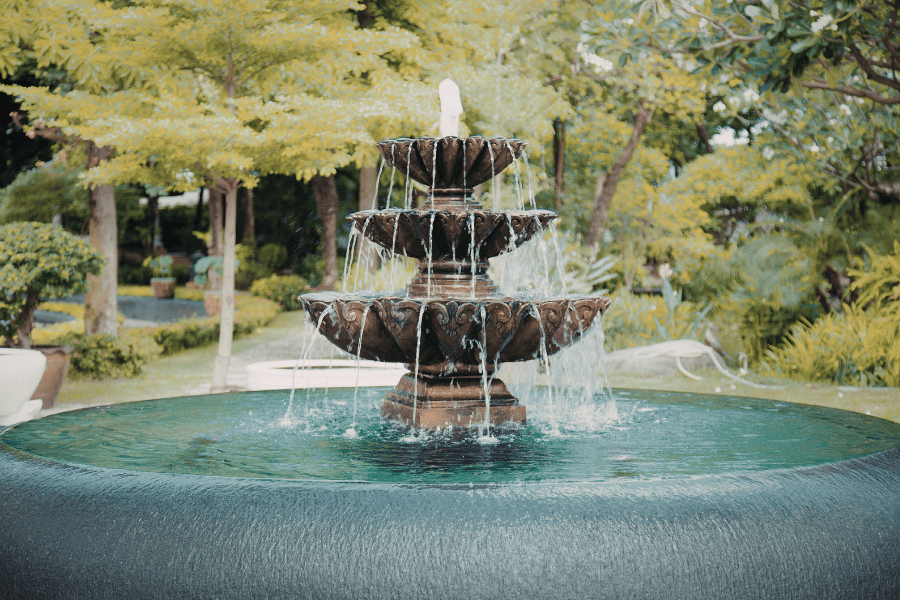
Cascading fountains are a popular choice because the movement of water is clearly visible and audible. This creates a stronger sense of flow and makes the fountain feel more effective.
Traditional Fountains for Vastu
Natural stone or Zen-style fountains are usually chosen for calmer, earthy interiors. They feel understated and blend well with plants, wooden furniture, and neutral colours. Such water features are also popular in Feng Shui.
Many Indian homeowners also prefer Ganesh fountains because they feel auspicious and familiar. If you choose one, place it respectfully and keep the area around it neat.
Modern LED or crystal fountains can work in contemporary homes, but very bright or flashy designs may reduce the calm effect that most people want from a fountain.
Bamboo fountains are also a strong choice. These symbolise a connection with nature and are very auspicious. But, bamboo fountains should always be placed facing inwards towards the house, and never outwards. This promotes inward flow of peace, prosperity and love in the home.
| Fountain type | Best for | Why it works |
|---|---|---|
| Tabletop fountain | Flats, smaller rooms | Easy to place and maintain |
| Wall-mounted fountain | Compact homes | Saves space and looks neat |
| Cascading water fountain | Living rooms, balconies | Strong sense of water flow |
| Natural stone fountain | Calm, earthy interiors | Feels balanced and grounded |
| Ganesh fountain | Family homes | Auspicious and familiar |
Do’s and Don’ts for Water Fountains in Vastu
Keep the fountain in a clean, visible, and active part of the home. It should feel intentional, not like an object pushed into an empty corner.
Always keep the water clean and moving. Stagnant or dirty water changes the entire effect of the fountain and quickly turns it into a neglected feature.
Choose a fountain that matches the room. A very large fountain can overwhelm a compact flat, while a tiny piece may disappear in a large formal hall.
Do not place a fountain under a staircase, in a cramped passage, or beside clutter. Also avoid keeping a fountain that is damaged, noisy in an unpleasant way, or no longer functioning properly.
Common Vastu Mistakes With Water Fountains
One common mistake is choosing a fountain because it looks attractive in the shop, without first thinking about where it will actually go.
Another is poor maintenance. A fountain with dust, algae, stale water or a stopped motor loses both its beauty and its purpose. This also affects the financial stability of the house and can cause loss.
This happens often in real life. A couple setting up a new flat may place a fountain in the southwest corner because that is where space is available. It may seem practical at first, but over time, the area can start feeling heavy or visually uncomfortable, especially if there is already large furniture in that zone.
How To Keep the Fountain Positive Over Time
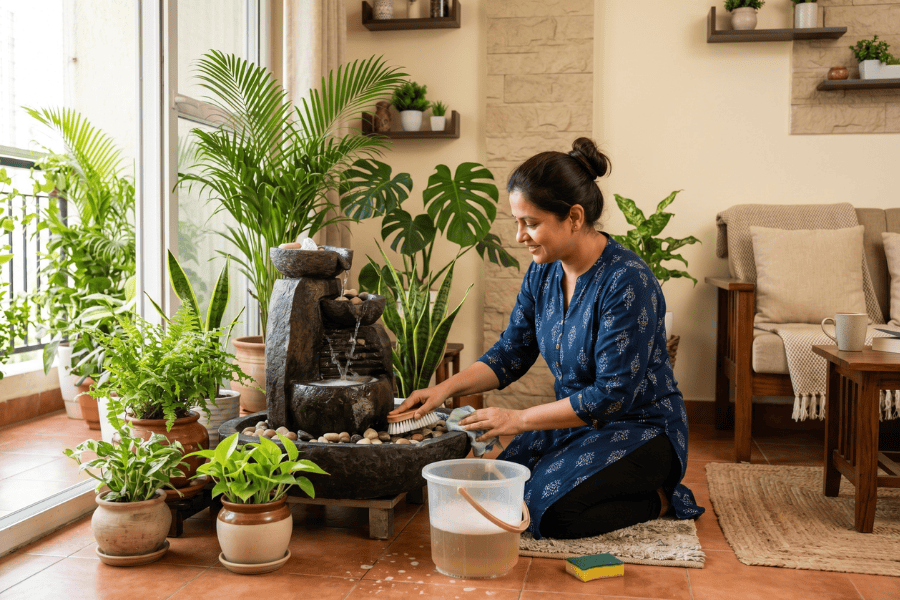
A fountain needs regular care. Change the water often, clean the bowl and pump, and make sure the flow remains smooth.
Also, pay attention to the area around it. Even a well-placed fountain loses its effect if the corner becomes dusty, cluttered, or poorly lit.
A good fountain should feel fresh when you look at it. That is usually the simplest test.
Frequently Asked Questions
Which direction is best for a water fountain at home as per Vastu?
The Northeast direction, North direction, and the East are generally considered the best directions for a water fountain at home.
Can we keep a water fountain in the living room?
Yes, the living room is one of the best places for a fountain because it is visible, active, and easier to maintain.
Is a water fountain good for home Vastu?
Yes, a water fountain is usually considered beneficial when placed in a suitable direction and maintained properly.
Which type of water fountain is best for the home?
Tabletop, cascading, natural stone, and wall-mounted fountains are among the most practical choices for home use.
Which directions should be avoided for water fountain placement?
The south, southwest, and west are generally avoided for water fountain placement in Vastu.
Final Thoughts
A water fountain can add beauty to a home, but more importantly, it can change how a space feels.
For homeowners, creating a peaceful and comfortable home, that matters. If the fountain is placed in the right direction, kept in the right room, and maintained well, it can become a simple but meaningful part of everyday life.