A home mandir is more than a decorative corner. It is a sacred place for prayer, stillness and daily connection. In Vastu Shastra, direction matters because it affects how the pooja space feels and functions within the home.
Many people ask which direction God should face in the home. The answer needs a little context. Vastu looks at the location of the pooja room, the direction of the idols, the direction you face while praying and the placement of lamps, books and other holy objects.
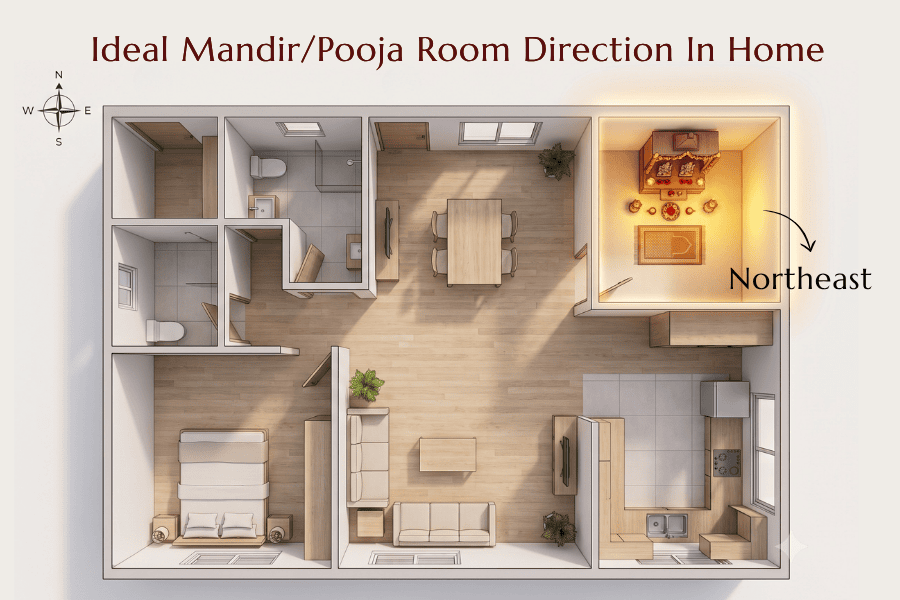
In most homes, the North-East is considered the best area for a pooja room. Idols are commonly placed so that the person praying faces East or North. South-facing deity placement is generally avoided. If space is limited, the setup can still work well with a few careful adjustments.
This guide brings the key points together in a clear way, so you can set up your mandir with confidence, respect and a stronger sense of energy alignment.
Why Direction Matters for the Pooja Room, Deities and Prayer
Direction has a central place in Vastu because each zone of the home is linked with a different quality of energy. A well-placed mandir supports concentration. It also makes the space feel calm, clean and suitable for daily worship. This is supposed to support spiritual growth and a more settled state of mind.
The pooja room is usually placed in the North-East direction, also called Ishan Kona (ईशान कोण), because this zone is associated with clarity, peace and spiritual focus.
East and North are acceptable alternative pooja room directions. The East is usually given first importance because it is linked with the rising sun and a fresh start to the day. North is also seen as suitable in many homes because it is linked with Kubera (कुबेर), the deity associated with wealth and prosperity.
But South-facing deity placement is usually avoided.
A good pooja setup should also feel practical. It should be easy to clean, open to natural light and free from storage clutter that has nothing to do with worship.
Understanding Vastu Shastra Principles for Placing Deities
Before deciding which direction God should face in the home, it helps to separate where the mandir is placed in the house, which way the deity faces and which way you face while praying. These are connected, but they are not the same.
The goal is to create a balanced space with smooth energy flow and a steady sense of reverence.
| Element | Preferred Direction | Secondary Option | Usually Avoided |
|---|---|---|---|
| Mandir location | North-East | East or North | South, basement or under staircases |
| Direction to face while praying | East | North | South |
| Idol placement | East, North or North-East | West-facing idol arrangements can work in some layouts | South-facing placement |
Best and Worst Directions for Idols or Gods
Commonly accepted good options include:
- Idols placed in the East, North or North-East directions, depending on the wall and room layout
- A mandir in the North-East zone
- Idols placed on a raised platform, not directly on the floor
- Enough space between the idol and the wall
Directions and placements that are usually avoided include:
- South-facing idols
- Mandir under a staircase
- Mandir next to or against a bathroom wall
- Broken idols or damaged framed images
- Idols placed in a cramped, cluttered shelf
It is also advised not to place idols directly facing each other, and not to push them tightly against the wall. A clean and open arrangement is believed to invite positive energy into the prayer area.
Placement of Other Holy Objects
The pooja room often includes more than idols. People keep diyas (दीया), incense, bells, religious books, mala (माला), copper vessels and framed pictures. These should be arranged with care.
Useful guidelines include:
- Keep lamps in the East, North or South-East direction of the setup
- Store only pooja-related items in the mandir unit
- Keep holy books clean and raised from the floor
- Avoid placing photos of deceased family members inside the prayer area
- Do not mix the pooja unit with random household storage
Fresh flowers may also be placed in the mandir when they are changed regularly and kept neat.
The space should look ordered and feel restful. Too many objects reduce focus.
Mandir in Living Rooms
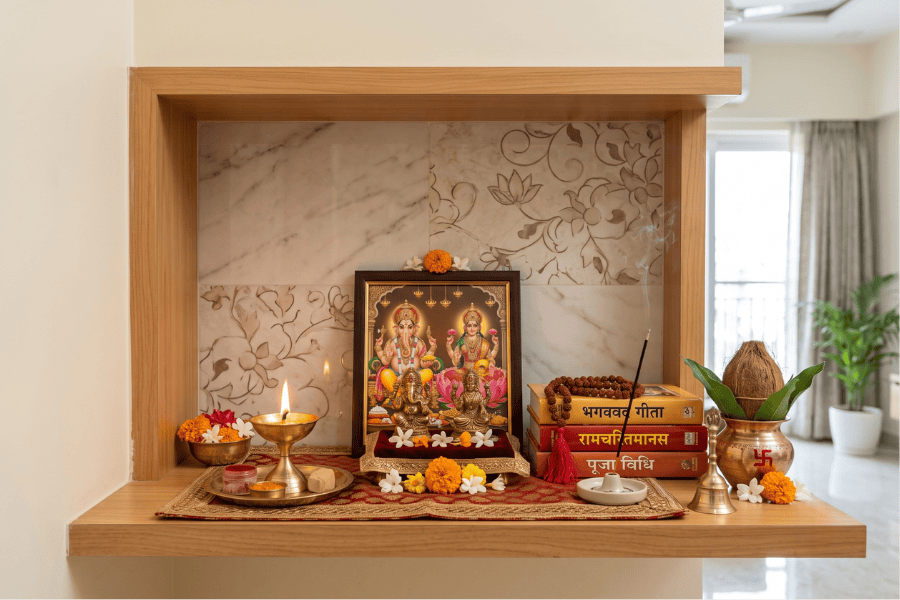
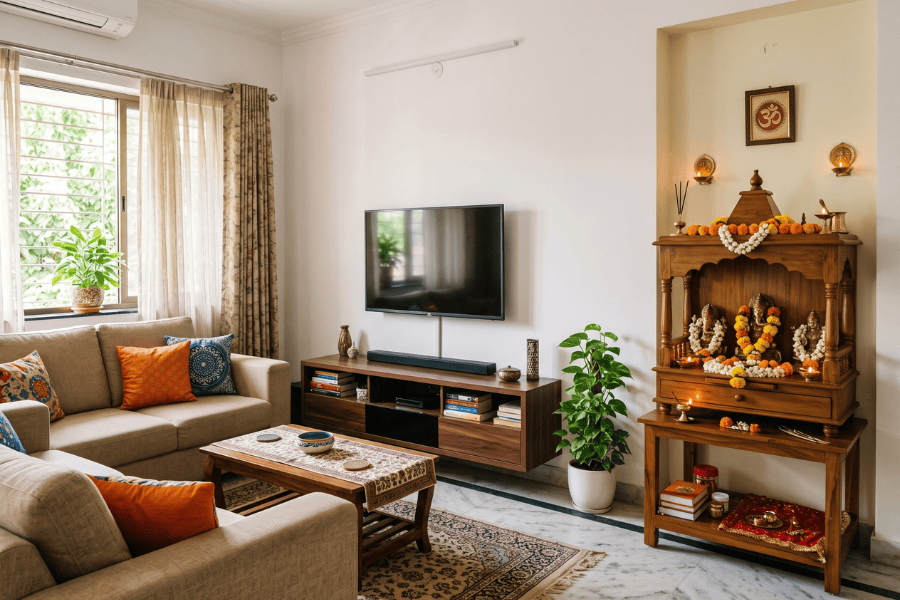
Many modern homes do not have a separate pooja room. In that case, a mandir in the living room can work well if it is placed thoughtfully.
The best choice is still the North-East corner of the living room. If that is not available, try the East or North direction. The unit should be away from television noise, shoe racks and heavy traffic within the room.
A living room setup works best when it has a fixed and respectful place. It shouldn’t be directly below stairs, joined to a bar unit or next to an entertainment wall.
If the mandir sits near the main entrance, make sure it still feels quiet and separate from constant movement through the home.
If possible, use a mandir unit made of wood and with shutters. This keeps the sacred area distinct even in a shared room and supports positive vibrations in the space.
Additional Vastu Solutions for Placing Deities and Idols
Here are some simple setup tips that are often missed when people focus only on direction.
- Keep the mandir at chest level or eye level when seated
- Leave a small gap between the idols and the wall
- Use light colors around the pooja room where possible
- Avoid broken idols, chipped frames or torn religious pictures
- Keep the area well-ventilated
- Clean the space regularly
- Do not place the mandir directly on the floor
- Do not place it next to a toilet wall if another option exists
You can also keep a small copper kalash (तांबे का कलश) with water in the pooja area if it is part of your regular practice and kept clean.
Another useful point is scale. Very large idols are usually not preferred in a small home temple. A calm, proportionate setup is easier to maintain and better suited for daily worship. The purpose is to keep the area suitable for prayer and divine focus, not visual excess.
Final Thoughts
Vastu Shastra guidance suggests placing the pooja room in the North-East and arranged so that the person praying faces East or North direction. A South-facing deity placement is usually avoided.
A pooja space does not need to be large. It needs to feel steady, clean and suitable for prayer. Some basics matter just as much as the placement of the deities. This includes cleanliness, calm surroundings, proper lighting and respectful placement of idols and holy objects.
If you are planning a new house or redesigning an existing one, professional guidance can help you avoid layout mistakes early. Vastu Ananda offers vastu consultations for plot vastu, residential vastu, commercial vastu, hotel vastu and office vastu, along with vastu basic and advanced courses for learners.
FAQs
1. Which direction should gods face in home mandirs according to Vastu principles?
The idols should usually be arranged in the East, North or North-East directions. Sometimes, a West-facing idol placement may also work.
2. Which direction should we face while praying at home?
East is the most preferred direction in Vastu principles. North is also considered a good direction in many homes.
3. Can we keep a mandir in the living room?
Yes. A mandir in the living room is common in modern homes. Place it in the North-East, East or North direction of the room and keep it away from TV units, shoe racks and bathroom walls.
4. Can God face South in home mandirs?
Vastu guidance advises against South-facing deity placement in a home temple.
5. Where should we not place a mandir?
Avoid placing a mandir under a staircase, in a bathroom-adjacent area, in the South direction, in a basement or in a cluttered storage corner.
6. Can we keep religious books and puja items in the mandir?
Yes, but only pooja-related items should be stored there. Avoid using the mandir for cash, documents or general household storage.