An East-facing house is one of the most discussed home types in Vastu Shastra (वास्तु शास्त्र). Many homeowners want to know if these homes are auspicious, suit their families and which mistakes could cause problems. The East is linked with the rising sun, early light and fresh movement in the home. In Vastu Shastra, this direction supports health, clarity and steady progress when the house is planned well.
This guide covers the key rules for an East-facing home. It also explains where such houses often go wrong and what practical fixes can improve the energy flow.
Does the East Direction Work for Homes?
The East direction works very well for homes when the plan follows sound Vastu Shastra rules.
In Vastu Shastra (वास्तु शास्त्र), the East is connected with Surya and the movement of light.
In an East-facing house, the main entrance brings morning sunlight into the house, which supports freshness, activity and a positive start to the day. This morning light is one reason many people prefer these homes.
This direction also relates well with air flow and open space when the home is not blocked by heavy structures. The five elements, or panch tatva (पंच तत्व), must still stay balanced across the house. An East-facing home gives good results when the fire zone, water zone and earth zone stay in the right places.
A few points decide whether the East direction will work well:
- The entrance must sit in a favourable part of the East side
- The Northeast direction should stay light, open and clean
- The South-West should stay heavier and more stable
- Toilets, heavy storage and major heat zones should not disturb the East or North-East
Are East-Facing Houses Auspicious?
East-facing houses are usually considered auspicious when the planning is right. The direction is linked with light, growth, social respect and a more active atmosphere in the home. Many families see this as a good choice for daily living, especially when they want a bright house with strong morning energy.
These qualities are often linked with a well-planned East-facing home:
- Better inflow of morning sunlight
- Improved mental freshness and daily routine
- Support for reputation, confidence and communication
- A lighter, more welcoming feel in the house
These homes often suit early daylight, better ventilation and a natural sense of openness. In Vastu Shastra terms, this supports positive prana (प्राण) in the house.
Ideal Plan for an East-Facing House
The best plan for these homes keeps lighter functions in the East and Northeast direction, while heavier functions are in the South and West.
This creates better directional balance and supports smoother energy movement. A badly planned East-facing house can create stress, delay and poor energy movement.
The East side can be divided into nine equal parts, called padas (पद). The central or North-central segments here are considered most favourable for the main door. The South-Eastern end is usually avoided for the main door.
Ideal Room Placement
| Room | Best Direction | Notes |
|---|---|---|
| Main entrance door | East, in a favourable central or North-central zone | Avoid the South-Eastern zones |
| Living Room | North-East or North | Keep it open and bright |
| Kitchen | South-East/North-West | Face East/West while cooking |
| Master Bedroom | South-West | Supports stability and control |
| Puja Room | North-East | Keep this area pure and calm |
| Toilets and Washrooms | North-West or South-East in some layouts | Avoid North-East and Brahmasthan |
| Staircase | South, West or South-West | Avoid North-East |
| Underground Water Tank | North-East | Keeps the water zone strong |
| Overhead Water Tank | South-West | Avoid North-East |
A good East-facing plan also keeps more open space in the North and East. The South and West can carry more weight through walls, storage or room mass. This follows basic Vastu balance between light and heavy spaces.
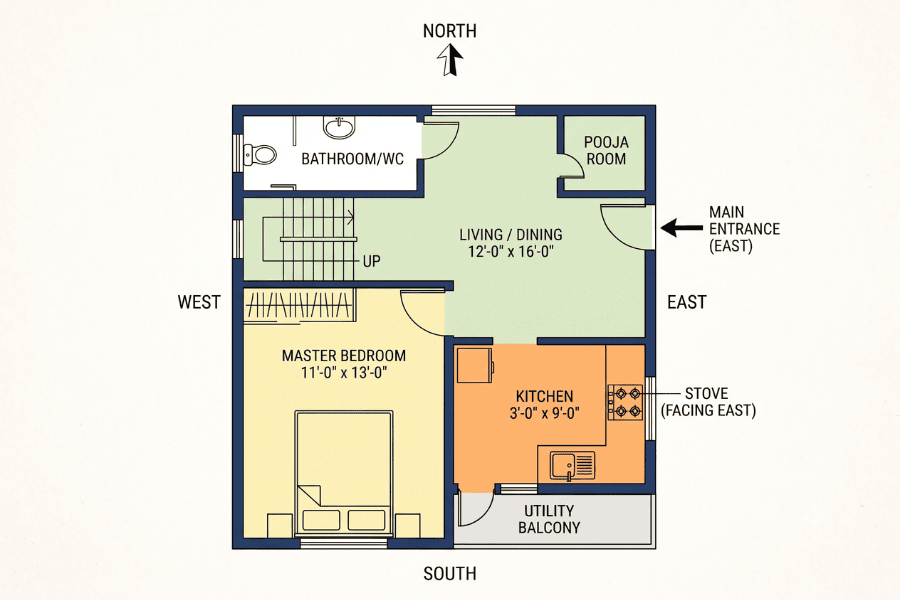
Simple Planning Checklist
- Keep the Northeast direction open and clean
- Place the kitchen in the South-East
- Place the master bedroom in the South-West
- Use the Northeast direction for pooja or meditation
- Keep the main entrance free from clutter
- Avoid toilets in the North-East
- Avoid stairs in the North-East
Artefacts, Paints and Decor for East-Facing House Designs
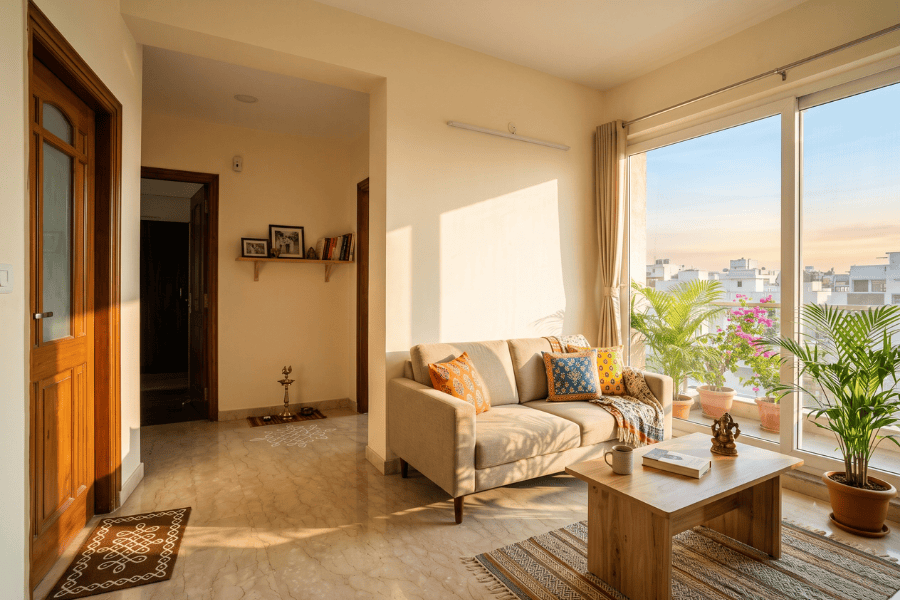
Décor should support the natural quality of the East direction. The aim is a house that feels light, calm and orderly. Décor cannot fix a major plot layout defect, though it can support a better atmosphere when the basics are already in place.
Décor changes should follow common sense. Heavy dark décor in the East can make the front of the home feel dull. Broken items, peeling paint and crowded walls also disturb the feel of the house.
Useful décor ideas for East-facing homes:
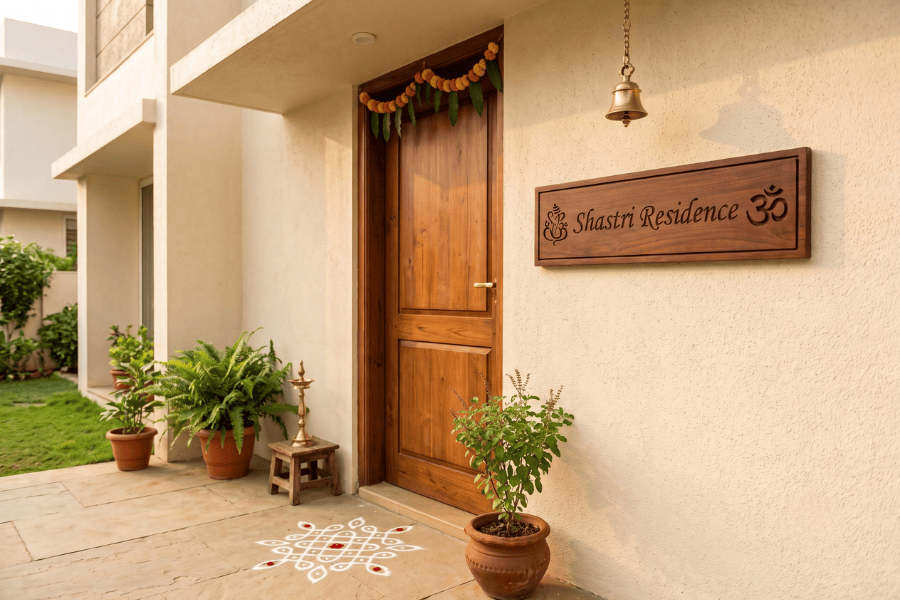
- Wooden nameplate at the main door
- Clean entrance with proper lighting
- Light curtains that allow morning sunlight
- Fresh plants in suitable areas, without blocking the entrance
- Simple spiritual symbols near the entry if appropriate for the family
Soft colours usually work well in East-facing homes because they reflect morning light nicely. Light green, soft blue, off-white and gentle earthy shades can suit the house depending on the room.
The East and North-East feel better with light tones. The South-West can carry deeper, steadier colours.
Keep the pooja room peaceful and uncluttered. Idols and sacred items should be placed with care and the area should stay clean. Many families also place a copper sun symbol, Om (ॐ) or Swastika (स्वस्तिक) near the entrance according to tradition.
Where East-Facing Homes Often Go Wrong and How To Fix Them?
Most problems in East-facing homes come from wrong placement, blocked light or too much weight in sensitive zones. These defects can affect peace, sleep, focus and family harmony.
One common mistake is poor entrance placement. If the main door falls too far towards the South-East, the home may feel unsettled.
Another common problem is clutter or obstruction in front of the entrance. A pole, thick tree or heavy object right in front of the door can disturb the flow into the house.
The North-East is another sensitive area. This zone should stay light and pure. A toilet, kitchen, staircase or heavy spaces here weakens the house badly in Vastu Shastra terms.
The South-West has the opposite need. It should stay heavier and more grounded.
Common Problems and Practical Fixes
| Problem | Effect in the Home | Practical Fix |
|---|---|---|
| Main door in an unfavourable East section | Restlessness and blocked progress | Correct placement during renovation, if possible. Keep the entrance bright, clean and supported with suitable Vastu remedies |
| Cluttered or obstructed entrance | Weak energy flow | Remove clutter, trim blockage and keep the path clear |
| Kitchen in the North-East | Disturbs the water and spiritual zone | Shift the kitchen, if possible. If not, reduce fire intensity and take a proper Vastu consultation |
| Toilet in the North-East | Affects peace and clarity | Keep it very clean and take corrective guidance based on the exact house plan |
| Staircase in the North-East | Creates heaviness in a light zone | Use structural correction in future redesign. Avoid adding more weight there. |
| Overhead tank in North-East | Heavy load in a sensitive zone | Move the tank when feasible |
| Master bedroom outside South-West | Less stability | Use the South-West as the main bedroom if the layout allows |
Quick remedies should be used carefully. A symbol or object may support the space, though it does not replace proper planning. Serious defects need a full review of the plan, measurements and actual usage pattern.
Final Thoughts
An East-facing house can be a strong Vastu choice when the planning is right. The direction brings natural light, freshness and active energy into the home. Good results depend on the full layout, especially the entrance, Northeast direction, kitchen and master bedroom.
Keep the East and North-East lighter, cleaner and more open. Keep the South-West stable and heavier. Follow this balance and the house feels more settled in daily life.
If you want expert guidance for your own property, Vastu Ananda provides Vastu consultations for plot Vastu, residential Vastu, commercial Vastu, hotel Vastu and office Vastu, along with basic and advanced Vastu courses for learners.
FAQs
Is an East-facing house good as per Vastu?
Yes, it is a supportive Vastu direction when the entrance and room placement are correct. Morning sunlight and a well-balanced plan improve the quality of the home.
Where should the main door be in an East-facing house?
The main door should be in a favourable part of the East wall, usually around the middle or the Northern half. The South-Eastern part of the East side is usually avoided.
What is the best kitchen position in an East-facing house?
The South-East is the best location for the kitchen. The North-West is the second option.
Where should the pooja room be?
The pooja room should be in the Northeast direction, or ईशान कोण, which is treated as a pure and spiritually strong zone.
Which colours suit an East-facing house?
Soft blue, light green, white and gentle natural shades usually suit East-facing homes well, especially in brighter front areas.