Have you ever brought home a beautiful painting, hung it on the wall, and still felt that something in the room was not quite right?
Many homeowners feel this. The house may be clean, comfortable and thoughtfully arranged, yet one corner still feels heavy or dull. In Vastu Shastra (वास्तु शास्त्र), even decorative choices can shape how a space feels.
That is why many people ask about peacock paintings. They are beautiful to look at, but they are also considered meaningful in Vastu. When placed well, a peacock painting can add calm, grace and a sense of positivity to the home.
Why Peacock Paintings Matter In Vastu
In Vastu, the peacock is linked with beauty, harmony, alertness and protection. It is not seen as just wall décor. It is treated as a symbol that can influence the mood of a space.
This is one reason peacock paintings are often chosen for living rooms, bedrooms, offices and entry areas. Many homeowners want artwork that not only looks good, but also feels right in the home and supports the overall living space.
For example, a couple may spend months setting up a new flat, choosing curtains, lighting and furniture, but still feel unsure about what to place on the main wall. In many such homes across India, symbolic art becomes part of the larger Vastu discussion.
Is A Peacock Painting Good For The Home?
Yes, in most cases, a peacock painting is considered a good choice for the home as per Vastu, provided the artwork is calm and the placement is sensible.
It is commonly associated with:
- Positive energy
- Harmony in relationships
- Prosperity and graceful progress
- Confidence and self-expression
- Protection from negativity
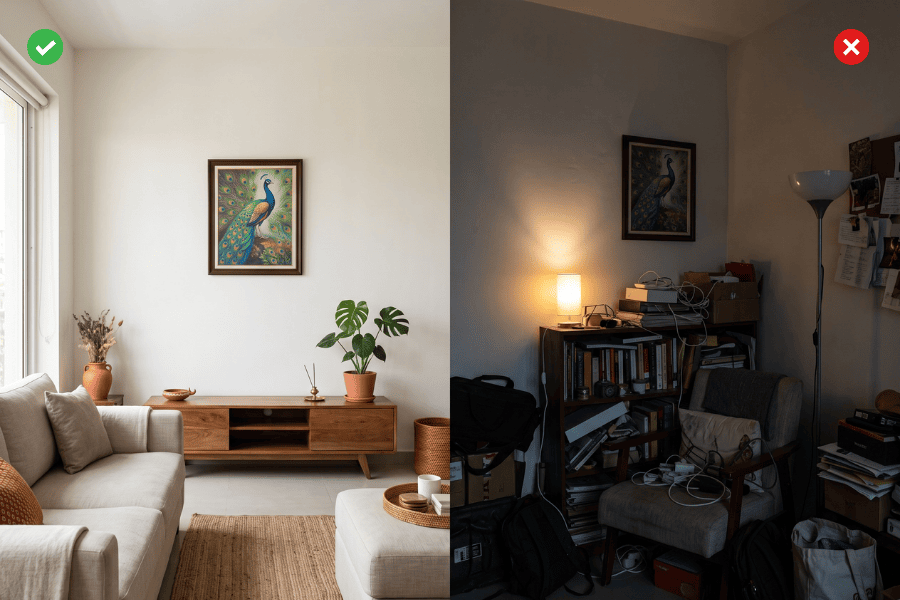
A peacock painting usually works best when the room is clean, bright and not overcrowded. A beautiful painting in a dark, cluttered corner will rarely give the same effect as one placed with care and aligned with basic vastu principles.
What A Peacock Symbolises In Vastu Shastra
The peacock carries deep cultural and spiritual meaning in Indian tradition. In Vastu, it is often associated with elegance, upliftment and balanced energy.
It is also linked with wisdom, creativity and refinement. In some traditions, the peacock is associated with Goddess Saraswati, which adds to its connection with learning and awareness.
For many people in their 50s and 60s, this matters in a practical way. They are not only decorating a wall. They are shaping the feel of a home they have built over many years.
The Main Benefits Of Keeping A Peacock Painting At Home
A peacock painting is often chosen because it brings together beauty and symbolism. In Vastu terms, these are the main benefits people look for.
It Helps Create A Positive Atmosphere
A calm and elegant peacock painting can make a room feel lighter and more welcoming. This is especially useful in spaces that feel dull or emotionally flat.
It Supports Harmony At Home
Peacock imagery is often linked with peace and emotional balance. In homes where family members gather often, this can be one reason people choose it for the living room.
It Is Associated With Prosperity
Many Vastu-based articles connect peacock symbolism with abundance, comfort and graceful growth. People often choose it when they want the home to feel stable and open to wealth, but not flashy.
It Can Support Confidence And Progress
In a study or office room, a peacock painting may support visibility, self-worth and forward movement. This is one reason it is often used in workspaces.
It Adds A Sense Of Protection
Peacock symbolism is widely connected with shielding the home from negative energy. Whether one sees this spiritually or emotionally, the idea is the same: the space should feel safer and more settled.
Which Direction Is Best For A Peacock Painting?
This is the question most people ask first, and rightly so.
In most Vastu guidance, East, North Direction and North-East are commonly preferred for peacock paintings. These directions are usually linked with growth, freshness, clarity and opportunity.
If you follow the broader Vastu map, the 16 zones are: North, North-North-East, North-East, East-North-East, East, East-South-East, South-East, South-South-East, South, South-South-West, South-West, West-South-West, West, West-North-West, North-West and North-North-West.
You do not need to memorise all 16 zones to place a painting well. But if you are planning your home carefully, it helps to know that Vastu direction is often looked at in more detail than just the basic 8 directions.
East For Freshness And New Beginnings
The East is often a strong choice for a peacock painting. It suits homes that need freshness, warmth and a more uplifting feel.
This placement can work especially well in the living room, study or near a bright family area.
North For Work, Movement And Opportunity
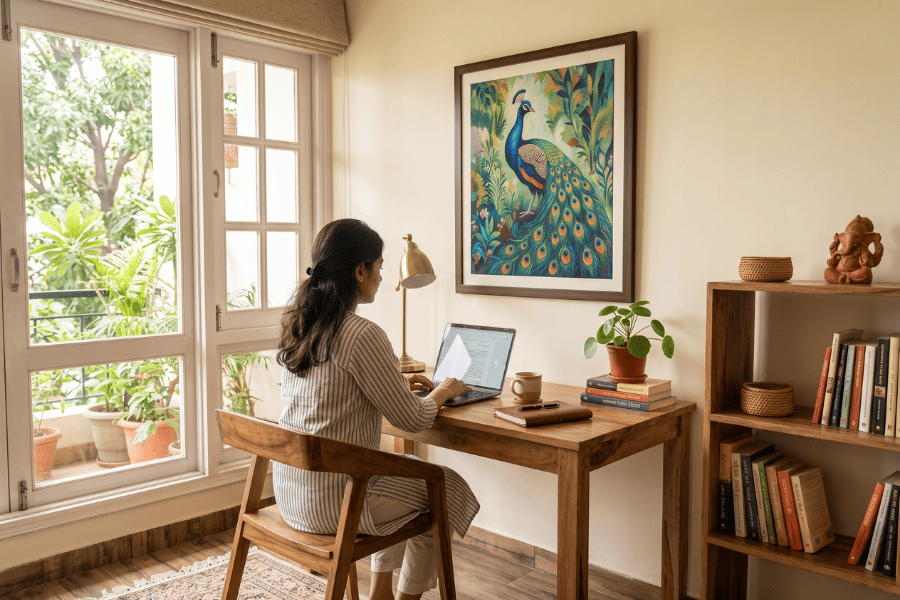
The North is often preferred for office rooms, study corners and work-from-home spaces. A peacock painting here may support confidence and a sense of progress.
This can be useful for someone who has recently started using one room for paperwork, reading or online meetings and wants the space to feel more active and focused.
North-East For Peace And Clarity
If the painting is calm and elegant, the North-East can also be suitable. This direction is often linked with clarity, calmness and spiritual balance.
It may work well in a quiet sitting space, reading room or a peaceful entry area.
Which Direction Suits Which Purpose?
| Direction | Best For | Why People Choose It |
|---|---|---|
| East | Living room, study, family areas | Linked with freshness, growth and new beginnings |
| North | Office room, work corner, study | Associated with opportunity, movement and career focus |
| North-East | Quiet sitting area, reading room, prayer-adjacent space | Often connected with clarity, peace and spiritual balance |
| Entry zone near East or North | Main entrance or foyer wall | Helps create a welcoming and positive first impression |
Where To Place A Peacock Painting In The House
Direction is important, but room placement matters just as much. A painting should suit the purpose of the room.
| Room | Good Placement | Why It Works |
|---|---|---|
| Living Room | East or North wall | Creates a welcoming and balanced feel |
| Bedroom | North or East wall, with soft imagery | Supports calm and emotional comfort |
| Office Room | North or North-East wall | Encourages focus, confidence and progress |
| Dining Room | Bright, clean wall with space around it | Adds warmth and refinement |
| Entryway | East or North side near the entrance | Gives a positive first impression |
Peacock Painting In The Living Room
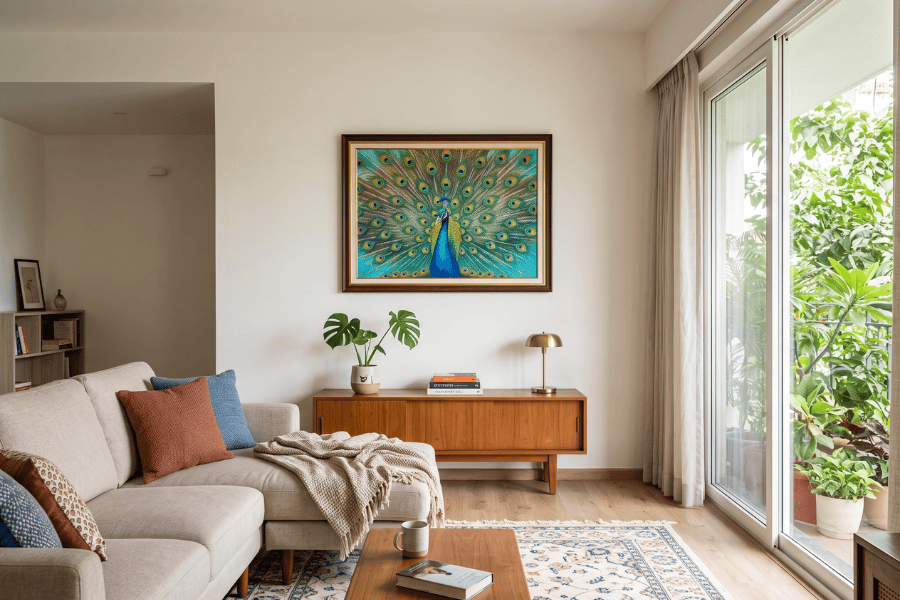
The living room is often the safest and most useful place for a peacock painting.
This is where the family sits together, where guests are welcomed and where the mood of the home is often felt most strongly. A peacock painting here can add colour, grace and a sense of harmony.
If you have a large blank wall behind the sofa and the room feels plain, this can be a very practical place for it. A well-chosen piece of wall art can lift the room without making it feel overdone.
Peacock Painting In The Bedroom
A peacock painting can work in the bedroom, but it should be chosen carefully.
Use soft and peaceful artwork. Avoid loud, dramatic or highly intense images. A pair of peacocks may suit a couple’s bedroom if the artwork feels calm and balanced.
It is usually better not to place the painting directly above the bed. A side wall is often the safer option.
Peacock Painting In The Office Or Study
This is one of the most practical placements. In office rooms, peacock imagery is often used to support confidence, communication and creative thinking.
For example, if a retired homeowner now uses one room for reading, paperwork, investments or consulting work, a well-placed peacock painting can help the room feel more alive and focused.
Peacock Painting Near The Entrance
The entryway sets the tone for the home. A well-placed painting here can make the house feel warm and welcoming from the moment someone enters.
This is a good option for people who want the home to feel positive without making major changes to the décor.
Peacock Painting In The Dining Room
The dining room is less commonly discussed, but it can still be a suitable place if the wall is bright and the room is kept neat.
A graceful painting can add warmth to the space where the family gathers for meals and conversation. If the piece is printed on canvas, it can also give the room a softer and more textured look.
What To Avoid When Placing A Peacock Painting
This matters as much as direction. A good painting placed badly can feel out of place.
Avoid these common mistakes:
- hanging it in a bathroom or on a toilet wall
- placing it directly above the bed
- choosing artwork that looks aggressive, chaotic or gloomy
- using faded, cracked or damaged paintings
- hanging it in a dark corner or near clutter
- overcrowding the wall with too many frames
Some practitioners also avoid the South-West for peacock artwork, especially if the image is visually active. There is also mixed advice around the South-East or Southeast Direction, so it is better to judge the room carefully instead of following one rule blindly.
If the wall is close to a damp area or exposed to too much water seepage, avoid placing the painting there. The condition of the wall matters too.
How To Choose The Right Peacock Painting
Not every peacock painting suits every home.
Choose an image that feels calm, graceful and balanced. The expression, colors, style and overall mood should be pleasant to look at every day.
Single Peacock, Pair Or Open Feathers?
A single peacock can suggest elegance and presence.
A pair of peacocks is often chosen for harmony and togetherness, especially by couples.
A peacock with open feathers can feel more vibrant and expressive, but it should still look graceful, not overpowering. Fine details inspired by peacock feathers can look especially elegant when used with restraint.
What Colours Work Best?
Blue, green and touches of gold are commonly preferred. These shades reflect nature and feel fresh and rich without becoming too heavy.
Very dark backgrounds or harsh colour combinations are usually less suitable for a peaceful home setting.
What About Size?
The painting should match the wall. A very small painting on a large wall can look lost. A very large painting in a small room can feel heavy.
A balanced size usually works best. Good framing also makes a difference, because it helps the artwork look complete and sit better within the room.
Simple Tips To Get Better Results
Here are a few practical points that make a real difference:
- Hang the painting at a natural eye level
- Make sure the wall is clean and not visually crowded
- Use proper lighting so the artwork feels alive
- Match the painting to the mood of the room
- If direction is not ideal, choose the cleanest and brightest suitable wall
These small details matter more than many people think. In real homes, placement quality often matters just as much as symbolic direction. When the painting is placed well, it supports smoother energy flow through the room.
A Brief Note On Feng Shui
In Feng Shui too, the peacock is linked with beauty, dignity, prosperity and recognition. So there is some similarity in symbolism.
Still, Feng Shui and Vastu Shastra (वास्तु शास्त्र) are different systems. If you are following Vastu for your home, it is best to use Feng Shui only as a general comparison, not as the main rulebook.
Need Personalised Vastu Guidance?
If you want help choosing the right placement for artwork, rooms or the overall energy of your property, Vastu Ananda offers consultations for plot vastu, residential vastu, commercial vastu, hotel vastu and office vastu. They also offer a vastu basic course and a vastu advanced course for those who want to learn more.
Final Thoughts
A peacock painting can do more than fill an empty wall. In the right place, it can bring beauty, calm and a stronger sense of balance to the home.
The key is not to overthink it, but to place it with care. Choose a peaceful design, keep the area clean and bright, and make sure the painting suits the room and the people living in it.
FAQs
Which direction is best for a peacock painting?
East, North and North-East are commonly preferred directions for a peacock painting in Vastu.
Can I keep a peacock painting in the bedroom?
Yes, but choose calm artwork and place it on a side wall rather than directly above the bed.
Is a pair of peacocks good in Vastu?
Yes, a pair of peacocks is often associated with harmony, togetherness and emotional balance.
Can I place a peacock painting near the main door?
Yes, placing a peacock painting near the entrance on the East or North side is often considered favourable.
Does a peacock painting bring prosperity?
Many Vastu practitioners associate peacock symbolism with prosperity, positive energy and graceful progress in life.