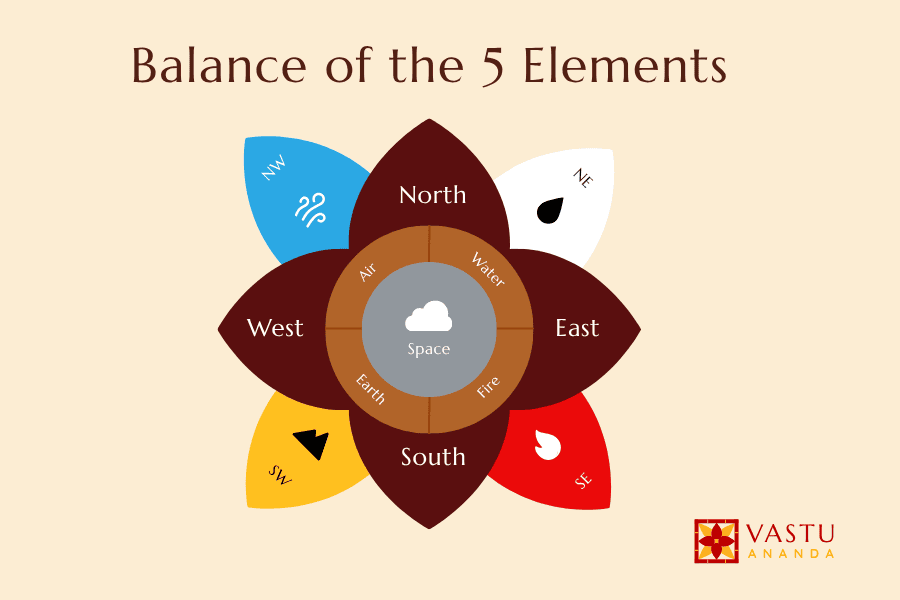
Vastu Shastra is built on the idea that every space is shaped by five natural elements, also called the Pancha Mahabhutas (पंचमहाभूत): Earth, Water, Fire, Air and Space. When these elements are in balance, a home tends to feel steady, comfortable and supportive. When one element becomes too strong or too weak, the space can start to feel heavy, restless or unsettled.
In practical Vastu, balance means understanding what each element represents, where it is strongest and how to support it through layout, colour, use and proportion. Let us look at how these five elements work together and how to bring them into better harmony at home.
The Five Elements in Vastu Shastra: Directions and Colours
The Pancha Mahabhuta are linked with specific directions in Vastu. This directional mapping helps guide room use, colour choices and remedies.
| Element | Sanskrit Name | Ideal Direction in Vastu | Common Colours | What It Represents |
|---|---|---|---|---|
| Earth | Prithvi (पृथ्वी) | South-West | Beige, brown, ochre, muted yellow | Stability, support, grounding |
| Water | Jal (जल) | North-East | Blue, aqua, light shades | Flow, clarity, opportunity |
| Fire | Agni (अग्नि) | South-East | Red, orange, coral, warm tones | Energy, action, transformation |
| Air | Vayu (वायु) | North-West | Light green, soft white, pastel tones | Movement, change, communication |
| Space | Akasha (आकाश) | Centre | Light neutral shades | Openness, expansion, connection |
Earth
Earth gives a home its sense of strength and steadiness. In Vastu, the South-West is associated with Earth, so this zone benefits from weight and stability. Heavy furniture/decor, storage and the main bedroom often work well here. Earth is supported by natural materials such as stone, clay, wood and terracotta.
Water
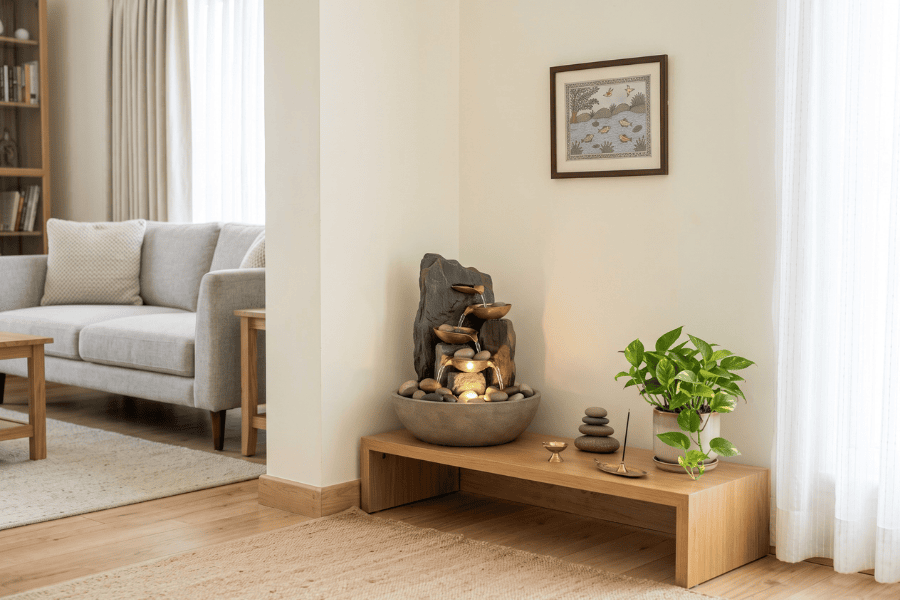
Water is linked with flow, intuition and freshness. The North-East direction is traditionally its most sensitive and beneficial zone. This area is best kept light, clean and open. Water bodies, drinking water storage, fountains or a calm spiritual corner are often preferred here. Too much heaviness in this zone can disturb the softness that Water needs.
Fire
Fire stands for power, digestion, confidence and activity. The South-East is its natural direction, which is why kitchens are often recommended here. Fire also includes electrical heat, lighting and cooking energy. Warm accents can support this zone, but the Fire element should be controlled, not excessive.
Air
Air brings movement, exchange and circulation. In Vastu, the North-West direction is commonly associated with Air. This zone benefits from ventilation, windows, light fabrics and uncluttered movement. Air supports movement and change, so it is often linked with guest rooms and transitional spaces.
Space
Space is the most subtle element. It is linked with openness, sound and the invisible quality of a place. In Vastu, the centre of the home, known as the Brahmasthan (ब्रह्मस्थान), is the core space zone. This area should feel open and free from too much weight or blockage.
The Three Key Cycles
To balance the five elements well, it helps to understand that they do not work in isolation. They influence one another through natural cycles. These can be seen in three simple ways:
- The support cycle – one element nourishes another and helps energy move smoothly
- The control cycle – one element keeps another from becoming excessive
- The imbalance cycle – poor placement or overuse creates conflict between elements
For example, Fire and Water placed too close together can create tension. In the same way, a blocked centre can reduce the quality of Space, which affects the overall feel of the home. A balanced space respects these relationships instead of treating each zone separately.
Why Elemental Balance Matters
Elemental balance matters because Vastu Shastra is not only about direction. It is also about how a place feels and functions.
A home may look attractive, but if the elements are poorly placed and not in harmony, daily life can feel less settled.
Some common effects of imbalance may include:
- Lack of calm or focus
- Heaviness
- Excess heat or agitation
- Emotional restlessness
- A general sense that the home does not support well-being
From a Vastu point of view, a well-balanced environment can support better ease, routine and mental clarity.
How To Bring All Elements Together Harmoniously
The best approach is to work with the home as a whole. Instead of trying too many remedies at once, begin with practical alignment.
Here are a few grounded ways to improve elemental balance:
- Keep the North-East light, open and clean
- Place the kitchen activity in or near the South-East
- Use the South-West for heavier furniture/home decor and stable functions
- Improve airflow in the North-West direction with windows or lighter layouts
- Avoid blocking the centre of the home with bulky storage
You can also support balance through material and colour choices.
| Need | Associated Element | Simple Vastu Approach |
|---|---|---|
| More stability | Earth | Add weight, earthy colours and natural textures in the South-West |
| More freshness | Water | Keep the North-East clear and use soft, light tones |
| Better energy | Fire | Strengthen the South-East with proper lighting and kitchen order |
| Movement | Air | Improve ventilation and reduce clutter in the North-West |
| Openness | Space | Keep the centre of the home light and unobstructed |
Common Problems and Remedies for Elemental Imbalances
In most homes, imbalance happens because of layout limits, modern design choices or simple neglect. The good news is that many issues can be softened without major reconstruction.
A few common problems include a cluttered North-East, a missing South-East kitchen, poor airflow, excessive dark colours or a blocked centre. Remedies should be practical and proportionate.
Here are some useful corrections to restore order, proportion and elemental logic within the home:
- If the North-East feels heavy: remove clutter, improve natural light and avoid storing bulky items there
- If the Fire element is weak: use warmer lighting, keep the cooking zone clean and avoid water features near the stove
- If the Air element is blocked: increase ventilation, use lighter curtains and reduce packed furniture in the North-West
- If the Earth element is weak: bring in grounded materials, stable furniture and earthy shades in the South-West
- If the Space element is blocked: clear the central area and avoid overfilling it with décor or storage
Final Thoughts
Balancing the five elements in Vastu Shastra is not about perfection. It is about creating a home that feels aligned, clear and supportive. Earth gives stability, Water brings flow, Fire creates action, Air encourages movement and Space allows everything to breathe. When these elements are respected in the right measure, the home often feels naturally more settled.
If you want expert guidance for plot vastu, residential vastu, commercial vastu, hotel vastu or office vastu, Vastu Ananda also offers personalised consultations and learning options through its vastu basic course and vastu advanced course.