In Vastu Shastra (वास्तु शास्त्र), a Lord Hanuman flag is linked with protection, courage, steadiness and victory over negative forces. Many families hoist the flag (ध्वज) on the terrace or roof when they want a stronger protective energy field in the house.
The flag’s position and condition, along with the time of its hoisting, matter a lot. A properly placed flag supports the energy of the space and keeps the intention pure. It also connects the home with discipline, faith and the protective force of Lord Hanuman.
Benefits of Hoisting a Lord Hanuman Flag
A Lord Hanuman flag is mainly linked with divine protection.
It strengthens the feeling of safety in the house and reduces fear, stress and heaviness in the environment.
In Vastu, this matters because the energy of a home affects the mind of the people living there. The flag mainly strengthens the qualities of fire, movement and protective force.
Some of the main spiritual benefits people seek include:
- Protection from negativity
- Greater courage and confidence
- Mental peace in the home
- Stronger spiritual focus
- Stability for the family
Lord Hanuman is also connected with devotion, self-control and service. These qualities improve the energy of the house (गृह) and support harmony in daily life. In many religious traditions, the flag also stands for victory and alertness.
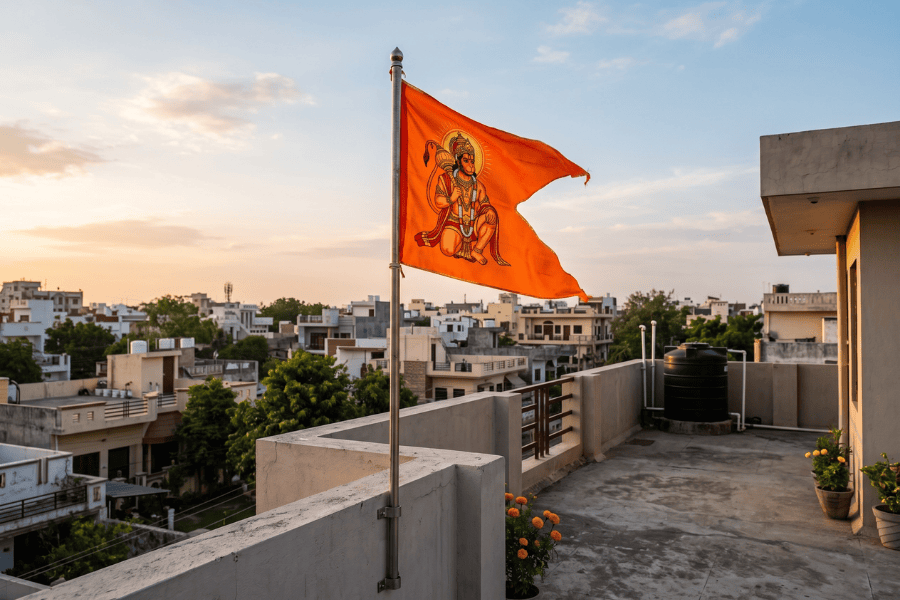
What a Hanuman Flag Signifies
A Lord Hanuman flag mainly signifies strength, devotion and divine protection. Traditional references also connect flags with Lord Hanuman as a sign of victory. This symbolism is widely linked with Arjuna’s chariot in the Mahabharata, where Lord Hanuman appeared on the dhwaj as a sign of power and support in battle.
In a home setting, the flag reminds the family to stay disciplined, truthful and fearless. It is also linked with protection from evil influences and unwanted energies.
Where Should the Lord Hanuman Flag Be Hoisted
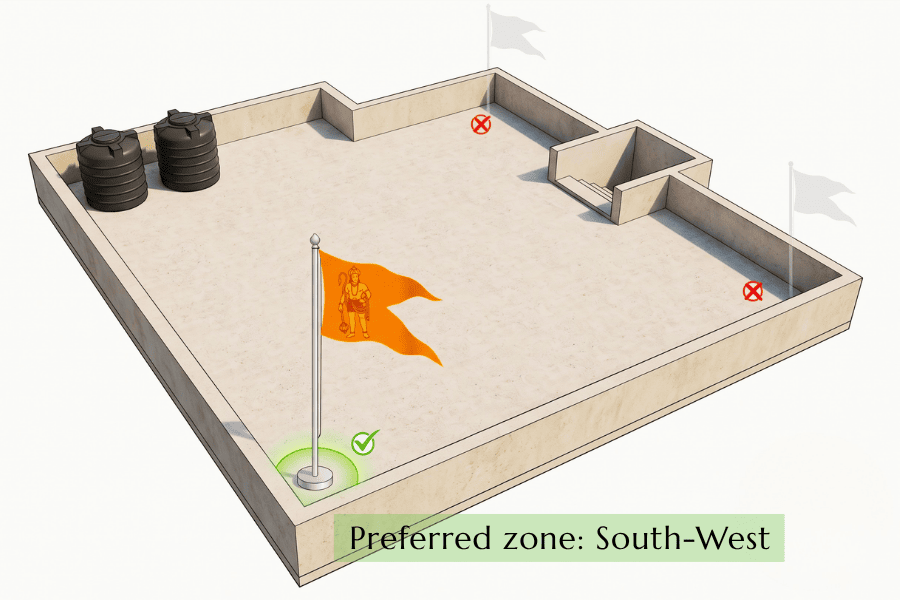
Vastu commonly recommends hoisting the flag on the roof or terrace. It should be placed in a position where it stays upright, clean and visible. The South-West corner is often preferred for this placement because that zone relates to stability and protection.
| Aspect | Recommendation |
|---|---|
| Best location | Roof or terrace |
| Preferred zone | South-West |
| Flag position | High, clear and upright |
| Condition | Clean and untorn |
The flag should not be placed casually in a corner where it gets trapped among clutter, wires or broken items. The surrounding area should stay clean. A strong and respectful placement keeps the sankalp (संकल्प) of the remedy intact.
Elements of the Flag
The flag itself should reflect devotion and clarity.
Saffron-coloured flags are the most common choice because the shade is associated with tapas (तपस), sacrifice, energy and spiritual fire. People also often prefer a double-triangle shape with an image of Lord Hanuman or sacred words on it.
Good quality cloth and a strong pole must be used. Do not keep a torn, faded or dirty flag for long. A damaged Hanuman dhwaja weakens the energy it is meant to carry.
Right Time To Hoist the Flag
Tuesday is widely regarded as the best day to hoist a Lord Hanuman flag because it is strongly associated with Lord Hanuman. Many people also choose a clean morning time after bath and prayer.
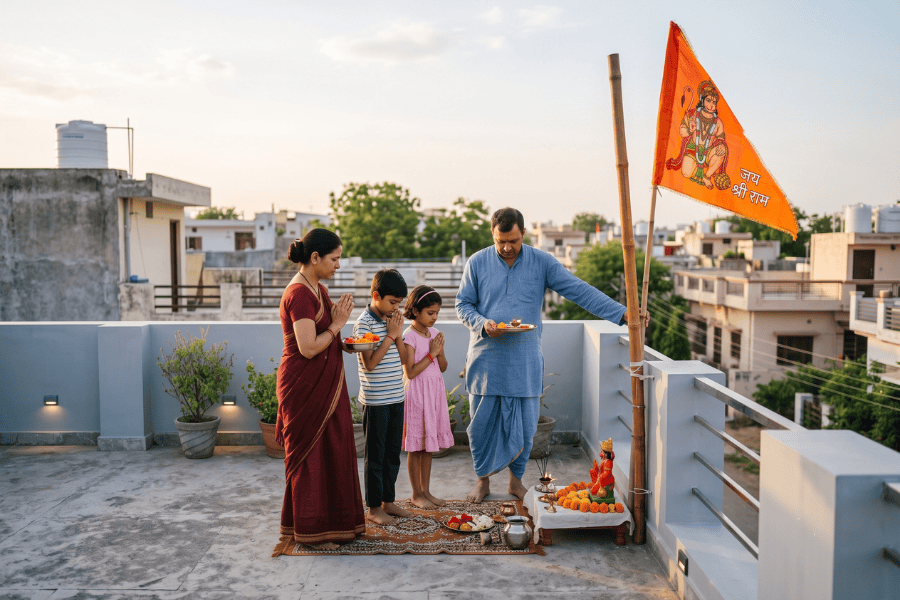
The flag can be hoisted after simple puja (पूजा), mantra chanting or Hanuman Chalisa recitation. Hanuman Jayanti is also considered an auspicious time for this act.
When hoisting the flag, the focus should be on devotional remembrance and clear intention. A sacred object gives its best effect when placed with faith (श्रद्धा) and discipline.
Important Tips To Keep in Mind
- Choose a flag size that suits the height of your house and terrace
- Keep the flagpole straight and firmly fixed
- Use a fresh flag during special occasions or after major family prayers
- Avoid placing the flag where dripping water keeps wetting it
- Do not let nearby plants, cables or wall fixtures cover the flag
- If multiple flags are on the terrace, keep the Hanuman flag separate and clearly placed
Final Thoughts
A Hanuman flag is a simple but powerful Vastu step for a home. It brings protection, courage and a steadier spiritual atmosphere when it is placed with respect. The right location, clean condition and proper timing all matter.
For people facing repeated stress at home, fear, conflict or a heavy feeling in the space, this can be a meaningful support. For a full Vastu assessment, Vastu Ananda provides consultations for plot vastu, residential vastu, commercial vastu, hotel vastu and office vastu. They also teach a vastu basic course and a vastu advanced course.
FAQs
Can I hoist a Hanuman flag at home?
Yes. Many families hoist it on the roof or terrace for protection and positive energy.
Which is the best colour for a Hanuman flag?
Saffron is the most preferred colour. It represents devotion, strength and spiritual energy.
Which direction is good to place a Hanuman flag?
The South-West area on a roof or terrace is commonly recommended in Vastu guidance.
When should I replace the flag?
Replace it when it becomes torn, dirty or faded. Do it respectfully and keep the new flag clean.
Is Tuesday the best day to hoist the Hanuman flag?
Yes. Tuesday is widely considered the most auspicious day for hoisting a Hanuman dhwaj.