A well-planned modern kitchen supports both daily comfort and a calmer home environment. In Vastu Shastra, the cooking area is linked with the fire element or agni (अग्नि), which is why the placement of the stove matters. When this part of the home is arranged with care, it can encourage steadiness, ease and better energy in everyday life.
Even small changes in the kitchen can improve movement, reduce friction and support a more balanced atmosphere.
This guide aims to offer basic tips that suit modern homes and support everyday health. It explains how to approach kitchen vastu for the cooking area, why direction matters, how colour and layout affect the fire zone and which daily habits help reduce negative energy over time.
Why Cooking Direction Matters
The direction you face while cooking affects how the fire element works in the kitchen and the energy balance at home. Good kitchen direction planning can also affect comfort and health in the family’s daily life.
Kitchen vastu shastra guidance recommends facing East because this auspicious direction is associated with clarity, freshness and supportive energy. It also suits the natural rhythm of the day, especially when morning sun light enters through the windows and brightens the cooking area.
The hob is usually placed in the South-East corner of the kitchen, so the person preparing meals can face the East direction.
This arrangement is considered more balanced than facing the South direction. When the fire zone sits well within the kitchen, the overall design tends to feel more stable and intuitive for the whole family.
A poor arrangement does not always create major problems, but it can add subtle discomfort. A cramped layout, blocked airflow or poor separation from the sink can disturb the natural balance of the room and allow negative energy to build through disorder, heat and stress.
Core Vastu Rules for the Cooking Zone
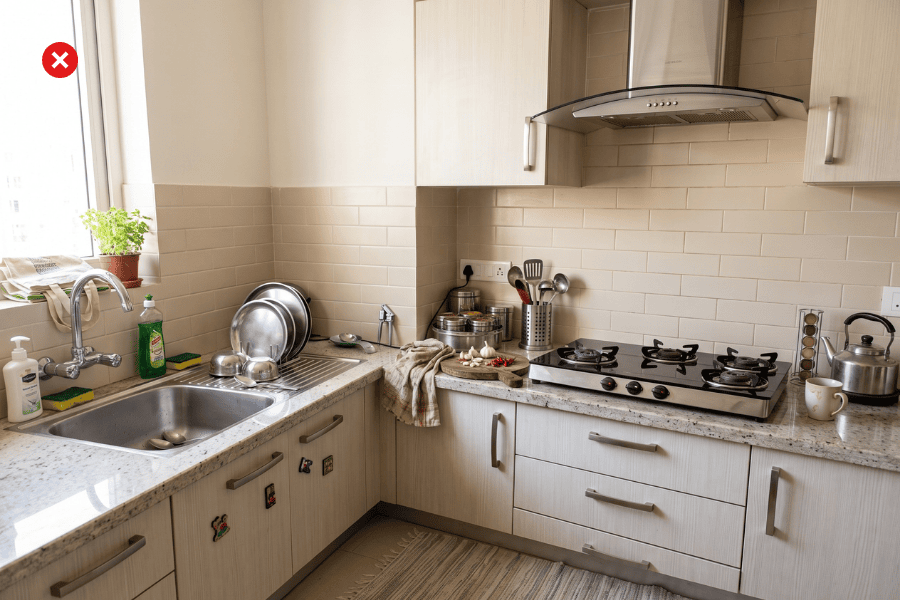
According to vastu principles, the fire element should stay strong, but not overpower the whole kitchen. For that reason, the stove or hob is best placed in the South-East corner of the room. If that is not possible, you can still improve the kitchen layout by giving the cooking zone a clear place and avoiding crowding around it.
This area should feel open, safe and easy to clean. Heavy clutter, poor airflow and cramped counters can disturb the flow of energy.
The entrance to the room should also feel open and unobstructed so movement stays easy. Well-positioned doors and access points help maintain a smoother sense of movement and better health conditions through airflow.
Try to keep heat-producing electrical appliances grouped neatly rather than scattered across the room. The oven, microwaves, mixers, grinders and similar appliances are usually best grouped with the fire zone. This improves both order and energetic balance.
The cooking surface should also sit away from direct water contact.
A practical layout usually works best when the cooking zone receives light, fresh air and enough working space. When these basics are in place, the room often feels easier to use and less tense over time.
Hob Placement
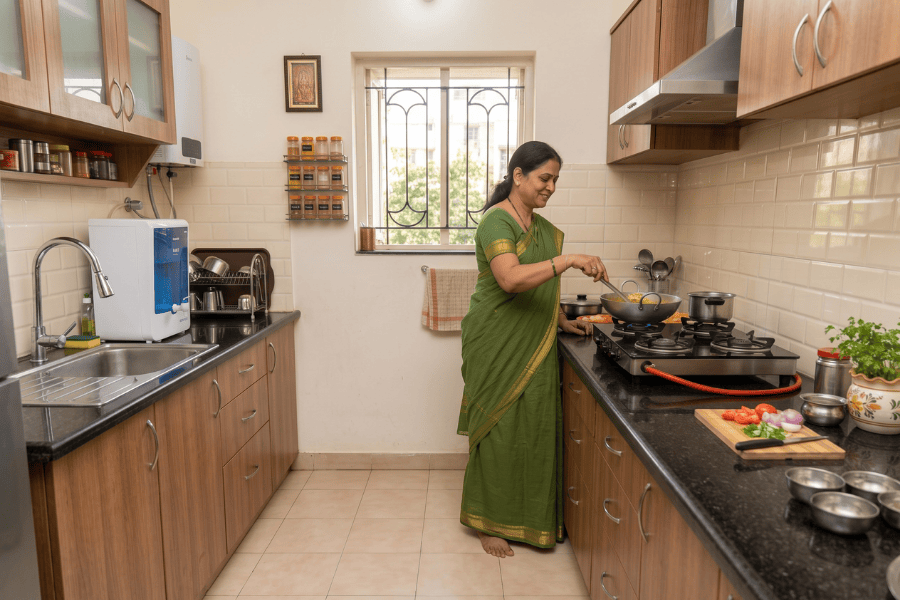
As per kitchen vastu shastra, the stove should ideally be placed in the Southeast corner of the kitchen. This area is associated with the fire element, making it the most suitable zone for cooking. If the kitchen itself is not in the ideal part of the home, the stove can still often be placed carefully within the available layout to support a better balance.
It is also better to keep the stove in a clean, open area rather than under heavy overhead storage that makes the cooking space feel compressed. It should be easy to access, simple to wipe down and located where heat can disperse well. The person cooking should have enough space to move freely, place utensils nearby and work without obstruction. This helps keep the kitchen functional while also supporting a better sense of order.
Good ventilation matters too. A window or an exhaust in the East or Northern wall is often recommended in vastu principles.
Burner Count and Everyday Use
People often ask whether burner count changes vastu results. In reality, this is a smaller factor than placement and maintenance. A two-burner or four-burner unit can both work well, depending on family size and routine. The more important point is that the cooking setup should suit the room and support daily use without crowding it.
If one burner never works or grease is left to build up, the cooking zone starts to feel neglected. This does not help the overall energy of the room. A well-maintained setup, used with care and cleaned regularly, is always better than a larger one that feels chaotic.
Choosing Suitable Colours Around the Cooking Area
A thoughtful design can soften the visual weight of the fire zone and help the room feel more harmonious. Even a small colour adjustment can improve the overall sense of energy and influence how the fire zone feels.
Since this part of the kitchen is linked with warmth, it is better to choose bright colours that feel lively but not harsh. Red, maroon, brown and metallic finishes are often preferred around the stove because they support the character of the fire element. A touch of orange can also work well when used with restraint.
If your cooking unit is black, there is no need to replace it. Instead, balance it with lighter counters, softer wall colours, brighter backsplashes or well-finished cabinets. The goal is to avoid a heavy visual effect that may make the room feel closed in.
Natural materials such as wood and stone also often help create a steadier feeling in this part of the home.
Table: Stove Colours and Their General Vastu Effect
| Colour | Vastu Shastra View | Practical Note |
|---|---|---|
| Red | Linked strongly with fire | Best used in moderation |
| Maroon | Warm and grounded | Creates a rich but steady look |
| Brown | Stable and earthy | Pairs well with natural finishes |
| Silver/Steel | Neutral and balanced | Ideal for a clean modern setting |
| Black | Acceptable with balance | Works better with light surrounding finishes |
Balancing Fire and Water Elements in the Kitchen
One of the most important vastu ideas is to separate fire and water (जल). In simple terms, the stove represents fire and the sink represents water. When these two sit too close together, the room may feel unsettled. This is often described as a clash that can disturb energy and create subtle discomfort in daily use.
That is why the North or North-East is considered the ideal kitchen sink direction, while the fire zone stays in the South-East direction. This keeps the two elements in their own zones. It also creates a more sensible working pattern for washing, chopping and cooking. It also helps the room feel calmer and reduces the sense of mixed or negative energy.
If both have to sit on one counter, leave as much space as possible between them. A wooden divider or chopping board can help soften the clash. Good separation also supports a cleaner routine, which is better for household health.
Leaking taps should also be repaired quickly because water waste can add to visual disorder and a sense of negativity.
| Element | Preferred Placement/Direction | Why It Matters |
|---|---|---|
| Fire | South-East | Supports the active cooking function |
| Water | North or North-East | Keeps water separate from fire |
Daily Kitchen Practices for Long-Term Positivity
A good layout is only one part of the picture. Daily habits keep the room balanced over time. In many homes, the difference between a pleasant cooking space and a draining one comes down to routine.
Cleanliness is essential. Do not let grease collect around the cooking point. Wash utensils in good time and avoid leaving stale food out for long periods. A clean kitchen supports clearer energy and makes daily work easier.
Organisation matters just as much. Clear doors and thoughtful kitchen direction planning can make the room easier to use and support a healthier atmosphere.
Keep heavy storage in the South or West when practical, and lighter items in the North or East direction. Orderly storage helps the room feel less crowded and improves movement. It is also helpful to group items by use so the space remains easy to manage. Many Indian homes also benefit from clearly planned shelves and cabinets so everyday items stay within reach.
It is also wise to think about where the refrigerator is placed. In many layouts, the fridge is better kept away from the fire zone so the room does not feel too crowded. The same applies to extra surfaces, bulky materials and unused items near the entrance or main door.
A simple morning practice can also help. Some households light a diya (दिया) or pause for a quiet moment before the day begins. These acts are not compulsory, but they can set a calm tone and strengthen positive energy in the kitchen.
Everyday Habits That Support Balance
- Clean the cooking area after use
- Keep counters clear of clutter
- Check for safe and efficient flame function
- Maintain tidy storage units for grains and utensils
- Let fresh air enter the room each day
- Use practical, balanced design choices rather than visual excess
- Follow simple tips consistently instead of making rushed changes
Final Thoughts
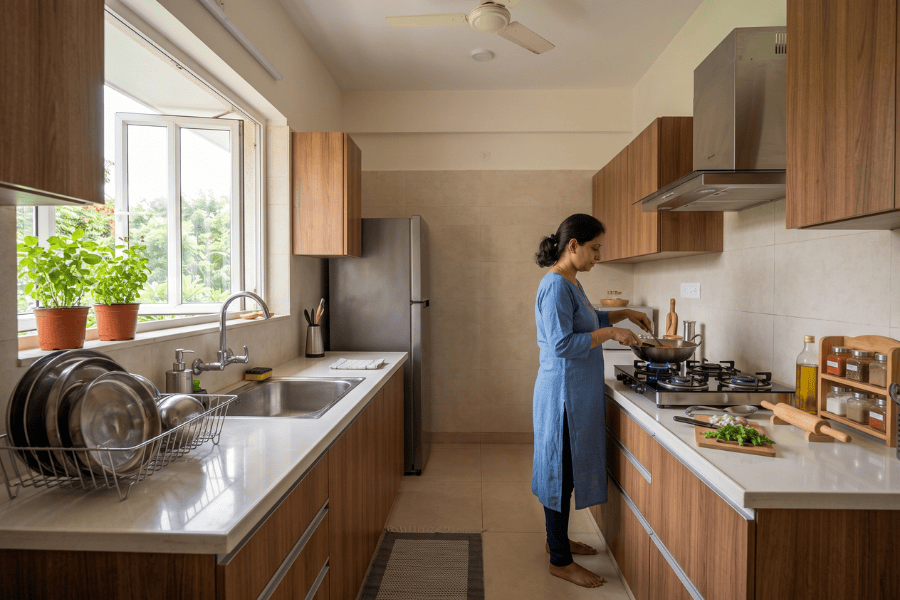
The best vastu approach is always the one that combines sound principles with practical living. Place the stove in the South-East direction, separate fire from water, use balanced colours and maintain a clean and usable Indian kitchen. These steps support steadier energy without making the home feel rigid or difficult to manage.
A well-kept kitchen does not depend on perfection. It depends on thoughtful planning, sensible design and daily care. When these come together, the kitchen feels lighter, more functional and more peaceful for the whole family. Good kitchen direction choices can also support comfort, routine and long-term health.
If you would like personalised guidance, Vastu Ananda offers consultations for plot vastu, residential vastu, commercial vastu, hotel vastu and office vastu, along with two learning options: the vastu basic course and the vastu advanced course.
FAQs
1. What is the best kitchen vastu direction for the cooking area?
The ideal vastu location is the South-East Corner of the kitchen, with the person cooking facing the East direction.
2. Should fire and water be kept apart according to vastu shastra?
Yes. In kitchen vastu, it is best to keep the sink and the stove apart so the room maintains better elemental balance.
3. Do colours really matter in this space?
Yes. According to vastu, colour affects mood, visual weight and the sense of energy, especially around the fire zone.
4. What daily habits help maintain positivity?
Regular cleaning, organised kitchen routines, fresh air and mindful upkeep all help maintain a balanced atmosphere.
5. Where should refrigerators be placed?
Refrigerators are better placed away from the main fire zone so the room does not feel too crowded. A common approach is to keep them in the South-West or West side of the room to maintain balance, movement and ease of use.
6. Where should the gas cylinder be kept?
The gas cylinder is usually best kept within the fire zone, which is the South-East side of the room. It should remain in a safe, ventilated area and should not be placed too close to water points.
7. How do you turn a kitchen into a positive space?
A positive space begins with order and comfort. Focus on the right cooking direction, separate the sink and flame, use balanced colours and avoid overcrowding the room with unused items. Daily upkeep is what helps that feeling last.