
Have you ever felt that a house looks fine, yet something about it feels heavy or unsettled? In many homes, the issue does not begin inside the rooms. It begins outside, with a large tree in the wrong place, a blocked entrance or plants added without a clear plan.
This is a common concern for homeowners, especially couples planning a new home or families trying to bring more peace into daily life. Many people in their 50s and 60s say the same thing: we have plants, but we are not sure if they are placed correctly. That is where Vastu Shastra (वास्तु शास्त्र) can help.
Tree plantation as per Vastu is not about filling the house with so-called lucky plants. It is about placing the right tree or plant in the right zone, so the home feels balanced, open and comfortable.
In Vastu, space is often studied through directional zones. When expanded, this includes all 16 zones: North, North-North-East, North-East, East-North-East, East, East-South-East, South-East, South-South-East, South, South-South-West, South-West, West-South-West, West, West-North-West, North-West and North-North-West. These zones help guide where trees, plants, open areas and heavier features should be placed according to core vastu principles.
This article explains how to choose and place trees and plants around your home in a simple and practical way.
Why Plant Placement Matters In Vastu
In Vastu, trees and plants are not seen as decoration alone. They affect light, airflow, openness and the overall feel of a house.
A tall tree in the wrong place can block morning light. A dense cluster near the entrance can make the home feel closed. On the other hand, a well-placed neem or a simple tulsi plant can make the same house feel lighter and calmer.
That is why placement matters so much. The aim is not to follow random rules. The aim is to create balance around the home and support healthy energy flow.
For example, many older houses have a large tree planted in front for shade. That may help in summer. But if it blocks the main entrance or keeps the East side dark for most of the day, the home may start to feel heavy over time.
How Vastu Plants Can Support The Home
When plants are healthy and placed well, they can support both the atmosphere and comfort of the home.
They may help by:
- Improving Air Quality
- Softening Harsh Outdoor Spaces
- Bringing A Sense Of Calm
- Supporting Privacy
- Making The Entrance More Welcoming
- Creating A Feeling Of Care And Growth
This is why people often feel better in homes with well-kept greenery. Even without knowing Vastu, they can sense the difference.
A couple moving into a retirement home, for example, may not want a high-maintenance garden. Even so, a few well-placed plants can make the home feel warmer and more settled without adding too much work. In many cases, that sense of order is also linked with prosperity and peace in the home.
Basic Vastu Rules For Trees And Plants
Before choosing specific trees, it helps to understand the broad rules.
In most homes, the North, East and Northeast should stay lighter and more open. The South, West and South-West are better for heavier plantation, especially larger trees.
This rule supports both Vastu and practical living. Morning light comes from the East. If that side is blocked by dense trees, the home can feel darker and less fresh.
Simple Rules To Keep In Mind
- Keep The North, East And North-East Relatively Open
- Plant Tall Trees In The South, West Or South-West
- Use Small Plants In Lighter Zones
- Avoid Thorny Plants Near Main Living Areas
- Remove Dry Or Dead Plants Without Delay
- Leave Enough Space Between Trees And The House
- Keep Entrances Clear And Unblocked

How Direction Shapes Plant Placement
Every direction in Vastu has a different quality. That is why the same tree may work well in one part of the plot and feel unsuitable in another.
The East is linked with sunrise and fresh energy. The north direction is linked with growth and movement. The North-East is especially sensitive and is usually kept open, clean and light.
The South-West, by contrast, is a grounding zone. That is why heavy trees often work better there.
This is also where many practical mistakes happen. People plant wherever there is spare space, without thinking about the long-term effect. Ten years later, the tree has grown too large, the roots have spread and the house feels crowded.
Best Directions For Plants And Trees At Home
The right direction depends on the type of plant.
Small herbs, flowering plants and sacred plants usually do well in lighter zones. Heavy fruit trees and tall shade trees are usually better in stronger zones.
| Plant Type | Best Direction | Notes |
|---|---|---|
| Tulsi (तुलसी) | East, North-East | Keep the area clean and respected |
| Money Plant | South-East, North | Avoid North-East |
| Snake Plant | East, South, South-East | Keep healthy and upright |
| Aloe Vera | East, North | Good for sunny corners |
| Bamboo | East, South-East | Works well indoors with light |
| Neem Tree | East, North | Needs outdoor space |
| Banana Plant | East, North-East | Do not let it block movement |
| Mango Tree | South, West, South-West | Needs room to mature |
| Tall Shade Trees | South, West, South-West | Avoid lighter zones |
A simple way to remember this is: keep the lighter side light, and the heavier side strong.
Best Plants For Positive Energy At Home
Not every home has space for large trees. Many families live in compact plots, builder floors or flats with balconies. In such cases, small Vastu-friendly plants can still make a real difference to the living space.
Commonly recommended plants include tulsi, money plant, snake plant, bamboo, aloe vera, jasmine, jade plant and parijat (पारिजात).
These plants are popular not only because of belief, but also because they are practical, familiar and easy to maintain in Indian homes.
For example, a money plant in a clean South-East corner is often easier to manage than a demanding flowering plant. In the same way, tulsi, also known as holy basil, continues to be valued across generations because it supports both spiritual practice and daily life.
15 Vastu Plants For Home And Their Suggested Directions
Here is a practical list of plants often chosen for Vastu-based homes:
- Tulsi – East or North-East
- Money Plant – South-East or North
- Snake Plant – East, South or South-East
- Bamboo – East or South-East
- Aloe Vera – East or North
- Jade Plant – East or North
- Neem – East or North
- Banana Plant – East or North-East
- Jasmine – East, North or North-East
- Lavender – East or North
- Peace Lily – East or West with good light
- Rubber Plant – South-East
- Chrysanthemum – East or North
- Lotus – North-East if kept in a water feature
- Parijat – East or North-East
This list should always be adapted to the size of the home, sunlight and the amount of care the plants will receive.
Indoor Plants: What To Keep And What To Avoid
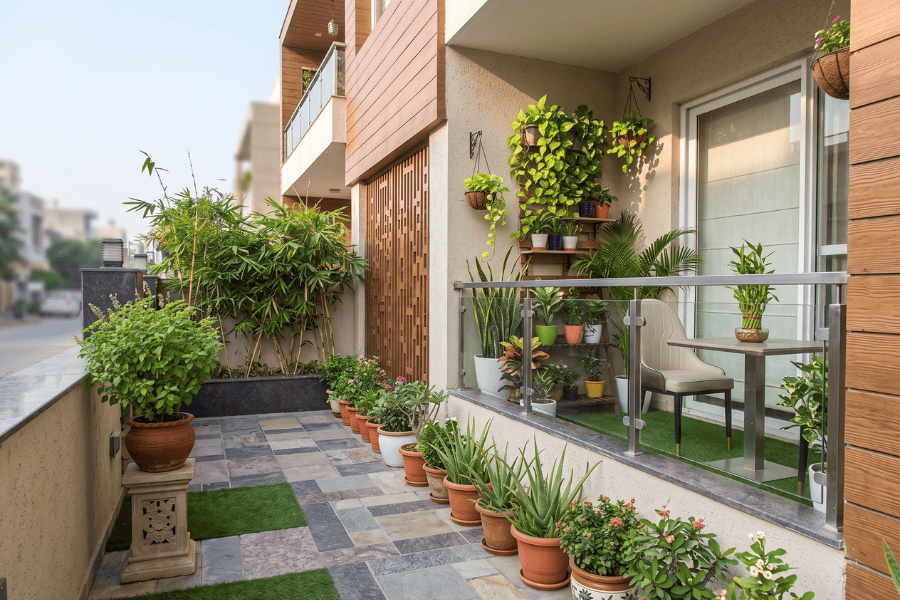
Indoor plants are useful, but too many can make a house feel cluttered. This is especially true in living rooms with limited sunlight.
As a general rule, choose a few plants that are easy to maintain. Keep them healthy. Do not fill every corner just because you have read that indoor plants bring luck.
Good Indoor Plant Habits
- Keep Plants In Bright, Ventilated Areas
- Remove Yellow Leaves Quickly
- Choose Simple Pots And Clean Them Regularly
- Let Creepers Grow Neatly Upward
- Keep Only As Many Plants As You Can Maintain
Plants To Avoid Or Place Carefully
| Plant | Why Caution Is Advised | Better Choice |
|---|---|---|
| Bonsai | Symbolises restricted growth in Vastu | Jade Plant, Bamboo |
| Cacti And Thorny Plants | Linked with harsh energy | Aloe Vera, Jasmine |
| Peepal Tree (पीपल) | Too large for most homes | Keep in open public or temple spaces |
| Banyan Tree | Roots and spread can affect buildings | Neem on a large plot |
| Tamarind Tree | Commonly considered unsuitable near homes | Lemon or flowering shrubs |
| Dead Or Dry Plants | Represent neglect and stagnant energy | Replace with healthy plants |
| Heavy Trees In North-East | Block openness and light | Small herbs or flowering plants |
One question that comes up often is about bonsai. Many Vastu experts do not recommend it indoors because it reflects limited growth. For a homeowner trying to create a sense of ease and success, that symbolism matters.
Which Trees Are Good For A House Garden?
For house gardens, the best trees are usually those that are useful, proportionate and suited to the direction available.
Neem, mango, banana, lemon and parijat are common examples. In some larger homes, ashoka and coconut are also considered, depending on the layout and available space. The right choice depends on plot size, sunlight and the distance from the house.
A retired couple living in a corner plot may have enough space for a neem tree on one side and a few flowering plants near the entrance. A smaller city home may do better with one banana plant, tulsi and a few herbs instead of trying to fit in large trees.
Fruit-Bearing Trees In Vastu
Fruit-bearing trees are often seen as a sign of nourishment and abundance. Still, they should be planted with care.
Heavy fruit trees such as mango and jackfruit are better suited to the South, West or South-West. These directions can handle their weight and spread more comfortably.
Lighter fruit plants such as lemon are easier to manage in home gardens, as long as they have enough sun and space. In some regions, families also ask about Jamun, which should be treated like any other larger fruit tree and placed only where there is enough room.
Banana is often treated as an auspicious plant in Indian homes. It is commonly linked with prayer and festive use, which is one reason many families prefer to keep it.
Tall Trees: Where They Should Go
Tall trees should be placed where they add support without blocking the natural openness of the house.
The South-West is usually the best zone for them. The South and West are also generally suitable.
This makes sense in everyday life too. A tall tree on the western side can reduce harsh afternoon sun. A heavy tree in the South-West can make the plot feel more anchored.
It is usually best to avoid tall trees in the East, North or North-East. These zones need lightness more than weight.
Trees To Avoid In The East Or North
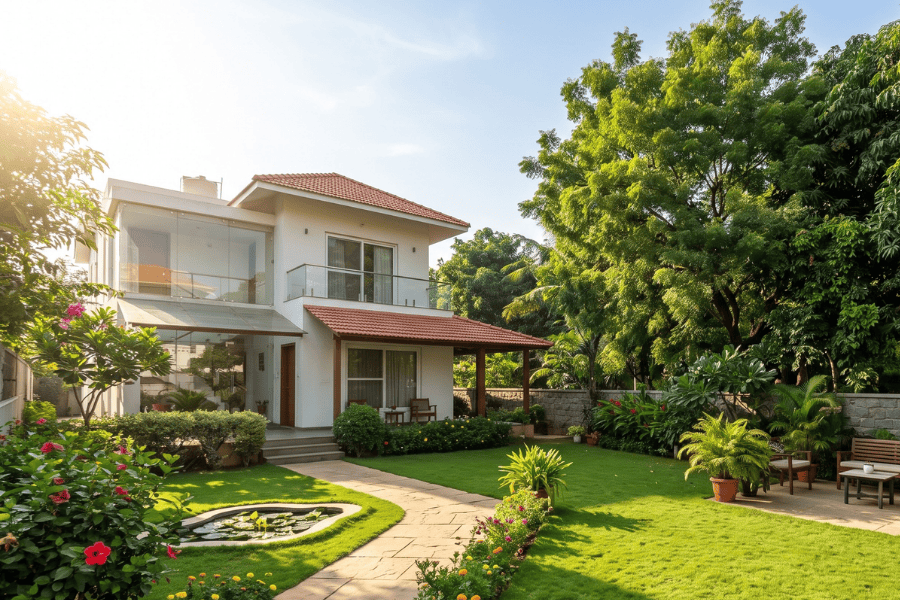
The East and North should usually remain open. Large, dense or spreading trees in these directions can make the home feel shut in.
They can also reduce light and airflow. In older homes, this becomes a practical issue as much as a Vastu concern.
Instead of large trees, these areas are better for:
- Tulsi
- Herbs
- Flowering Plants
- Low Shrubs
- Lawn Or Open Ground
This is often one of the easiest corrections to make in an existing home garden.
Trees That Are Best Avoided Near The House
Some trees are not considered ideal for residential use, even if they are sacred or useful elsewhere.
Peepal and banyan are the clearest examples. Both have deep cultural importance, but they grow very large and are not suitable close to a house.
Thorny plants are also usually avoided near the main home. Tamarind and neglected dry plants are commonly discouraged in Vastu advice for residential spaces because they are believed to hold or encourage negative energy.
This is not about fear. It is about choosing what suits the home best.
Special Vastu Notes On Popular Trees
Peepal Tree
The peepal tree is sacred and respected. But it is usually not advised close to the house because of its size and root spread.
Neem Tree
Neem is widely valued for its medicinal and purifying qualities. It is often seen as one of the better trees for a residential plot when there is enough space.
Mango Tree
Mango is auspicious and abundant, but it is also a large tree. It is better suited to the South, West or South-West than to lighter directions.
Jackfruit Tree
Jackfruit is heavy and spreading. It is more suitable for large plots and should be placed in stronger directions.
Banana Tree
Banana is often seen as auspicious and spiritually favourable. Many families like to keep it for both religious and household reasons.
Parijat Tree
Parijat is valued for its gentle fragrance and beauty. It is often considered suitable in the East or north-east corner when properly maintained.
Lemon Tree And Green Chillies
Lemon is often a practical and welcome choice in home gardens. Green chillies are usually grown for daily use, and they work best in neat kitchen garden spaces that do not create clutter.
Final Thoughts
A good Vastu garden does not need too many plants. It needs the right plants in the right places.
If you keep the lighter directions open, place heavy trees in stronger zones and maintain your greenery properly, the home will usually feel better in a natural way. That is the real purpose of tree plantation as per Vastu.
For many families, the goal is simple. They want a home that feels peaceful, welcoming and easy to live in. The right trees and plants can support that quietly, without making the space feel crowded or complicated.
Some readers also compare Vastu with Feng Shui. While the systems are different, both pay close attention to placement, balance and the effect of surroundings on daily life.
If you want expert guidance for your plot, home or workplace, Vastu Ananda offers vastu consultations for plot vastu, residential vastu, commercial vastu, hotel vastu and office vastu. They also offer a vastu basic course and vastu advanced course for learners. Learn more at https://www.vastuananda.in/
FAQs
Which Plant Brings Positive Energy At Home?
Tulsi is one of the most widely accepted plants for positive energy at home. Money plant, bamboo and aloe vera are also commonly recommended.
Where Should A Snake Plant Be Placed In The House?
Snake plant is often placed in the East, South or South-East. It should be kept in a clean, well-maintained spot.
Where Should A Money Plant Be Placed As Per Vastu?
The South-East is the most commonly suggested direction. Some traditions also allow North placement. It is usually avoided in the North-East.
Which Plants Are Considered Auspicious In Vastu?
Tulsi, banana, neem, money plant, bamboo and parijat are among the plants often considered auspicious. Homes that include medicinal plants are also often valued for their practical and traditional benefits.
What Are The Best Indoor Plants For Good Health?
Tulsi, aloe vera, snake plant and peace lily are popular choices for freshness and ease of care.



































































































