According to Vastu Shastra, people should consider the size, shape and proportion of the land before buying it. These affect how easily you can plan a balanced home. The dimensions especially matter because they determine the energy flow as well as space, light and movement across the site.
A plot may look attractive, yet still create planning problems if it is too narrow, too deep, cut at one corner or stretched in an awkward ratio. This becomes even more important when you want to build a bungalow, a duplex or a compact residence on a limited site. Suitable dimensions make layout planning easier.
This guide explains the best dimensions as per Vastu Shastra, how different plot sizes should be assessed and what to check before finalising land for your home.
Why Plot Dimensions Matter in Vastu
In Vastu Shastra, a plot is the base of the entire architecture of the home. If the base is proportionate and well aligned, the house plan can support better placement of key zones such as the North-East, South-West, South-East and North-West, which improves energy flow across the site. This affects comfort, health, peace and financial stability.
Dimensions matter for five clear reasons:
- They decide whether the land is balanced or stretched
- They affect how the Vaastu Purush Mandala (वास्तु पुरुष मंडल) fits on the site
- They influence the amount of open space in each direction
- They shape the placement of rooms, staircase, parking and water elements
- They determine whether the site suits residential use or commercial purposes
A square or regular rectangle is usually considered ideal because every direction gets proper space.
A very long narrow site often creates pressure on planning and can lower the overall energy level of the space. It can reduce useful open areas, push the entrance into a weak position or distort the proportion of important zones.
Vastu Shastra also connects land planning with the five elements, or Panch Mahabhutas (पंचमहाभूत) — earth, water, fire, air and space. When the dimensions support correct placement of these elements, the home feels more settled and easier to live in.
Best Dimensions as per Vastu Shastra
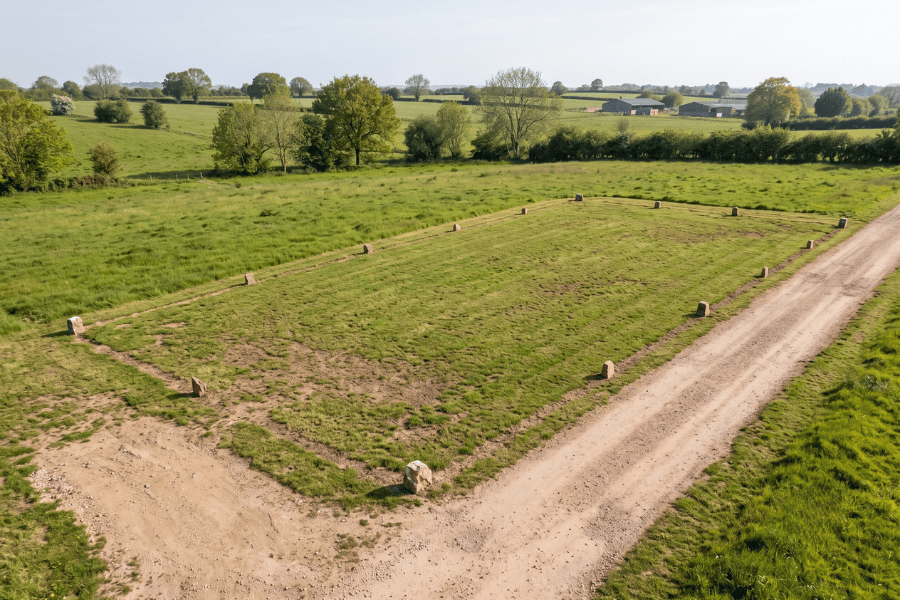
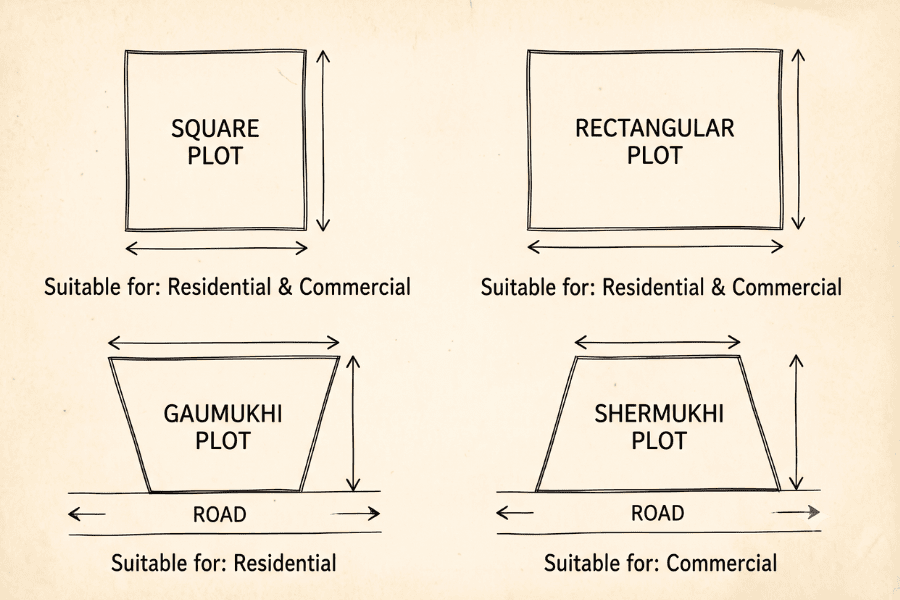
There is no single lucky measurement that suits every family. What matters more is proportion, shape and orientation. Vastu Shastra guidance considers the regular square plot shape to be the most stable form. These plots give equal strength to all four main directions and support clean room planning.
A rectangular plot is also good when it is not overly stretched. The length-to-width ratio should ideally be 1:2. In simple terms, the longer side should not be more than double the width or shorter side. Once the site becomes too long and narrow, planning quality drops and family comfort can suffer. If the ratio exceeds 1:3 ratio, then the plot is better suited for educational or commercial activity rather than residential use.
A Gaumukhi (गौमुखी) plot can be acceptable for homes because of its narrow front and wider rear. While, a Shermukhi (शेरमुखी) plot’s wider front and narrow rear is considered better for commercial purposes.
Dimensions That Need Extra Care
| Plot Condition | Likely Issue |
|---|---|
| Length far greater than width | Uneven planning and weaker energy distribution |
| Triangular plot shape | Stress in planning and imbalances in corners |
| Missing corners | Weakens one directional zone |
| Oval or semicircular plot | Hard to divide into stable Vastu zones |
| Irregular plots with multiple sides | Causes layout waste and directional distortion |
This does not mean irregular shapes must be rejected. These land shapes need closer study before purchase. An area that looks large can still be poor for planning if its useful buildable area is awkward or creates Vaastu defects in key zones. For plots with clear imbalance, a Vastu expert may suggest corrective steps such as compound wall adjustment, careful mirror placement, Vastu yantras or Vastu pyramids, depending on the exact Vaastu defects in the site.
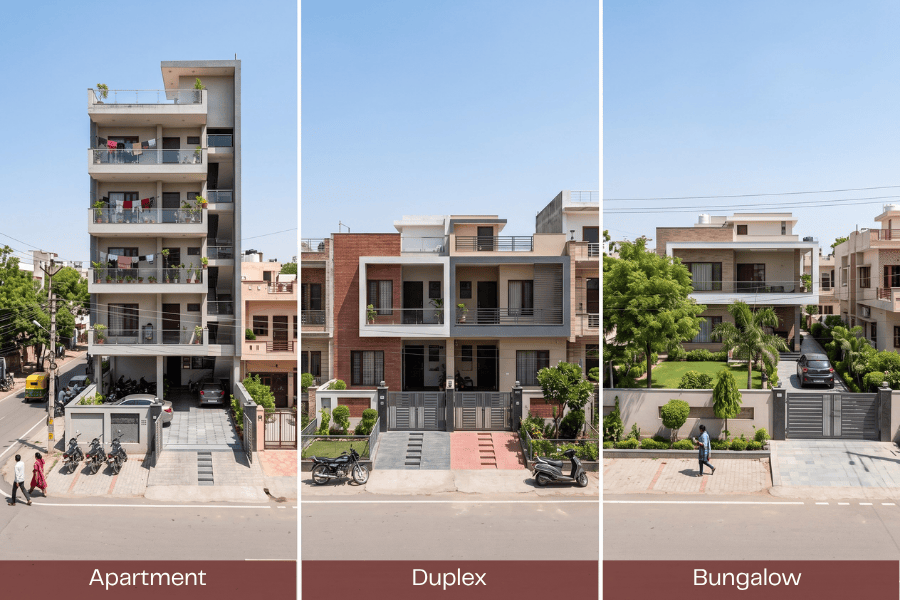
Plot Dimensions for Apartments, Duplexes and Bungalows
Plot dimensions do not work the same way for every property type. A site that suits a bungalow may not work well for a duplex, and apartment planning follows another logic because the individual buyer usually does not control the outer shape of a plot.
Apartments
For apartment projects, the overall site dimensions matter at the real estate developer and construction level. Residents usually focus more on the flat’s internal Vaastu layout, entrance and directional balance. Even so, the land shape on which the apartment stands affects the building’s energy pattern.
A regular rectangular or square apartment space gives cleaner tower placement, better common circulation, more natural light and more balanced open areas. If the site is too tight or uneven, key zones such as the North-East can get blocked by ramps, services or heavy structures.
For buyers, these points matter most:
- Check the main entry of the apartment complex
- See whether the North-East direction has openness and light
- Avoid projects built on highly irregular or corner-cut plots
- Check if heavy services dominate the centre or North-East
Duplexes
A duplex needs more planning discipline because the built form rises vertically and includes internal stairs. Dimensions especially matter more for a compact duplex plot. A badly proportioned site can force the staircase, kitchen or bedrooms into weak zones. It can also reduce flexibility in placing the living room, puja room and bathroom in a balanced way.
A medium rectangular plot usually works well for duplex construction. It gives enough depth for parking and entry while still keeping useful internal room widths. If the land is too narrow, the layout often turns into a corridor plan with weak ventilation and compromised room positions.
Bungalows
Bungalows need broader, more open land shapes because the planning is spread horizontally. A square or near-square site suits a bungalow very well. It gives better setback distribution, stronger centre space and easier placement of garden, water body, car park and utility areas. Home builders have more freedom to plan open spaces and heavier built zones without disturbing the overall balance of the site.
Large bungalow plots also allow better use of directional strength, like using North-East for openness, water or a garden and the South-East for kitchen or controlled fire activity.
For independent homes, broader frontage and balanced depth usually give more flexibility than a deep narrow strip.
Vastu Tips for Choosing and Planning Different Plot Sizes
The right plot size depends on family needs, building type and future use. Still, some Vastu Shastra checks apply to almost every site.
What To Check Before Buying a Plot
- Prefer square or rectangular plots
- Keep the length-to-width ratio within 1:2
- Check that all corners are regular and close to 90 degrees
- Prefer more openness and natural light in the North and East directions
- Check the plot slope carefully. A site with lower North-East and higher South-West is generally preferred
- Review the road position and entry potential
- Avoid severe cuts in the North-East direction
- Check whether the shape fits the kind of property you plan to build
Planning Guidance by Plot Size
Small plots need precision, medium plots need balanced zoning and large plots need discipline so that open areas and built mass stay in the right places.
Small Plots
Small sites can still work well if the shape is regular. The main challenge is fitting all functions without crowding the centre. Keep the plan simple. Avoid too many internal cuts or awkward projections. On a small plot, even one wrong staircase or toilet position can disturb the whole layout.
Good practices for small plots:
- Keep the entrance clear and well placed
- Protect the Brahmasthan from heavy load
- Use regular room shapes
- Keep the North-East direction light and open as far as possible
Medium Plots
Medium-sized plots give the best flexibility for most families. They allow proper room dimensions, parking and directional correction. A regular rectangle is often ideal here, especially for duplexes and compact bungalows.
This size range gives enough freedom to place the kitchen, bedrooms, staircase and water points more correctly. It also reduces the need for awkward planning adjustments.
Large Plots
Large areas look easy to plan, yet they bring their own issues. If the land shapes are extended in the wrong zone or too much open space in a weak direction, the sites can still create imbalance. Large plots should be divided clearly into active and quiet zones before planning begins.
A disciplined layout matters here. Vastu consultants study not just the area, but also orientation, shape, slope, road relation and extension patterns.
Plot Size and Planning Priorities
| Plot Size | Main Priority | Common Risk |
|---|---|---|
| Small | Efficient room placement | Crowded centre and blocked North-East |
| Medium | Balanced zoning | Minor directional compromises |
| Large | Control of open spaces | Wrong extensions or poorly placed heavy areas |
Shape Matters Along With Size
People often ask whether 30×40, 30×50 or 40×60 are the best dimensions as they are the common plot sizes in many Indian cities. In Vastu Shastra terms, these sizes can work if the orientation, shape and planning are right. A 30×40 plot with good directional balance can perform better than a larger one with a cut corner or poor slope.
That is why Vastu assessment should never stop at these numbers alone. It is important to assess the full site condition including shape, proportion, road position, slope, extensions/cuts and intended use.
Final Thoughts
A good plot makes the house plan easier, stronger and more peaceful from the beginning. The best plot dimensions as per Vastu Shastra are the ones that give balance, clean proportion and easy planning. It is also necessary to check the shape, slope, corners, road position and the type of home you want to build. In most cases, square and rectangular shapes remain the safest choice.
If you want expert guidance before buying or planning a site, book a consultation with Vastu Ananda. Vastu Ananda provides consultations for plot vastu, residential vastu and vastu for commercial purposes. like hotel vastu and office vastu. They also have a vastu basic course and vastu advanced course for learners.
FAQs
Which plot shape is best as per Vastu Shastra?
Square plots are usually seen as the best. Regular rectangular ones are also very good, especially when the length-to-width ratio stays within 1:2.
Is 30×40 a good plot dimension as per Vastu Shastra?
Yes, it can be. A 30×40 plot can work well if the orientation, slope, corners and internal planning are correct.
Are very long and narrow plots considered suitable in Vastu Shastra?
They need caution. If the length is much more than double the width, planning becomes harder and energy balance weakens.
Does plot size matter more than plot direction?
Both matter. Size alone does not decide the outcome. Shape, proportion, direction, slope and planning quality must be studied together.
Can an irregular plot shape be corrected?
Sometimes yes. In some cases, boundary adjustment, compound wall treatment and better internal planning can reduce the defect on the land. A detailed site review is needed before purchase.