

If you are building a house for your family, or planning the home where you want to spend your later years, you want the land itself to support peace, health and stability. Nobody wants to invest their savings into a plot that keeps bringing stress, conflict or delay.
That is where Vastu Shastra becomes important. In Vastu, the plot is not just empty land. It is the foundation of the energy that will shape the property later. The size matters. The direction matters. The road matters. But the shape of the plot matters just as much.
We will cover what each plot means, how the shape affects energy, which directions are considered suitable, what defects to watch for and how to correct them. We will also look at road position, entrances, the five elements and the 16 Vastu zones or cardinal directions so that you can make a more confident decision.
What Are Gaumukhi and Shermukhi Plots?
Two of the most discussed plot shapes in Vastu are Gaumukhi and Shermukhi. Both are well known. Both can be useful. But they do not serve the same purpose.
A Gaumukhi plot is generally preferred for residential use because it supports calm, protection and long-term stability. A Shermukhi plot is usually preferred for commercial use because it supports activity, visibility and outward growth.
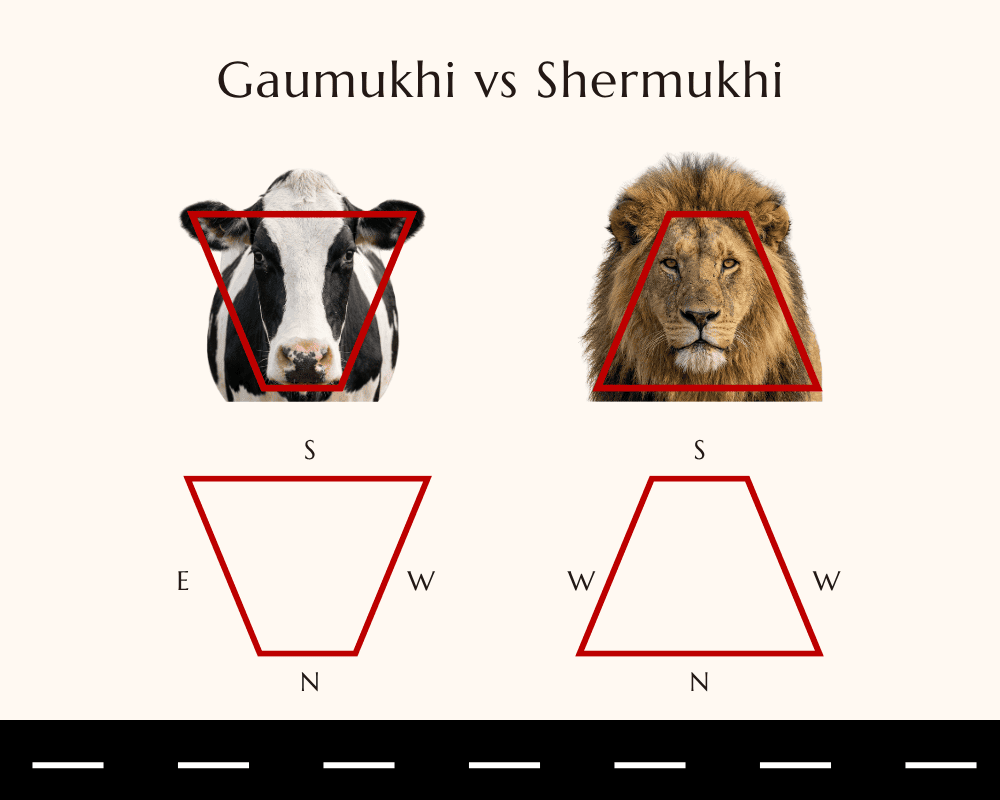
What Is a Gaumukhi Plot?
A Gaumukhi plot is a plot that is narrower at the front and broader at the back. When seen from above, its outline resembles the face of a cow, which is why it is called Gaumukhi or Gomukhi.
In Vastu, this shape is usually considered beneficial for residential properties. The narrower front controls the entry of outside energy. The wider rear allows that energy to settle, spread and strengthen inside the plot. This creates a feeling of support and containment.
That is why Gaumukhi plots are often linked with:
- Family peace
- Emotional balance
- Financial stability
- Privacy
- Long-term settlement
For a couple planning a family home, this shape often feels more secure. The front does not feel too exposed, while the rear offers more usable space for rooms, a garden, a courtyard or family areas.
What Is a Shermukhi Plot?
A Shermukhi plot is wider at the front and narrower at the back. It resembles the face of a lion.
This shape creates a powerful front opening. In Vastu, that wide frontage is associated with stronger outward expression, movement and visibility. This is why Shermukhi plots are generally considered more suitable for commercial use than residential use.
A Shermukhi plot is often chosen for:
- Shops
- Offices
- Clinics
- Hotels
- Showrooms
- Commercial buildings facing a busy road
The broad front attracts attention. It helps with access, display and public presence. But the same quality that makes it strong for business can make it less suitable for a home unless it is planned very carefully.
Which One Suits You Better
The biggest difference is how the shape handles energy.
A Gaumukhi plot pulls energy inward and helps retain it. A Shermukhi plot pushes energy outward and makes the property more active.
That is why the general Vastu guidance is simple:
- Gaumukhi is usually better for homes
- Shermukhi is usually better for business
This does not mean every Gaumukhi plot is automatically good or every Shermukhi plot is automatically bad. Directional orientation, entrance area, slope, corner condition and layout all affect the final result. But if two plots are otherwise similar, the Gaumukhi shape usually gives better support for family life, while the Shermukhi shape usually gives better support for commercial success.
| Feature | Gaumukhi Plot | Shermukhi Plot |
|---|---|---|
| Shape | Narrow front, wider rear | Wide front, narrower rear |
| Best Use | Residential | Commercial |
| Energy Pattern | Inward and stable | Outward and active |
| Main Strength | Peace and retention | Visibility and attraction |
| Typical Preference | Homes and family living | Shops, offices and business use |
Why Plot Shape Matters in Vastu
In Vastu Shastra, shape is not a decorative detail. It changes the way energy moves on the land.
A balanced plot supports the five elements — Water (जल), Fire (अग्नि), Earth (पृथ्वी), Air (वायु) and Space (आकाश). These elements do not act randomly. They are expressed through direction, weight, openness, slope and use of space.
Vastu also studies land through directional zones. A proper reading is not limited to just North, South, East and West. It includes 16 zones:
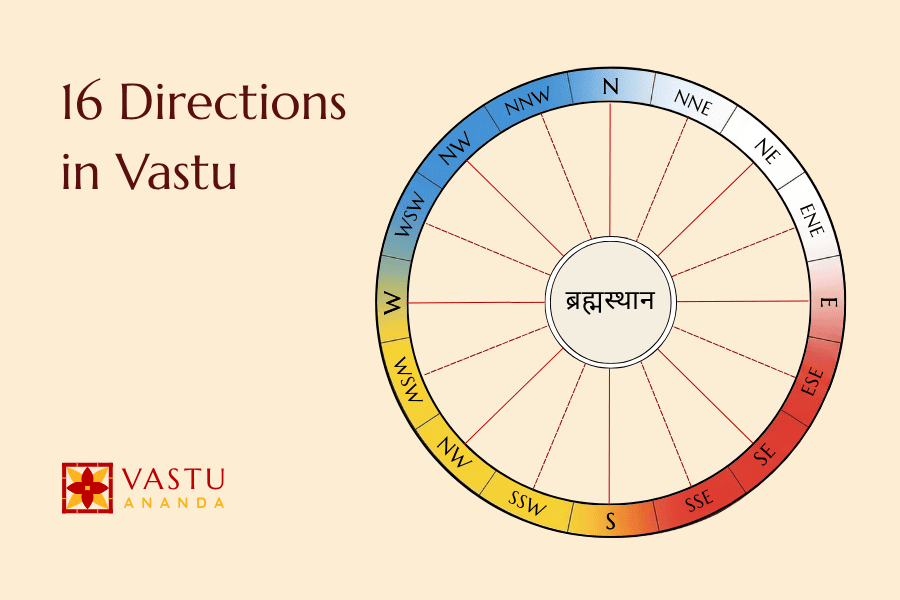
Each zone carries a different quality. When the plot shape supports these zones, planning becomes easier. When the plot shape distorts them, problems begin. A wrong extension, a missing corner or a badly shaped front can weaken the natural energy of the plot before construction even starts.
That is why two houses built with the same map can feel completely different. One feels open and peaceful. The other feels tense and heavy. The plot shape is often one of the reasons.
Gaumukhi Plot Vastu: What Makes It Good for Homes?
A foundation of a good Gaumukhi plot (cow-faced plot) is when it widens gently toward the back. The sides should feel proportionate. It should not be twisted, overly stretched or cut sharply at important corners.
In residential Vastu, this shape is valued because the broader rear creates support. It gives more strength to the inner part of the property, where family life actually happens.
For best results:
- North-East (उत्तर पूर्व) should remain open, light and clean
- South-West (दक्षिण पश्चिम) should remain heavier and more stable
- The kitchen should ideally be in the South-East (दक्षिण पूर्व)
- The centre or Brahmasthan (ब्रह्मस्थान) should not be blocked
- The plot should not have severe cuts in important corners
This becomes very practical during planning. Bedrooms, storage and master areas generally work better in the heavier zones. Prayer space, meditation or a water feature suits the lighter North-East better. This helps the whole house feel aligned instead of forced.
Main Benefits of a Gaumukhi Plot
A Gaumukhi plot is usually preferred for homes because it supports containment. The shape helps hold energy inside the property rather than letting it disperse.
Its common benefits include:
- Stronger family bonding
- More privacy from the road
- Better stability in life decisions
- Improved financial retention
- Calmer overall feel inside the house
This is one reason many traditional families instinctively like such plots. They may not always use technical Vastu terms, but they often describe the same feeling in simple words: “The land feels settled.”
For people in their 50s or 60s, this matters even more. At that stage, most buyers are not looking for a flashy property. They want a home that feels restful, secure and easy to live in. A Gaumukhi plot supports that kind of life very well.
Which Directions Work Best for Gaumukhi Plots?
Vastu experts recommend Gaumukhi plots for residential use in West-facing and South-facing situations, provided the overall plan is strong.
This is an important point because some buyers reject West-facing and South-facing plots too quickly. In practice, the shape of the plot can improve how the energy settles. A Gaumukhi form helps create better control and inward balance.
A West-facing Gaumukhi plot can support steadiness, maturity and stable living when the entrance is chosen carefully, and the lighter zones remain open.
A South-facing Gomukhi plot can also work well for a home when the South-West is strong, the main door is properly placed, and the house does not overload the wrong zones.
Still, direction alone should never decide the matter. The entrance, slope, drainage, corner strength and internal layout must all be checked together.
How to Correct a Gaumukhi Plot if It Has Defects
Not every Gaumukhi plot is perfect. A plot may have a cut corner, road pressure, an awkward taper or a poor slope. These issues can disturb the shape’s natural benefits.
Common corrections include:
- Keeping the North-East clear and uncluttered
- Strengthening the South-West with built mass or a stronger compound wall
- Avoiding heavy structures in the North-East
- Correcting awkward frontage through gate and boundary planning
- Using internal zoning to balance an uneven rear spread
For example, if the plot is too narrow at the front, the entry should be planned with extensions so the energy does not feel blocked. If one rear side extends more than the other, room placement can help reduce imbalance.
Many buyers worry that a small defect means the plot should be rejected. That is not always true. Minor defects can often be corrected if they are understood early.
Shermukhi Plot Vastu: When Is It a Better Choice?
A Shermukhi plot (lion-faced plot) has a broad front, which naturally gives it a more commanding street presence. This is one of the main reasons it is preferred for commercial properties.
The wide front is useful for:
- Customer access
- Display area
- Branding visibility
- Multiple entry options
- A strong public impression
The rear becomes narrower, so planning is important. The internal use of space should remain practical. If the rear becomes too cramped, the plot may lose functional strength.
In a business setting, the broad front works well because commercial spaces benefit from openness and exposure. A shop with a wider frontage is easier to notice and brings more prosperity. A clinic with a visible entrance feels more accessible and brings in positive energy. A showroom gains display power from the road-facing width.
Benefits of Shermukhi Plots
The biggest strength of a Shermukhi plot is visibility.
It attracts movement, supports public interaction and creates a stronger external presence. That is why it works well for active commercial use. A business depends on attention, and the Shermukhi shape helps create that attention.
Its key benefits include:
- Better frontage
- Stronger public appeal
- Improved business visibility
- Support for outward growth
- More dynamic energy
At the same time, this shape can be less suitable for quiet residential living. A family house usually needs contained and restful energy. A Shermukhi plot can feel too open or too exposed unless it is corrected carefully.
That is the main drawback. The plot is not weak, but its natural energy suits commercial use more than home life.
Best Directions for Shermukhi Plots
Shermukhi plots usually perform better when they support movement, visibility and active use. That is why East-facing and North-facing Shermukhi plots are often considered favourable.
An East-facing Shermukhi plot supports openness, visibility and fresh incoming energy. This can help public-facing businesses.
A North-facing Shermukhi plot is also valued, especially for business. In Vastu, North (उत्तर) is associated with finance and Kuber (कुबेर). This gives the direction a strong link with opportunity and earnings.
So if someone is buying a plot for a shop, office or clinic, a North-facing or East-facing Shermukhi shape can be a strong choice.
Remedies for a Shermukhi Plot
A Shermukhi plot can still be used for a home, but it usually requires more careful planning and correction.
The aim is to reduce excess outward energy and strengthen support inside the plot.
Useful remedies include:
- Strengthening the South-West
- Keeping the North-East open and clean
- Making sure the rear does not feel weak or empty
- Controlling the entry properly
- Using landscaping and internal zoning to improve balance
This happens often in real life. A family buys a plot because the front looks large and attractive from the road. Later, they realise the house feels too exposed or restless. In such cases, Vastu remedies are not cosmetic. They are practical adjustments to restore balance.
Building a House: What To Check First
If you are choosing land for a house, the shape must be studied along with the entrance, open space, ratio, directions and proportion.
For homes, more open space in the North and East is usually beneficial. More weight in the South and West supports stability. The kitchen works best in the South-East, and the main family functions should avoid disturbing the Brahmasthan to keep away negative energy.
These rules matter because they help the five elements stay balanced. Water element should not be suppressed in the lighter zones. Fire (अग्नि) should not dominate the wrong part of the house. Earth (पृथ्वी) should give strength to the heavier zones. Air (वायु) and Space (आकाश) should move freely where needed.
A plot should also feel usable in a practical way. If the shape makes room planning difficult, that is also a warning sign. Vastu rules and good usability support each other.
How Road Position Changes the Vastu of a Plot
Roads affect how energy and activity approach the plot. A one-sided road plot is usually easier to control. More roads increase exposure. This can be good for commercial property, but a home usually needs more protection and less external pressure.
Square and rectangular plots are usually the easiest to plan. But Gaumukhi and Shermukhi plots can also give strong results when the shape remains balanced and usable.
The problem starts when the plot is highly irregular. Major cuts, odd angles and extreme stretching make Vastu planning difficult. The plot may technically look Gaumukhi or Shermukhi, but still behaves poorly because the corners and sides are distorted.
That is why a buyer should not look only at the front outline. The full geometry of the plot must be checked.
| Road Position | Effect on the Plot | What to Watch |
|---|---|---|
| One-side road | More controlled energy | Easier entrance planning |
| Two-side road | More movement | Corner balance matters |
| Three-side road | Strong outside activity | Internal planning becomes critical |
| Four-side road | High exposure | Boundary and entrance control are essential |
This is why a Shermukhi commercial plot with two-sided road access can perform well because it gets better visibility and smoother public movement. But a family home on a plot with too much road exposure may lose privacy and feel unsettled.

Final Thoughts
Gaumukhi and Shermukhi plots are both important in Vastu principles, but they are not equal for every purpose.
If you are building a home and want stability, privacy and peace, a Gaumukhi plot usually gives better support. If you are buying land for a business and need visibility, frontage and stronger outward energy, a Shermukhi plot is usually the better choice.
The right answer depends on the purpose of the property, the direction of the plot, the entrance, the road position and the condition of the corners. When these are aligned properly, the plot supports life more smoothly over time.
For most families, that is the real goal. Not just buying land, but choosing land that feels right and works well for years to come.
FAQs
Which Is Better, Gaumukhi or Shermukhi?
For homes, Gaumukhi is usually better. For business use, Shermukhi is usually better.
Which Facing Is Good for a Gaumukhi Plot?
West-facing and South-facing Gaumukhi plots are often considered suitable when planned properly.
Which Facing Is Good for a Shermukhi Plot?
East-facing and North-facing Shermukhi plots are commonly preferred, especially for business use.
Does Plot Shape Matter More Than Direction?
Both matter. Shape gives the base pattern of energy, while direction affects how that energy works. A good decision requires both to be checked together.
Do Roads Around the Plot Matter?
Yes. Road exposure affects movement, visibility and energy flow. More roads usually increase activity around the property.