
When an inverter is placed without thought, it can create Vastu issues. Heat, clutter, poor ventilation and the wrong direction can affect how the space feels and how safely the unit runs. In Vastu Shastra, electrical items connect with the fire element, so their location matters.
For most homes, the inverter should be placed in the South-East zone if possible. This article explains why that direction is preferred, which areas to avoid, what to do about staircases and lofts and the common mistakes people make.
Why Inverter Placement Matters
An inverter is an electrical device, so Vastu links it with Agni (अग्नि), or the fire element. The right placement keeps the elemental balance in order, supports smooth energy flow through the house and reduces conflict with zones linked to water, prayer, rest or open central space.
Placement also matters because inverters need ventilation, safe wiring and distance from moisture. A badly placed inverter may overheat, collect dust, block circulation or create inconvenience during maintenance. In some cases, poor placement and neglect can even raise safety risks that affect comfort and may contribute to health issues in the home environment.
Good placement supports both Vastu balance in the home and safe daily use.
The Right Vastu Placement
The best inverter placement, according to Vastu Shastra, is the South-East direction of the house.
If the Southeast is not possible, the final choice should depend on the house layout and an Vastu expert review.
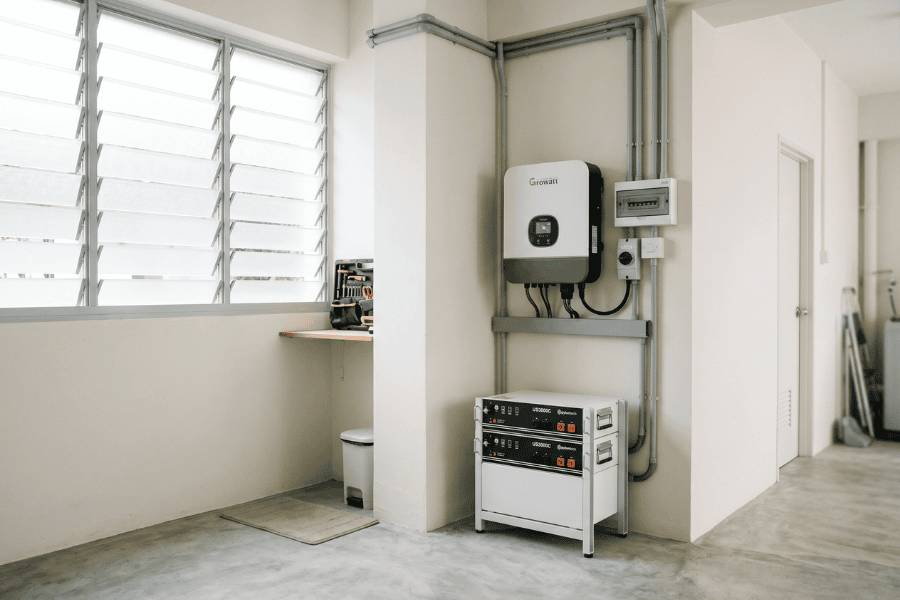
A few practical rules should be followed wherever you place it:
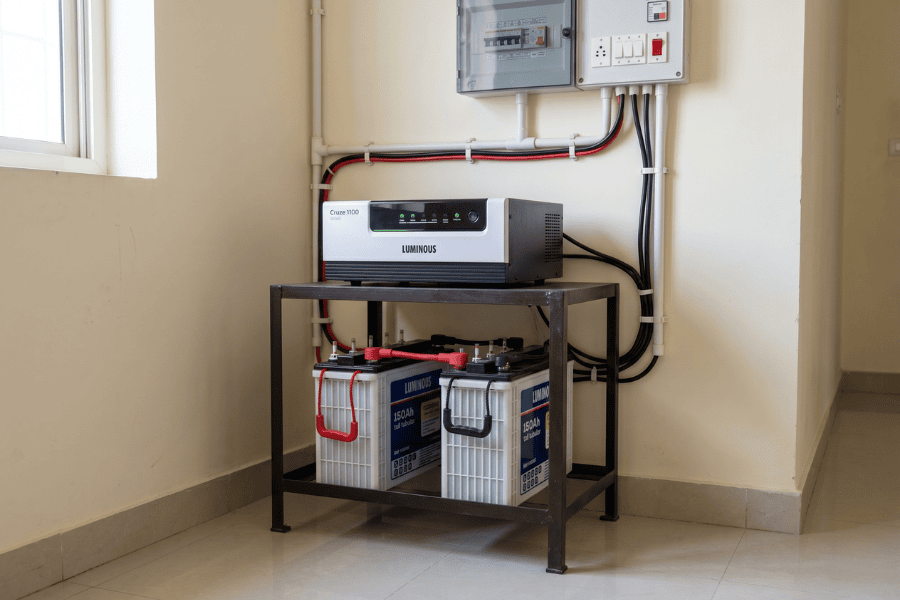
- Keep the inverter in a dry and ventilated (हवादार) area
- Place it slightly above floor level if possible
- Keep the area around it clean and uncluttered
- Leave enough space for heat to escape
- Keep it away from direct contact with water features, like fountains or water tanks
Best and Worst Direction Rules
| Direction | Vastu View | Notes |
|---|---|---|
| South-East | Best direction | Ideal zone for electrical equipment and fire element |
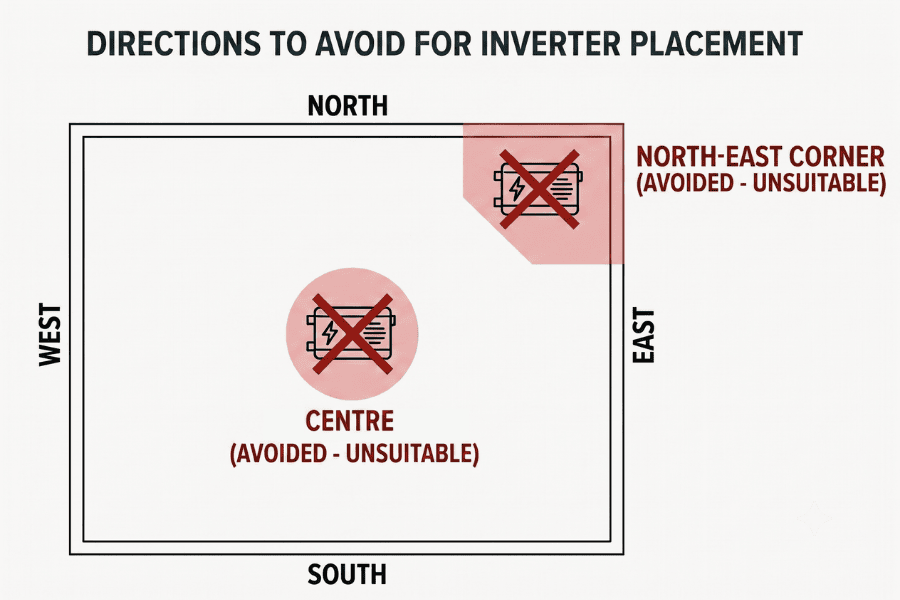
| North-East | Avoid | Zone should stay light and free from heavy electrical equipment |
| Centre of the house | Avoid | Brahmasthan should stay light and open |
| Other directions | Case-specific | Depends on the house plan |
The North-East direction is the main zone to avoid. In Vastu, this area is linked with lightness, clarity, prayer and water energy. Keeping heavy electrical equipment there is usually considered unsuitable and may disturb the home’s balance by increasing negative energy.
The centre of the home (ब्रह्मस्थान) should also stay free from heavy devices. This area is treated as the core of the house, so it should not be blocked with machinery, heavy furniture, storage or large electrical units.
Staircases and Lofts
Many people place an inverter under the staircase (सीढ़ी) because it is hidden and does not take up visible space. From a Vastu point of view, this is usually not the best idea.
Under-stair spaces often have:
- Poor airflow
- Trapped heat
- Dust build-up
- Cramped access for maintenance
That combination can make the inverter harder to manage. Vastu guidance also generally treats this area as compressed and heavy, which is not ideal for electrical balance.
Lofts (छज्जा) are also not preferred if they are closed, dusty or hard to access. Heat can collect there, especially in warmer months. If a loft is the only available place, it should be open enough for ventilation and should not sit above a prayer area, bed or water sources.
Key Vastu Principles
If you want a quick way to judge whether an inverter placement is suitable, use these core Vastu principles.
| Principle | What It Means For Inverter Placement |
|---|---|
| Fire Element | Place electrical appliances in the South-East where possible |
| Ventilation | Choose a spot with airflow so heat does not build up |
| Dryness | Keep the unit away from bathrooms, sinks and damp walls |
| Stability | Place it on a firm surface with secure wiring |
| Cleanliness | Avoid clutter, dust and stored junk around the inverter |
| Distance from rest areas | Keep it away from bedrooms where possible |
These points matter because the condition of the place also matters. A correct direction with poor maintenance is still a weak setup.
You should also avoid placing the inverter near:
- Bathrooms, toilets or water features
- Kitchen sink zones
- Pooja room (पूजा कक्ष)
- Children’s sleeping area
- Main entrance passage
Some homeowners also focus on the unit’s colour, but direction, ventilation and cleanliness matter much more for proper placement.
Common Mistakes To Avoid
Here are the most common mistakes people make when placing inverters in their home:
- Placing the inverter in the North-East: This puts an electrical equipment in a zone that should stay light and calm.
- Keeping it under the staircase: This can often create heat and maintenance issues.
- Installing it too close to water sources: Inverters should stay away from bathrooms, wash basins and damp utility corners.
- Putting it inside a bedroom: Bedrooms should stay restful and free from unnecessary electrical load and heat.
- Blocking it with storage: Shoes, boxes, old containers and cleaning items should not surround the unit.
- Placing it directly on the floor: A slightly raised platform is often better for dryness, cleaning and safety.
- Ignoring wiring condition: Even a well-placed inverter can become risky if the wiring is loose or exposed.
Final Thoughts
The best place for an inverter, according to Vastu, is the Southeast direction. That matches the fire element and suits electrical equipment in a natural way. If that space is not available, a carefully chosen alternate zone may be used depending on the layout.
The Northeast zone, centre of the house, dampness and tight spaces should be avoided. Keep the setup clean, dry, stable and easy to maintain.
If you want expert guidance for your home, office or plot, Vastu Ananda provides consultations for residential vastu, commercial vastu, office vastu, hotel vastu and more. You can also explore our vastu courses.
FAQs
Can we keep an inverter in the North-East?
It is generally not advised in Vastu Shastra. The North-East is treated as a light and spiritually sensitive zone, so heavy electrical equipment is usually avoided there.
Is South-East always the best direction for an inverter?
Yes, the Southeast is the preferred direction because it relates to Agni and suits electrical appliances.
Can an inverter be kept under the stairs?
It is better to avoid it. Under-stair areas often have poor ventilation and restricted access, which is not ideal for either Vastu or safety.
Is it fine to keep the inverter in a bedroom?
This is usually avoided. Bedrooms should stay calm and less burdened by heat, sound and electrical activity.
Should the inverter be kept directly on the floor?
A slightly raised platform is usually better. It helps with dryness, cleaning and safe use.
What if my home does not have space in the South-East?
Choose the next most suitable dry and ventilated zone based on your home layout. If the plan is complex, a site-specific Vastu review is better.