
Buying a plot can feel exciting at first. Then the doubts start.
Is this shape fine? Is the orientation right? Will this corner cut cause problems? Why does one person say the plot is good while another tells you to avoid it?
For many families, especially when it is a retirement home, a second home or a plot bought after years of saving, these questions feel very real. No one wants to make a costly decision and regret it later.
That is where Vastu Shastra (वास्तु शास्त्र) becomes useful. It gives you a practical way to look at the shape, slope and balance of a plot before you buy or build.
In simple terms, a well-shaped plot is easier to plan, easier to build on and usually easier to align with Vastu principles. This guide explains which plot shapes are considered ideal, which ones need caution and what can be done if the plot is not perfect.
Why Plot Shape Matters More Than Most Buyers Realise
Most buyers first look at location, road access and price. That makes sense. But once the basic checks are done, the shape of the plot deserves equal attention.
A regular plot is easier to design well. It gives cleaner room layouts, better open spaces and fewer compromises in planning. In Vastu, it is also seen as more balanced in how energy flow moves across the land.
By contrast, a plot with awkward angles or missing corners can create both practical and Vastu concerns. You may end up with wasted space, odd room placement or a layout that never feels quite settled.
Think of a couple buying a plot for their post-retirement home. They may not want a site that demands constant design adjustments or expensive corrections later. A simple, regular shape often saves stress from the beginning.
What to Check Before You Finalise Any Plot
Before looking at specific plot shapes, it helps to assess the plot as a whole.
In traditional Vastu, land is often studied through the 16 zones, not just the main 8 directions. These 16 zones are North (उत्तर), North-North-East, North-East (ईशान), East-North-East, East (पूर्व), East-South-East, South-East (आग्नेय), South-South-East, South (दक्षिण), South-South-West, South-West (नैऋत्य), West-South-West, West (पश्चिम), West-North-West, North-West (वायव्य) and North-North-West.
This matters because even a small extension or cut in one sub-direction can be read differently from the main direction beside it. It also helps to study whether the plot aligns well with the cardinal directions.
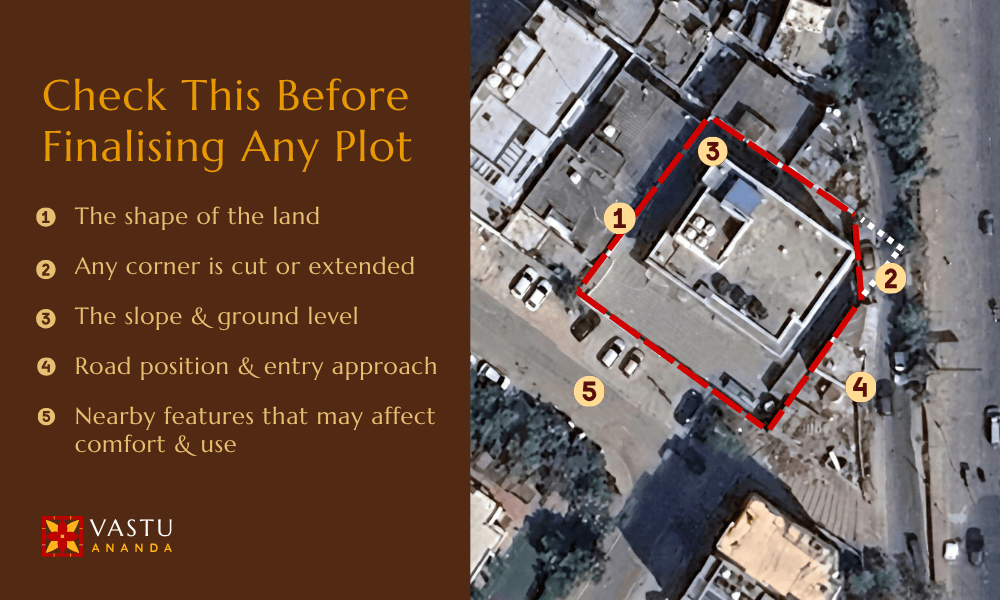
Here are the first things to check:
- the shape of the land
- whether any corner is cut or extended
- the slope and ground level
- road position and entry approach
- nearby features that may affect comfort and use
A plot may look fine on paper but feel less practical once you notice a sharp triangular end, a missing corner or a heavy slope towards the wrong side. Good Vastu tips always begin with these basic checks.
Which Plot Shapes Are Considered Best in Vastu?
When it comes to plot shape, Vastu guidance is actually quite straightforward. The more regular and balanced the plot, the better.
Square Plots
A square plot is usually considered the best option. All four sides are equal and all corners are complete, which gives a strong sense of balance.
For homeowners, this shape is helpful because it allows simple planning. Rooms fit more naturally, open space can be distributed better and the site often feels settled.
Rectangular Plots
Rectangular plots are also highly preferred. In many cases, they are more common and more practical than square plots.
A rectangle works well when it is not too stretched. Many Vastu references suggest that the width-to-length ratio should ideally stay within 1:2.
For a family building one home for long-term use, a rectangular plot often offers the best mix of flexibility and stability. In most cases, square or rectangular plots remain the safest choice.
Gaumukhi and Shermukhi Plots
Some traditional Vastu texts and practitioners also discuss special plot forms.
A Gaumukhi plot is narrower at the front and broader at the back. It is often considered suitable for residential use.
A Shermukhi plot is broader at the front and narrower at the back. It is more commonly associated with commercial use.
These shapes need direction-based analysis, so they are not judged by shape alone.
Plot Shapes That Need Extra Care
Not all plots come in neat shapes, especially in cities and growing suburbs. That does not mean you must reject every unusual plot. It does mean you should examine it more carefully.
Circular Plots
Circular plots are not usually the first choice for house construction. The main issue is practical.
Most homes are planned in straight lines. So when the plot is circular, space can be lost and the final layout may become inefficient.
Triangular Plots
Triangular plots are generally treated with caution in Vastu. Their sharp corners and uneven proportions are seen as less balanced.
In real life too, triangular plots often create planning problems. One end may become difficult to use, and the house may need compromises that affect comfort.
L-Shaped Plots
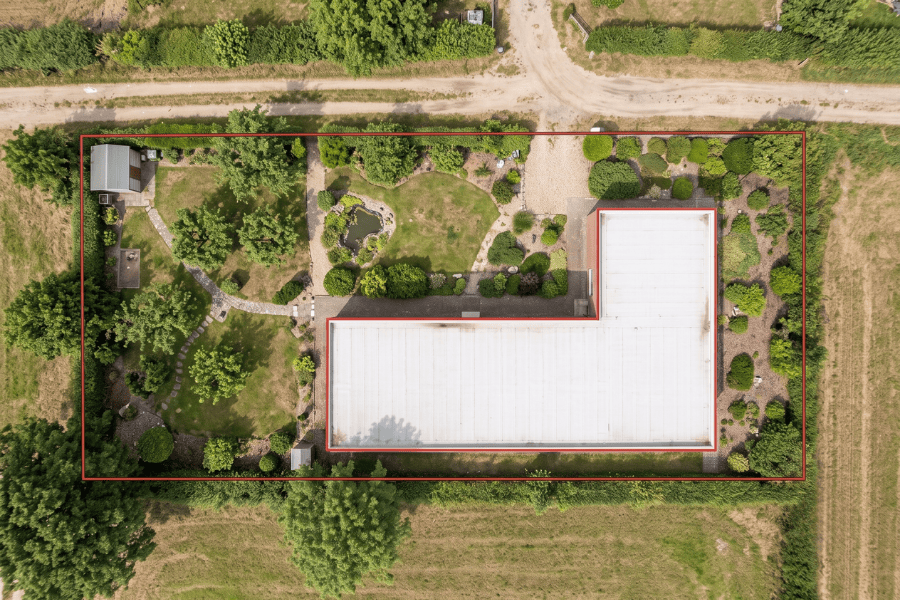
An L-shaped plot often feels incomplete because one section appears missing from the overall form.
This can create both visual and planning imbalance. In many cases, the usable part of the site needs to be redefined before construction begins.
Irregular Plots
Irregular plots include any site with uneven sides, odd projections or non-standard corners.
These are common in urban developments. Some can still be used well, but only after looking closely at where the cuts, extensions and slopes fall.
Some buyers also ask about a hexagon plot. In most practical Vastu discussions, any multi-sided shape that moves away from a clean square or rectangle needs extra review before final plot selection.
The same caution is often applied to a pentagon or an octagon plot. The more unusual the form, the more carefully the site should be assessed before building.
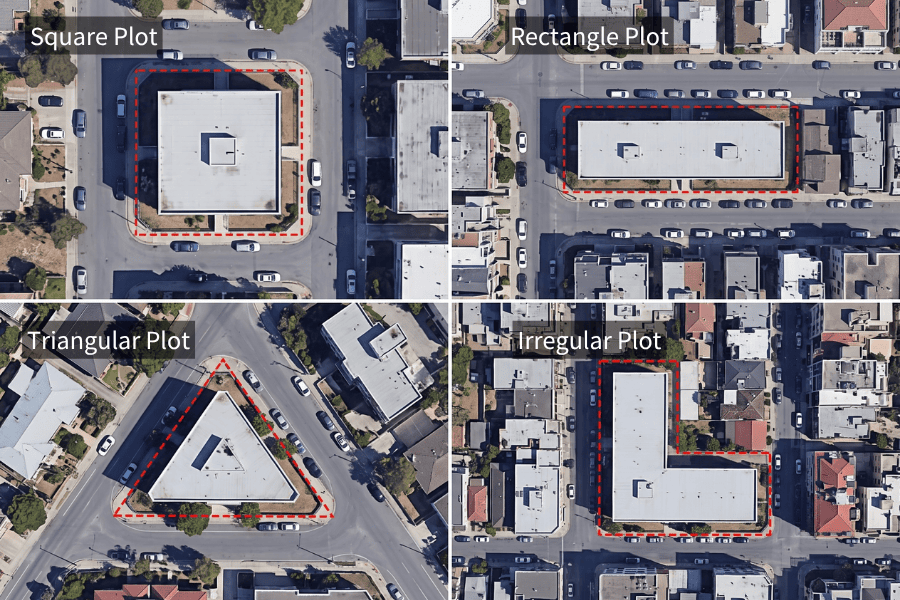
A Quick Look at Plot Shapes and Their Vastu Effect
| Plot Shape | General Vastu View | What It Means in Practice |
|---|---|---|
| Square | Most favourable | Balanced and easy to design |
| Rectangle | Very favourable | Practical and widely preferred |
| Gaumukhi | Often favourable for homes | Needs correct directional placement |
| Shermukhi | Often favourable for business | Better reviewed case by case |
| Circular | Needs caution | Harder to plan efficiently |
| Triangular | Usually avoided | Sharp angles and wasted space |
| L-Shaped | Needs correction | Can feel incomplete |
| Irregular | Needs detailed review | Depends on cuts, extensions and slope |
Land Cut-Outs: Why Missing Corners Matter
Once the shape is clear, the next step is to check whether the plot has any cut-outs.
A cut-out means a corner or side is missing, reduced or pushed inward. In Vastu, these missing areas matter because each direction and sub-direction is linked with a different quality of life and use.
This is one of the reasons two plots that look similar at first glance can be judged very differently.
For example, a buyer may be shown a rectangular plot at a good price. Only later do they notice that the South-West corner is slightly cut. On paper it may seem minor, but in Vastu that detail would need careful attention.
A missing Northeast corner is often treated very seriously in traditional Vastu because this area is linked with openness, clarity and lightness in the plot.
North-West Cut
A North-West cut is generally considered unfavourable. It is often linked with instability, repeated disturbances or lack of smooth support.
South-East Cut
The South-East is associated with the fire element. A cut here is usually seen as a weakness in that zone and is often treated cautiously.
South-West Cut
A South-West cut is commonly treated as one of the more serious defects. This zone is associated with stability and grounding, so a reduction here is usually not preferred.
It is also worth noting that Vastu sources often view a cut in the North-East as highly unfavourable, even though it is not one of the cut-outs listed above. That is why the exact location of a cut should always be checked carefully.
Plot Slope and Topography Also Affect Vastu
Plot shape is important, but shape alone is not enough.
A square plot with an unfavourable slope may still create concern. A slightly irregular plot with better levels may sometimes be easier to work with.
In many Vastu guidelines, the land is preferred to be higher in the South and West and lower in the North and East. The North-East is often treated as the lightest and lowest part of the site.
This idea also connects with practical experience. A site that drains well and feels open in the right places is usually easier to develop. The placement of nearby water bodies can also influence how the land is assessed in Vastu terms.
Some traditional guidelines also prefer open support in the East and North, with heavier natural features such as mountains or raised ground in the South or West.
Here is a simple summary:
| Plot Feature | Common Vastu Preference | Practical Benefit |
|---|---|---|
| South and West slightly higher | Preferred | Better balance and support |
| North and East slightly lower | Preferred | Better openness and flow |
| North-East lowest | Strongly preferred | Supports lightness and drainage |
| Heavy fall towards South-West | Avoid if possible | Can create planning and drainage problems |
Surroundings That Can Influence Plot Vastu
Even a good plot shape can feel less favourable if the surroundings are poorly placed.
This includes road hits, visual pressure and nearby activity that disturbs the comfort of the home.
For example, plots at T-Junctions are often examined carefully in Vastu because of the direct road thrust. The same is true of plots with strong obstructions in front, such as poles, large structures or heavy visual blocks.
Plots near open garbage points also tend to be avoided for obvious practical and environmental reasons.
If you are reviewing a South-Facing Plot, or studying Corner Plot Vastu, these outside factors become even more important because access, exposure and road placement all affect how the site feels in daily use.
Traditional Ways to Assess the Positivity of Land
Traditional Vastu also includes basic ways of observing land before purchase.
These are not scientific tests, but they can still encourage careful inspection.
Buyers are often advised to notice whether the land feels stable, whether water collects in the wrong place and whether the shape and surface seem naturally usable.
Some sources also discuss soil quality, texture and colour. In modern terms, this should support, not replace, proper engineering advice, drainage review and legal due diligence.
If construction will begin soon after purchase, the condition of the soil also matters for the foundation. So if you are buying a plot for your children to build on later, or for your own future home, use both approaches. Respect the traditional checks but also complete all technical and legal verification.
Remedies for Plot Shape Problems
Sometimes the plot has already been bought. In that case, the focus shifts from selection to correction.
A remedy should be practical. It should improve how the site is used and reduce the imbalance as much as possible.
Remedies Based on Plot Position
If there is a cut or extension in a sensitive area, one common step is to adjust the compound wall or define the active part of the plot more clearly.
This helps create a more regular usable zone for the main construction.
Remedies for Irregular Plot Shape
For L-shaped or uneven plots, the main house is often planned within a square or rectangular portion. The leftover area may be treated as landscape, garden or secondary open space.
During planning, details such as the main entrance, the location of a door and the overall facing of the plot should also be studied carefully, because these choices affect how the site is used every day.
Once the house design begins, many families also ask how the plot shape may influence room placement, such as the kitchen or living room. Later on, they may look at details like colors, a mirror or the position of a sink, but these should come after the plot itself has been judged properly.
Simple corrective ideas often include:
- redefining the main usable area with a boundary wall
- placing the house within the most regular part of the site
- keeping the North-East lighter and more open where possible
- correcting major level differences before construction
- avoiding heavy structural load in distorted corners
These are practical vastu remedies, but the best result still comes from choosing a balanced plot in the first place.
Final Thoughts
A good plot should not leave you feeling unsure every time you look at the site plan.
That is why plot shape matters. Square and rectangular plots are usually preferred because they are balanced, complete and easier to plan well. Irregular, triangular and cut plots need more care, especially when corners and slope add to the issue.
The best approach is a calm one. Check the plot shape first, then study cuts, levels and surroundings.
For most families, that simple order brings much more clarity. And when the investment is important, clarity is exactly what you need. For buyers who want clarity before making a final decision, speaking with a qualified Vastu expert can help avoid confusion and unnecessary fear.
If you want expert guidance before buying or building, Vastu Ananda offers consultations for plot vastu, residential vastu, commercial vastu, hotel vastu and office vastu. They also offer a vastu basic course and a vastu advanced course for learners.
FAQs
Is a square plot always better than a rectangular plot?
A square plot is generally considered the most balanced. But a rectangular plot is also very good and often more practical in real projects.
Is an irregular plot always bad?
No. Some irregular plots can be corrected through thoughtful planning. The exact shape and the location of cuts matter more than the label alone.
Does slope matter as much as shape?
Yes. In many cases, slope and shape should be judged together because both affect how the plot performs.
Can cut corners be corrected?
In some cases, yes. Boundary planning, space use and careful design can reduce the impact of a cut-out.