

Can a simple wind chime change the energy of your home?
According to Vastu, it can make a huge difference.
The right wind chime, placed in the right direction, helps break stagnant energy, lighten heavy spaces and bring a sense of movement, harmony and positivity into the house.
How Wind Chimes Work in Vastu
In Vastu Shastra (वास्तु शास्त्र), every direction carries a different quality and is governed by a devta. Wind chimes are able to activate the air element and help energy circulate smoothly through the space.
They are active tools that can move stagnant energy, improve the flow of prana and correct imbalances. When a wind chime is matched with the right material, sound and direction, it strengthens the zone it is placed in and supports better harmony.
A well-placed chime can reduce heaviness, clear blocked corners and bring a sense of lightness and order.
Sound is also important. Pleasant natural sound improves the feel of a space and supports a calmer environment. Even sources such as the US National Park Service show that sound environments affect mood and well-being. In Vastu, this becomes even more important because sound is a way to awaken subtle energy.
Harnessing the Air Element With Vastu
In Vastu Shastra, the movement created by air supports the balance among the five elements: Air (वायु), Water (जल), Fire (अग्नि), Earth (पृथ्वी) and Space (आकाश). When air passes through the chimes’ rods or bells, the sound breaks stagnant vibrations and spreads energy to nearby areas.
This helps awaken the Space and Air elements together, and so chimes can be used as a simple yet effective remedy for zones that feel dull, blocked or inactive.
The direction in which the chime is placed also changes the result:
- North (उत्तर) supports money flow
- North-East (उत्तर पूर्व) is better for clarity and purity
- East (पूर्व) attracts new beginnings and vitality
- North-West (उत्तर पश्चिम) can help with movement and contacts
How Can Chimes Help With Vastu Dosha
Wind chimes are commonly used to reduce minor vastu dosha (वास्तु दोष) in a home. A dosha forms when there is an imbalance due to wrong placements, blocked zones, missing elemental support or poor energy flow.
Wind chimes help by:
- Improving movement in dead corners
- Softening harsh energy near beams or awkward layouts
- Reducing the impact of cluttered or low-energy zones
- Strengthening a weak direction through the right element
For example, a metal wind chime in the North-West can improve movement in a stuck area. Bamboo or wooden chimes in the East direction can strengthen health and family harmony. The right remedy depends on the zone and the element that needs support.
Ideal Placement of Wind Chimes in Homes
Even a beautiful chime can give poor results if it is hung in the wrong direction or in an area with no air movement.
Indoor vs Outdoor
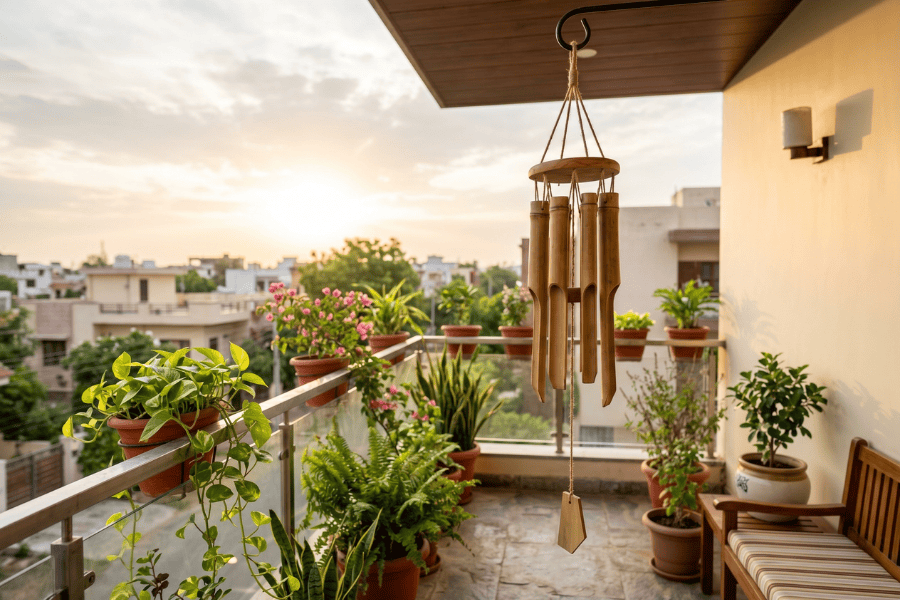
Both indoor and outdoor wind chimes can work in vaastu, but they should be chosen with purpose. Outdoor wind chimes are ideal for balconies, verandas, gardens and entrance areas where natural breeze can activate them. Indoor wind chimes work best near windows, ventilated corners or transition areas between rooms.
Wherever it may be placed, the wind chime should move naturally and sound soft. It should never create noise that feels sharp, disturbing or excessive.
Entrance
The main entrance is one of the best places for a wind chime because this is where energy enters the home. A well-placed wind chime near the main entrance helps welcome positive energies and prevents heavy energy from settling.
For entrance placement:
- Use metal in North, West or North-West
- Avoid hanging it directly above the main door
- Place it beside the entrance where the air can reach it easily
This is especially helpful in homes where the entry feels dull or where the first impression lacks freshness.
Bedroom
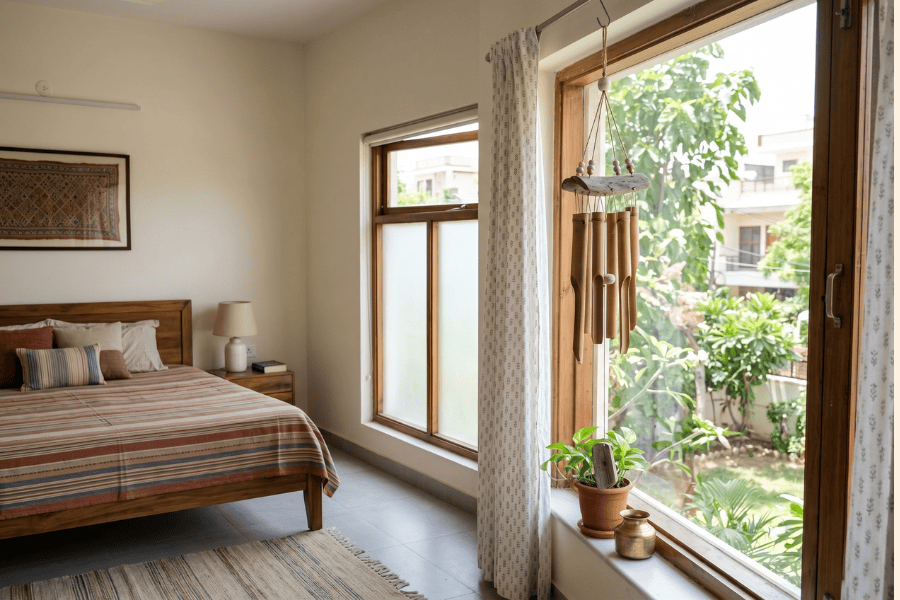
Wind chimes can be used in the bedroom, but only with care. The sound should be gentle and the placement should not disturb sleep. Heavy or loud metallic chimes are not ideal near the bed.
In bedrooms, the energy should feel peaceful, restful and emotionally balanced. The best approach is to:
- Place a soft-toned wind chime near a window or balcony
- Avoid hanging it directly above the bed
- Prefer ceramic, crystal or light wooden options for a calmer effect
Puja Room
The puja room is a sacred space, so any object placed there must support purity and spiritual focus. Keep the design clean, light and traditional.
A simple bell-shaped or brass-toned wind chime can work well if it does not overpower the room. This can strengthen the subtle quality of the North-East, which is linked with prayer, wisdom and divine flow.
Living Room
The living room benefits greatly from wind chimes because it is a social and active area. Here, chimes improve harmony, family interaction and movement of fresh energy.
Wooden, bamboo or metal wind chimes can all work depending on the direction of the room. If the living room falls in the East, wooden and bamboo options are strong choices. If it falls in the West or North-West, metal works better.
Types of Wind Chimes
Wind Chime Material
The wind chime material decides which element it strengthens.
| Material | Best Direction | Vastu Shastra Effect | Description |
|---|---|---|---|
| Metal | North, West, North-West | Improves movement, luck and support | Metal wind chimes are among the most widely used in Vastu. They support precision and financial improvement. |
| Wood/Bamboo | East, South-East | Supports growth, vitality and prosperity | Wooden wind chimes suit homes that need growth, family harmony and healthier energy flow. Bamboo wind chimes are highly effective in bringing peace, freshness and a softer energy. |
| Ceramic/Clay | South-West, North-East | Brings stability and grounding | Ceramic wind chimes are grounding and stable. They work well where emotional calm and balance are needed. Clay connects strongly with the Earth element (पृथ्वी). It is a good choice for stabilising heavy or disturbed zones. |
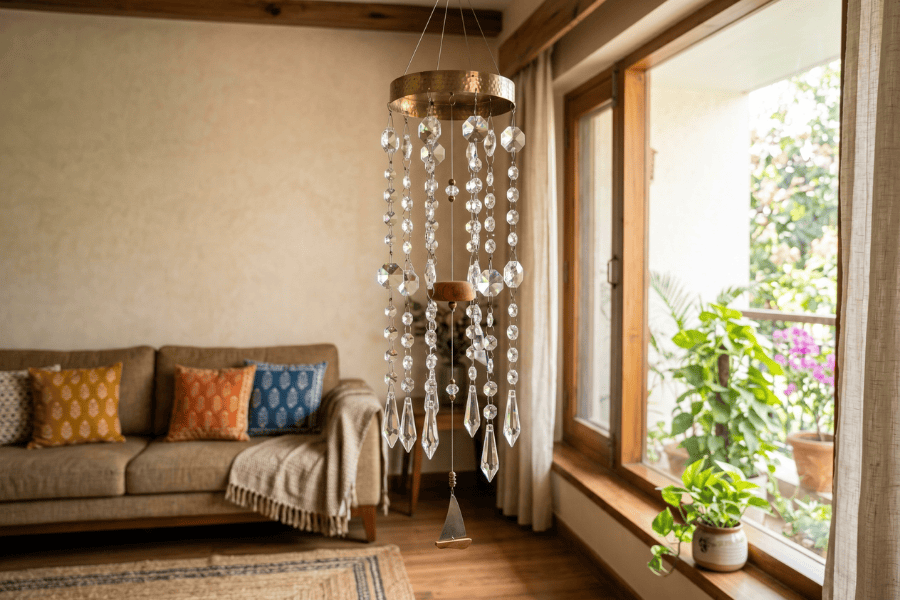
| Glass/Crystal | North-East, East | Improves mental clarity and purity | Glass wind chimes bring lightness and visual brightness. They support clarity and upliftment. Crystal wind chimes improve subtle energy. They are ideal when you want a space to feel lighter and spiritually cleaner. |
| Seashell | North, East | Supports softness and flow | These carry a soft, soothing feel and connect well with water (जल). They are useful in spaces that need emotional ease. |
Shapes
Cylindrical or Tubular
These are the most practical and common forms. They create balanced sound and suit both modern and traditional homes.
Bell-Shaped
Bell-shaped wind chimes have a devotional quality and work well near sacred or peaceful spiritual zones.
Geometric
Geometric shapes support order and visual balance. They fit homes where clean lines and symmetry matter.
Spiral or Helix
Spiral or helix forms encourage movement and flow. They are useful in areas where energy flow feels stuck.
Number of Rods
Four-Rod
A four-rod wind chime is often used for stability and structure. It suits homes that need order and better mental focus.
Five-Rod
Five rods represent the five elements and create balance across the home. This is a strong choice for general harmony.
Six-Rod
Six-rod metal wind chimes are widely recommended for career support and a smoother flow of opportunities.
Seven-Rod
Seven rods are often chosen for creativity, learning and refined thinking. They work well in study or thoughtful living spaces.
Colours
Colour should match the energy of the zone.
| Colours | Use Case |
|---|---|
| Red | Supports the fire element (अग्नि) and energy. Use with care and only where stronger activation is needed. |
| Blue | Works best for calmness, flow and emotional softness. |
| White | Brings purity, peace and clarity. It suits spiritual and clean spaces very well. |
| Green | Supports growth, healing and renewal. Works well in family-centric and health zones. |
| Black | Can add depth and seriousness, but should be used carefully and not in heavy amounts. |
| Yellow | Brings warmth, grounding and steadiness. |
| Brown | Supports the Earth (पृथ्वी) element and gives a natural, stable feel. |
Symbols
Symbols can add another layer of meaning. Sacred shapes can strengthen the purpose of the wind chime when they match the room and direction. For example, lotus designs support purity and spiritual growth, while Chinese coin motifs are often used for abundance.
Choose symbols that feel peaceful and appropriate to the space. Avoid loud, random or overly decorative motifs that weaken the spiritual quality of the chime.
How To Pick the Right Wind Chime for Your Home
The right wind chime depends on a balance between its direction, material, sound and purpose. You can use this simple checklist:
- Identify the direction where you want to place it
- Match the material to that direction
- Choose a soft, pleasant sound
- Avoid damaged or very noisy designs
- Pick a size that suits the room or outdoor area
How To Take Care of Wind Chimes
A wind chime should stay clean, intact and pleasant to hear. A broken or dusty one weakens the energy of the space.
You can use these care tips to keep your wind chime active and energetically clean:
- Clean metal wind chimes regularly to prevent dullness
- Protect bamboo and wood from excess moisture
- Replace cracked glass or chipped ceramic pieces
- Check hanging threads and hooks often
- Remove any wind chime that creates a harsh or irritating sound
Final Thoughts
A wind chime works best when it matches the home’s energy, the five elements and the devta controlling that direction. When chosen with care, it improves flow, lightness and positivity in a very natural way.
For a home that needs deeper correction, expert guidance makes all the difference. A personalised Vastu consultation for wind chime placement can help you choose the right direction, material and remedy for your specific layout.



































































































