Does your home feel complete, but still not peaceful?
Many homeowners feel like this after moving into a new flat or finishing a renovation. Everything looks fine, yet something feels missing.
Very often, the problem is not a major Vastu defect. It may be one of the smaller things we live with every day.
In Vastu Shastra (वास्तु शास्त्र), greenery is not just decoration. It brings life, improves energy flow and supports peace, prosperity and emotional comfort. Dry leaves, the wrong greenery near the entrance, heavy pots in the wrong zone or no natural touch at all can increase negative energy and change the feel of a home.
This guide explains the best Vastu plants for the home, where to keep them and which plants to avoid. It also shows how different plants support wealth, health, family harmony and peace in practical, everyday spaces.
What Are Vastu Plants?
Vastu plants are chosen and placed according to the Vastu principles of Vastu Shastra. They are used to improve the energy of the home and strengthen the natural balance of the space.
A healthy plant adds freshness the moment you enter a room. In Vastu, that freshness is not just visual. It supports the energy of growth, stability and renewal.
Greenery also helps balance the five elements, or Panchabhutam (पंचभूतम्): Earth (पृथ्वी), Water (जल), Fire (अग्नि), Air (वायु) and Space (आकाश). A home that supports these elements feels more comfortable and more settled.

Why Plants Matter in Vastu Shastra
In Vastu, every direction and sub-direction has its own role. That is why placement is never random in traditional architecture and home planning.
These zones affect different parts of life such as wealth, relationships, sleep, spiritual growth, stability and health. They also connect with and directional energies and divine beings (देवता). such as Kuber (कुबेर) in the North (उत्तर), Ishan (ईशान) in the North-East (उत्तर पूर्व) and Agni (अग्नि) in the South-East (दक्षिण पूर्व).
Plants help strengthen the quality of these zones. A Tulsi plant in the right place purifies the home. A money plant in the right zone supports abundance. A calming plant in a tense room softens the space.
Benefits of Keeping Vastu Plants at Home
The first benefit is that plants increase the liveliness of a house. A home with healthy plants feels more alive.
Plants also improve the emotional feel of a house. This is especially important in homes where people feel restless, sleep badly or notice more tension than before.
Some varieties support prosperity and fortune. Others strengthen peace, health or family warmth. That is why Vastu does not treat every variety the same way.
For example, a retired couple may place Tulsi in the East and notice the balcony feels calmer and more sacred. A family may keep a jade plant near the entrance and feel that the front area becomes more welcoming and positive.
Many indoor varieties also help maintain a fresher home environment and are valued for their air-purifying qualities.
Like Feng Shui, Vastu also pays close attention to how natural elements affect the feeling of a home.
15 Best Vastu Plants For Home
1. Tulsi (Holy Basil)
Tulsi (तुलसी) is one of the most powerful Vastu plants. It purifies the home, protects the family atmosphere and strengthens spiritual energy.
It is best placed in the North-East (उत्तर पूर्व), East (पूर्व) or North (उत्तर). Many traditional homes keep Tulsi in the balcony or courtyard where it receives morning light.
2. Money Plant
Money plant is the most widely used Vastu plant for wealth. It supports financial growth and keeps the energy of abundance active in the house.
Place it in the South-East (दक्षिण पूर्व) facing zone. This is especially useful in homes where people feel money comes in, but savings do not stay.
3. Lucky Bamboo
Lucky bamboo supports progress, success and calm energy. It is a practical option for both homes and offices.
Keep it in the East (पूर्व) or South-East. It works well on a side table, desk or in the living room.
4. Jade Plant
Jade plant attracts prosperity and fresh opportunities. It is often placed near the entrance or in the wealth zone.
For a couple buying a new flat after retirement, a jade plant near the entrance (मुख्य द्वार) is a simple way to begin with positive energy.
5. Snake Plant
Snake plant gives strength to a room and protects it from dull, stagnant energy. It is also one of the easiest plants to maintain.
Place it in the South-East or South (दक्षिण). It works especially well in bedrooms and living rooms.
6. Aloe Vera
Aloe vera improves health and healing. It also brings a cooling energy into the home.
Keep it in the East or North where it receives enough light.
7. Peace Lily
Peace lily supports calmness and emotional balance. It is ideal for homes where people want less emotional tension.
Place it in the North or East, especially in a living room or bedroom.
Another good indoor option is the Areca Palm, which brings freshness and softness to larger living spaces when placed in a bright area.
8. Jasmine
Jasmine adds warmth, softness and a gentle fragrance. It is especially useful for spaces where comfort matters.
It suits balconies, East-facing windows and quiet bedroom corners.
For homeowners who enjoy flowering varieties, roses can also be used in outdoor areas with care, especially where beauty and warmth are needed.
9. Lavender
Lavender supports rest and good sleep. It is very useful in homes where one person sleeps lightly or worries often at night.
Place it in a bright bedroom corner or balcony.
10. Rubber Plant
Rubber plant brings stability and a grounded feel. Its broad leaves also make the room feel fuller and stronger.
It does well in South or West zones and suits living rooms.
11. Lotus
Lotus is linked with purity and spiritual upliftment. It works best in homes with a water feature or a prayer area.
Place it in the North-East.
12. Orchid
Orchid brings beauty, grace and harmony. It suits bright indoor spaces where you want elegance without clutter.
13. Rosemary
Rosemary improves clarity and freshness. It is well-suited to kitchen gardens and sunny balconies.
14. Chrysanthemum
Chrysanthemum brings joy and lightness to the home. It works well in bright balconies and garden areas.
15. Peony
Peony supports relationship harmony and softness. It is useful in the South-West, the zone linked with stability in relationships.
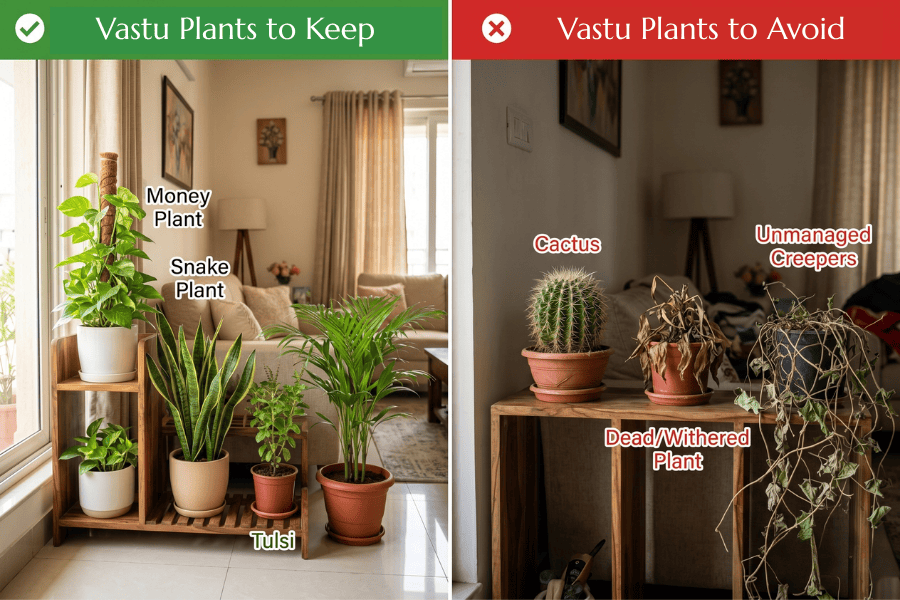
Plants To Avoid at Home as per Vastu
Some plants disturb the softness and balance of a home when used in the wrong place.
1. Bonsai
Bonsai symbolises restricted growth. It is not a good choice for family spaces.
2. Cacti and Thorny Plants
Thorny varieties, including cacti, create tension and sharpness. They are best avoided near entrances, living rooms and bedrooms.
3. Dead or Decaying Plants
Dead plants stop positive energy. They should never be left in the home.
4. Uncontrolled Climbers and Creepers
Creepers create heaviness and confusion when left unmanaged indoors. They should be controlled carefully.
5. Other Plants To Avoid
Wide outdoor choices, such as cotton plants, should also be placed with care, as they are not usually suited to compact indoor home spaces. Also, avoid planting tamarind trees in or near your house. This sours interpersonal relationships.
Basic Vastu Rules for Plant Placement at Home
The right plant in the wrong place will not give you the right result. Placement matters just as much as plant choice.
As a rule, light and uplifting varieties suit North, East and North-East. Prosperity-related greenery does well in the South-East. Heavy pots and large planters are better in South-West and West.
This follows Vastu’s elemental logic. North-East relates to Water (जल) and purity. South-East relates to Fire (अग्नि) and activity. South-West relates to Earth (पृथ्वी) and stability.
The centre of the home, or Brahmasthan (ब्रह्मस्थान), should remain open and light. It should not be crowded with pots, stands or plant décor.
A common mistake is keeping many decorative plants near the main entrance without considering direction or weight. This can make the area feel blocked.
Where To Place Popular Vastu Plants
The placement of Vastu plants in your house can shift the energy in your home. Here’s a guide on which plant goes where –
Where To Keep Tulsi
Tulsi should be kept in the North-East, East or North. It should always be placed in a clean and respected area.
Where To Keep Lucky Bamboo
Lucky bamboo should be placed in the East or South-East. It is a good choice for work desks and living room corners.
Where To Keep A Money Plant
Money plants should be kept in the South-East. Avoid placing it in the North-East.
Where To Keep Snake Plant
Snake plant works best in the South-East or South. It is a strong choice for modern flats and compact bedrooms.
Where To Keep Peace Lily
Peace lily should be placed in calm indoor spaces with soft light, especially in the North or East parts of the home.
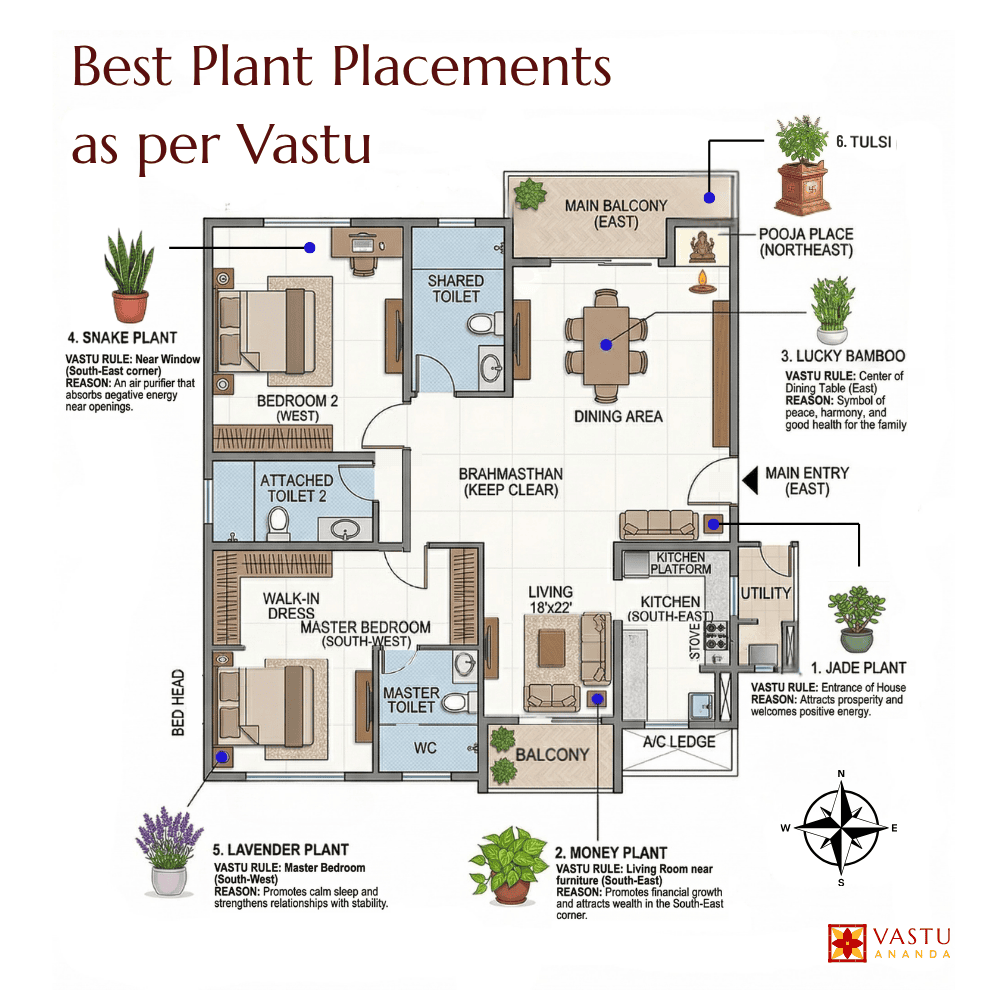
Best Vastu Plants for Each Room
Plant placement in Vastu Shastra also depends on the room being used. This is because different rooms are associated with different energies and elements. For example, the fire element is connected to the kitchen.
So here’s a guide on which Vastu plants go in which room.
Living Room
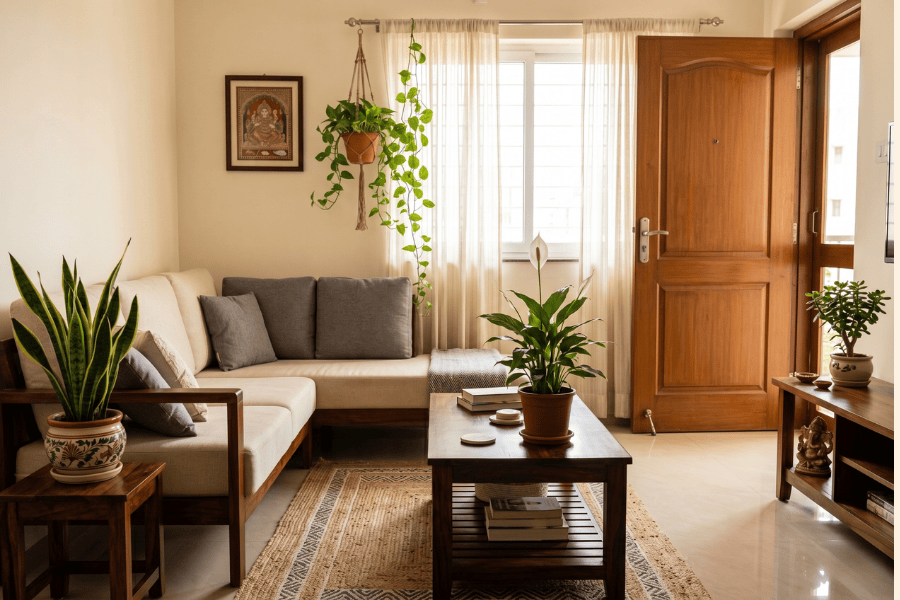
The living room should feel welcoming and balanced. Jade plant, rubber plant, lucky bamboo and peace lily work very well here.
Bedroom
Bedroom plants should feel soft and calming. Snake plant, lavender, jasmine and peace lily are the best options.
Kitchen
The kitchen benefits from useful and fresh plants. Rosemary, Tulsi and aloe vera are good choices when there is enough natural light.
Balcony or Garden
The balcony is one of the best places for Vastu plants. Tulsi, chrysanthemum, jasmine, rosemary and aloe vera all work well here.
Home Entrance
The entrance should feel open, clean and positive. Jade plant, lucky bamboo and healthy green foliage plants are suitable here.
Avoid thorny plants near the main door.
How To Choose the Right Vastu Plant for Your Home
Start with the purpose. Ask yourself what the home needs most right now.
If the house feels tense, choose calming varieties. If the home feels dull or financially stuck, begin with prosperity-related greenery. If the house needs spiritual strength, start with Tulsi.
Then look at the direction available in your home. A plant should match both the purpose and the zone.
It is also important to choose plants you can maintain. In Vastu, a healthy plant helps. A dying plant does the opposite.
For example, many older homeowners prefer low-maintenance options such as jade plant, snake plant and money plant because they are easy to care for and still very effective.
Do’s and Don’ts of Indoor Plants in Vastu
| Do’s | Don’ts |
|---|---|
| Keep plants healthy and green | Keep dead plants indoors |
| Place Tulsi in a pure area | Place a cactus near the entrance |
| Use the South-East for prosperity plants | Clutter the centre of the house |
| Place heavy planters in the South-West | Let creepers grow uncontrolled indoors |
| Remove dry leaves quickly | Use broken pots or cracked containers |
Watering, Care and Seasonal Tips
Water each variety according to its type and the season. Do not overwater.
A variety that is always yellow, soggy or rotting weakens the energy of the room. Healthy greenery strengthens this energy.
Clean leaves regularly. Remove dead or dry parts. Make sure each plant gets enough light and drainage.
In winter, the easiest Vastu plants to maintain are snake plant, jade plant, aloe vera, peace lily and rosemary.
Terrace Garden Vastu
A terrace garden has a strong effect on the energy of the house because it sits above the main structure. Its layout should feel balanced, not crowded.
Small plants and water features are best in the North-East or East. Taller plants and heavy pots are better in the South-West or West.
Keep the centre open. This supports Space (आकाश) element and maintains lightness.
This is especially useful for independent homes where the terrace becomes a daily sitting space in the morning or evening.
Frequently Asked Questions
Where should I place a snake plant at home?
Place it in the South-East or South-facing part of the home.
Where should I place a money plant according to vastu shastra?
Place it in the South-East facing area.
Which Indoor Plants Are Best For Good Health According To Vastu?
Tulsi, aloe vera, peace lily and snake plant are among the best choices.
Can Vastu plants be gifted?
Yes, they make excellent gifts. A healthy Vastu choice is a thoughtful gift for a housewarming, anniversary or new beginning. Lucky bamboo, jade plant, money plant and peace lily are all good options.
Final Thoughts
The right Vastu choice can change the feel of a home more than most people expect.
It can make an entrance feel welcoming, a bedroom feel calmer and a balcony feel peaceful again. For homeowners and couples creating a settled life, these small changes matter.If you want expert help choosing the best plants for your entrance, bedroom, balcony or full home layout, explore a personalised Vastu consultation for your home with Vastu Ananda.