If you have ever heard someone say, “Don’t buy a South-facing house”, you are not alone.
Many homeowners feel uneasy the moment a broker, neighbour or relative points out the direction. A couple in their 50s may like the layout, the sunlight and the location, then suddenly start doubting the whole purchase just because the entrance faces South.
This is where clear guidance matters. In Vastu Shastra (वास्तु शास्त्र), a South-facing house is not automatically bad. What matters is how the house is planned, where the entrance falls, how the rooms are placed and whether the energy of the home feels balanced.
A well-designed South-facing home can be comfortable, stable and supportive for family life. A poorly planned one can create problems, but the same is true of homes facing other directions too.
In this guide, we will look at what a South-facing house really means, whether it is good or bad as per Vastu, the key rules to follow, common myths and simple ways to make the home more balanced.
What A South-Facing House Really Means In Vastu
What Does A South-Facing House Mean In Vastu?
A house is called South-facing when you stand inside the main entrance, look outward and face South. This is the most practical way to identify the house direction.
Many people confuse the direction of the road with the direction of the house. That can lead to wrong assumptions before the home is even checked properly.
In Vastu, the main entrance plays a major role in deciding the facing direction. So if the plot opens one way but the main door faces another way, the entrance direction carries more weight.
How Can You Identify A True South-Facing House?
The easiest way is to stand at the centre of the main door and use a reliable compass. If you face South while stepping out, the home is South-facing.
It is also important to check whether the house is truly South-facing or slightly South-East-facing. Many people treat them as the same, but in Vastu they are not.
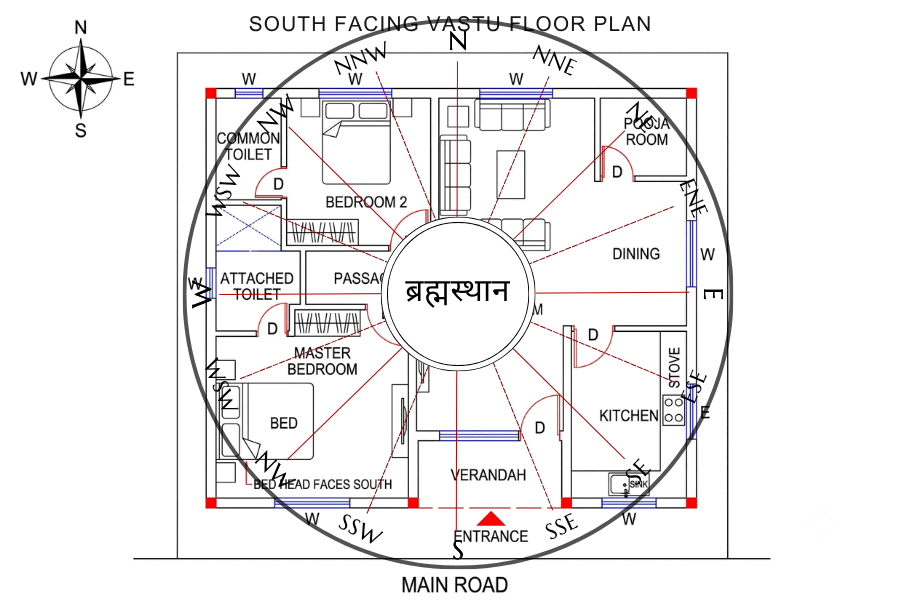
When Vastu experts study direction in more detail, they may divide the compass into 16 zones rather than only 8. These 16 zones are: North, North-North-East, North-East, East-North-East, East, East-South-East, South-East, South-South-East, South, South-South-West, South-West, West-South-West, West, West-North-West, North-West and North-North-West.
That is why even a slight shift in entrance direction can change the reading.
Is A South-Facing House Good Or Bad As Per Vastu?
This is the question most people really want answered first.
The simple answer is that a South-facing house is not automatically good or bad. Its effect depends on the entrance zone, room placement, plot slope, water location and how the house is used every day.
I often see families reject a perfectly workable home because of fear. At the same time, I also see people buy a house happily because someone told them the direction was lucky, without checking the layout at all.
Both approaches are risky. In Vastu, direction matters, but planning matters more.
Is A South-Facing House Lucky?
A South-facing house can be favourable when the main door is in the right zone and the overall layout supports balance.
For example, if the South-West is stable, the North-East is open and the fire and water elements are correctly placed, the house can feel grounded and comfortable. If these basics are ignored, the house may feel heavy, tense or disorganised.
Luck is not built by direction alone. It is shaped by the full plan.
Who Should Live In A South-Facing House?
A South-facing house can suit people who prefer structure, responsibility and steady routines.
This is why some experienced consultants find that such homes work well for families who want stability and a clear sense of order in daily life.
For an older couple buying a retirement home, this can be reassuring. What matters most is not the label of the direction, but whether the home feels settled, bright and easy to live in.
Which Professions Are Often Linked With South-Facing Homes?
Traditional Vastu views sometimes connect South-facing homes with people in professions that involve leadership, authority, public dealing or strong decision-making.
That may include business owners, legal professionals, administrators, property professionals and people in visible public roles.
These links should not be treated as a hard rule. They are only one part of the larger Vastu view.
| Profession Type | Why It Is Traditionally Linked With South-Facing Homes |
|---|---|
| Business owners and traders | The direction is often linked with active decision-making |
| Lawyers and administrators | It is associated with structure, order and authority |
| Property professionals | Their work often involves movement, negotiation and public dealing |
| Public-facing professionals | It may suit people who need visibility and confidence |
Key Things To Check In A South-Facing House Plan
Before looking at detailed remedies, it helps to understand the main planning points that shape a South-facing home.
Main Entrance Vastu For A South-Facing House
The entrance is one of the most sensitive parts of a South-facing house.
The main door should not be placed carelessly in the extreme South-West. In many Vastu readings, the more suitable entrance zones lie within selected parts of the South side rather than at the far South-West corner.
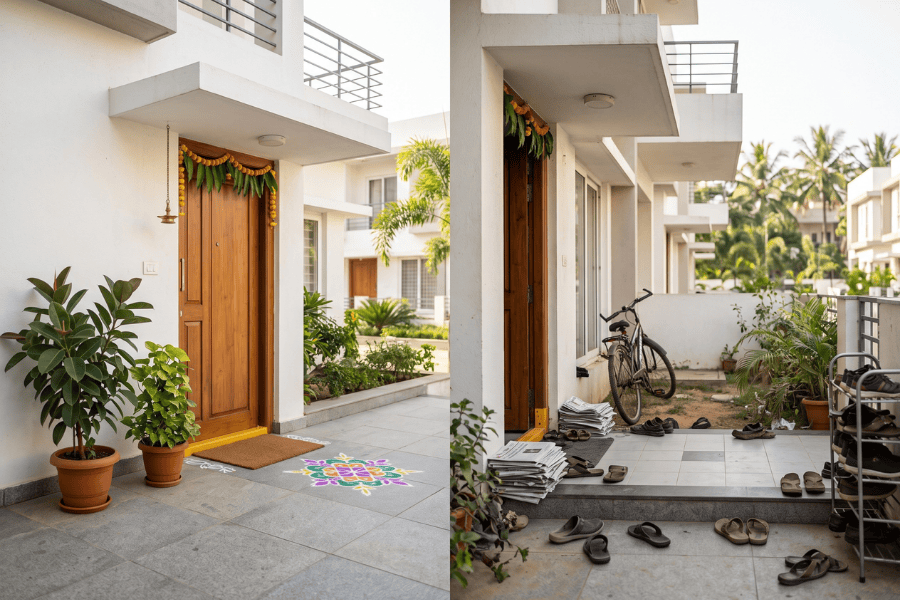
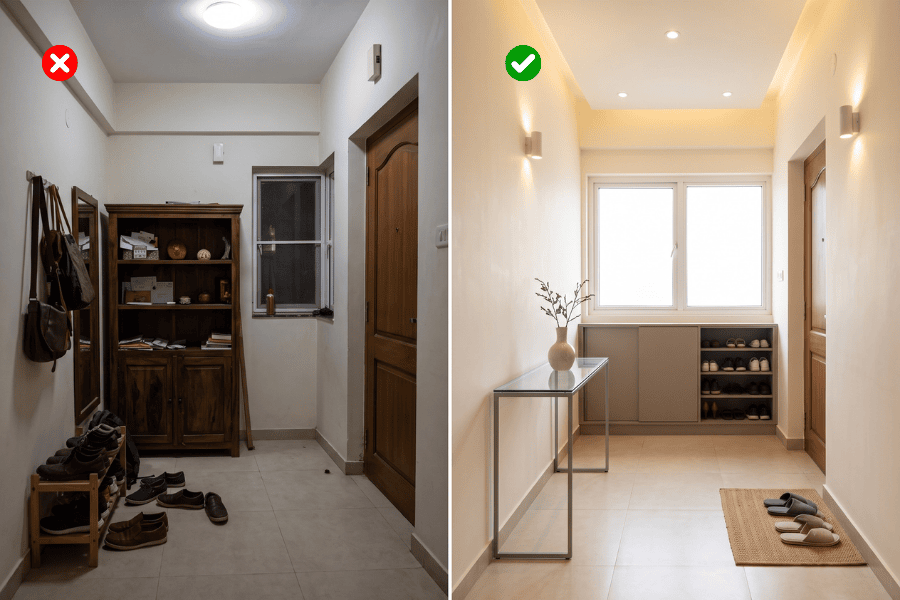
The entrance should also feel strong and welcoming. Keep it clean, well lit and free from clutter.
A dark or neglected entrance affects how the whole house feels. This is one reason many families say a house never felt right, even when the layout looked good on paper.
Pooja Room Placement In A South-Facing Home
The pooja room is usually best in the North-East, also known as the Ishan (ईशान) corner.
This part of the home is traditionally linked with clarity, calmness and prayer. It is better to avoid placing the pooja room in the South or below a staircase.
If space is limited, even a small but respectful pooja area in the North-East of the living room can work better than forcing it into an unsuitable corner.
Slope Direction As Per South-Facing House Vastu
In most Vastu guidance, the plot should be slightly higher in the South and West and lower or lighter in the North and East.
This supports the idea of keeping the heavier sides stable and the lighter sides more open.
For homeowners, this can be understood very simply. A house feels more balanced when the heavy zones stay grounded and the lighter zones do not get blocked.
Best Colours For A South-Facing House
Colour should support comfort, not create visual pressure.
In a South-facing house, soft neutrals, earthy shades and light warm colours often work well. Very dark shades can sometimes make the home feel heavier than it already is, especially in the entrance or main living spaces.
Practical Vastu Tips For A South-Facing House
Where Should The Main Door Be?
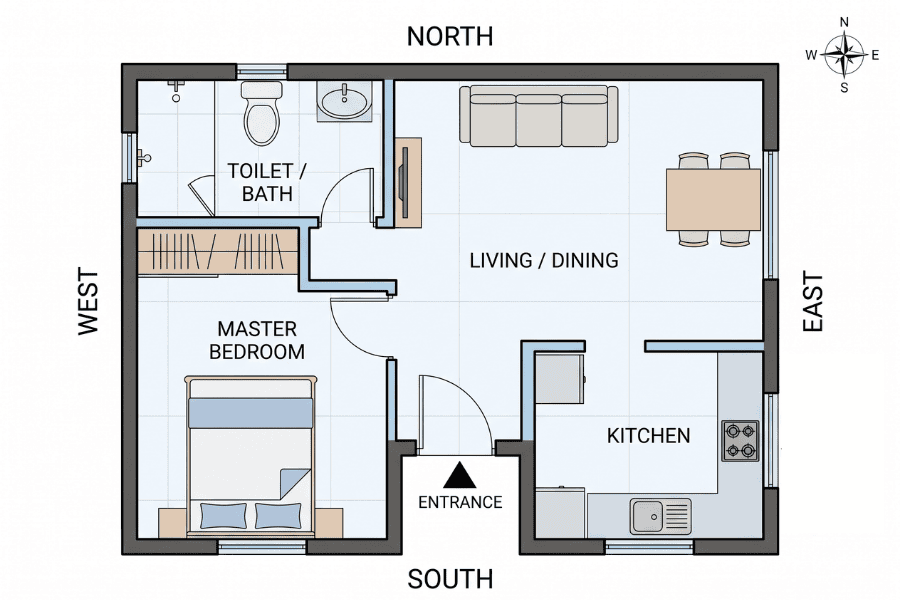
The main door should be placed in a suitable zone on the South side and not in the extreme South-West.
It should be the best maintained door in the house. Good lighting, a clear threshold and easy opening matter more than many people realise.
A realistic example is easy to imagine. A family may spend lakhs on interiors, but if the entrance is dim, cluttered and blocked by unused items, the house still feels unwelcoming the moment you enter.
Where Should Underground Water Storage Go?
Underground water storage is generally better in the North, North-East or East. Avoid placing underground tanks or borewells in the South or South-West.
How Should The Walls And Structure Be Planned?
South and West walls are often kept stronger or thicker than North and East walls. This approach can support a better sense of grounding.
It follows the Vastu idea that the South-West should feel heavier and more stable, while the North-East should remain lighter and more open.
Which Is The Best Kitchen Location?
The kitchen is usually best in the South-East, the zone linked with Agni (अग्नि), or fire.
If that is not possible, the North-West is sometimes used as a secondary option. Ideally, the person cooking should face East.
Avoid placing the kitchen in the South-West if possible. That corner is generally better suited to stability than active fire energy.
Which Direction Is Best For The Bedroom?
The master bedroom is commonly recommended in the South-West.
This often suits older couples well because the room feels more settled and private there. Children’s or guest bedrooms can be placed in the West or North-West depending on the plan.
Where Should The Living Room Be?
The living room is often best in the North, East or North-East.
These zones usually allow the space to feel lighter and more open. This matters in real life because the living room is where families sit together, meet guests and spend shared time.
What Are The Pooja Room Guidelines?
The pooja room should ideally be in the North-East.
Keep it clean, simple and peaceful. Avoid placing it inside a bedroom if you can, and avoid putting it under a staircase or next to a toilet wall.
Where Should The Staircase Be?
The staircase is commonly placed in the South, West or South-West, depending on the layout.
Avoid the North-East for a staircase. Spiral staircases are also usually avoided in Vastu because they can create a cramped and unsettled movement pattern.
What About Garden Placement?
Try to keep the North and East sides lighter, open and clean.
A small garden, lawn or sitting area often works well when it does not block openness in these zones. Heavy landscaping in the wrong place can make the house feel tighter than necessary.
Which Colours Support Positive Energy?
Use colours that help the home feel calm and balanced.
Cream, beige, light yellow and soft earthy shades usually work well. The goal is not to follow colour trends. The goal is to support comfort and clarity in the space.
| Area Of The House | Common Vastu Colour Guidance |
|---|---|
| Main entrance | Natural, balanced and welcoming shades |
| Pooja room | Light and peaceful colours such as white, cream or pale yellow |
| Living room | Soft neutrals that keep the space open and inviting |
| Bedroom | Grounded and restful tones rather than overly bright shades |
| Colours to limit | Very dark shades that make the house feel heavy |
Benefits Of Following South-Facing House Vastu
Better Use Of Natural Elements
A well-planned South-facing house can make good use of sunlight, airflow and heat balance.
This can improve comfort in day-to-day living, especially when windows, shading and room usage are planned with care.
Improved Family Harmony
When rooms are used in the right way and the house feels balanced, daily life becomes smoother.
This may sound simple, but homeowners often notice that a home feels calmer when the layout supports how the family actually lives.
Better Health And Well-Being
Natural light, good ventilation and uncluttered spaces support better living.
Greater Prosperity And Stability
In Vastu, prosperity is linked with order, correct placement and steady flow rather than fear-based ideas.
A house that feels balanced often helps people think more clearly and live with less friction.
Smoother Energy Flow Throughout The Home
When the heavier areas, lighter areas, fire zone and water zone are placed correctly, the home often feels more settled.
Even people who do not actively follow Vastu often say they can feel the difference in a well-planned house.
More Effective Room Placement
One practical benefit of Vastu is that it encourages each room to be used where it works best.
This brings together symbolic balance and everyday comfort.
Common Myths About South-Facing Houses
What Are The Most Common Myths?
The most common myth is that every South-facing house is unlucky.
This is not true. Another myth is that such homes always bring money loss, health problems or family stress.
In reality, poor planning creates more problems than direction alone.
South-Facing Vs South-East-Facing: Why The Confusion Matters
Many people mix up South-facing and South-East-facing homes.
This creates confusion because the South-East carries stronger fire energy and may need different planning advice. So before applying any tip, the exact direction should be checked properly.
What To Avoid In A South-Facing House
Here are some common mistakes to avoid:
- Placing the main entrance in the extreme South-West
- Putting underground water storage in the South or South-West
- Blocking the North-East with heavy storage or construction
- Placing the pooja room in the South
- Keeping the entrance dark, cluttered or poorly maintained
- Using spiral staircases where movement already feels tight
- Assuming the house is bad without checking the actual plan
How To Make A South-Facing House More Vastu-Compliant
Start by checking the true direction with a compass.
Then review the entrance zone, the South-West stability, the openness of the North-East, the location of the kitchen, bedrooms, pooja room, staircase and underground water storage.
Often, small corrections can make a noticeable difference. Better lighting at the entrance, clearing clutter, shifting heavy furniture or improving how a room is used can help the home feel more settled.
If the plan has major structural issues, a proper consultation is better than random remedies.
If you want experienced guidance, Vastu Ananda offers vastu consultations for plot vastu, residential vastu, commercial vastu, hotel vastu and office vastu. They also offer a vastu basic course and a vastu advanced course for learners.
Final Thoughts
A South-facing house is not something to reject out of fear.
In Vastu Shastra (वास्तु शास्त्र), what matters most is correct planning. A good entrance, balanced room placement, proper water zones and a stable South-West can make a South-facing home feel comfortable, practical and supportive.
So if you are buying, building or correcting a South-facing house, do not rely on rumours. Check the actual direction, study the layout and make calm, informed decisions.
FAQs
Is blue a good colour for a South-facing house?
Blue can work in a limited and balanced way, especially where a calm effect is needed. But colour choices should match the room function, natural light and the overall balance of the house.
What are the main benefits of a South-facing home?
A South-facing home can offer good sunlight, a strong sense of presence and efficient space planning when designed well.
Are spiral staircases good or bad in South-facing houses?
Spiral staircases are usually avoided because they can create cramped movement and a less stable feel. A regular staircase is generally preferred.
What is the ideal Vastu plan for a 30×40 South-facing house?
There is no single 30×40 plan that suits every family. The final plan should depend on the road position, family needs and exact compass reading.