
In Vastu Shastra, symbols matter because they shape how a space feels, functions and supports daily life. The Kalpavriksha (कल्पवृक्ष), often called the wish-fulfilling tree of life, is one such symbol. It is linked with abundance, spiritual growth and nourishing energy. In traditional belief, it represents a source of blessings that supports both material comfort and inner peace.
When used thoughtfully in a home, the Kalpavriksha tree or its symbolic form can support a calm and uplifting environment. What matters is intention, appropriateness and harmony with the space. Let us look at how this symbol is understood in Vaastu and how it can be used in a balanced way within the wider Indian architecture.
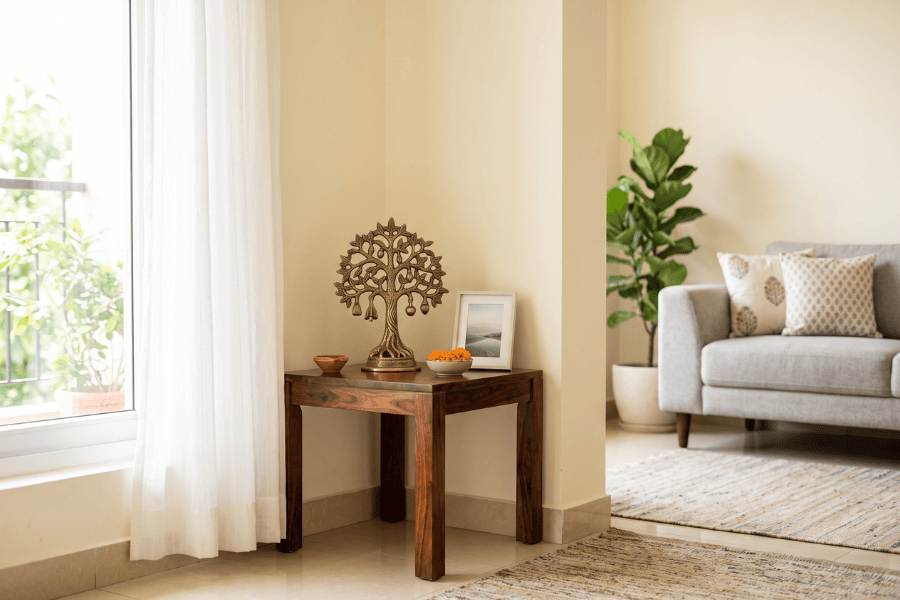
What Is the Kalpavriksha Tree?
The Kalpavriksha is a sacred and mythological tree in Hinduism. It is also known as Kalpataru (कल्पतरु).
In ancient texts, it is described as a divine wish-fulfilling tree associated with abundance, generosity and blessings.
It appears in stories connected with Samudra Manthan, where it emerged as one of the celestial treasures. References to such sacred symbols can be traced through the Puranas and the Vedas, where nature and divine order are closely linked.
In spiritual symbolism, the Kalpavriksha is not always limited to one botanical tree. In Indian tradition, different trees such as the banyan (बरगद), coconut (नारियल) and parijata (पारिजात) are at times associated with the wider idea of a life-giving and highly beneficial tree. This is why the Kalpavriksha is often considered as a sacred concept and as a symbolic object, painting or decorative tree of life.
Kalpavriksha Tree at a Glance
| Aspect | Meaning |
|---|---|
| Sanskrit Name | Kalpavriksha (कल्पवृक्ष) |
| Common Idea | Wish-fulfilling divine tree |
| Core Symbolism | Abundance, protection, growth and blessings |
| Vaastu Use | Tree, artwork or a symbolic decor |
The Role of the Kalpavriksha Tree in Vastu Shastra
In Vaastu, the Kalpavriksha tree represents expansion, nourishment and positive life force. Many people place it in the home as a vastu remedy to invite a sense of prosperity, balanced energy and emotional steadiness.
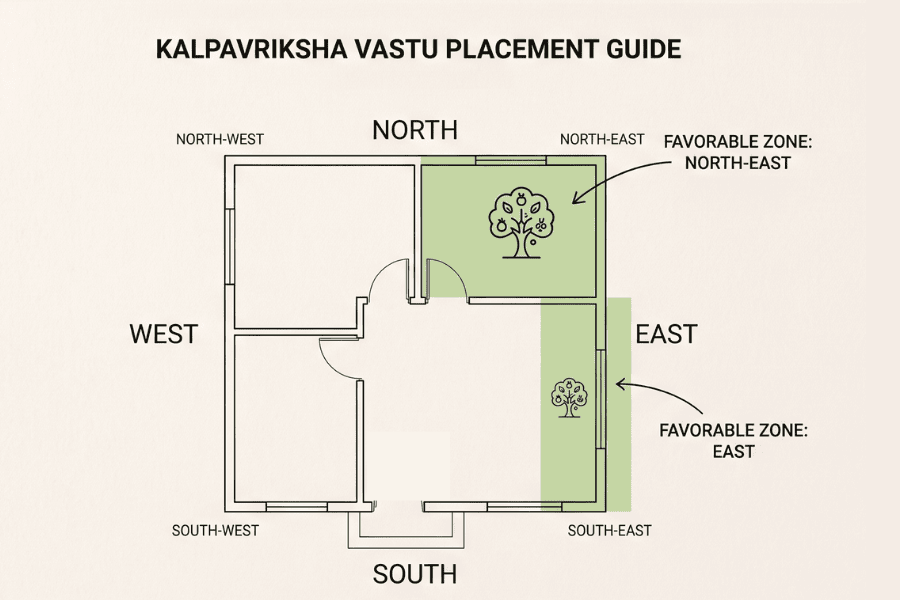
From a Vaastu point of view, this symbol works best when it supports the natural qualities of a direction. The East is linked with light, clarity and growth, while the North-East is associated with prayer, purity and spiritual energy. In some traditions, the North is also associated with Kubera, the deity linked with wealth and guardianship. For this reason, these directions are commonly recommended for sacred idols, prayer symbols and spiritually uplifting imagery.
The Kalpavriksha should not be seen as a magical cure. It works best as part of a well-kept home with good light, order and positive use of space. It is equally important to avoid placing spiritually significant symbols in heavy or imbalanced zones such as the Southeast or Southwest.
How To Use the Kalpavriksha Tree in Your Home
A Kalpavriksha can be introduced in a natural form, through a symbolic sculpture or through artwork. The best choice depends on your home, available space and purpose.
Here are the most practical ways to use it:
- Place a symbolic Kalpavriksha in the East or North-East corner of the home
- Use a painting or framed image if planting a tree is not practical
- Keep the surrounding area clean, bright and undisturbed
- Use it in a prayer corner, meditation area or peaceful living space
- Avoid placing sacred symbols in cluttered or neglected zones where the energy feels dull
Location and Placement
Placement should be guided by both symbolism and practicality. If you are using an image, brass tree or decorative form, the North-East and East are generally the safest choices. These directions support lightness, spiritual intention and gentle energy flow.
If you are using the symbol in a living room, place it where it feels visible but not overpowering. Near the entrance may also work if the area is neat and welcoming. Avoid placing sacred images in bathrooms, directly on the floor or in spaces with heavy storage and disorder.
Tree Size
If you are using an actual tree in a garden, the size should suit the property. A very large tree in a small area may create crowding or maintenance problems. In Vastu Shastra, balance matters more than excess.
A symbolic home décor piece, like a brass kalpavriksha idol, should also match the room. A small, tasteful piece in a calm corner is often better than an oversized decorative item that dominates the space without purpose.
Maintenance
A neglected sacred object or unhealthy plant weakens the effect of the space. If you keep a real plant or tree, make sure it gets proper natural light, water and trimming. Remove dry leaves and keep the base clean.
For handcrafted, metal or framed Kalpavriksha items, regular dusting is enough. The goal is simple: respect the symbol and keep the area energised, not dull or forgotten.
Ritual Practice and Praying
Some households like to include the Kalpavriksha in daily prayer or meditation. This can be meaningful when done with sincerity. A short prayer, a diya or a quiet moment of gratitude near the symbol can help create mental focus and peace.
A clean space, respectful placement and calm intention are often more important than elaborate practice.
Recommended Use of Kalpavriksha in the Home
| Form | Best Use | Suggested Area |
|---|---|---|
| Real tree | Open outdoor space | Garden or frontyard |
| Brass or bronze tree | Decorative and symbolic use | Living room, pooja corner, study |
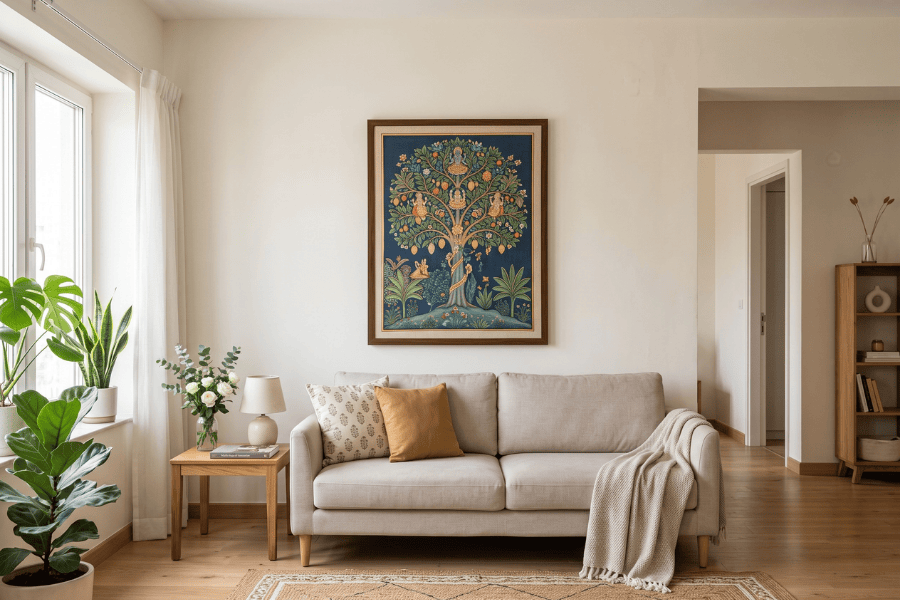
| Painting or framed image | Indoor Vaastu support | North-East wall or meditation corner |
| Small tabletop piece | Compact homes or flats | Clean shelf in East or North-East |
Kalpavriksha Tree Paintings and Images
If a real tree is not possible, paintings and images are a practical alternative. Many homes today use wall art to carry spiritual meaning without changing the structure of the house. A Kalpavriksha image can serve this purpose well, especially when chosen as a dignified tree of life motif that supports harmony.
Choose artwork that feels serene and dignified. Avoid loud colours, distorted forms or overly decorative designs that reduce the sacred quality of the symbol. A calm image placed in a pooja corner, study area or peaceful wall in the living room is usually suitable.
A few useful tips:
- Choose clean and balanced artwork
- Place it at eye level, not too low
- Keep the frame and surrounding wall clean
- Avoid mixing it with random home décor that weakens its meaning
Final Thoughts
The Kalpavriksha is a beautiful symbol of growth, blessings and balance. According to vastu principles, its value lies in the quality it brings to a space. Whether you use a real tree, a metal form or a painting, place it thoughtfully, keep it well-maintained and allow it to support a peaceful home environment.
If you would like guidance tailored to your property, Vastu Ananda offers consultations for plot vastu, residential vastu, commercial vastu, hotel vastu and office vastu, along with vastu basic and advanced courses for learners.
FAQs
1. Is the Kalpavriksha a real tree or a symbolic one?
Traditionally, it is a divine and symbolic tree. In modern usage, people may connect the idea with sacred trees or use symbolic forms such as paintings and metal décor.
2. Which direction is best for Kalpavriksha in Vastu?
The East and North-East are generally considered the most suitable directions for its placement.
3. Can I keep a Kalpavriksha painting at home?
Yes. A painting or image is often the easiest and most practical way to bring this symbol into the home.
4. Is ritual worship necessary?
No. Respectful placement, cleanliness and positive intention are usually enough. Rituals are optional and depend on personal belief.