Have you ever felt that one part of the house always brings restlessness? The kitchen feels too heated, arguments happen for no clear reason or a bedroom never feels truly calm. Many homeowners notice these patterns but do not know that, in Vastu Shastra (वास्तु शास्त्र), the South-East corner is often the first place to check.
This part of the home is called the Agni Corner, Agni Moola or Agneya Disha (आग्नेय दिशा). It is linked with the fire element, which governs heat, activity, cooking, fire energy and transformation.
When this zone is used well, the home often feels more settled and functional. When it is disturbed, people may experience irritation, poor planning, excess heat or daily discomfort.
That is why so many people ask about agni kon, agni direction and southeast corner Vastu. In this guide, we will look at what the Agni Corner means, why it matters, what should be placed here and what remedies may help if there is a Vastu dosh (वास्तु दोष).
What Exactly Is The Agni Corner In Vastu?
The Agni Corner is the South-East direction of the home. In Vastu, this zone is connected with Agni (अग्नि), or the fire principle.
Within traditional Hindu philosophy, this area is associated with transformation, discipline and the controlled use of heat in everyday life. It is also tied to Agni Dev, the deity of fire, which is why this corner is treated with so much care in classical Vastu thinking.
It is seen as the natural place for activities related to cooking, heat, controlled energy and certain electrical functions. This is why the kitchen is so often recommended here.
People also know this zone by names such as Agni Moola, agni kon, agni kona and agneya kona. In simple English, it is the fire corner of the home. In practical terms, the agni moola direction is the South-East side of the house.
If you are looking at directions more carefully, Vastu does not stop at just North, South, East and West. It also looks at a fuller directional grid based on traditional Vastu principles.
The 16 directional zones are: North, North-North-East, North-East, East-North-East, East, East-South-East, South-East, South-South-East, South, South-South-West, South-West, West-South-West, West, West-North-West, North-West and North-North-West.
In this larger framework, the Agneya Corner sits in the South-East sector, between East and South. This is why even the exact placement within the South-East side can matter.
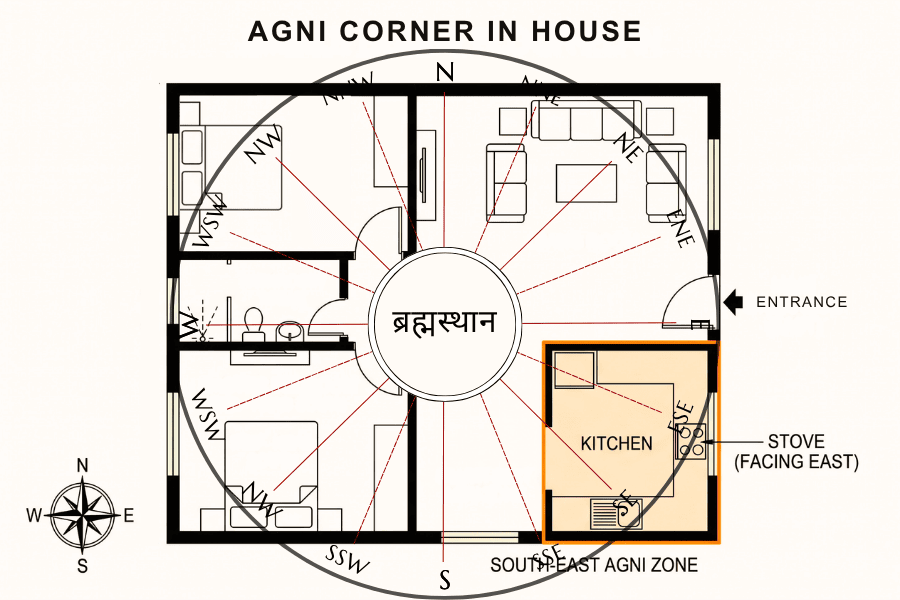
Why The South-East Zone Matters So Much
The fire element is not only about flame. In Vastu, it also represents movement, digestion, drive, confidence and the ability to act at the right time.
That is why this zone affects more than the kitchen alone. It influences how active, organised and balanced a home feels.
For many families, this becomes visible in ordinary ways. A badly planned South-East corner may show up as a kitchen that always feels stressful, a bedroom that feels too active or a home layout that disrupts energy flow.
For a couple buying a new home, this is often a practical concern. They may not be looking for theory. They simply want to know why one layout feels comfortable and another feels tiring.
When the fire zone is managed well, it is often said to support clearer routines, stronger familial bonds and better everyday cooperation at home.
Basic Vastu Rules For The Agni Corner
The core rule is simple: the South-East zone should support the fire element, not oppose it.
That means this area usually works best for the kitchen, gas stove, heat-producing appliances and carefully managed electrical use. It should be kept clean, bright and active.
In many homes, proper kitchen placement becomes the single biggest factor in making the Agni zone work well. A well-positioned cooking area often brings more ease to the daily rhythm of the house.
What usually does not work well here are strong water elements, neglected storage, dampness or uses that need deep calm and stillness.
A useful way to think of this zone is as a place for controlled fire. Not too weak, not too harsh.
Here are the main principles homeowners should remember:
- Use the space for kitchen or fire-related functions where possible
- Keep the area clean, dry and uncluttered
- Avoid major water features in this zone
- Do not turn it into a dark, heavy or unused corner
- Check electrical safety and ventilation carefully
In many homes, even simple corrections improve this zone. Better lighting, less clutter and a clearer use of the room can make a visible difference.
What A Balanced Agni Corner Can Support
When the Agni Corner is aligned with its natural purpose, the home usually feels more functional. The benefit is often practical before it feels symbolic.
A well-used South-East zone may support smoother cooking routines, steadier daily energy and a better sense of order in the house. For families, this matters more than abstract Vastu language.
For example, many homeowners in their 50s say they start noticing these details more after children move out or after a renovation. They want the home to feel easy to live in, not draining.
In Vastu terms, a balanced Agni Moola is often linked with health, prosperity and better relationships in the household. Many people also associate it with financial well-being, especially when the home supports discipline, routine and practical decision-making.
| What A Balanced Agni Corner May Support | How It Shows Up In Daily Life |
|---|---|
| Better use of kitchen energy | Cooking feels easier and more organised |
| More active household rhythm | Less stagnation and more flow in routines |
| Better directional balance | Rooms feel more suited to their purpose |
| Reduced friction from poor planning | Fewer everyday discomforts |
Fewer everyday discomforts
What To Keep In The South-East Corner
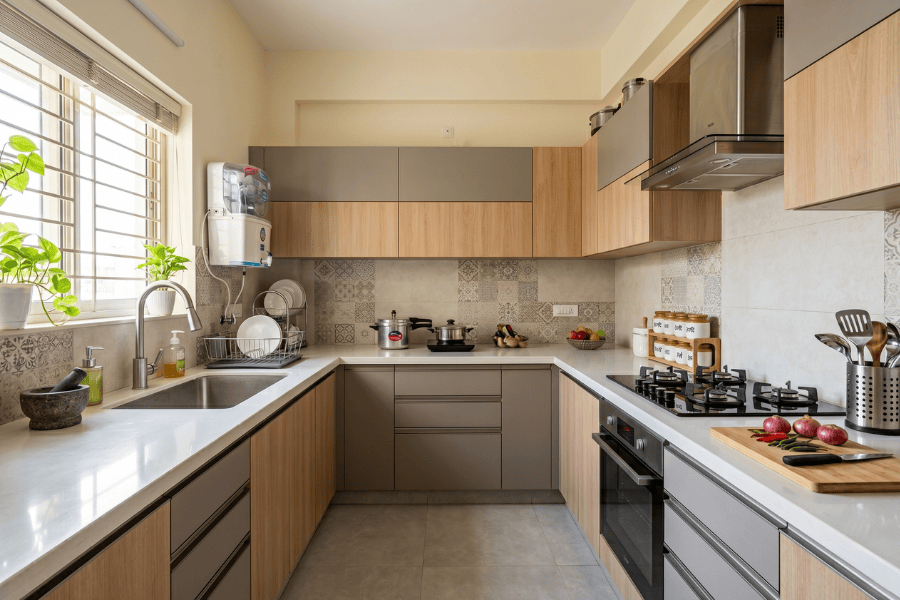
This is one of the most common questions people ask. In most homes, the best use of the Agneya Corner is the kitchen.
The stove, cooking platform and certain electrical appliances fit naturally here. This is because they match the fire element rather than conflict with it.
Warm lighting, copper items and organised kitchen storage also work well in this part of the house. Some households also use candles in a decorative way, though only where it is safe and practical. The key is to keep the zone active and tidy, not overloaded.
| Suitable Placement In The Agni Corner | Why It Works |
|---|---|
| Kitchen | Best match for the fire element |
| Stove or hob | Represents controlled fire |
| Microwave, oven or selected appliances | Supports the active nature of the zone |
| Decorative warm lighting | Strengthens the sense of energy |
| Well-kept utility storage | Acceptable if it does not create clutter |
A common real-life example is a family kitchen where the stove is in the North-East and the sink dominates the cooking side. Even if the house is otherwise well planned, the kitchen may feel awkward to use. In Vastu, this is exactly the kind of imbalance people try to correct.
What Not To Place In The South-East Corner
The South-East zone should not be burdened with elements that weaken or disturb fire. This is where many homes go wrong.
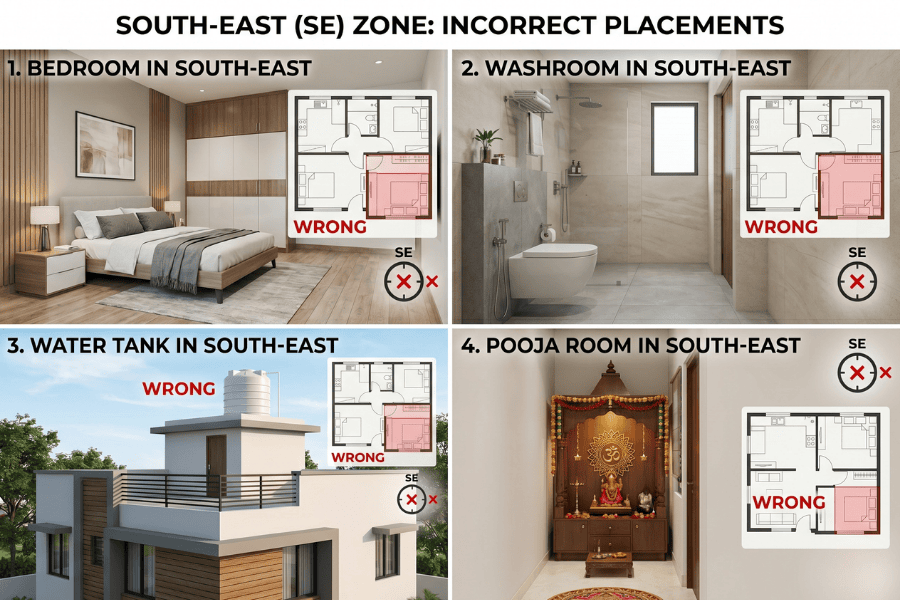
The biggest concern is water-heavy use. Borewells, water tanks, major drainage points and similar placements are generally avoided here.
This is also not considered the best place for a pooja room, because the energy of this zone is active and heated rather than peaceful and inward. A prayer space is usually expected to support divine energy, which sits more comfortably in calmer zones such as Ishaan.
Too much clutter is another common problem. A South-East corner packed with broken items, storage boxes and unused objects often starts feeling heavy and irritating.
Colours And Decor To Avoid Here
Colour matters in this zone because it influences how the room feels.
Many Vastu experts advise avoiding strong blue, black and sometimes dark green in the Agni Corner. These colors are seen as cooling or conflicting with the fire element.
Heavy use of mirrors in the exact South-East area is also often discouraged, especially if they create visual disturbance in a kitchen or bedroom.
Likewise, this zone should not become a plant-heavy area with constant watering. A few decorative choices are one thing, but the overall feel should still support fire, not water.
Best Colours For The Agni Corner
The most suitable colours for the Agni Corner are usually warm and light. Red, orange, coral, peach, pink and soft golden yellow are commonly recommended.
That does not mean the whole room has to look bright red. In fact, that often feels too harsh.
A better approach is to use warm shades with restraint. A backsplash, soft wall tone, fabric detail or small accent piece is often enough.
For many homeowners, especially in older family homes, this is the easiest remedy to try. Repainting one wall, improving the light or replacing dark colours with warmer tones can shift the mood of the space without major renovation.
What Happens When The Agni Corner Is Balanced Or Disturbed
A balanced Agni Corner often feels practical, bright and easy to use. The room supports activity without creating pressure.
A disturbed one may feel too heated, too dark, too damp or simply out of place. People often describe this not in Vastu terms but in everyday language. They say, “Something feels off in this room.”
In traditional Vastu, imbalance in the South-East is often linked with irritability, stress, conflict or poor room function. In some cases, families also connect it with ongoing health issues or strain around routines and decision-making.
If the kitchen is badly placed, the resulting stress may also affect the way family members interact with each other. Over time, even a practical layout issue can begin to disturb harmony in relationships.
This does not mean every problem in life comes from one direction of the house. But poor planning in a key zone can certainly add discomfort.
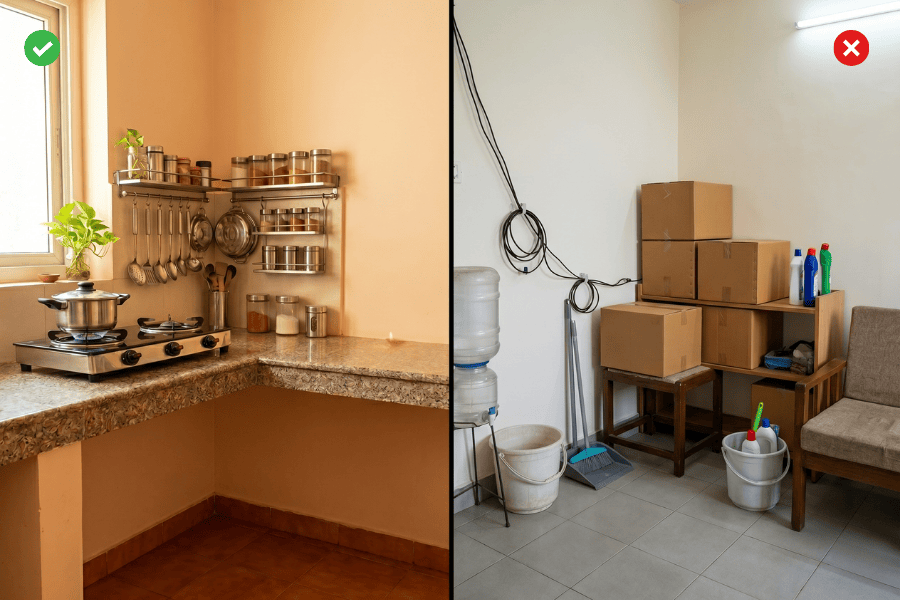
Agni Dosh And Simple Remedies That Help
A Vastu dosh in the Agni Corner usually means the fire zone is not being used in a suitable way. The good news is that many homes can be improved without dramatic changes.
The first step is always practical correction. Before adding any symbolic remedy, look at how the space is actually being used.
Start with these checks:
- Is the area cluttered or neglected?
- Is there too much water use in this zone?
- Is the room dark, damp or poorly ventilated?
- Are the colours too cold or heavy?
- Is the room function unsuitable for the fire zone?
Once these basics are corrected, the South-East corner often begins to feel lighter and more balanced.
Practical Remedies For Agni Moola Imbalance
These are some grounded remedies often suggested in Vastu consultation:
- Clear clutter and remove broken items
- Improve ventilation and light
- Introduce warm colours in a mild way
- Shift water-related use away from this zone where possible
- Keep electrical fittings safe and orderly
- Use the space more intentionally instead of letting it become dead storage
Some households also explore a pyramid remedy or structured Vastu Pyramids placement, but these should be used carefully and not as a substitute for correcting the actual layout. In some cases, a properly placed yantra, a red lamp or even copper sun plates may be suggested as secondary supports after the practical issues are addressed.
South-East Entrance: Should You Worry?
A South-East entrance worries many buyers. This is understandable, especially when relatives or brokers make alarming statements without looking at the full plan.
The truth is more nuanced. Not every South-East entrance gives the same result.
The exact position of the door within the South-East side, the layout of the house and the use of nearby spaces all matter. That is why broad fear-based advice is rarely helpful.
If your main entrance falls in this zone, focus first on whether the entry is clean, bright, well maintained and proportionate to the rest of the plan. In some homes, the larger issue is not the direction alone but poor design around the entrance.
Bedroom, Toilet And Other Placements In Agni Kon
People often ask whether certain rooms can be placed in the Agni Corner. This is one of the most practical parts of the discussion.
Is A Bedroom Good In The Agni Corner?
In most cases, the South-East is not the ideal location for the master bedroom. The fire element may make the room feel too active for deep rest.
This is especially relevant for older homeowners who already struggle with sleep, heat or blood pressure. A bedroom in this zone may not support the calm they need.
What If There Is A Toilet In Agni Kon?
A toilet or bathroom in this zone is generally considered less favourable because it introduces water and drainage into the fire corner.
If shifting it is not possible, focus on dryness, ventilation, hygiene and neat maintenance. These practical improvements matter.
Can A Mandir Be Placed Here?
A mandir (मंदिर) or pooja area is usually not preferred in the South-East. Most Vastu guidance places prayer in calmer, more sattvic zones.
What About Stairs, Septic Tank Or Water Tank?
These placements need case-by-case review. In general, major water storage, borewell or septic functions are not preferred here because they conflict with the fire element.
Is A South-East Corner Plot Good Or Bad?
A South-East corner plot is not automatically bad. This is one of the most misunderstood topics in Vastu.
Whether the plot works well depends on entrance placement, road position, slope, open spaces and the internal plan. A well-designed plot can perform better than a poorly designed “good direction” plot.
This is where many couples buying a new home feel confused. One person hears that South-East is risky. Another hears that it is manageable. Both may be partly right, because the full layout decides the result.
In some cases, better planning of this zone is also linked with a stronger sense of order, healthier cash flow and overall financial stability in the household.
Agni Kon In Relation To Other Directions
The Agni Corner makes more sense when seen as one part of the full house energy map.
In Vastu, each direction has a different role. The North-East is associated with openness and prayer, the South-East with fire and activity, the South-West with stability and the North-West with movement.
This directional system is traditionally understood through the idea of the Vastu Purusha, whose body symbolically maps the energy grid of the house. That is one reason every zone is given a different role and weight.
This is why a room that works well in one zone may feel wrong in another. Understanding Agni Kon in relation to other directions helps homeowners make better decisions without overgeneralising.
Final Thoughts
The Agni Corner is one of the most important zones in a home because it governs the fire element. When this space is used correctly, it supports daily activity, warmth and functional planning.
When it is ignored or used in a conflicting way, the home may begin to feel unsettled in subtle but real ways.
The right approach is not fear. It is clarity. Understand the direction, use the space appropriately and make sensible corrections where needed. That alone solves many Agni Corner problems before they grow into bigger concerns.
If you would like expert guidance on plot Vastu, residential Vastu, commercial Vastu, hotel Vastu or office Vastu, you can learn more from Vastu Ananda. They also offer a vastu basic course and vastu advanced course for learners who want to study the subject in more depth.
FAQs
What should be in the South-East corner?
The kitchen, stove and selected electrical functions are usually the best fit.
How can South-East Vastu dosh be reduced?
Begin with practical steps such as clearing clutter, improving light, reducing water conflict and using suitable colours.
Can we sleep in the South-East corner?
It is usually not the first choice for a main bedroom, especially for people who need a calm sleeping environment.
Is blue colour suitable for the Agni zone?
Most Vastu guidance avoids strong blue in this area because it does not support the fire element.
Is a South-East corner plot always bad?
No. The final effect depends on the full layout and planning.