A home affects the people who live in it every day. When the layout, use of rooms or directional balance goes against basic Vastu Shastra principles, the condition is described as Vastu Dosh (वास्तु दोष). The concern may show up as discomfort in the space, repeated tension, poor sleep, frequent arguments or a feeling that the house never settles.
Vastu Dosha Nivarana usually means reducing or correcting those faults through practical changes, sacred tools and disciplined spiritual practice.
In many homes, the answer is a mix of proper placement, regular care, suitable chanting and a clear understanding of what needs correction. This guide brings those ideas together in a simple way so you can understand where each remedy fits and how to use it with care.
What Is Vastu Dosh
Vastu Dosh (वास्तु दोष) is a defect or imbalance in a property. It may come from wrong room placement, poor directional use, blocked zones or structural features that disturb the intended energy of the space.
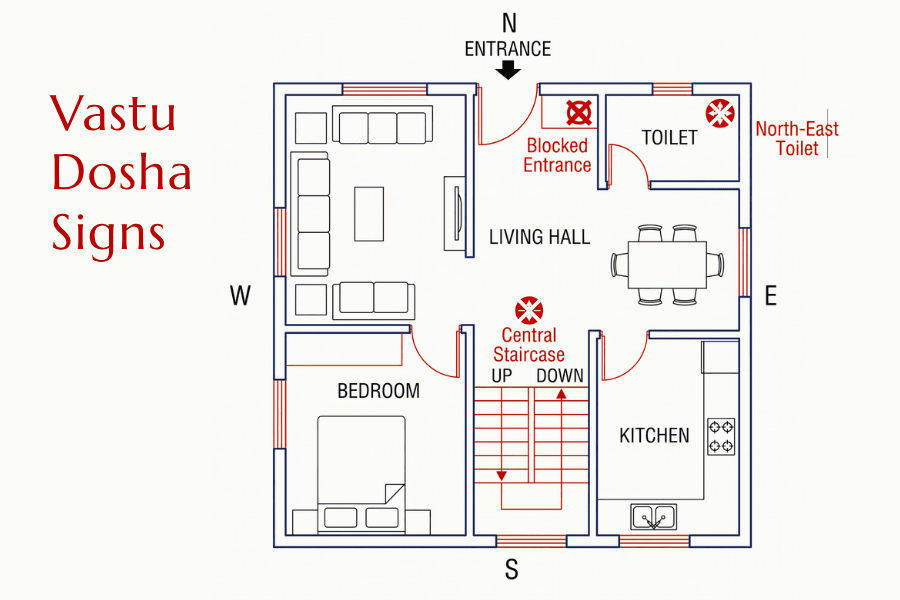
Common examples include a toilet in the North-East, a kitchen in the wrong fire zone, a staircase in the centre/Brahmasthan or clutter blocking natural movement in the home. In traditional practice, these conditions may affect peace, focus, health and financial stability.
Some vastu dosh are mild and can be reduced with everyday corrections. Others need a more careful response that may include a yantra (यंत्र), mantra (मंत्र), puja (पूजा) or vastu expert consultation.
Common Signs of Vastu Dosh in Homes
You cannot judge a home by one event alone. Still, repeated patterns often make people look more closely at the space. These signs suggest that the layout, use of space or ritual care of the home may need attention.
| Common Sign | What People Often Notice |
|---|---|
| Disturbed peace | Frequent arguments, restlessness or discomfort without a clear reason |
| Health strain | Poor sleep, fatigue or repeated minor illness in the household |
| Financial pressure | Delay, unstable cash flow or sudden expenses |
| Mental heaviness | Lack of focus, anxiety or low mood in specific rooms |
| Stalled progress | Delays in study, work or family decisions |
Consequences of Untreated Vastu Dosh
When a fault stays in place for a long time, the effect may feel stronger because the daily pattern does not change. People often report:
- Recurring tension at home
- Sleep disturbance
- Reduced concentration
- Stress around money or work
- A constant sense of unease in certain areas
A vastu dosh does not affect every person in the same way. The effect depends on the type of fault, the direction involved, the people living there and whether the home is otherwise well kept.
Why Vastu Dosha Nivarana Is Important
Vastu Dosha Nivarana matters because a home should have steadiness, clarity and peace.
Nivarana in this context means relief from the burden of the vastu dosh. It points to correction, calming and balance. A space that feels disordered often affects routine. A balanced space supports rest, conversation, prayer and work more naturally.
From a practical point of view, this process also makes people examine the house more carefully. They should try to remove clutter, improve room use, keep sacred areas clean and pay attention to direction. These are useful steps even before any spiritual remedy is added.
Vastu Dosha Nivarana Yantra
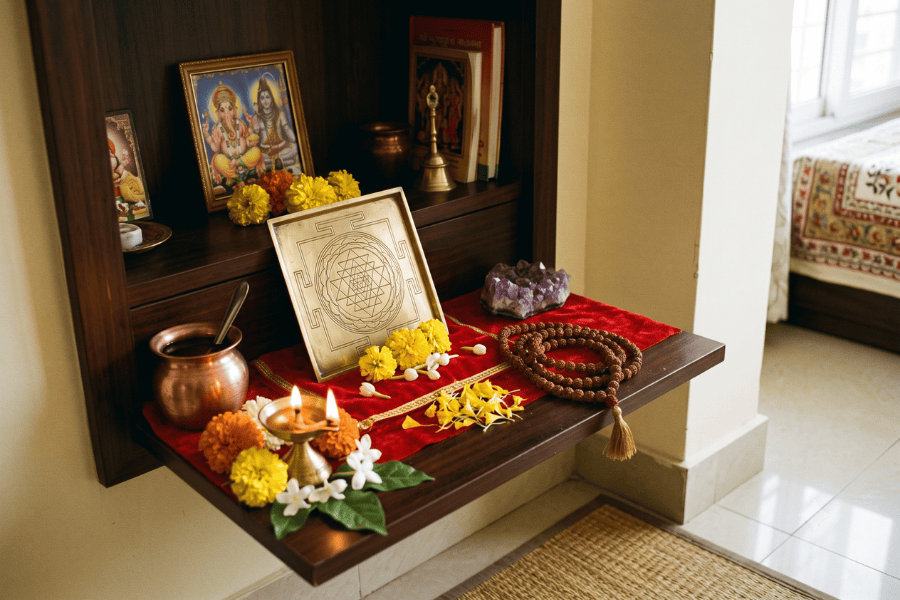
A Vastu Dosha Nivarana Yantra is a sacred geometric tool used in Vastu Shastra to reduce the effect of faults in a home, office, factory or commercial space. It is usually prepared on metal and installed with prayer, mantra and proper intention. In traditional practice, it is linked with Vastu Purusha (वास्तु पुरुष), Vastu dev and the directional balance of a property.
People usually use it when an architectural layout fault cannot be corrected fully through structural changes. It is also used as a supporting remedy along with puja (पूजा), meditation, mantra chanting and practical corrections in the space. Within Hinduism, such remedies are usually approached with reverence rather than treated as decorative objects.
How It Works
The yantra is believed to work through its sacred form, ritual preparation and correct placement. In Vedic practice, geometric patterns are used to hold and direct a specific spiritual intent. A Vastu Dosha Nivaran Yantra is therefore used to calm disturbed energies, support directional balance and reduce the impact of known Vastu faults.
It is secondary to proper layout, directional use, and maintenance of the space. That is why the yantra is often used together with daily care of the home, prayer, proper room use and regular chanting. If the home is cluttered, poorly maintained or badly arranged, the yantra alone will not solve everything.
A cleaner and more open space is believed to support positive vibrations and reduce negative energy over time. Some practitioners also describe this process in terms of subtle energy frequencies within the home.
Recommended Size and Materials
The size of a Vastu Dosh Nivaran Yantra can vary based on the property and the tradition being followed. For home use, smaller copper plates are commonly used for altars, walls or discreet placement in the affected zone. For larger residential or commercial sites, a consultant may suggest a larger plate or a site-specific installation.
Copper is the most commonly recommended material because it is widely used in Vedic ritual practice and is considered suitable for spiritual conduct and stability. Some yantras are also made in brass, Panchdhatu (पंचधातु) or other ritual metals. The important point is not only the metal, but also the accuracy of the yantra design and whether it has been prepared properly.
When choosing one, it is better to look for clear and accurate inscription, durable metal and a clean finish.
Where To Place
Placement depends on the type of vastu dosh and the advice given with the yantra. In many cases, the North-East is chosen for general installation because it is treated as a sensitive and sacred zone in Vastu practice. Some yantras are also placed in the puja room, near the main entrance or at the affected part of the property after a proper review.
The area should be kept clean and not hidden under heavy clutter. Placement near shoes, waste or damp corners should also be avoided. A well-kept space with enough airflow and sunlight usually supports better results and reduces the feeling of negative energy collecting in one area.
When used correctly, it is intended to support harmony, prosperity and greater peace of mind in the space.
Energisation of Yantra
Energisation means preparing the yantra through mantra, puja and ritual intention before it is installed. In traditional use, this step is important because the yantra is not a decorative item. It is treated as a sacred object that should be awakened through proper practice.
Many practitioners prefer an energised yantra because it has already undergone mantra japa (जप), puja and ritual preparation. This is believed to make the yantra more suitable for spiritual use from the beginning. Even then, proper placement and respectful upkeep still matter. Without that, the home may continue to feel heavy or unsettled, and the same areas of negative energy may remain active.
The exact energising process can vary, but a simple traditional method usually includes:
- Clean the yantra with clean water, rose water or raw milk followed by water.
- Prepare a clean place in the puja area or intended location.
- Light a diya (दीया) and incense.
- Offer flowers and, if appropriate, sandalwood paste or kumkum.
- Chant a Vastu mantra such as Om Vastu Purushaya Namah (ॐ वास्तु पुरुषाय नमः)
- Install the yantra in the chosen place with a calm mind and clear prayer.
If the yantra is being used for a serious or site-specific defect, energisation should ideally be done under the guidance of an experienced Vastu consultant or priest.
Other Vastu Dosh Remedies
A yantra is one remedy. Many homes use a combination of methods depending on the nature of the dosha.
Nivarana Pooja and Deities
Vastu Dosh Nivarana Puja or Vastu Shanti Puja is performed to reduce the effects of Vastu faults and purify the property. The deities commonly associated with this practice are Vastu Purusha (वास्तु पुरुष), Lord Ganesha (गणेश) and in some traditions, the Navagraha (नवग्रह) are also invoked.
Lord Ganesha is worshipped for the removal of obstacles, while the Vastu Purusha is worshipped as the presiding energy of the site or structure.
Puja is often chosen when a family moves into a new home, a property has repeated disturbance or renovation has changed the internal layout.
Vastu Dosha Nivaran Mantras
Vastu Dosha Nivaran Mantras are widely used for regular correction and prayer. They are usually chanted with a clean mind, a steady place and a clear intention.
A suitable Vastu Shanti Muhurta (वास्तु शांति मुहूर्त) is often suggested for formal chanting or ritual use.
In daily household practice, people often chant in the morning after bathing and cleaning the prayer space. Early morning is commonly recommended because the home is quieter and the mind is more settled.
One common range for Vastu mantra japa is 54,000 or 125,000 recitations for a full, disciplined practice. For daily household use, people often begin with 11, 21 or 108 repetitions.
Rudraksha
Rudraksha (रुद्राक्ष) is used in some Vastu remedies for spiritual support and purification. In household practice, people may place an energised bead in the puja area or near the entrance after guidance from a knowledgeable Vastu practitioner.
It is best to treat Rudraksha with care. It should be clean, respected and used for a clear purpose. Random use without guidance often creates confusion because different beads are linked with different traditions and recommendations.
Flowers
Flowers (फूल) are one of the simplest remedies because they change the feel of a sacred space at once. Yellow flowers are also mentioned as a simple mantra practice.
Only fresh flowers should be used in puja, near the yantra or in the prayer room. Remove dried flowers quickly and keep the area clean.
Final Thoughts
Vastu Dosh Nivaran is a practical and spiritual process. It starts with clear observation of the home and continues with the right mix of correction, prayer and discipline. A yantra may be useful. A mantra may be useful. A puja may be useful. The right choice depends on the fault, the house and the seriousness of the practice.
Keep the approach simple. Use remedies with respect. If the vastu dosh is serious or the property has multiple Vastu faults, get the layout checked properly before choosing a final remedy plan.
If you want expert guidance for plot Vastu, residential Vastu, commercial Vastu, hotel Vastu or office Vastu, you can book a consultation with Vastu Ananda. Vastu Ananda also teaches a Vastu Basic Course and a Vastu Advanced Course for learners who want deeper study.