

Success in exams and education is impossible without a good study table setup. The study area is where students build their focus, memory, discipline and mental clarity every day.
According to Vastu Shastra, when the study desk is placed in the right zone and facing the right direction, the space supports calm thinking, better concentration and stronger academic performance.
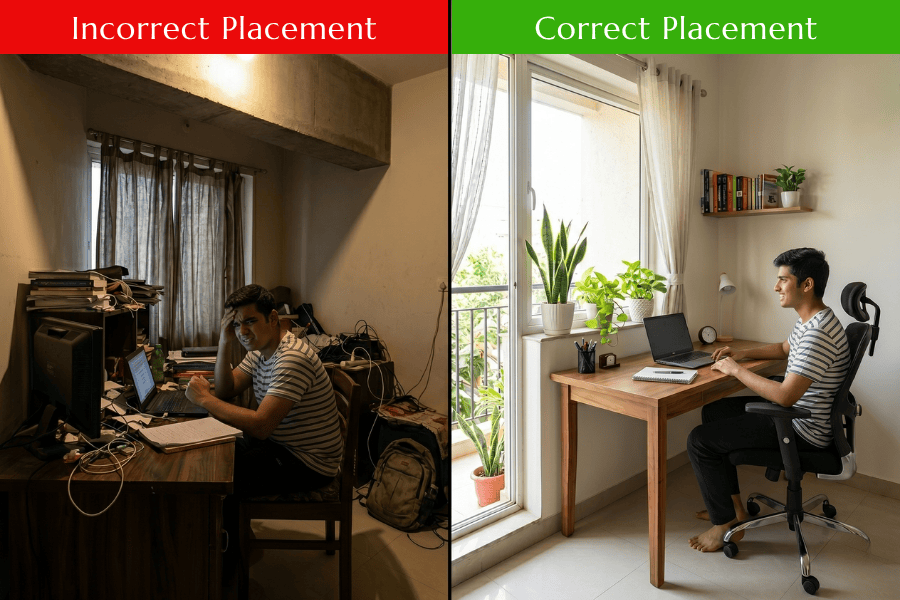
If a study table is wrongly placed under a beam or surrounded by clutter, it starts blocking the smooth flow of positive energy. In such cases, many students might feel distracted, restless or mentally tired despite working hard. This can affect their confidence, consistency and ability to learn.
The good news is that vaastu for study tables is practical and easy to apply. In this guide, we will cover the essential Vastu Shastra rules for study tables and the basic vastu principles that support academic success.
Which Direction Should Students Face?
The best direction to face while studying is East (पूर्व) or North (उत्तर).
The East is associated with sunrise, new energy and growth, which makes it a strong direction for learning. Facing East supports clarity, fresh thinking and better grasping power. It is ideal for school and college students, especially those who need help with concentration, memory and discipline.

Facing North is also highly favourable. Vastu principles link the North with growth, opportunities and smooth mental flow. It helps the mind stay alert and supports steady progress. This direction works well for students preparing for competitive exams, professional courses and skill-based learning.
The North-East (उत्तर पूर्व) zone, also known as Ishan kon (ईशान कोण), is considered especially pure and supportive for education. If the study table is placed so that the student faces East or North within a clean North-East part of the room, the results are even better.
The South (दक्षिण) and South-West (दक्षिण पश्चिम) should be avoided for regular study. They can create heaviness and mental pressure, making a student feel dull, stubborn or slow. Facing North-West (उत्तर पश्चिम) for long study sessions can also increase restlessness among students.
| Direction | Main Benefit for Students | Best For |
|---|---|---|
| East | Clarity, focus and fresh thinking | Daily study, school learning |
| North | Mental flow and progress | Exams, career-focused study |
| North-East | Spiritual calm and wisdom | Deep focus, peaceful study |
| West | Moderation support when other options are not available | Revision and reading |
| South | Can feel heavy if used incorrectly | Best avoided for regular study |
When the study table is placed correctly and the student faces a favourable direction, the entire study experience improves. It shows up in behaviour, energy and daily consistency. Some key benefits include:
- Better concentration during long study hours
- Improved memory retention and understanding
- Less distraction and mental confusion
- More discipline and routine
- Stronger confidence before exams
- Calmer emotions and lower frustration
- A greater interest in learning
Influence of Five Elements on Study Area
According to Vastu Shastra, the five elements shape how energy moves in a room and how a person feels while using that space. A study room works best when fire (अग्नि), water (जल), earth (पृथ्वी), air (वायु) and space (आकाश) are well-balanced instead of competing with each other.
Too much fire from screens, harsh colours and overheating can make the mind irritable. Excessive earth elements through heavy furniture and dark corners can create dullness. Constant air movement and disorder can reduce focus.
A balanced placement in the study area creates harmony among these elements and helps the student stay grounded, alert and emotionally stable. When energy flows well, the student feels mentally lighter and more engaged.

Creating a Vastu-Compliant Study Environment
Energy in a study space should move gently, not rush, stagnate or feel blocked. This is why Vastu Shastra gives importance to room layout, furniture weight, light entry and open zones.
Study Table
The study table is the centre of the room’s learning energy. It should feel steady, clean and comfortable. A weak, damaged or overcrowded table weakens focus.
Overhead Beams, Sloped Ceilings, Wall Gap
The best study table placement is along the East or North side of the room so the student can face those directions while studying. Keep a little breathing space between the table and the wall if possible. This prevents a cramped feeling and allows energy to circulate. Try having a solid wall behind the chair because it gives better support and stability.
Avoid placing the study table:
- Directly under an overhead beam, as it creates pressure and interrupts concentration
- Under a sharply sloped ceiling that presses down on the mental field and reduces clarity
- In a passage where people keep crossing
- Directly in front of a toilet door
- Facing a blank, oppressive wall with no breathing space
- Sitting with their back to a door whenever possible
Table Material
Wood is the best material for a study table because it carries warmth, stability and natural grounding. Very reflective glass tables are better avoided because they can create visual distraction and scattered energy.
Table Size
The table should be proportionate to the room and to the student’s needs. A table that is too small creates pressure and clutter. A table that is too large can dominate the room and waste useful space. The ideal size allows enough room for books, writing and a lamp without making the surface crowded.
Desk Shape
A rectangular or square study table is best. These shapes create order and stability. Avoid highly irregular shapes, sharp jutting edges or overly curved designs. Clean lines support disciplined thinking.
Colour
The best colours for a study room are light, calm and clear. Shades such as off-white, light green, soft blue, pale yellow and light beige work well. These colours keep the mind settled and fresh.
Avoid overly dark shades, aggressive reds and very loud combinations around the study table. A little warmth works fine, but too much intensity disturbs concentration.
| Colour | Vastu Effect | Best Use in Study Room |
|---|---|---|
| Light Green | Growth and freshness | Walls, organisers |
| Soft Blue | Calm thinking | Accent wall, decor |
| Pale Yellow | Positivity and alertness | Study space highlights |
| Off-White | Openness and clarity | Main wall colour |
| Dark Red | Overstimulation | Best avoided near the study table |

Lighting and Ventilation
A study area should have bright, balanced lighting and a steady flow of fresh air. Natural sunlight from the East is especially beneficial because it energises the mind early in the day.
A stuffy room blocks the free movement of air and reduces mental freshness. Good ventilation keeps the room from feeling heavy and dull.
Electronic Devices
Electronic devices should be used with control. A laptop or desktop may be necessary, but too many gadgets on the study table increase heat, distraction and agitation. According to Vastu Shastra, this can create excess Fire (अग्नि), especially in already warm or screen-heavy rooms.
A clean digital setup protects attention. Keep only the devices that are needed for study. Hide tangled wires. Avoid placing chargers, gaming accessories and entertainment devices around the study area.
Pictures and Decorations
Pictures in a study area should inspire focus, discipline and positivity. Choose images that reflect learning, goals, nature or calm achievement. Motivational quotes can work if they are simple and not visually noisy.
Avoid violent images, gloomy artwork, lonely figures or decorations that create emotional heaviness. The study area should feel uplifting, not dramatic.
Bookshelves, Books and Stationery
Books and stationery should be arranged neatly to support mental order. Broken pens, useless papers and random piles of books create stagnant energy and reduce seriousness toward study.
Keep everyday books within easy reach. Heavy storage can be placed toward the South-West (दक्षिण पश्चिम) side of the room if practical, while keeping the North-East side lighter and cleaner.
Plants
A small healthy plant can make a study room feel fresh and calm. It brings life, softness and natural balance. A plant with clean green leaves can work well in the East or North zone of the room. Avoid thorny plants, dried plants or too many pots in a small study area.
Symbols and Spiritual Support
Spiritual support strengthens intention, humility and mental peace. Many families like to keep subtle spiritual support in the study area, like a small symbol of Goddess Saraswati, Lord Ganesha or an inspiring spiritual symbol.
Basic Vastu Guidelines for Academic Success
Academic success grows faster when the study space supports the mind every day. The strongest Vastu guidelines are simple and practical:
- Face East or North while studying
- Keep the North-East pure and open
- Avoid overhead beams and oppressive ceiling lines
- Keep the study table clean and well organised
- Use a wooden rectangular table when possible
- Maintain good light and ventilation
- Reduce clutter, noise and excess electronics
- Use calm colours and positive symbols
- Create a steady daily study routine in the same place
Final Thoughts
A Vastu-aligned study table creates a disciplined field for learning, supports memory, sharpens focus and helps the student move forward with confidence. When the natural elements, directions and layout work together, study becomes smoother and more effective.
If you want personalised guidance for your child’s study table, room layout or learning corner, explore a Vastu consultation for study and home spaces with Vastu Ananda.